September has been really, really busy for me. We attended the Gaming the American Revolution Camden 250 Event in Camden, South Carolina and work was pretty busy as well. As such, I just feel like I have been unable to really give this post the time needed to make it as good as it can be. Don’t get me wrong…I am still writing it but I am not spending as much time searching this month. I also was unable to find a sponsor for the post so we are foregoing that this month as well.
This month, I was able to find 15 games to share. I was also able to find 5 games being offered on Crowdfunding through Kickstarter.
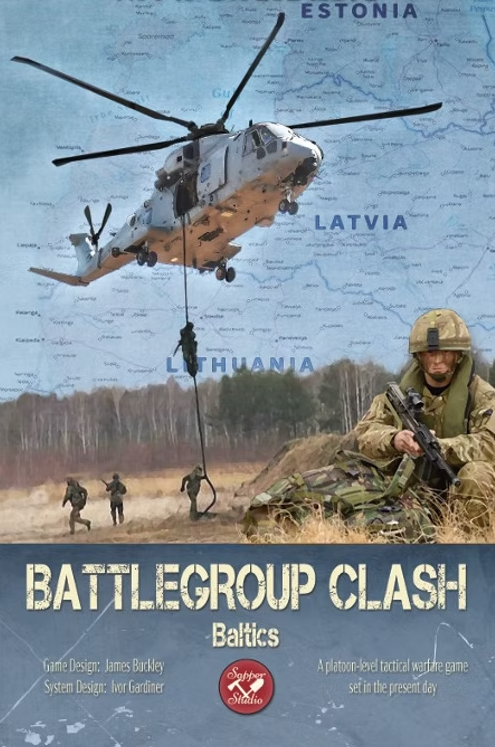
1. Battlegroup Clash: Baltics 2nd Printing from Sapper Studio
James Buckley is a name we all know in the wargaming space. He has worked with publishers like PHALANX and Nuts! Publishing and also is now a burgeoning designer as he published his first game in 2025 called Battlegroup Clash: Baltics from his new publishing company called Sapper Studio. The game has already sold out and they are currently offering up a 2nd Printing on pre-order
From the game page, we read the following:
Battlegroup Clash: Baltics is a two-to six-player tactical land warfare game that plays in two to three hours. It is a commercially-adapted version of a game recently developed for the British Army to help train its junior officers.
The game is set in Estonia and covers a hypothetical near-future Russian invasion of the country, and attempts by NATO land forces to repulse it. Each side has a maximum force size equivalent to a reinforced battalion, with individual unit sizes being platoons or sections.
It comes with six scenarios and has three play modes and optional rules, allowing for players to vary the level of realism and complexity of play. The Basic mode of play is equivalent to a light complexity commercial wargame. The Standard and Advanced modes are equivalent to a medium-light complexity game.
While the game mechanics and components will be familiar to anyone that has played a hex and counter wargame, there are several unique features about Battlegroup Clash: Baltics:
Preparation & Planning – In the Standard and Advanced modes of the game players will need to draft Orders for their forces. This happens at the start of the game. These Orders drive the actions individual units take in the game. This is a simplified version of the type of planning that would occur in real life. It presents both a challenge and opportunity to players, and greatly enhances the immersion of the game.
Drones and Electronic Warfare – Events in Ukraine have shown how much the use of drones has changed the modern battlefield. Reflecting this, in the game players use UAS drones for reconnaissance and FPV (‘kamikazi’) drones to attack enemy units. Each side can intercept their opponent’s electronic transmissions to improve targeting, and apply tactical Electronic Warfare effects such as jamming the enemy’s drone assets or crippling their GPS navigation.
Real World Mapping – The four maps in the game are based on satellite imagery from key locations in Estonia. Using computer aided design, that imagery has been turned into a highly realistic map. There are no hexes, just grid lines, the same as a real world map. Players must read the map terrain to determine key locations and terrain features, and assess how they fit into their battleplan and objectives.
If you are interested in Battlegroup Clash: Baltics2nd Printing, you can pre-order a copy for £69.00 ($92.38 in US Dollars) from the Sapper Studio website at the following link: Battlegroup Clash: Baltics (2nd printing) | Sapper Studio
2. VEKTYR: The Geopolitical Struggle for Central Asia, 1991-2020 from GMT Games
I love a good geopolitical wargame as well as a good multi-player wargame. And when these 2 are mixed, it can really make for a very interesting gaming experience with diplomacy, alliances, asymmetry and the like. This past month, GMT offered a game that have both in VEKTYR: The Geopolitical Struggle for Central Asia, 1991-2020 that takes a look at the ongoing struggle between the United States, Russia, and China. for influence and control in Central Asia. The game is designed by a new designer named Kyle Farrell so I am very interested in connecting with him to discuss the design and get more information about how it plays and what his vision and basis are for the game.
From the game page, we read the following:
VEKTYR is a 2-3 player geopolitical wargame that simulates the ongoing struggle for influence in Central Asia between the United States, Russia and China.
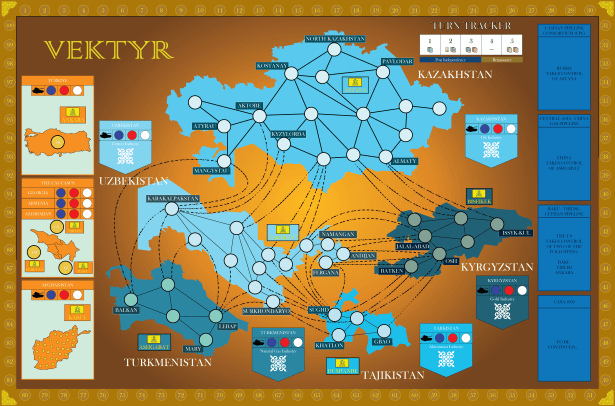
The game takes players from 1991 after the newly independent Central Asian nations – Kazakhstan, Kyrgyzstan, Tajikistan, Turkmenistan, and Uzbekistan – emerged from the collapse of the Soviet Union through 2020 when multiple international crises accelerated the global shift towards a multipolar world.
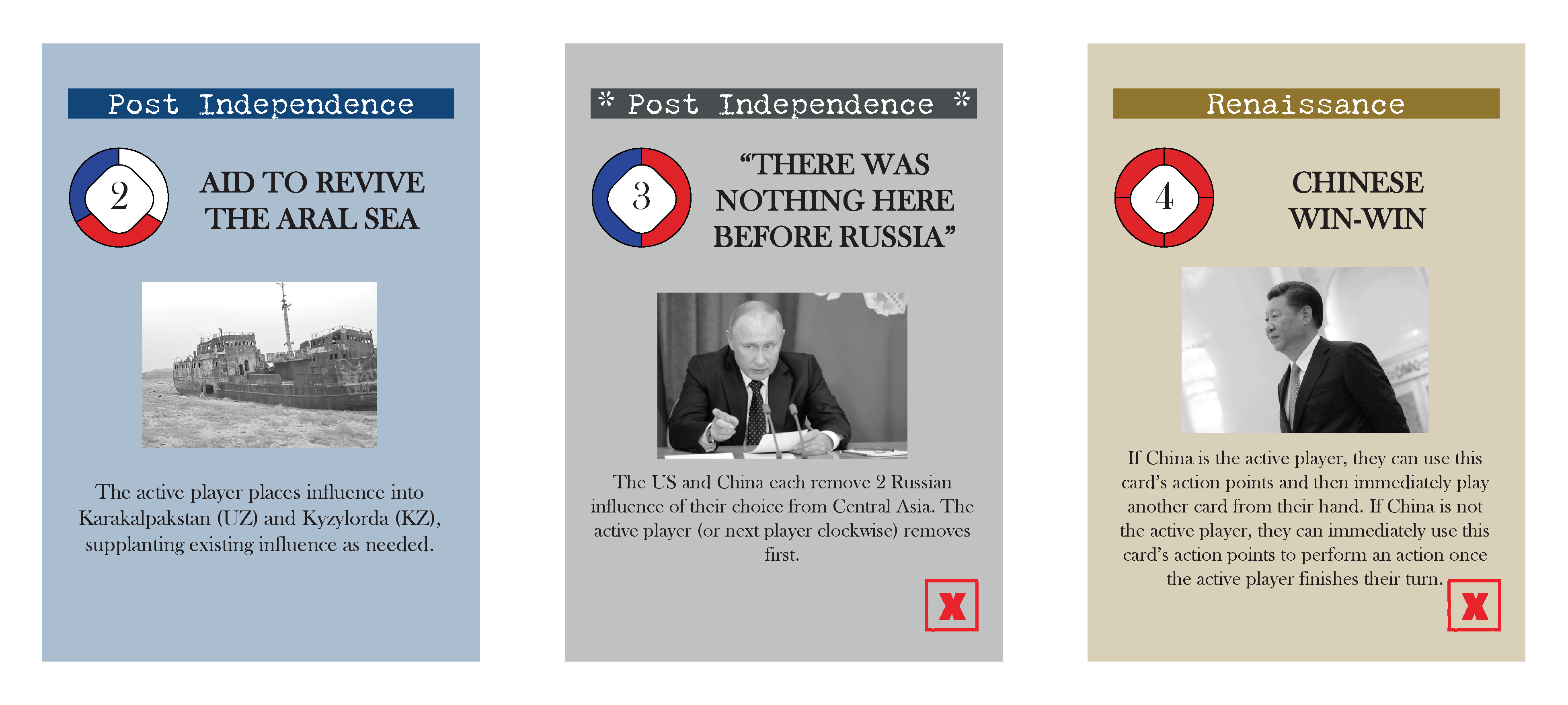
The extensive action deck covers over 120 distinct historical occurrences that have shaped Central Asia’s relationship with three global powers – the United States, Russia and China – as well as the rest of the world.
Over the five turns of the game, each player will have to bend history to their will in order to establish influence throughout Central Asia as well as periphery territories in the Caucasus, Türkiye, and Afghanistan. Your mission is to win hearts and minds, catch the ears of the region’s presidents, invest in critical industries and showcase your power’s prowess through military assistance.
In VEKTYR, players will accrue victory points by playing “Scoring” cards, playing event cards that award VP’s, or building pipelines for VP payouts. The game consists of 5 turns: 3 turns within the Post Independence epoch from 1991-2016 and 2 turns within the Central Asian “Renaissance” epoch from 2016-2020. Each turn consists of 6 rounds.
At the start of each turn, each player draws up to a hand size of 7 cards and plays one round in succession until every player has played 6 rounds. All of VEKTYR‘s cards have a dial in their upper left corner noting which global power the card’s event pertains to. Some cards are fully-neutral cards meaning any power can play them, others can be played by 2 of the 3 powers, and others still can only be played by a single power. Whenever a rival plays a card with an event pertaining to you, you’ll have the opportunity to resolve the event during your rival’s round. A delightful mechanic that keeps the game dynamic even when it’s not your go!
Every round, players either use their card’s event or action points to lay influence on the board, seize the ear of the region’s presidents, invest in industries, provide military assistance or build pipeline infrastructure. Much of the game centers around your ability to build influence in the Central Asian provinces as well as periphery countries. Players will use events and action points to gain a strategic foothold in these wide stretches of Eurasia. But how effective will your soft power be in fending off your rivals’ similarly enticing offers?
Also, what have you done for me lately? One of the mechanics that keeps the board fresh in VEKTYR is called “atrophy” and mimics the ephemerality of political popularity. Under this mechanic, at the end of every Turn, each player removes some of their influence from the board, opening up new possibilities for their opponents as they are forced to abandon specific countries or provinces.
I am very much interested in this title and would like to learn more about how it works and how it tries to simulate the complex situation and politics involved.
3. Empire of the Sun: China Expansion from GMT Games
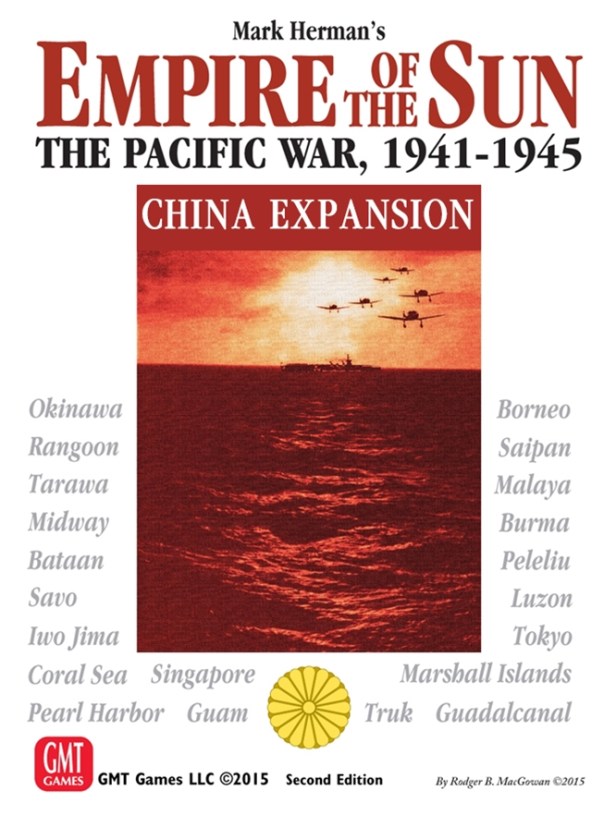
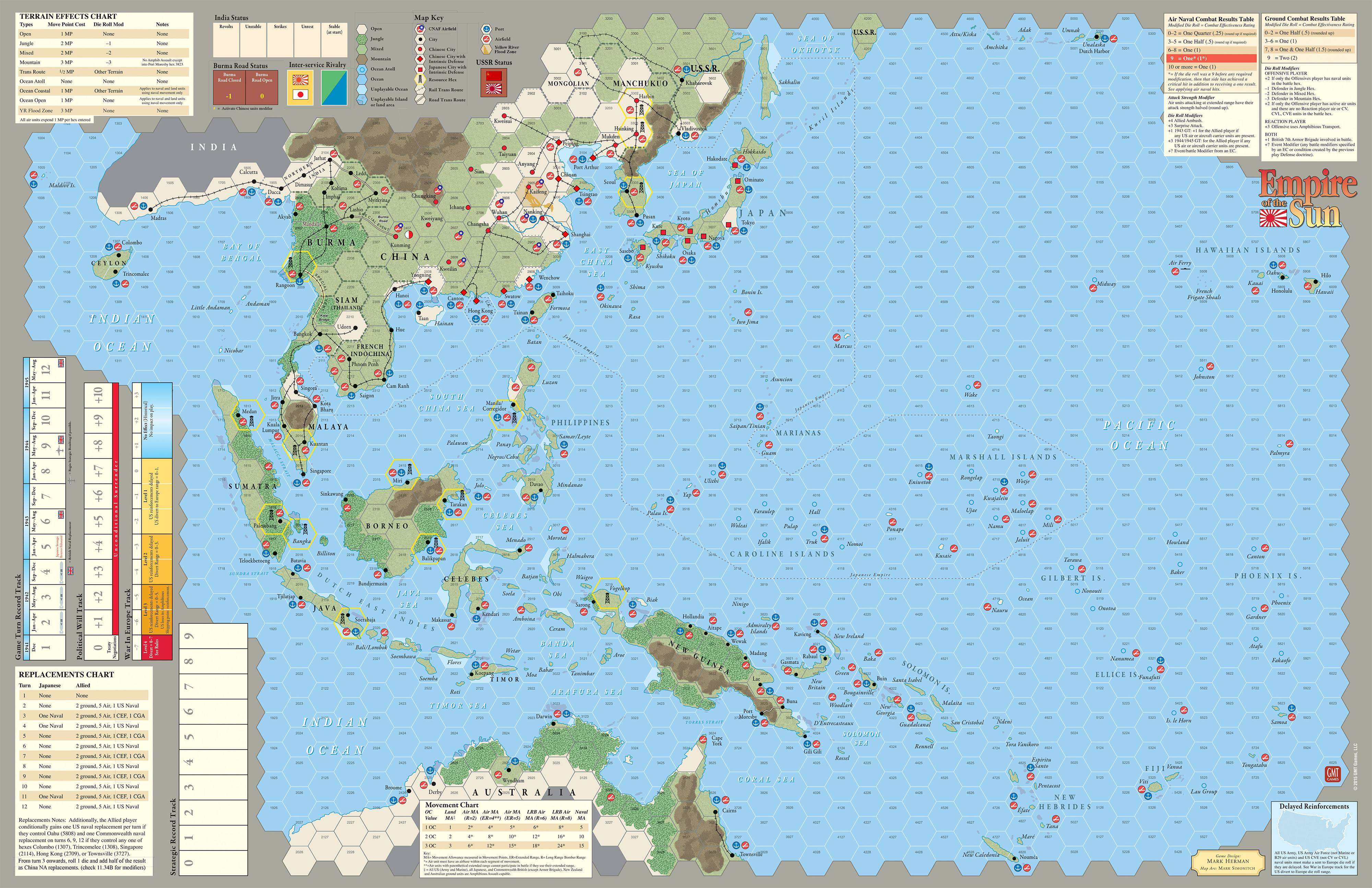
Empire of the Sun is Mark Herman’s card driven design that takes a strategic level look at the entirety of World War II in the Pacific from the attack on Pearl Harbor until the surrender of Japan and is the first card driven game (CDG) to move the system closer to a classic hex and counter wargame, while retaining all of the tension and uncertainty people have come to expect from a CDG. Recently, GMT announced an expansion to the game that deals with the China Theater and the action that took place there between the combatants. The game comes with a new replacement map that will replace the China Front Track as well as some new cards. The game was dreamed up by a few Chinese designers, and fans of Empire of the Sun, named Ji So and Liu Zhijun.
From the game page, we read the following:
Empire of the Sun examines the China theater as a frontline ‘piston’ model that reprises its historical role as an Allied resource need based on the level of Japanese offensive efforts to force its surrender. We are now releasing a new expansion for the core game, which you will need to play this expansion that adds all of the ground and air forces to open up a path not really taken to include the eventual Soviet invasion of Manchuria.
About two years ago, two Chinese gamers contacted me that they had developed a China expansion for Empire of the Sun. I was certainly interested and what you hold in your hands is the product of my collaboration with Ji So, Liu Zhijun, and my developer Francisco Colmenares. What has changed is my original piston model China Front track has been replaced with a map and counters. There are a host of rules to handle this unique theater of operations, but what I have found at their core is how well we have gotten the new module to perform to history and the original track.
What you will find is if the Japanese play cards into China offensives, they will likely capture and control the rail lines plus the coastal ports. Achieving more is possible, and everyone is likely to try, but it is hard to get forward momentum as long as the Allies put some equivalent effort into defending Chungking. This is exactly how the original track worked, but what is very interesting is you more clearly see the connection between the China-Burma-India (hereafter CBI) theater and mainland China. In my various opposed playtests, I have found that in half the games there is some action in China and in others not much happens. I have also found that if the Japanese army strategy is followed, the US makes quicker progress across the Pacific. What this will give you is more control over how you decide to prosecute the war from the Japanese perspective. That said, every so often I have had spectacular success with a surprise Chinese offensive. More options, more strategy, and for me, more interesting game play.
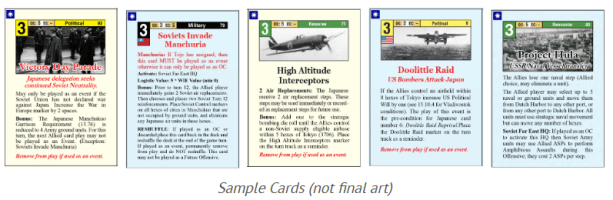
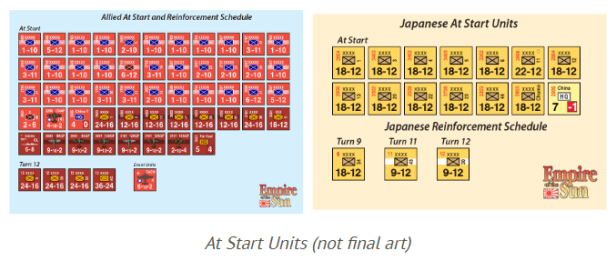
Empire of the Sun: China Expansion comes with 33 new cards (18 Allied and 15 Japanese), a 22”x34” paper map (original map art with the China theater shown in detail), one counter sheet featuring new US, Nationalist Chinese, Communist Chinese, Japanese, and Soviet air, ground, and naval units, replacement player aids with the new rules added for China, PLUS an integrated rulebook with all rules integrated into the original core system. Empire of the Sun: China Expansion is now available for the low, low, low, low price of $35.
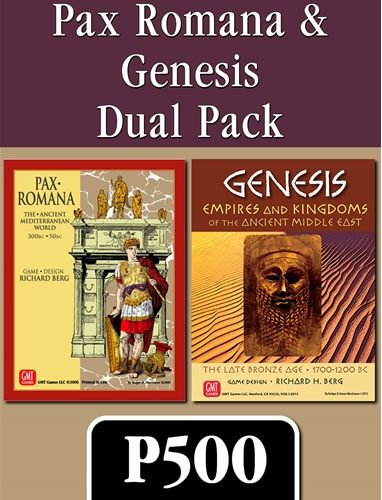
4. Pax Romana & Genesis Dual Pack Reprint Edition from GMT Games
I very much love these Deluxe Edition Multi-Packs from GMT Games. They are an insane value with multiple games included in the same box, typically with new components, updated rules and sometimes additional scenarios. A newly announced pack is the Pax Romana & Genesis Dual Pack, which contains 2 classic Ancients games in Pax Romana and Genesis designed by Richard Berg.
From the game page, we read the following:
GMT is proud to bring back into print Richard Berg’s Pax system games, Pax Romana and Genesis in a dual pack format. This printing of Pax Romana will be identical to the 2nd edition published in 2015 with all known errata incorporated along with additional editing where necessary to improve clarity. Similarly, this printing of Genesis will be identical to the 1st edition with the exception that Kingdom Displays will be enlarged to 8 ½ “ x 11”. All known errata will be addressed with additional editing where necessary to improve clarity. The games will share a back-printed mounted map and come in a 3” box.
Components
Pax Romana
One 22″ x 34″ back printed full-color mounted map board shared with Genesis
Three full-color die-cut counter sheets (1/2” counters, 280 counters per sheet)
One smaller full-color die-cut counter sheet (5/8” counters)
One smaller full-color die-cut counter sheet (round counters)
55 Event Cards
Four 8 ½ ” x11″ Player Mats
Two 11” x 17” Player Aid Cards (four sets of the two PACs)
Rule Book
Play Book
Two six-sided dice
Genesis
One 22″ x 34″ back printed full-color mounted map board shared with Pax Romana
Three full-color die-cut counter sheets (840 1/2” counters)
55 Event Cards
Two 11” x 17” Player Aid Cards (five sets of the two PACs)
Five 8 ½” x 11” Kingdom Display Cards
Rule Book
Play Book
Two six-sided dice
Pax Romana
How did Rome get to be Rome? Why did the Glory That Was Greece fade? What stopped Carthage from making an empire of the Mediterranean? Could the Seleucids really have conquered the western world?
These are a few of the questions you can explore in Pax Romana, designed for play by all levels of gamers, from the competition-oriented, one sitting players to the Let’s Recreate History on a grand scale afficionados.
Pax Romana covers the Europe from 300 BC through the end of the 1st century BC, when control of the Mediterranean was in a state of flux with four possible empires. And it does so with a scale and system that is filled with decision-making tension but also highly accessible and easy to play. The emphasis is on strategic operations, from raising armies to colonizing outlying areas, to fighting barbarian incursions, to maintaining political stability at home.
Pax uses a unique marker-oriented play sequence that provides surprise and opportunity, plus a deck of unusual cards that provide the historical background of events and calamities within which the players must operate. Each turn represents 25 years, with the movement of forces and the shifting of power occurring at a proportionately very large scale. Combat takes place throughout the game, but they, too, represent ongoing conflict as much as individual battles. But even here, subtleties are built-in: force composition matters – armies overbalanced by cheap light infantry suffer penalties, while cavalry can single-handedly make the difference between winning and losing – and knowing when and where to make a stand and when to withdraw to safer places can literally decide the fate of a power for an entire generation. And at this scale, of course, the best-laid plans frequently go awry.
Most important for gamers, though, is the wide variety of scenarios Pax provides, from fast-playing, one-sitting two-player games to vivid recreations of the entire era with four players. The game works well with 2, 3 or 4 players, and is designed to be playable solitaire for those interested in the historical view it provides. Scenarios range from The Punic Wars, through the Eastern Med conflicts between the Greeks and the Seleucids, all the way up to the entire 10 turn game, covering 300 years of history. In addition, there are two versions of Pax: the Standard Game, designed for fast play, and the Advanced version, which adds in much tangential history and allows for a more introspective examination of the era.
Genesis
Genesis is a campaign-level game covering the turbulent Late Bronze Age in the Middle East, where kingdoms rose and fell while establishing many of the systems and ways of life that underwrite Western Civilization. Much like its ancestor game, Pax Romana, Genesis is a game that provides the players with the historical dramatis personae and allows them to forge their own empires. It also has a great emphasis on the control of the important trade routes and commercial centers and the building of the spectacular monuments these civilizations left for posterity and wonder.
All the “high”-points of this era are included: lots of gods that have major effect on play (Astarte, Baal, Dagon, Marduk, et al), the rise of chariot warfare … peasants, slaves, and a host of historical kings: Thutmose, Akhenaten, Suppiluliuma, Mullatawi, Tushratta, Hammurabi, Agum III, Shalmaneser, Shamsi-Adad , and many more. . . even Sargon the Great (the world’s first great conqueror (2270-2215 BCE) … along with Sea Peoples, independent kingdoms (Canaanites, Arzawans) and pirates, and guys with great beards (see below):
There are several two-player scenarios for short-time play, an introductory scenario to get you into the system (featuring Sargon), and the big, 5-player multi, included all the major players – Egypt, The Hittites, the Mitanni, Assyria and Babylon – more color than a Crayola Factory and more fun chrome than a ‘57 Chevy. The main scenario can also be played with 3 or 4 players.
Of course, there are the cards (the game is not card-driven but card-augmented), such as:
The Begat Effect: Independent Expansion (2): The card player may move a Peasant unit from a friendly City space to any unoccupied independent City space within 4 spaces of where that Peasant starts. This card may be held in Hand until played.
Baal (2): It’s Time to Pay Baal … and all those priests running those temples. For every Monument he has in a Home Kingdom City, the card player must pay 2$. If he cannot pay, the player must remove the Monuments that he cannot pay for.
The Akhenaten Effect: If you are Egypt and your Pharaoh/King is Akhenaten, you do not pay anything; you simply remove all Monuments in your Home Kingdom cities. This card must be played when drawn.
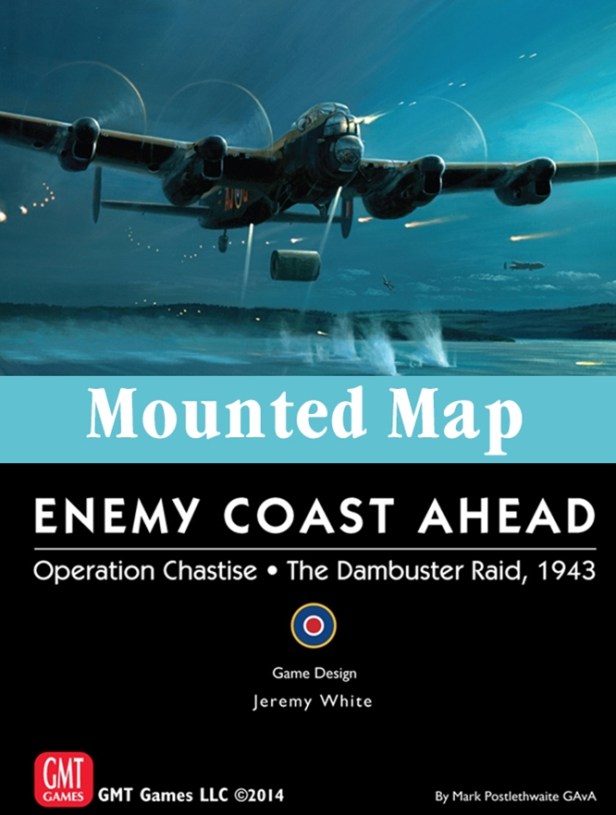
5. Enemy Coast Ahead: The Dambuster Raid Mounted Map from GMT Games
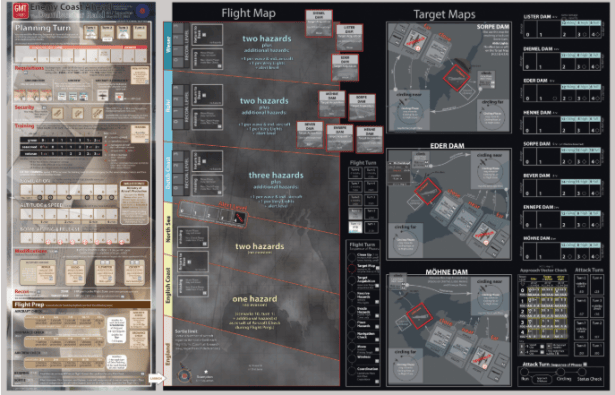
One of my complaints about wargames is that that boards that you play the games on are paper. These are generally flimsy, have severe folds on them that disfigure the beauty of the boards and also are a bitch to get to lay flat without having humps in them that act as steep terrain and make it hard for me to line up my units. Now, once again, I want to say that I generally am ok with paper maps for multi-map hex and counter wargames where having a nice thick mounted map, or in the case of many maps, is infeasible for storage purposes. But, when the game is a different kind of game, such as Waro (Euro focused wargame), I very much like having a solid mounted mapboard. One of the offerings this month is a step in the right direction to fix a great game with a new Mounted Map for Enemy Coast Ahead.
From the game page, we read the following:
Based on positive feedback to our mounted mapboard releases, we are continuing to offer mounted maps for several of our most popular games as P500 items.
We are now offering a 22 x 34″ mounted map for Jerry White’s Enemy Coast Ahead: The Dambusters Raid. This is intended to ship separately along with the game’s 2nd printing. But note that it will work with either 1st or 2nd printing, so this will work just fine for those of you who want to get a mounted map for your original game. Enjoy!
6. In the Desert 1940–1943: WW2 in North Africa from Dissimula Edizioni Currently on Kickstarter
Several years ago, Sergio Schiavi broke onto the scene with his new company called Dissimula Edizioni with their first Kickstarter called Radetsky’s March: The Hundred Hours Campaign and that game was then followed a few years later by From Salerno to Rome: World War II – The Italian Campaign, 1943-1944 and their third game called Give Us Victories: The Chancellorsville Campaign. They also have a line of smaller, simpler games that started with 1943-1945 from a few years ago that dealt with the war for Italy during WWII. That game was fantastic and they have now worked on the 2nd entry in that series called In the Desert 1940–1943: WW2 in North Africa that is currently on Kickstarter.
From the game page, we read the following:
Between 1940 and 1943, North Africa was the theater of a war fought between the Axis forces and the British Commonwealth; numerically limited armies faced each other in a long sequence of offensives, retreats, and counterattacks. The clashes often took place in the desert, where mobility and the ability to maintain supply lines were as decisive as the strength of the weapons.
Behind the front loomed Malta, a strategic British base and a constant threat to the vital supplies heading toward Tripoli…
The game system used in In the Desert 1940–1943: WW2 in North Africa is derived from 1943–1945, but features significant differences. The game lasts eight turns, during which players alternate their operations by spending Supply Points (SP). Each activation requires careful decisions: commit your forces immediately or preserve them for later operations? Supply is essential: without a clear line to their own bases, units risk remaining engaged and vulnerable. Meanwhile, control of Malta constantly threatens Axis supplies. Special events allow players to alter the situation on the battlefield, recover forces, strengthen attacks, or create new strategic opportunities.
As of October 1st, the Kickstarter campaign has funded and raised $5,461 toward its $3,643 funding goal with 156 backers. The campaign will conclude on Wednesday, October 7th at 4:25am EDT.
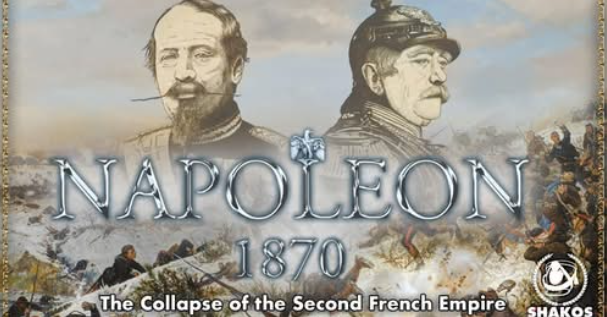
7. Napoléon 1870: The Collapse of the Second French Empire from Shakos Currently on Kickstarter
I do love a good Napoleonics wargame and The Conquerors Series from Shakos is really very good as we have played a few games over the years. They have a new volume in that series on Kickstarter that is designed by a tandem of great designers in Brian Asklev (Baltic Empires from GMT Games and 1812: Napoleon’s Fateful March from VUCA Simulations) and Fred Serval (A Gest of Robin Hood and Red Flag Over Paris from GMT Games as well as A Very Civil Whist from PHALANX) called Napoléon 1870: The Collapse of the Second French Empire from Shakos. This game is set in a different period but uses the same system to tell the story of the collapse of the Second French Empire during the Franco-Prussian War of the 1870’s.
From the game page, we read the following:
In 1870, Napoleon III’s Second Empire was on the brink of collapse. After hastily declaring war on Bismarck’s Prussia, the French armies were overwhelmed and surrounded at Metz.
This is your opportunity to write something different.
Napoléon 1870 is the fourth instalment in the Napoleon Series, a series devoted to the great strategists of history. Following on from Napoléon 1806, Napoléon 1807 and Napoléon 1815, Napoléon 1870 brings its own unique challenges to this well-tried and highly acclaimed campaign system.
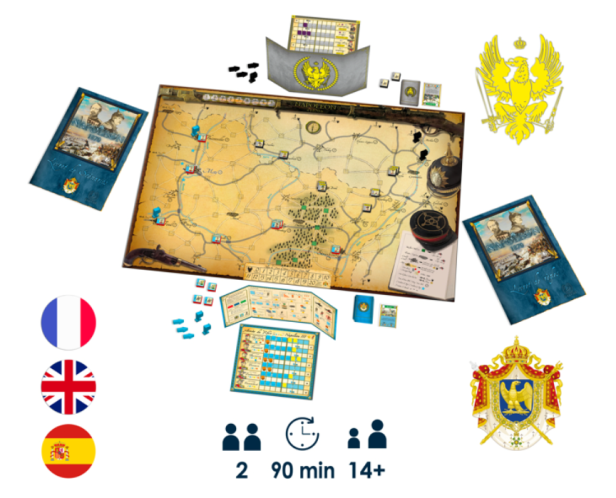
In Napoléon 1870, two players, assume the role of Napoleon III or Bismarck, making the key decisions that will shape the fate of Europe. In the role of Napoleon, will you manage to escape the trap set by your opponent and avoid being trapped in Metz, or, like Bismarck, will you succeed in taking the French armies by surprise and outflanking them? A variety of scenarios, lasting from 40 minutes to 2 hours and a half, will allow you to rewrite the battles along the borders right up to the final assault on Metz.
Napoléon 1870 is aimed at both seasoned grognards as well as enthusiastic young conscripts keen to understand how history is made. Thanks to a set of simple rules that remain faithful to historical reality, all the key aspects of the campaigns of the Napoleonic era are recreated so that players can engage with them. As events unfold, there will be scope for both subtle bluffing and the brutal use of overwhelming force.
Napoléon 1870 follows the rules of the Napoleon Series (also referred to as the Conquest Series) created by Denis Sauvage, but two designers wellknown to the general public have teamed up to produce this new installment:
• Fred Serval, a specialist in the Second Empire and author of Red Flag over Paris and A Gest of Robin Hood from GMT Games.
• Brian Asklev, an expert in Napoleonic strategy and operations, author of 1812: Napoleon’s Fateful March from VUCA Simulations.
As of October 1st, the Kickstarter campaign has funded and raised $32,894 toward its $17,079 funding goal with 294 backers. The campaign will conclude on Tuesday, October 13th at 2:00pm EDT.
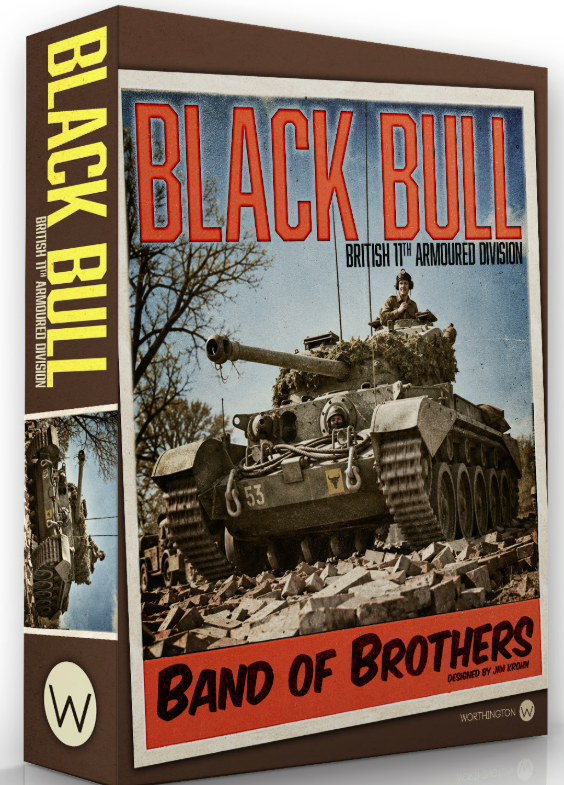
8. Band of Brothers BLACK BULL: British 11th Armoured Division Bull from Worthington Publishing Currently on Kickstarter
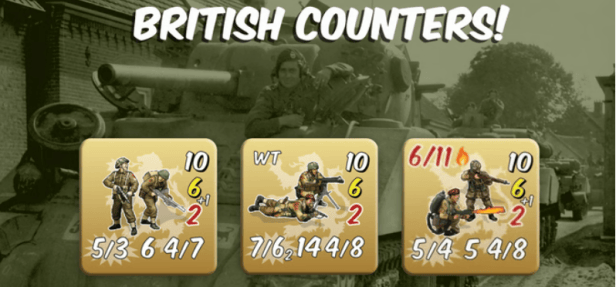
There are some series out there that people really love and enjoy playing. This love leads to the series selling well and then expanding as the market is able to continue supporting the games. Band of Brothers from Worthington Publishing is such a series. A tactical level squad based game set in World War II, the series has expanded into several different theaters and has multiple stand-alone expansions. Recently, I saw news that there would be a new volume coming to Kickstarter called Black Bull, which focuses on the exploits of the British 11th Armoured Division during World War II.
From the game page, we read the following:
The Band of Brothers Series returns to Europe with BLACK BULL: British 11th Armoured Division, a new standalone game focusing on one of the British Army’s best-known armoured formations of World War II.
The British 11th Armoured Division was formed in 1941 and adopted the distinctive Charging Bull as its divisional emblem.
The game includes 14 scenarios following the 11th Armoured Division through its campaign in Northwest Europe.
The scenarios put the British player in command of the infantry, tanks and supporting weapons of the Black Bull against German forces in a variety of tactical situations.
As of October 1st, the Kickstarter campaign has funded and raised $19,020 toward its $500 funding goal with 267 backers. The campaign will conclude on Saturday, October 10th at 4:00pm EDT.
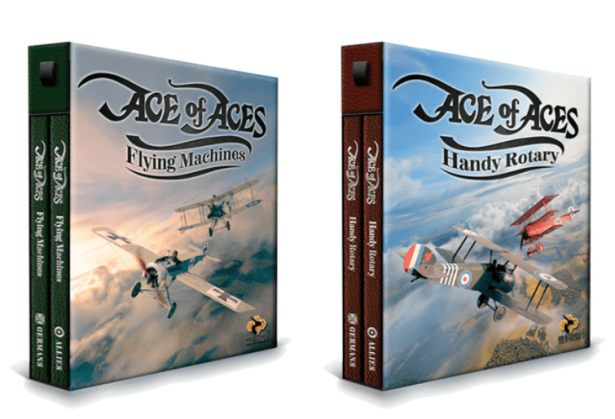
9. Aces of Aces: Handy Rotary & Flying Machines Deluxe Editions from Mr. B Games Currently on Kickstarter
A classic reborn is how I would classify the newest edition of Ace of Aces. With very unique mechanics trying to provide the experience of dueling it out with an enemy biplane over the fields of World War I, Ace of Aces is now making a comeback with the Powerhouse Series rebirth all the way from 1981. The newest edition include a look at 2 games in Aces of Aces: Handy Rotary & Flying Machines Deluxe Editions.
From the game page, we read the following:
We’re back with two more Ace of Aces books! We are giving our deluxe treatment to two more books, Ace of Aces: Flying Machines and Ace of Aces: Handy Rotary. We promised these during our Powerhouse Series Kickstarter campaign, and we’re excited to bring them to you now. Just as with our Ace of Aces: Powerhouse Deluxe Edition, these will both be redone in full color with the same slipcase design as the Powerhouse edition.
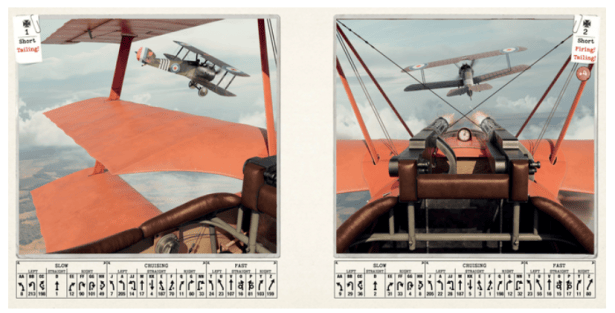
The Ace of Aces family of games uses two books to simulate a duel in the skies between two fighters in World War I. Using Alfred Leonardi’s innovative matrix system, players choose maneuvers in their book. Each maneuver leads to a page in the book that matches the first-person perspective of the pilot. Players maneuver to line up their planes so they can unload their guns on their opponent. Take too many shots, and you go down in flames!
Each of the Ace of Aces sets includes two books; these are the dogfighting books, as well as a rulebook and chart book, all in a beautiful slipcase! The slipcase also has an extra drawer to store dice and chips.
We’ve updated all the interior graphics with all new artwork. All in full color! These aren’t the final pages, but they are pretty close
As of October 1st, the Kickstarter campaign has funded and raised $162,075 toward its $50,000 funding goal with 1,335 backers. The campaign will conclude on Thursday, October 8th at 6:00pm EDT.
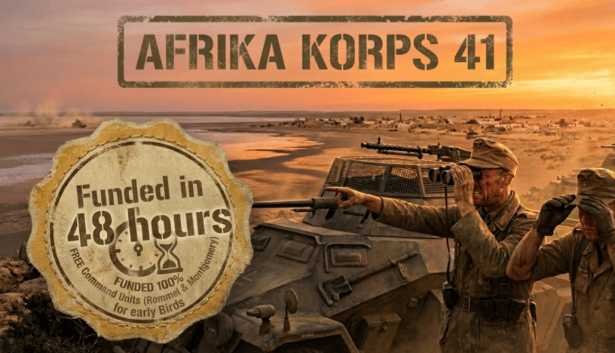
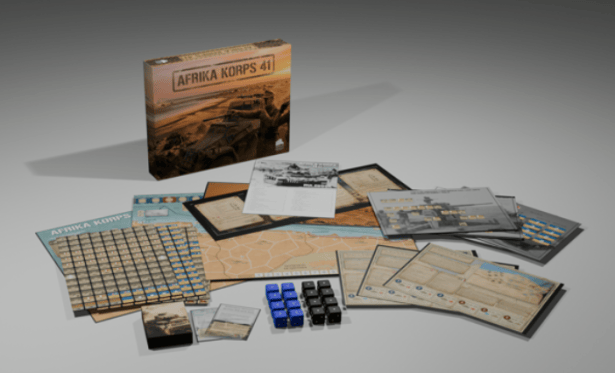
10. Afrika Korps 41 from Trafalgar Editions Currently on Kickstarter
Who doesn’t love a good North Africa wargame? No one says me and I am excited to share with you this new upcoming game called Afrika Korps 41 from Trafalgar Editions. The game is currently on Kickstarter and really looks to be pretty good.
From the game page, we read the following:
The North African desert, 1941. The armored columns of Rommel’s Afrika Korps and the British 8th Army clash in a brutal war of movement for strategic control of the Mediterranean theater.
Afrika Korps 41 puts you in supreme command of this legendary campaign. Featuring an intuitive, deeply challenging, and highly immersive gameplay system, it delivers the true grit and tactical depth of historical conflict—without the dense complexity of traditional wargames.
There are several games that recreate the North Africa campaign in World War II, but Afrika Korps 41 offers a unique experience thanks to its balance between accessibility and strategic depth.
Simple Rules, complex decisions – Unlike other denser wargames, here the rules are easy to learn, but mastering the game requires planing and efficient resource management
Area-based system – Forget about hexes. Movement and territorial control are resolved intuitively with clearly defined strategic areas.
Innovative combat chart – We’ve designed a combat resolution system that moves away from the traditional, offering dynamic and realistic results without relying on complex tables.
Clean map with integrated aids – Key information is incorporated directly onto the game board, facilitating quick reference and speeding up gameplay.
Three difficulty levels – From an introductory mode ideal for new players to advanced levels that will challenge even the most experienced.
Flexible experience – You can play the full campaign or choose between three historical scenarios of 30-40 minutes, in addition to the option of starting the campaign from different key moments of the conflict.
Solo mode – Perfect for those who want to enjoy the game without needing an opponent.
Larger counters (17 mm) – Greater comfort and visibility on the battlefield.
Afrika Korps 41 is designed to offer an immersive, strategic, and dynamic experience, with innovative mechanics that differentiate it from other games about the same campaign.
And the game comes designed with a fully functioning solitaire game mode for those that either prefer to play solitaire or have difficulty finding opponents.
Afrika Korps 41 features an advanced Artificial Intelligence (AI) system designed to deliver the full gameplay experience in solo play, allowing you to command either side (the Axis or the Allies). Both the full campaign and individual scenarios are completely playable without a human opponent, ensuring a tactical challenge that is as tense as it is dynamic.
Forget predictable automation. Our AI makes strategic decisions based on the actual, real-time context of the board. By evaluating the map situation and vital objectives, the system dynamically shifts between two core mentalities:
⚔️ Offensive Posture (Attacker Mode): The AI aggressively seeks to breach your lines, pushes relentlessly toward strategic objectives, and exploits every single tactical blunder you make.
🛡️ Defensive Posture (Defender Mode): The enemy digs in smartly, focusing on consolidating key positions, containing your advances, and efficiently deploying their reinforcements.
Infinite Replayability: Thanks to this adaptive behavior, no two solo games will ever play the same. The system immerses you in a war of attrition where your ability to counter the AI’s unpredictable maneuvers is your only path to victory.
As of October 1st, the Kickstarter campaign has funded and raised $12,704 toward its $7,932 funding goal with 151 backers. The campaign will conclude on Friday, October 16th at 6:00am EDT.
New Release
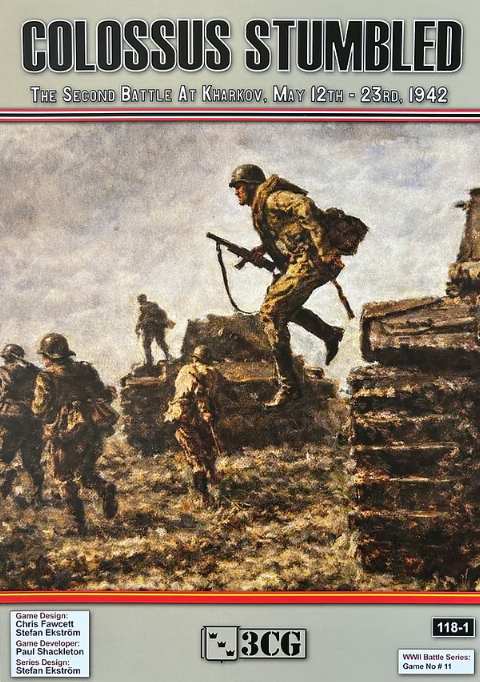
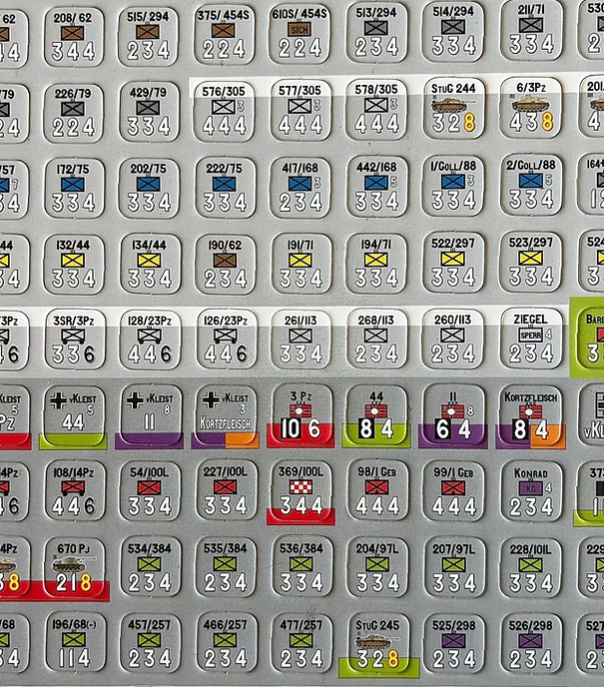
1. Colossus Stumbled: The Second Battle at Kharkov, May 12-23rd, 1942 from Three Crown Games
Three Crown Games is a great little company and their games really cover some great historical topics and also look the part as they are well produced, even though they are poly bag and not boxed games and are just plain desirable. This month, I noticed that they were shipping one of their new games called Colossus Stumbled: The Second Battle at Kharkov, May 12-23rd, 1942 and I very much wanted to share it with you.
From the game page, we read the following:
Colossus Stumbled is the title of the game that handles the first 12 intensive days of the second Battle of Kharkov (nowadays Kharkiv), 12 to 23, May 1942. On 12 May 1942, Soviet forces launched an offensive against the German 6th Army from a salient established during the winter counter-offensive. After a promising start, the offensive was stopped on 15 May by massive airstrikes and the Axis started their counter-offensive ‘Operation Fredericus’, in the region around Kharkov. Its objective was to eliminate the Izium bridgehead over Seversky Donets or the “Barvenkovo bulge” which was one of the Soviet offensive’s staging areas.
If you are interested in Colossus Stumbled: The Second Battle at Kharkov, May 12-23rd, 1942, you can order a copy for 49,50 € ($57.30 in US Dollars) from the Three Crown Games website at the following link: https://www.threecrownsgames.com/product-page/colossus-sumbled
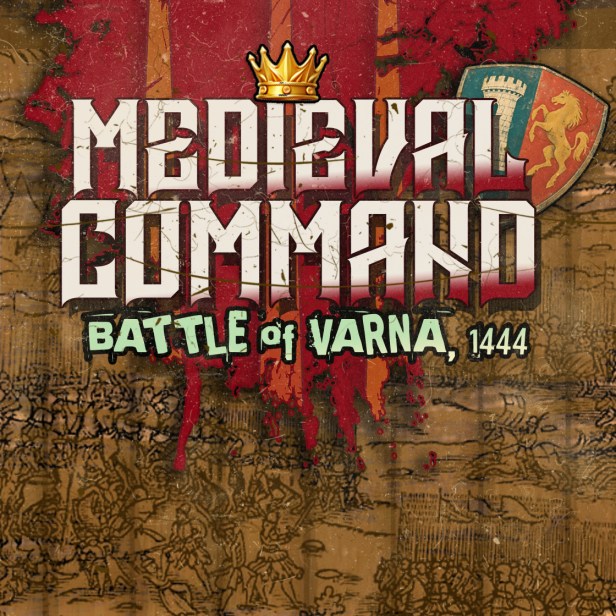
2. Medieval Command: Battle of Varna, 1444 Print & Play from Solo Wargame
Martin Melbardis began his design career with Campaign: Fall Blau from Catastrophe Games. This was a very interesting little dice chucking solitaire game on Operation Barbarossa during WWII. Since that time, he has started his own independent wargame company called Solo Wargame and has designed 10 different and very interesting roll and write wargames on a plethora of subjects including World War I (Trench Tactics), World War II (Operation Barbarossa, Lone Wolf: U-Boat Command and War in the Pacific), Napoleonic Wars (Siege Works) and Ancient Rome (Rome Must Fall). His newest game called Medieval Command: Battle of Varna, 1444 starts a new series and is focused on the Crusade Battle of Varna and looks really interesting.
From the game page, we read the following:
On the fog-shrouded morning of 10 November 1444, the fate of southeastern Christendom hangs by a fraying thread as your heavily outnumbered Crusader army stands before the terrifying mass of Sultan Murad II’s Ottoman host near the Black Sea port of Varna. You are outnumbered nearly two to one; however, your heavy cavalry advantage can make the difference. Medieval Command: Battle of Varna 1444 is a solo Print & Play wargame that simulates the epic last ditch crusade attempt to free the Balkans from Ottoman rule. As the solo player, you play the role of Crusader, while the BOT handles your opponent, the Ottomans. You must master a tight dice-drafting system where GREEN dice power Ottoman attacks and Crusader defenses, while WHITE dice fuel your own offensives. Because you cannot win a war of attrition against these odds, your only hope is to tactically bank your dice to unleash devastating Boosted Actions like a thunderous, multi-die cavalry charge to smash the elite Janissary Wall before your lines crumble and the young King Władysław III is slain in the mud.
Here is a link to a playthrough video from the designer:
3. Thirty Years of Misery: The Thirty Years War 1618-1648 from VUCA Simulations
A couple of years ago, I came across a new designer named Brian Asklev and have done interviews with him covering Baltic Empires from GMT Games and 1812 – Napoleon’s Fateful March from VUCA Simulations. Brian is a pretty sharp designer and I very much like his approach to design as well as the choices in designs that he is doing. His new game is called Thirty Years of Misery: The Thirty Years War 1618-1648. The cover art is amazing, the topic looks great and the approach that he is taking seems to be very novel.
From the game page, we read the following:
Between 1618 and 1648, Europe was consumed by one of the longest and most destructive conflicts in its history. What began as a rebellion in Bohemia soon engulfed the Holy Roman Empire and drew nearly every major European power into a struggle over religion, dynastic ambition, and political supremacy. Millions perished as armies marched across Central Europe, cities were besieged, alliances shifted, and entire regions were devastated.
Thirty Years of Misery places you in command of the major powers that shaped this conflict. Lead the Imperial Habsburgs, the Catholic League, Sweden, or France as you fight to reshape Germany through military campaigns, religious influence, political maneuvering, and strategic diplomacy.
Victory requires more than battlefield success. You must secure electorates, protect your heartlands, influence the religious landscape of the Empire, and achieve your faction’s unique historical ambitions before peace is finally negotiated at Westphalia. Rather than recreating individual battles, Thirty Years of Misery captures the entire strategic conflict across three decades of war.
Every campaign combines:
Military operations
Religious conflict
Political objectives
Coalition warfare
Historical events
Dynamic diplomacy
Each round features a randomized turn order, ensuring that no two campaigns unfold the same way. Players must continually adapt to changing circumstances, unexpected interventions, and opportunities created by both allies and enemies.
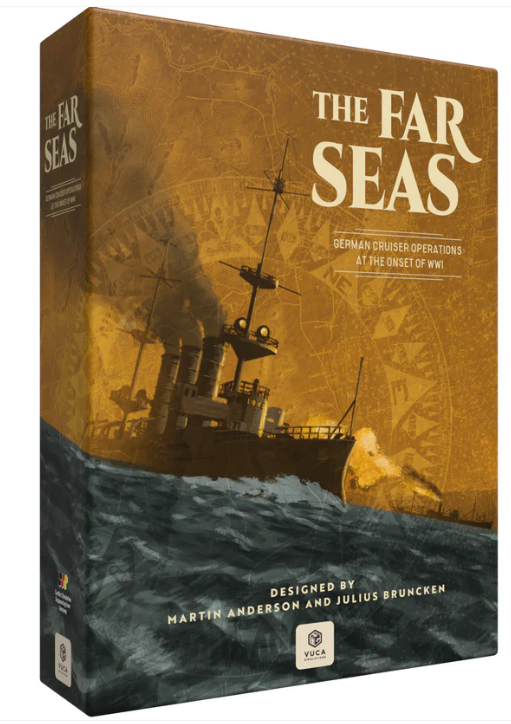
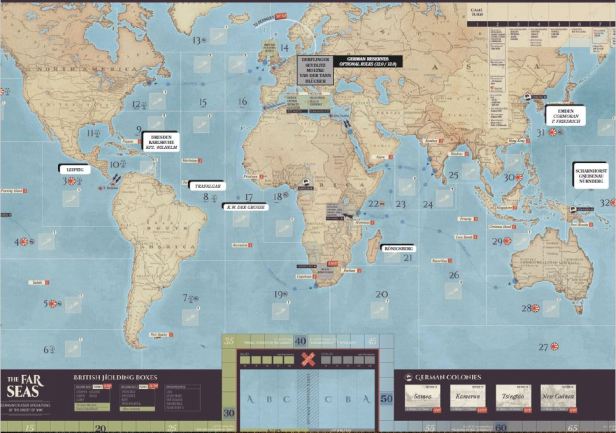
4. The Far Seas: German Cruiser Operations at the Onset of WWI from VUCA Simulations
Another new order game from VUCA Simulations this month is The Far Seas: German Cruiser Operations at the Onset of WWI and I am always in for a naval focused wargame. I have not played that many and frankly not that many of the ones that I have played are that good but this one does look intriguing. I have also always been interested in the German efforts to solidify their place around the globe navally and with the founding of colonies in Africa and the South Pacific. So this one looks to fill that niche and looks to be really very interesting.
From the game page, we read the following:
At the outbreak of World War I, eight German cruisers were scattered across the globe—isolated, outnumbered, and cut off from home. What followed was a daring campaign of commerce raiding, evasion, and naval warfare that forced the British Empire to divert vast resources in pursuit.
The Far Seas puts you in command of this asymmetric naval struggle.
Take control of the German raiders or the Allied fleets in a tense operational-level game of hidden movement, search, and decisive engagements.
German player: Plan secretly, strike where the enemy is weak, raid merchant shipping, disrupt supply lines, and attempt the long journey home.
Allied player: Coordinate a superior fleet, protect trade routes, and hunt down elusive cruisers across the world’s oceans.
Every decision matters—overextend, and you risk destruction; hesitate, and the enemy slips away.
The system is built for fast turns, high tension, and meaningful choices:
Hidden movement and intelligence gaps create constant uncertainty
Elegant search and encounter mechanics lead to dynamic engagements
Combat resolves quickly but carries lasting consequences
Modular rules allow you to scale complexity to your preference
The core experience is accessible, yet layered with strategic depth for experienced players.
Beyond the core system, the game integrates historical realities that shaped naval warfare in 1914:
Coaling constraints force long-term planning
Convoy systems create high-risk, high-reward targets
Colonial operations add strategic pressure points
Special events introduce uncertainty and narrative moments
These elements enhance realism while preserving smooth gameplay.
If you are interested in The Far Seas: German Cruiser Operations at the Onset of WWI, you can order a copy for $99.99 from the VUCA Simulations website at the following link: https://vucasimulations.com/products/the-far-seas
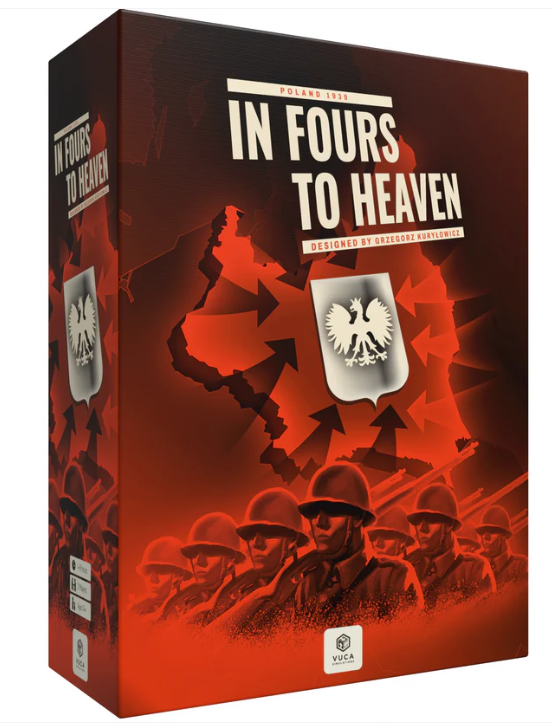
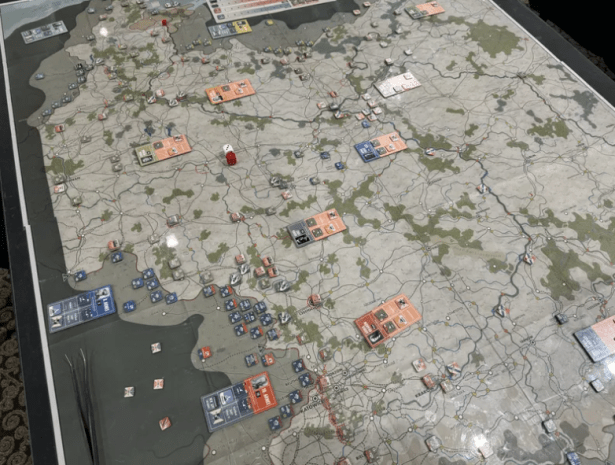
5. In Fours to Heaven: The Invasion of Poland 1939 from VUCA Simulations
Last year, while trolling the interwebs, I came upon the In Development section of the VUCA Simulations website and saw a very interesting looking operational level wargame on the German invasion of Poland in 1939 to kickoff World War II called In Fours to Heaven. The subject caught my eye, the title caught my eye and the cover caught my eye and I am very much interested in this one. I know that this campaign is seen as very one sided and that the outcome was predetermined as there was really no way for the Polish army to stand against the might of the German war machine but this one takes a look at the situation and makes it a gameable effort.
From the game page, we read the following:
In Fours to Heaven places you at the operational command level of the German invasion of Poland in 1939—a campaign often considered decided, yet far more complex, chaotic, and uncertain than history suggests.
Will you execute a lightning campaign—or struggle against friction, supply, and coordination breakdowns? Will you delay the inevitable—or collapse under pressure?
This is not a scripted retelling. It is a dynamic operational simulation of the Polish Campaign—driven by uncertainty, command limitations, and morale.
The German player must achieve rapid operational success before time, logistics, and resistance slow the advance.
The Polish player fights a desperate but intelligent campaign of delay, coordination, and survival—where morale becomes a decisive factor.
As usual, thanks so much for reading along and sticking with me this month as I navigated through the many websites and game pages looking for new and interesting games to share.








Most looking forward to ‘In Fours to Heaven’ (although I’ve already ordered the ‘Empire of the Sub’ China expansion.)
LikeLiked by 1 person