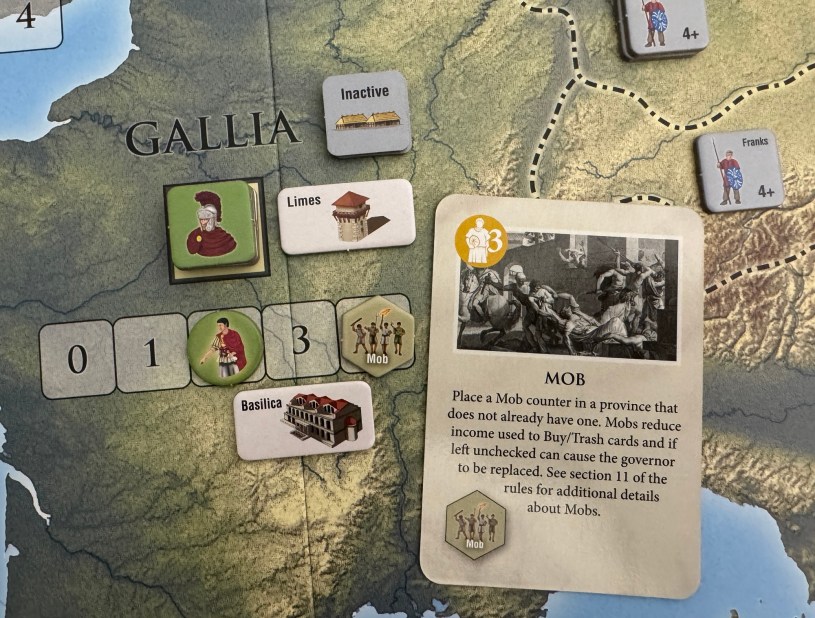
With this My Favorite Wargame Cards Series, I hope to take a look at a specific card from the various wargames that I have played and share how it is used in the game. I am not a strategist and frankly I am not that good at games but I do understand how things should work and be used in games. With that being said, here is the next entry in this series.
#90: Mob from Time of Crisis: The Roman Empire in Turmoil, 235-284 AD from GMT Games
I really love Time of Crisis from GMT Games. This is a very light, introductory wargame that is just plain fun to play. I have been playing it a ton on the Rally the Troops! online platform and really enjoy it no matter what the outcome of those games are. One card that I enjoy using is called Mob, which is a 3 value Populace Card that really can be a devious way to usurp your enemies. Populace cards are intended to be used to increase the support level for your reign in various local senates, recruit militias to assist in the defense of the local populace, to remove Mob counters through the process of holding games and to build various improvements that provide various benefits such as a Basilica, Amphitheater or Limes. You will be unable to control your local provinces without the support of the people and the Populace cards will help you to build that support. But with the Mob card, this is an offensive focused Populace card that can be used to begin undermining your opponents hold on provinces.
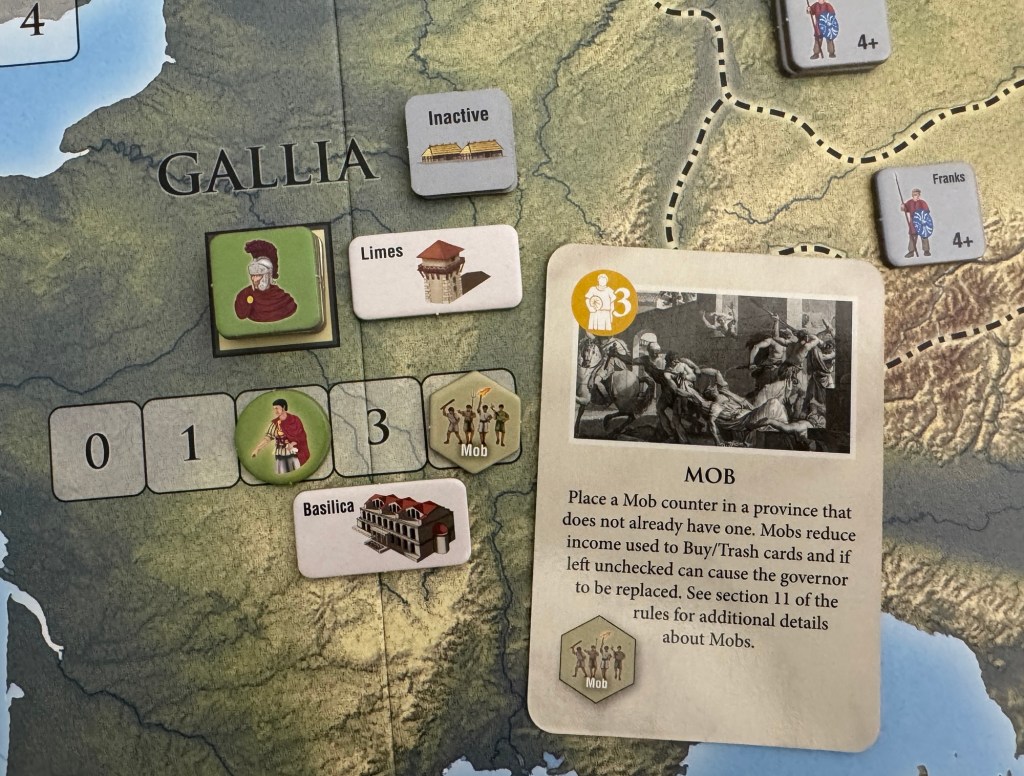
When played, the card allows you to place a Mob counter in a province on the board that doesn’t currently have a Mob counter. Mob counters represent rioting and instability in the provincial capital of a province. The Mob in the province will reduce its income generation by the number of Mob counters in the province but also will grow if not dealt with. During the Support Check Phase, if the number of Mob counters in a province equals or exceeds the province’s support level the Governor is replaced with a Neutral Governor with a support level of 1. During the End of Turn Phase, one Mob counter is added to each governed provinces that already has a Mob counter and no Amphitheater. The presence of an Amphitheater doesn’t stop Mob counters from being added from the play of the Mob card but will stop them from growing. Remember, one of the maxims of Ancient Rome was bread and circuses, which is panem et circenses in Latin. It was coined around 100 AD by the Roman poet Juvenal in his Satires. The phrase criticizes how the Roman public traded their political freedom and civic duties for free grain and massive public spectacles.
The Mob card can be quite effective as it reduces the income of your opponents which is used to to purchase additional and more powerful cards but also forces them to spend their card values on suppressing the mobs, through military force with the Suppress Mob action or through placation with the Hold Games action. Both will be a thorn in the side of your opponents and will cause them to have to change their plans temporarily to deal with the issues you have caused them. A fun and delightful “take that” type of card.
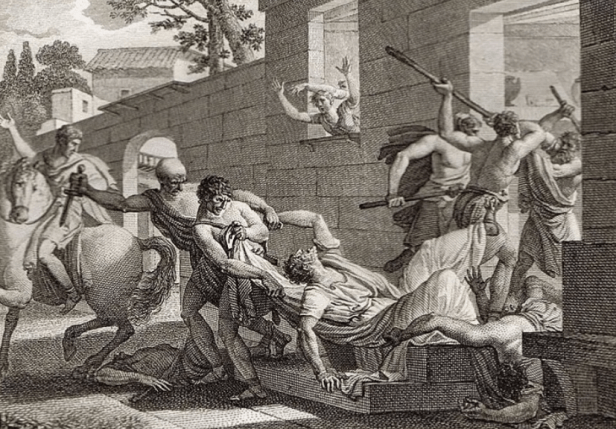
Mobs in ancient Rome were powerful, volatile groups of urban plebeians, freedmen and workers who heavily influenced politics, food supplies and public safety. Driven by economic hardship, political gangs, and grain shortages, these crowds routinely rioted, burned government buildings and forced emperors or senators to heed their demands. Ancient Roman writers, politicians, and historians viewed the urban mob (plebs) with a mixture of fear, contempt and fascination, often describing crowds as volatile, lawless and easily swayed by demagogues. One of the more well known quotes from history comes to us by way of Titus Livy when he said, “Indeed, that is the nature of crowds: the mob is either a humble slave or a cruel master.” Livy also wrote: “As for the middle way of liberty, the mob can neither take it nor keep it with any respect for moderation or law.”
If you are interested, I wrote a full review for Time of Crisis and you can read that at the following link: https://theplayersaid.com/2017/09/04/the-most-recent-fruits-of-wargame-hybridization-a-review-of-time-of-crisis-the-roman-empire-in-turmoil-235-284-ad-from-gmt-games/
We also posted a full review video and you can watch that at the following link:
In the next entry in this series, we will take a look at DoD Contractors from Andean Abyss: Insurgency and Counterinsurgency in Colombia from GMT Games.
-Grant

