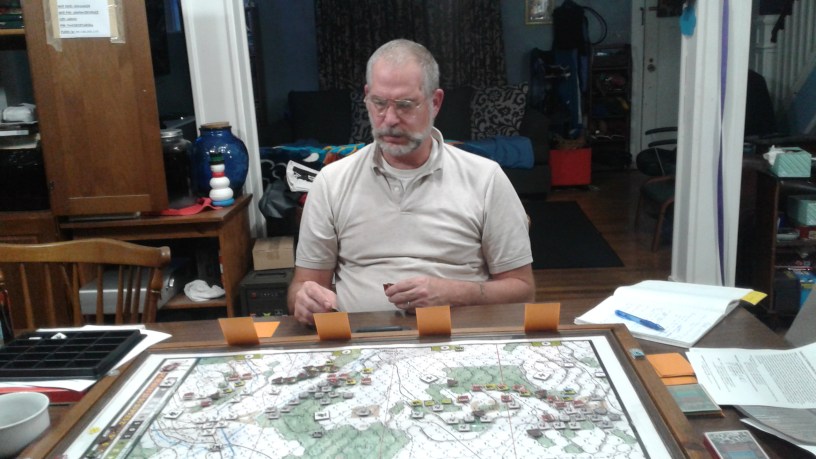
John Poniske is a prolific designer and we have enjoyed several of his games including Revolution Road from Compass Games, Plains Indian Wars from GMT Games, Bleeding Kansas from Decision Games, Hearts and Minds from Worthington Games and Maori Wars: The New Zealand Land Wars 1845-1872 from Legion Wargames. We also own several of his designs but have not had a chance to get them tabled yet including King Philip’s War from Multi-Man Publishing and Pontiac’s War: Frontier Rebellion, 1763-66 from Compass Games. We have done several interviews with John over the years and I always enjoy this thoughts on the subjects that he decides to cover. In this entry in the Best 3 Games with…Series, I take a look at 3 of John’s designs that have spoken to me.
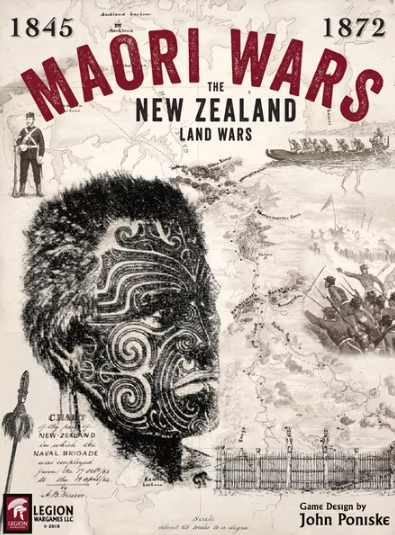
3. Maori Wars: The New Zealand Land Wars, 1845-1872 from Legion Wargames
Maori Wars: The New Zealand Land Wars, 1845-1872 from Legion Wargames is a game that uses as a background the uprisings that took place between 1845 and 1872 due to British colonial incursions into native Maori lands on the North Island of New Zealand. The ensuing conflict over a period covering nearly 30 years involved the destruction of a number of Maori villages, Pas, which are fortified villages that featured intricate trench-works and some colonial settlements. The war introduced the British to a very skilled and strategic combatant who used a strategy of ambushes and bush raiding to catch off guard and frustrate the professional British ranks. The hallmark of the game is that it is highly playable by featuring low counter density, a play time of under two hours for most of the scenarios and easy to understand rules.
Playing as the British, players will have to deal with swinging tribal loyalty and will need to master the rivers and seas to move their more powerful troops and gunboats around while the Maori player will be focused on bush-raiding, which allows the Maori to move units temporarily off the board and out of harms way, but then to later bring them back in a more favorable strategic location of their choosing. The asymmetry in the fighting styles is really very good and I like the way it factors into account the history.
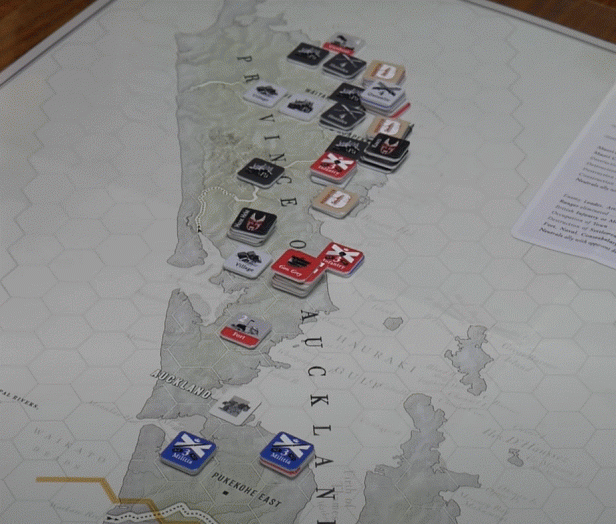
Maori Wars is a great game with some really beautiful art, not only on the board but also on the counters. The game is a slugfest between the mighty British and their Queenite allies against the inhabitants of the island in the various Maori tribes that resisted their colonial oppressors. The tribes have lots of tricks up their sleeves and use the land and their knowledge of it to great advantage as they conduct bush raids regularly and are very difficult to bring to decisive battle.
Here is a look at our unboxing video for Maori Wars: The New Zealand Land Wars, 1845-1872 :
We also did a video review and you can watch that at the following link:
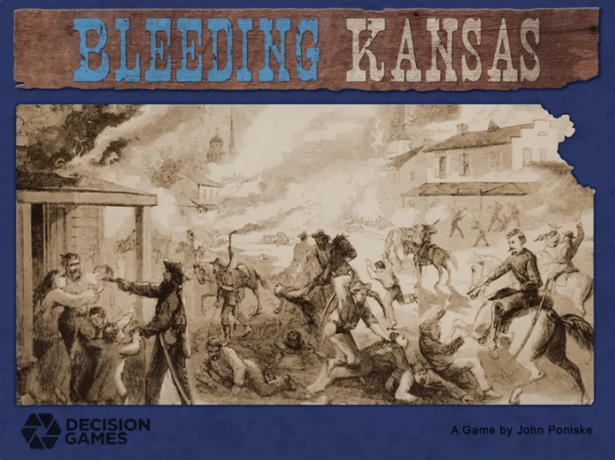
2. Bleeding Kansas from Decision Games
Bleeding Kansas is a very well designed 2-player game that deals with the violence and politics of pre-statehood Kansas from 1854-1861. The game focuses on the tensions between pro-slave and abolitionist parties and their attempts to win over emigrants to Kansas to their cause and thereby influence the outcome of elections to move the state toward their leaning on the issue of slavery. The game has four elections that players will fight over trying to have the most influence in Kansas counties to score victory points. At its heart, the game is an area control game that has splashes of election dynamics that feels very Euro-like as it uses cubes to represent forces.
The core mechanism in the game is the cards. Each of these cards is tied to an historical event, important person or other factor involved in the conflict and allows players to choose their actions for that immediate turn. The game proceeds as players alternate the play of one of the cards from their hand to take various actions from symbols that appear on the cards. These symbols provide actions such as influencing new settlers to the region to join their side in the conflict, build up forces for the coming battle, take control of counties by moving these forces around or displacing those of your opponent, attacking the opposition, burning down their population centers, enticing settlers to migrate to their areas or request intervention from the Federal Garrison stationed at Leavenworth. The cards carry out the plans of players and create a historical narrative of the conflict.

The game really is pretty simple mechanically but don’t let the game’s simplicity fool you. This is a knock down drag out bare knuckle fight for supremacy in the Kansas Territory and will test you’re meddle as you fight back and forth undoing what your opponent has just done. The game boils down to staying the course and playing your cards smartly to gain the upper hand in elections. You have to be able to judge where control stands as you play each card and you have to plan as scoring elections can really sneak up on you if you are not paying attention.
Here is a look at our unboxing video so you can get a good look at the components:
Here is a look at our video review of the game:
Here also are links to a series of Action Points on the various aspects of the game:
Action Point 1 – Burn and Skirmish Actions
Action Point 2 – Movement and Influence Actions
Action Point 3 – Politics, Migration and Cooperation Actions
Action Point 4 – Election Track and Election Process
We also did an interview with designer John Poniske that you can read on our written blog at the following link: https://theplayersaid.com/2019/07/08/interview-with-john-poniske-designer-of-bleeding-kansas-from-decision-games/
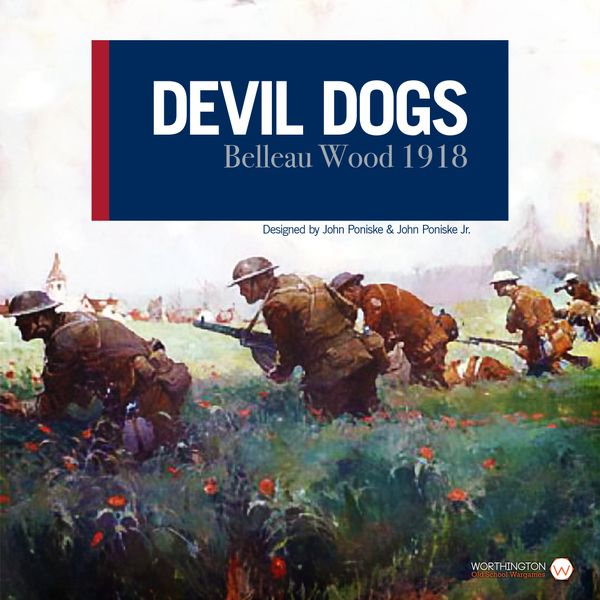
1. Devil Dogs: Belleau Wood 1918 from Worthington Publishing
Devil Dogs: Belleau Wood 1918 is an easy to learn, fast-playing card-driven game for 2 players. The play map covers the historical French battlefield geography and the 300 counters and markers represent the historical units and incidents involved along with chits that determine initiative and order choice. The game is unique in that it captures the tension and high rate of casualties without ever casting a single die, relying more on planning and issuing orders as the active or reactive player. Each side will have a 30 card deck that is faction specific.
I love Multi-Use Cards in a game and this one uses faction specific decks that can be used in several different ways. The combat system is also quite unique as hits are not calculated by a die roll and reference to a CRT but by the combat strength of the units attacking determined by the play of a card and then in what terrain the targets are hiding. The best element of the game though was having to play a card to each sector on the map without knowing what your opponent will play and then seeing how you did. Really interactive and interesting game and this one was a big hit with both of us! Although the rules were a bit challenging in their format and presentation but nothing that we couldn’t handle after a few turns into the game.
Here is a link to our video review of the game:
There you have it. My Best 3 Games with…Designer John Poniske! He has done so many good games and the narrative and historical immersion of all of them are top notch.
What are your favorite games from John Poniske?
-Grant


John does games on such unique historical topics. My favorite (that I’ve played) is King Philip’s War. I’m looking forward to The Berlin Airlift.
LikeLiked by 1 person