I am always amazed at the output of these wargame publishers! It seems that there is a continual flow of new and upcoming games every single month. I think that when I started this Wargame Watch feature way back in June 2017, I thought that it would be tough to do a monthly feature, but now some 87 entries later, it is still going strong. This month for the Wargame Watch I was able to find 27 games (including the 2 pre-orders mentioned at the start)! Of that total, 4 total games were offered on Kickstarter or Gamefound.
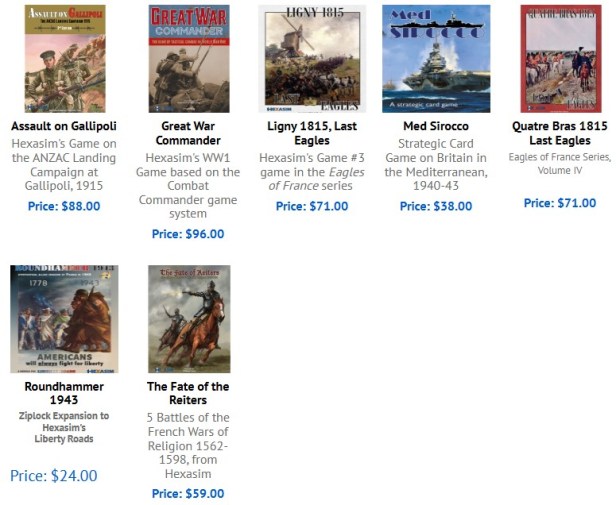
Again this month, we have a sponsor for the Wargame Watch post in Hexasim. Hexasim is a French wargame publisher primarily focused on producing historical wargames, particularly centered around the Napoleonic Wars and other European conflicts, known for their detailed rules and focus on tactical gameplay; their games are often published in both French and English editions, with titles like Waterloo 1815 – Fallen Eagles, Great War Commander, Liberty Roads, and The Fate of the Reiters being some of their most notable releases. You may also know that many of their games are available for purchase through GMT Games.
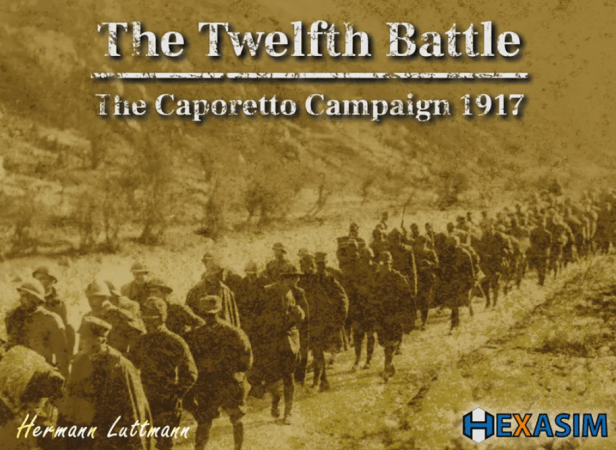
The Twelfth Battle is a solitaire wargame that simulates the Central Powers offensive in Italy that began on October 24th, 1917, with an all-out assault around the town of Caporetto. Using gas and stormtroopers, German and Austro-Hungarian formations assaulted the Italian defensive lines along the Isonzo River and around the town of Caporetto, creating a huge breach in their positions. Hundreds of thousands of Italian troops, demoralized and fatigued from the first eleven attritional battles along the Isonzo, were made casualties or surrendered.
In this game by Herman Luttmann, you play as the German + Austrian-Hungarians against the system. The Germans have Storm Troopers and artillery but the Allies have some British and French divisions as backstops. (They never had to engage in real life). The Italians start with poor morale and are easily pushed back. However, as the battle progressed the Italians that remained were of a higher quality and the Central Powers supply line was over extended. The final defensive line ends up “in front of Venice” (but not really that close) and is dug in (it held in real life.) So overall it’s a near run thing.
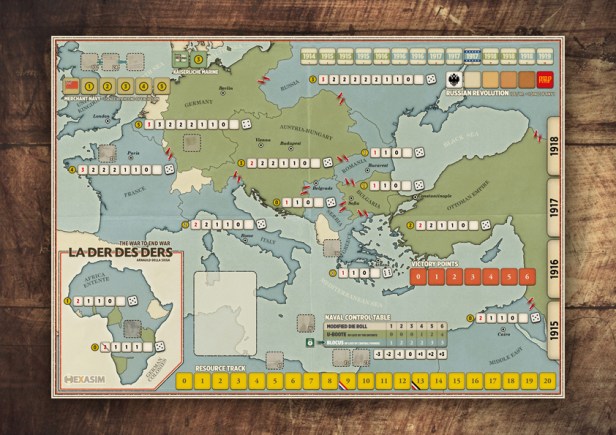
In La Der des Ders – The War To End War, the players have to manage their limited resources as best they can. These will allow them to (try to) unlock new technologies (each side has its own Tech Tree), replenish their armies and launch offensives. Germany and its allies have the upper hand at the start of the game, and will have to push hard to maintain their advantage over the Entente, which is gradually gaining in power. La Der des Ders benefits from a real bot in solitaire and contains components worthy of the finest board games.
We have played a few of their games and recently very much enjoyed our experience with Assault on Gallipoli: The ANZAC Landing Campaign 1915 2nd Edition. This game was originally published by Gecko Games out of Australia by the designers Kieran Oakley and Russell Lowke. They recently provided this new and updated version with some upgraded components and graphics.
We also published a video review and you can watch that at the following link:
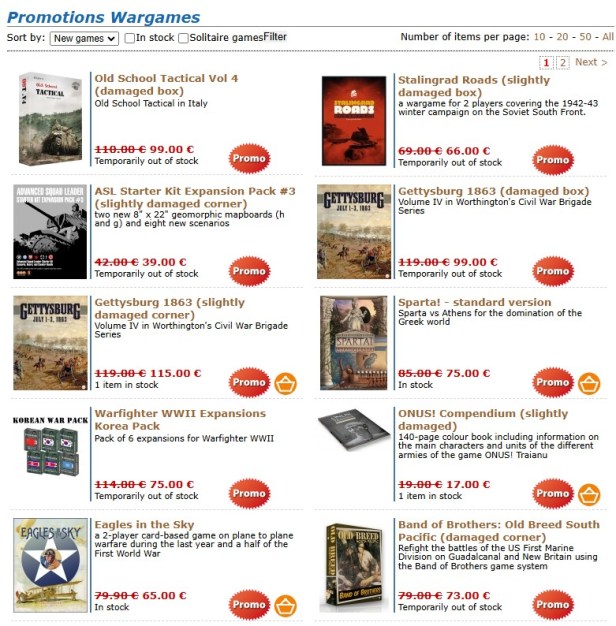
They also have a promotions section on their website called Promotions Wargames where they have plenty of their games, as well as other publisher’s games, listed for pretty decent discounts. If you like a good deal on a good wargame, check out this portion of their website at the following link: https://www.hexasim.com/en/promotions-wargames
But now onto the games for March!
Pre-Order
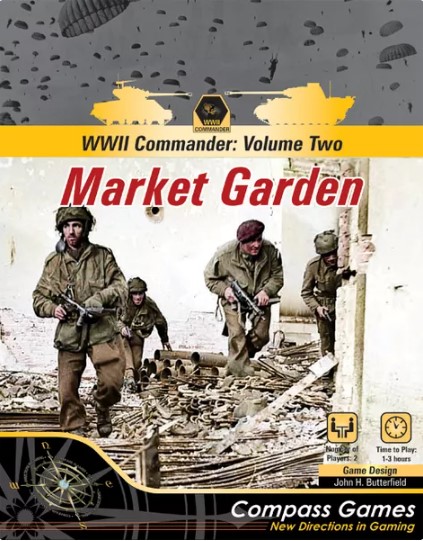
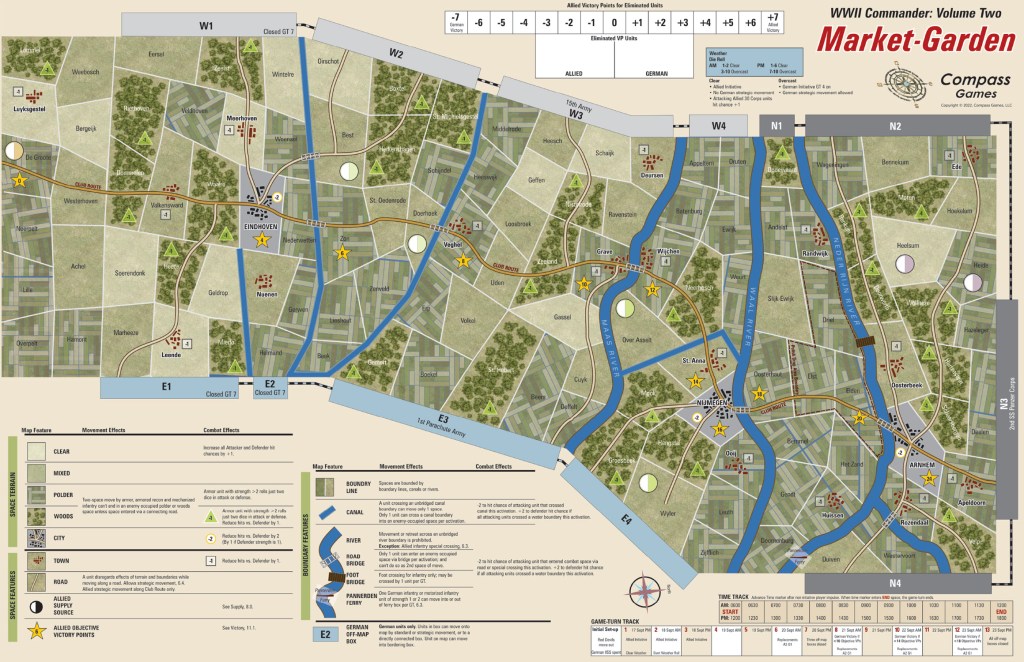
1. WWII Commander: Volume Two Market-Garden from Compass Games Currently on Kickstarter
Anytime I see a Market-Garden game, I sit up and take notice. There is just something to be said for the objectives, the terrain and the issues with the roads and then add in elite paratroopers and it gets really interesting. Then also, any game that John Butterfield designs is noteworthy as well. This one has both of these and I am very interested in the game. I have not played the WWII Commander Series Volume One (called Battle of the Bulge) but have heard good things about the system and its playability.
From the game page, we read the following:
WWII Commander: Volume Two Market-Garden is the second in a series of fast two-player area-based games on key campaigns of the Second World War. Market-Garden recreates the Allied airborne and ground offensive against the German Army in Holland in September 1944. Allied airborne divisions dropped behind German lines to hold a highway corridor across rivers and canals until ground forces could link up to cross into the industrial heart of Germany. Each player commands the opposing Allied or German forces.
The simple elegance and constant player interaction of the WWII Commander games capture the tension of WWII strategy. The game system is a fast-playing introduction to war games, but mastering its tactics is a true challenge as the players take turns deciding which units to activate and where to attack and defend.
As the Allied player, your airborne forces must seize and hold key objectives while your armored ground forces break though the German front and advance aggressively without getting cut off by German infantry and armor coming from all sides. As the German player, you must delay the Allied ground advance, trading space for time as you attempt to destroy the airborne forces behind your lines. The rules are simple, gameplay is fast and furious, and can be completed in one sitting, and either side can win at different stages of the game.
As of March 1st, the Kickstarter campaign has funded and raised $18,549 toward its $2,500 funding goal with 220 backers. The campaign will conclude on Tuesday, March 4th at 1:02pm EST.
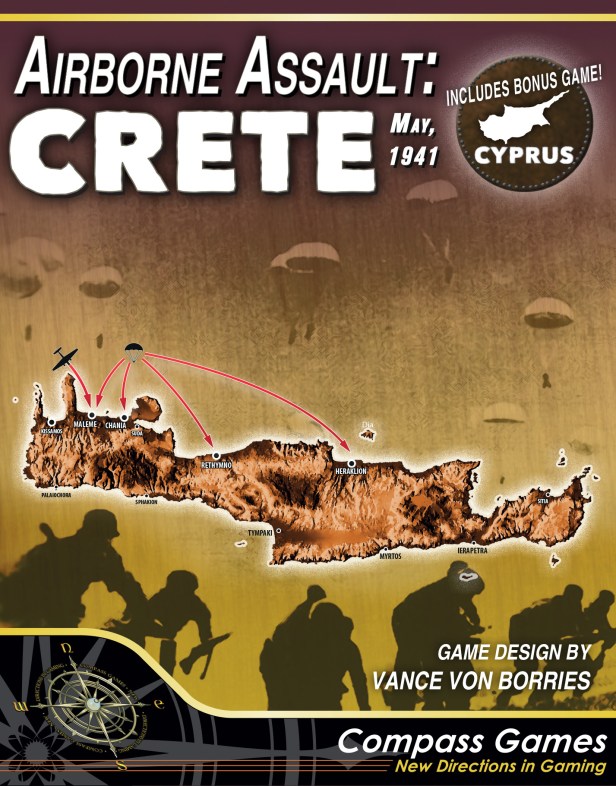
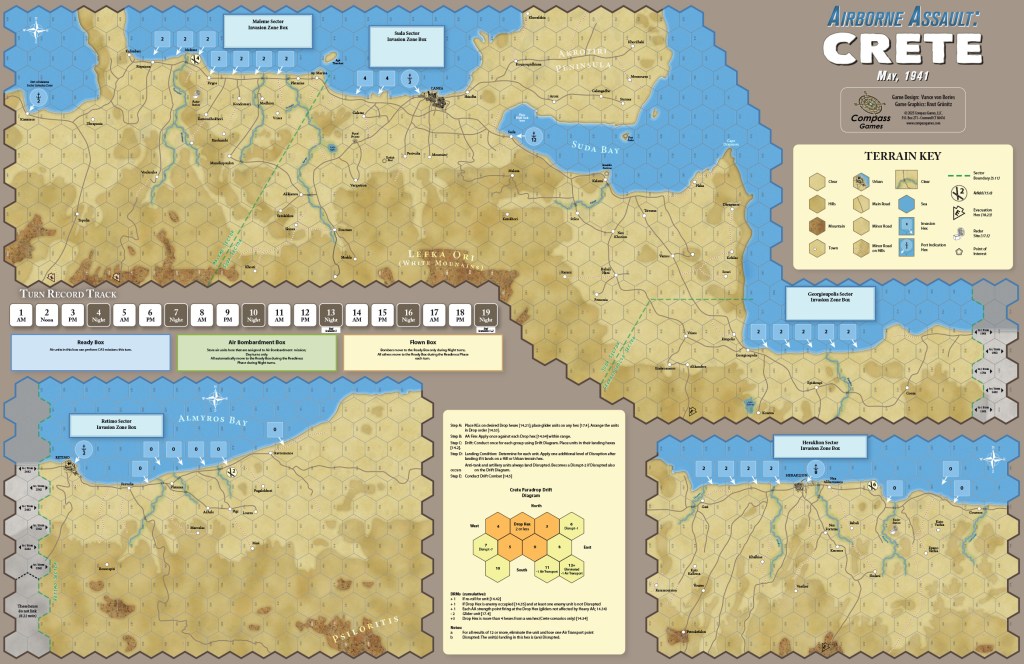
2. Airborne Assault: Crete, May 1941 from Compass Games
Vance von Borries is a great designer and we have played several of his games. Recently, Compass Games added several new pre-orders to their site and I am just now getting around to adding them to the Wargame Watch. Sorry about that. Sometimes life just gets in the way. The first of these new pre-order games is a look at the story of the invasion of Crete during World War II called Airborne Assault: Crete, May 1941 and I am very much looking forward to seeing this one on our table one day. It also has a bonus game that comes with it as well so you kind of get a 2-for-1 with this one.
From the game page, we read the following:
Airborne Assault: Crete is a grand-tactical level game of the historical WWII invasion of Crete and includes the hypothetical paratroop invasion of Cyprus. The game requires two players and is suitable for team play. The game focuses on the first few days of battle, keeping players’ attention on maneuver and what is vital to winning the battle. Players will find a familiar game rules framework covering the combined arms problems of airborne assault, air support and bombardment, and sea invasion. The defender balances where to defend and when to evacuate. Both players employ special rules for reaction and infiltration movement, armor bonus, and drift combat, all within day and night restraints. The two short Crete scenarios are suitable for competitive play. The two larger scenarios feature player options for reinforcements. As a bonus, an exciting and balanced scenario showing a hypothetical June 1941 German invasion of Cyprus is included.
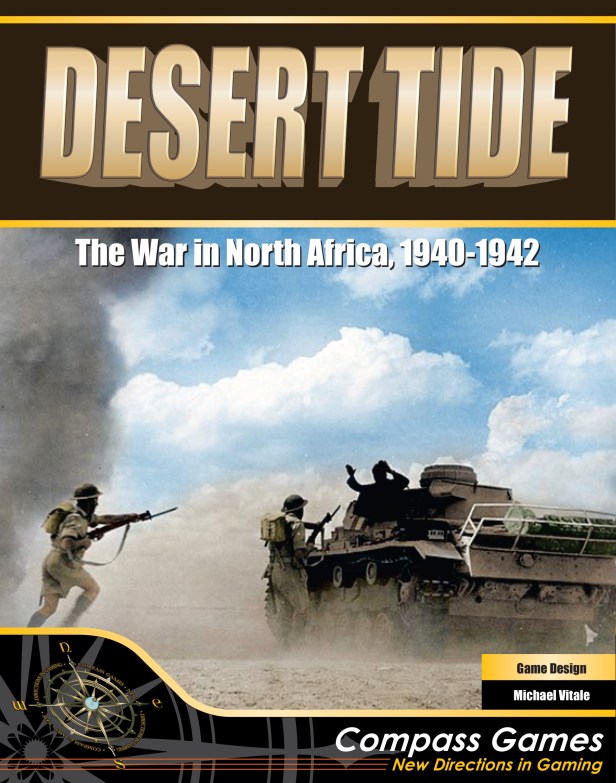
3. Desert Tide: The War in North Africa, 1940-1942 from Compass Games
The next game offered on pre-order from Compass Games is a North African centered wargame called Desert Tide: The War in North Africa, 1940-1942. I don’t know much about this one and do not believe that I have played a game designed by Michael Vitale but this does look interesting. And I know that I have really enjoyed the Tide Series of games designed by Gregory M. Smith in Pacific Tide and Imperial Tide, which is the basis for this game.
From the game page, we read the following:
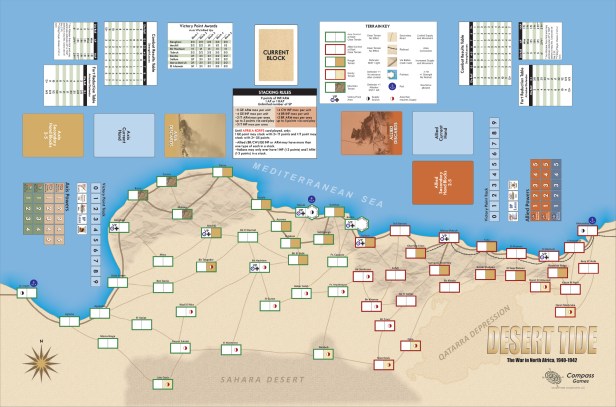
Desert Tide is a 2-player, operational-level game which places you in command of either the Axis Powers (Germany and Italy) or the Allied Powers (Britain and her Commonwealth allies) during the North African campaign of World War II. Starting with “O’Connor’s Offensive” in 1940, the Allies try to run the Italians out of Libya in 1940, forcing the Axis to bring in Rommel and the German army that will become the Afrika Korps.
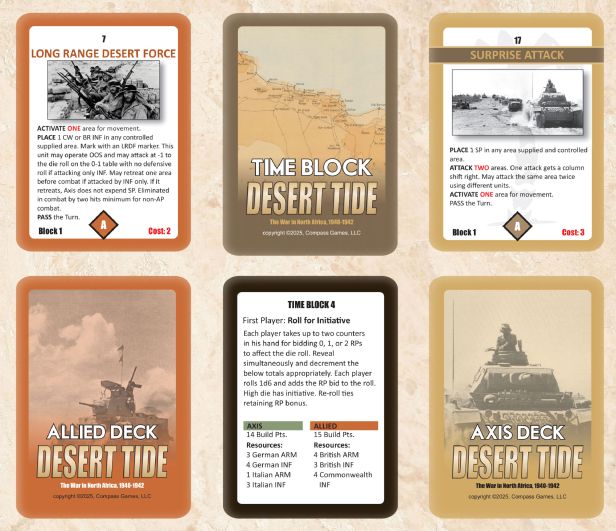
Each turn, or ‘Block’ is about 6 months long, during which multiple card plays occur. These give the players movement, combats, fortified boxes, supply, and other actions. At the end of each Block, players must make critical decisions on which cards to re-buy in an attempt to win the game. Desert Tide is based on the popular, action-packed “Tide” System of card-driven games (Pacific Tide, Imperial Tide, Rebel Tide), with many combat and strategic decisions to challenge players in just a single evening’s game.
The core of the game is the unique card re-buy system, in which players take each Block’s Build allowance and decide which cards they need for the upcoming Block. Cards not only provide for reinforcements, but allow for movement, combat, supply, and fortification. Which cards to re-buy is without question one of the key decisions the player must make to prepare for the next Block’s operations. Besides the focus on card play, the game also features a small footprint (one standard map) and also is designed to be played in just a single evening.
The game is highly accessible to those familiar with the “Tide” Series from Compass Games. The card-driven system ensures that there is very little “down time” for each player as card play or Resource expenditure happens quickly. While Desert Tide is designed as a 2-player experience, an additional option for solitaire play is provided by the inclusion of a Solitaire Bot.
I really do love this Tide Series and enjoy Card Driven Games immensely. So, this one is high on my radar at the moment and I hope to learn more over the next year or so. We will reach out to the designer to get an idea about the design.
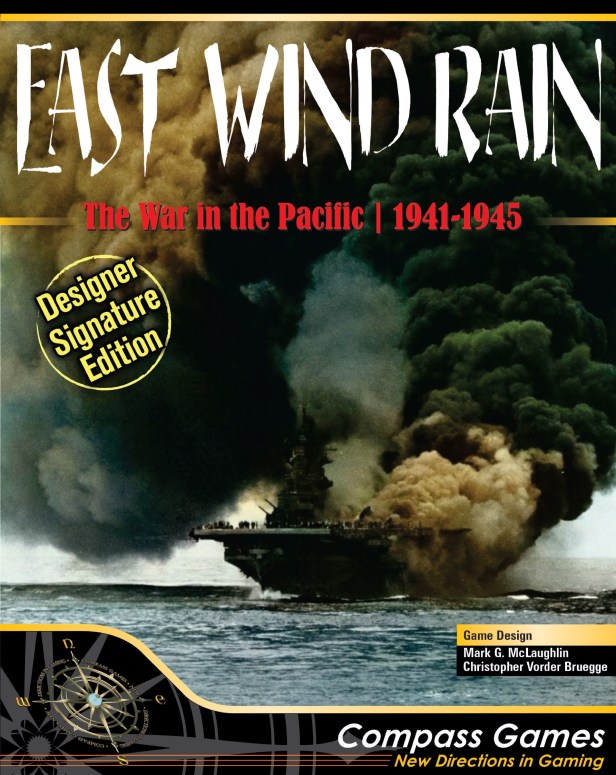
4. East Wind Rain: The War in the Pacific, 1941-1945 from Compass Games
The next offering from Compass Games, was a game that I have heard a lot about, both positive and negative. But, I really do enjoy a good Pacific Theater of Operations wargame and this is one that I am very much looking forward to. East Wind Rain: The War in the Pacific, 1941-1945 is the product of the partnership of Mark McLaughlin and Christopher Vorder Bruegge and it is now getting a new slick and shiny Designer Signature Edition.
From the game page, we read the following:
In November 1941, the Japanese admirals sent a carrier fleet on a secret mission across the Pacific. On the morning of December 7, 1941, that fleet launched aircraft to attack the US Pacific Fleet at Pearl Harbor, the first objective of the imperial war strategy codenamed East Wind Rain.
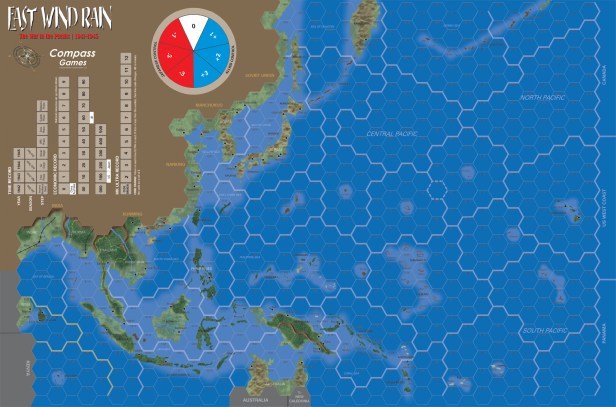
East Wind Rain, Designer Signature Edition, is a strategic game of the Asian-Pacific Theater in World War II. Each turn represents three months, divided into economic, intelligence, strategic deployment, operations, supply, and redeployment phases. The map is divided into areas for strategic movement purposes, with each area subdivided into hexagons, each approximately 200 nautical miles across. Zones on the periphery of the map allow for movement and combat in China and in other areas.
Nearly 300 major warships of both sides, from light cruisers to battleships and fleet carriers are represented by named counters. Other vessels are represented by type markers and numbered Strength Points (SPs), with each SP equal to two destroyers, two escort carriers, four submarines, or approximately 200,000 tons of shipping. Each air SP represents 20 army (land-based) or naval aircraft, long-range bombers, or US B-29 Superfortress heavy bombers.
Ground forces are represented by infantry, marine, paratroop, and ranger (representing commandos, marauders, and Chindit irregulars) troops organized in army, corps, division, and brigade-sized units. Each SP represents approximately 3,000 combat troops.
Players build their forces and bases, organize task forces and air fleets, and maneuver these to decide history’s greatest naval contest.
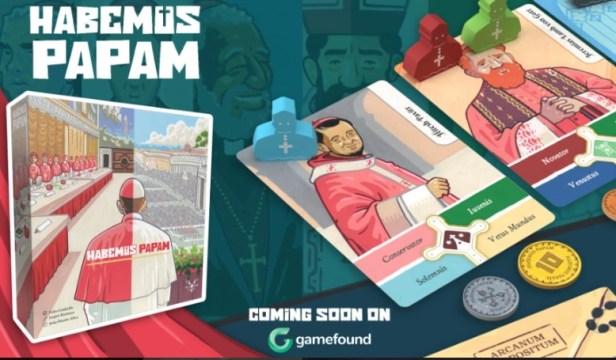
5. Habemus Papam from Salt & Pepper Games Coming to Gamefound March 5th
I am always on the lookout for an interesting and different type of historical game. And when that game is multi-player and allows the players to do some negotiating and deal making then I am very keenly interested. A few months ago, I came across this very interesting looking new game designed by Francisco Gradaille called Habemus Papam from Salt & Pepper Games. Habemus Papam takes a look inside the ceremonial process of selecting the next Pope of the Catholic Church.
From the game page, we read the following:
Black smoke rises above the Sistine Chapel as the doors close behind the last cardinal. In the halls of the Vatican, whispers turn to promises, and promises to alliances. The throne of St. Peter awaits its next occupant, but the path to it is paved with secrets. Will your candidate be the one chosen to lead the Church?
Cardinals must carefully manage their influence in the Roman Curia, jealously guarding secrets that could elevate or destroy candidates, while maintaining an image of piety before their peers and the faithful. Each player must weave their own network of allies, knowing that loyalty can be as ephemeral as the smoke that signals the outcome of each vote. The most astute cardinals will know when to reveal their cards and when to keep their true intentions hidden beneath the weight of their red hats. The art of deception is intertwined with the need to build credible coalitions, creating a delicate balance between personal ambition and the greater good of the Church.
The next Pope will not necessarily be the most devout or the most virtuous, but the one who best knows how to navigate the murky waters of ecclesiastical politics, combining cunning, diplomacy and, perhaps, a touch of divine inspiration.
The people in St. Peter’s Square are waiting to hear two words: Habemus Papam. Let the conclave begin.
We are reaching out to the designer Francisco Gradaille to do an interview and hope to have that up in the next few weeks. But this one looks pretty interesting and should be a very interesting experience.
The game is scheduled to launch on Gamefound as of Wednesday, March 5th.
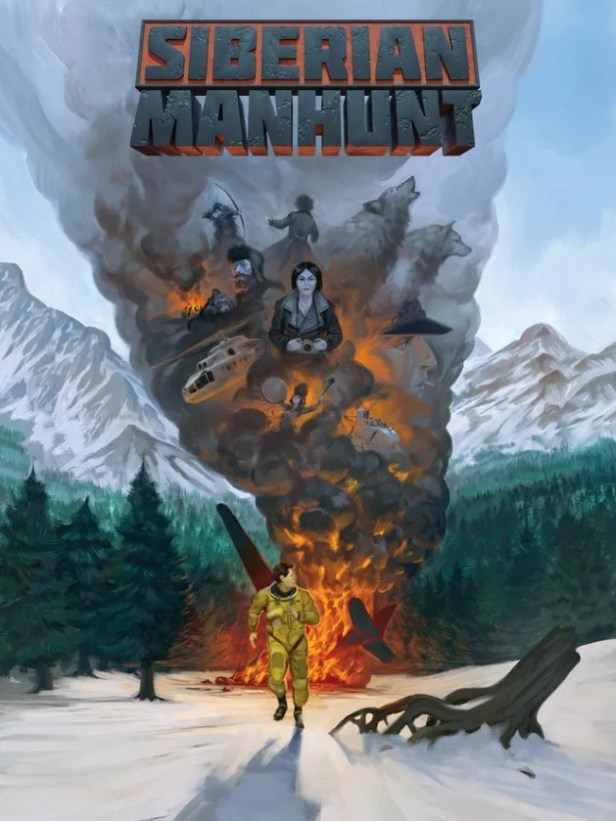
6. Siberian Manhunt from Dangerous Games Currently on Kickstarter
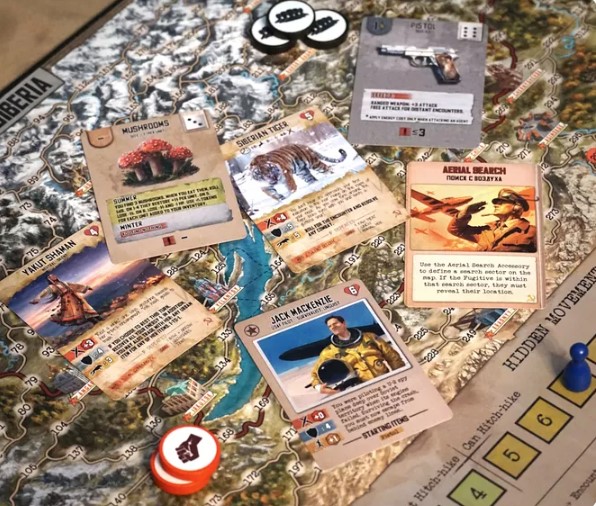
Once in a blue moon, I am totally unawares of a game as it gets released or is put up on pre-order or goes up on a crowdfunding campaign. Not that I know every game that is coming but I pay attention and know most of what and when. This month, I was totally blindsided by a very cool looking historical game called Siberian Manhunt from Dangerous Games that is now being offered on Kickstarter. The game is a hidden movement game that takes a look at a downed U2 spy plane pilot in the wilds of Siberia, Russia and their efforts to escape while the Russians are trying desperately to hunt them down and capture them.
From the game page, we read the following:
During the height of the Cold War, the U.S. mounted a surveillance program over the Soviet Union, flying U-2 spy planes at high altitude to avoid radar and fighter interceptors. Not every pilot returned…
Siberian Manhunt is an asymmetrical hidden movement game for two players. One player takes the role of a U-2 spy plane pilot who has crashed behind enemy lines and must escape across the border into China. The fugitive must use their wits to navigate the dangerous landscape, survive encounters with predatory animals, and avoid starvation and hypothermia, all while being pursued by the KGB. Do they dare enter towns, risking detection by the local authorities, or will they strike out into the wilds and rely on their wilderness survival skills to stay alive?
The other player is a Soviet general assigned to capture or kill the fugitive. At their disposal is the full might of the USSR: KGB agents and Yakut trackers, the Red Army, aerial searches, road blocks, and propaganda campaigns. But the Soviet government is fickle and not all Russians are loyal communists — and sometimes the hunted is deadlier than the hunter.
I have already backed this one and am really kind of blown away by the concept, the mechanics and the components. This one is sure to be a winner and I am very much looking forward to its delivery later this year.
As of March 1st, the Kickstarter campaign has funded and raised $57,773 toward its $6,283 funding goal with 861 backers. The campaign will conclude on Tuesday, March 11th at 4:00pm EDT.
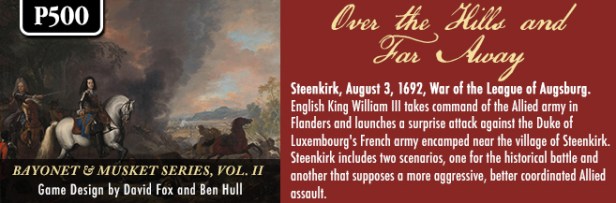
7. Over the Hills and Far Away: Bayonet & Muskets Series, Volume II from GMT Games
While attending the World Boardgaming Championships a few years ago, we had the chance to interview many designers about their current and upcoming projects. One designer that Alexander always seeks out is Ben Hull who has designed such games as Fields of Fire, This Accursed Civil War and Sweden Fights On. At WBC, Ben discussed his new Bayonet & Musket Series and the first game called Banish All Their Fears and we were both very intrigued with the subject and the approach of the design. Now they have a new volume in the series upcoming called Over the Hills and Far Away.
From the game page, we read the following:
The Bayonet & MusketSeries is a tactical system that covers the most important battles of the late 1600’s and early 1700’s with an emphasis on battlefield command and the military changes brought about by the abrupt dominance of firepower. Infantry units are battalions, cavalry units are regiments, and artillery units are batteries.
Volume II provides the same level of historical research and analysis as its predecessor and contains these two battles:
Steenkirk, August 3, 1692, War of the League of Augsburg. English King William III takes command of the Allied army in Flanders and launches a surprise attack against the Duke of Luxembourg’s French army encamped near the village of Steenkirk.
The French are caught completely flat-footed, and the Allied attack, led by the English and Scots Guards, drives through the first three lines of French defenses. But Luxembourg refuses to panic and stands his ground until the initial Allied attack, strangely un-supported, is halted and King William’s army forced to retreat.
Steenkirk includes two scenarios, one for the historical battle and another that supposes a more aggressive, better coordinated Allied assault.
Ramillies, May 23, 1706, War of the Spanish Succession. Urged by King Louis XIV to avenge the French defeat at Blenheim two years before, French Marshal Villeroi marches to engage the Duke of Marlborough in Flanders. Villeroi’s army contains some of France’s best regiments, including the French and Swiss Guards and the elite Maison du Roi, and occupies a line of high ground anchored on a series of stout villages. “Have a particular care to receive the first shock of the English troops,” warns King Louis, but in vain as an undaunted Marlborough attacks and wins a sweeping victory, routing the French army and capturing most of the Spanish Netherlands—modern-day Belgium—in the aftermath.
Ramillies includes two scenarios, one for the historical deployment and another that allows players free deployment to better keep an eye on the valiant redcoats.
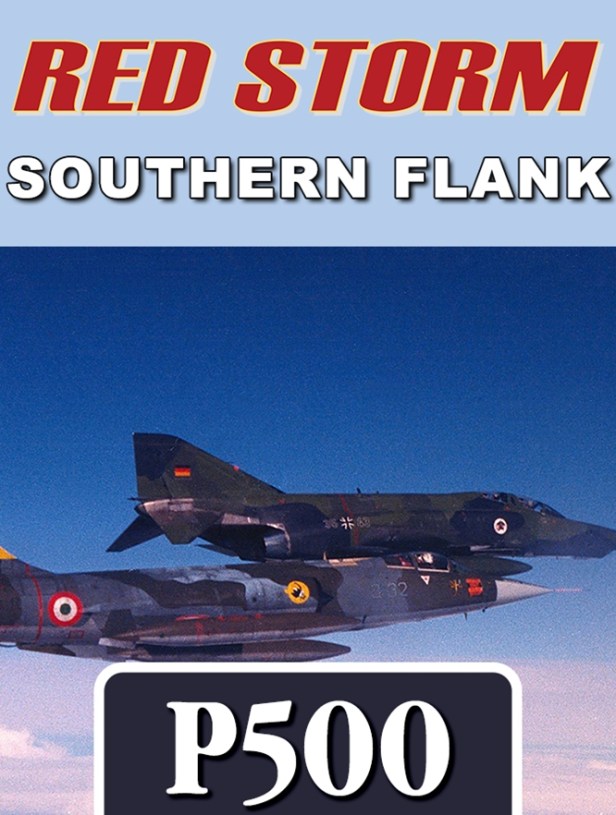
Cold War Gone Hot games are very popular and one that is based on an iconic system is going to make it more popular. Such is the case with Red Storm: Southern Flank which is the 2nd addition to the Red Storm family since it was announced in 2021.
From the game page, we read the following:
Red Storm: Southern Flank includes two full expansion modules—one covering southern Germany (Red Storm: Bavaria) and one covering northern Italy and Yugoslavia (Red Storm: Adriatic). Together, these two expansions greatly expand the original Red Storm game, providing players new air forces, with unique aircraft types and variants, and adding aircraft to air forces already represented in the original Red Storm game.
Players will deploy these forces on new maps across more than fifty scenarios, including solo and campaign scenarios, confronted by new ground and naval forces—all based on the same detailed, but playable, operational air warfare rules pioneered by Lee Brimmicombe-Wood’s acclaimed Downtown game system.
In addition to Red Storm veterans like the MiG-21, MiG-23, Su-22, F-15, F-16, and Tornado, many new aircraft appear. New NATO aircraft types include the Mirage 2000, Mirage F1, Mirage IIIE, Mirage IVP, C-160 Gabriel, F-8E(FN) Crusader, Etendard IV, Super Etendard, C-130 Hercules, OV-10 Bronco, AH-64 Apache, UH-60 Blackhawk, FB-111A Aardvark, EF-18A Hornet, AV-8S Matador, F-104S, G.91, MB.339, G.222, and PD.808. New Warsaw Pact types include the Su-7 Fitter, LZ-39A Albatross, Mi-24 Hind, Su-15 Flagon, and MiG-31 Foxhound. Finally, for Yugoslavia the J-21 Jastreb, J-22 Orao, G-4 Super Galeb, and G-2 Galeb are available.
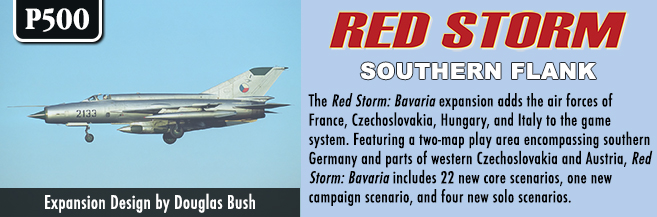
The Red Storm: Bavaria expansion adds the air forces of France, Czechoslovakia, Hungary, and Italy to the game system. Featuring a two-map play area encompassing southern Germany and parts of western Czechoslovakia and Austria, Red Storm: Bavaria includes 22 new core scenarios, one new campaign scenario, and four new solo scenarios. From air superiority sweeps, close air support missions, deep strike raids, helicopter operations, airborne drops, and nuclear weapon attacks, this expansion delivers true “meat and potatoes” Red Storm action, with the new combatants and forces fighting over the rugged Bavarian battlefield.
The Red Storm: Adriatic expansion takes the air war to a unique and rarely simulated theater. While the main combatants are the air forces of Italy, the United States, and the Soviet Union, the expansion also adds the air forces of Spain and Yugoslavia to the Red Storm game system. As a mixed air and maritime theater, the expansion provides all the rules and counters needed for scenarios involving NATO and Yugoslav naval forces operating in the northern Adriatic, including the naval air elements of the Italian, French, Yugoslavian, and Spanish navies. Red Storm: Adriatic provides another 22 core scenarios, a campaign scenario, and four solo scenarios covering the operations in this area, including air superiority sweeps, long-range strikes, airborne operations, convoy raids, amphibious assault support, close air support missions, and more.
One of the parts of the design that I really like is that players have to plan both their air and ground forces prior to a scenario. Raid forces must be generated, targets and routes mapped, and aircraft loadouts determined. SAM, AAA, and radar units must be placed. Both sides have to figure out how to handle the rough terrain and frequently poor weather of central Germany. This one looks very interesting and while we have yet to play Red Storm: The Air War Over Central Germany, 1987, we are going to look at getting it to the table this year.
You can check out our unboxing video of the 1st Printing of Red Storm: The Air War Over Central Germany, 1987 at the following link:
*Important: Play of the expansions requires ownership of the original Red Storm: The Air War over Central Germany, 1987 game. All other rules, counters, charts, and materials needed for play are provided, including the full set of naval rules and counters first introduced in Red Storm: Baltic Approaches. In total, Red Storm: Southern Flank adds 54 new scenarios, four maps, 560 new counters, and many new aircraft and data charts to further explore a potential air war in 1987 between NATO and the Warsaw Pact.
9. The Last Hundred Yards 3rd Printing from GMT Games
If you didn’t know we really enjoyed The Last Hundred Yards. The system is very interesting and uses some novel elements in regards to how victory points are scored. Really an excellent system! They have a 3rd Printing that they are adding to the P500 and in my opinion the fact that the first 2 printings sold out should be a sign to you about how good this system really is!
From the game page, we read the following:
The Last Hundred Yards is unlike any tactical wargame published to date. It introduces innovative systems intended to model Small Unit Behavior in Combat during WW2. It is fun, fast-paced, and provides a very good simulation of what it was like to command combat units at the platoon or company level. The game is purposely designed to deliver a brisk yet intensive gaming experience that forces many decisions upon you as you take command of an infantry company in Western Europe after the D-Day landings.
Here’s a look at the major innovations and the designer’s thinking behind the systems featured in The Last Hundred Yards:
Initiative and Advantage: In The Last Hundred Yards only the player winning the initiative has a proactive game turn; his opponent is limited to reaction only. Generally, the attacker has the initiative or momentum at the beginning of a small unit combat as the result of plans and preparation, so he generally dictates the action. The defender will generally react to the attacker’s actions, hoping at some point to blunt or take away the attacker’s momentum. This is represented in The Last Hundred Yards by player advantage and the importance of winning the initiative.
Simultaneous vs Sequential: In small unit combat, things are happening simultaneously. In an attack on an enemy position, some units of a formation provide cover fire to suppress the enemy, while other units maneuver against the enemy position. These actions take place simultaneously. But, in most current tactical games, opportunity fire is sequential and is typically represented by the Phasing Player moving a unit or stack of units a single hex at a time, giving the non-phasing player an opportunity to fire. Then he moves into the next hex, again giving the non-phasing player an opportunity to fire, etc. Once he has finished moving one unit or stack of units, he selects another and repeats the process until he has moved all of his units. Not only is this very time consuming, but it’s often unrealistic as well. First, the phasing player can adjust his move depending on the opportunity fire result. In reality, all these things are happening at the same time. Each player’s units would be moving and firing simultaneously and may not know or see where the enemy maneuvered. In The Last Hundred Yards, simultaneous movement and opportunity fire are modeled primarily through the Action/Reaction Cycle and Fire Mechanics.
Action/Reaction Cycle: “Where there is action there is always a reaction.” In The Last Hundred Yards, the Action/Reaction Cycle is the engine and the heart of the game. The Player winning the Initiative is the active player. He conducts actions (fire, maneuver, or recover) with the units of the active platoon. After all units of the active platoon have completed their actions, units of the non-active player may react (fire, maneuver, recover or do nothing) to units of the active player if units of the active player conducted actions in their LOS. Once the non-active player completes his reactions, the active player may react in turn to those units of the non-active player that conducted actions in their LOS. Or, the active player may instead activate the next platoon, repeating the cycle. A key aspect is that unless a unit sees an enemy unit conduct an action in his LOS he may not react. In essence, units that saw no action will most likely do nothing as they were most likely to hold their position until notified otherwise.
Fire Mechanics: Fire mechanics in The Last Hundred Yards are based on the premise that during the short span of a few minutes in a game turn, fire is focused on a specific enemy unit as it fires or maneuvers. To reflect this, DRM markers are used to represent the enemy unit or units under fire and the amount of fire power placed on them. A different color DRM marker is used for each type of fire (green for small arms fire, yellow for anti-tank fire and red for indirect fire). Note that neither player will see the results of his fire until the Fire Resolution Phase occurring after all platoons of the active player have been activated. The following Fire Resolution is extremely fast and simple. The firing player rolls a single sided 10 die for each of his DRM markers in play, adding or subtracting the DRM of this DRM marker to the die roll, then comparing it to the defensive value of the enemy unit. Combat results are Disruptions or Casualty Reductions.
Tank Combat: Tank combat at this scale is the most difficult aspect of modeling small unit combat. In most tactical games, vehicle combat usually has taken the form of defensive fire or motion activity by the targeted vehicle during the “I go” player’s turn. But there are some problems with this approach. First, defensive fire suffers from the “perfect knowledge” problem. The targeted vehicle always spots the menace. Sometimes, even often, the target vehicle has no opportunity to fire at its assailant for the simple reason that the crew of the target vehicle does not know the enemy is there. One cannot see much out of a buttoned-up tank on a battlefield erupting with booming explosions and the life-threatening zip of high velocity shells. The tank that kills yours is often one that was never seen. Second, humans do not possess vision thru 360 degrees. The act of “looking all around” takes time and in that time, a projectile may be on its way to kill your vehicle. Looking right means you are not looking left for a segment of time and in that time segment death may come your way. So in The Last Hundred Yards, the traditional defensive fire concept has been replaced with a reaction sequence that might allow the target vehicle to escape its hunter, and, in some cases, turn the hunted into the hunter.
Winning the Game: In each mission or operation, an attacking player must achieve a specific objective. Once accomplished, the attacking player’s score is based on the time required to complete the mission, additional mission objective points, and the casualty differential between the sides. The mission objective points and the casualty differential are added or subtracted from the time required to complete the objective. Based on the final score, the attacker will either win, lose or draw.
Simplicity of Rules: The rulebook for The Last Hundred Yards should be less than 20 pages. Any veteran wargamer will appreciate the brevity of the rules and the elegance of the game systems. The designer has created a relatively short set of rules, using simple but innovative solutions to capture the concepts of tactical wargaming well. As a result, The Last Hundred Yards is a fairly simple game to play…although it is challenging to master.
You really can’t go wrong with a good tactical system and this one is definitely truly interesting and would be a good game for those that like the minutiae of small squad tactical engagements.
Here is a link to our review video for The Last Hundred Yards:
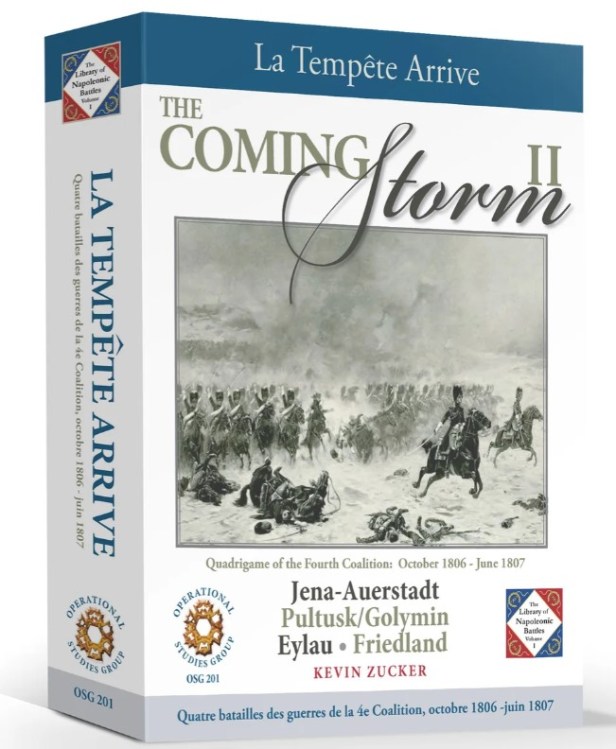
10. The Coming Storm II: Quadrigames of the Fourth Coalition: October 1806-June 1807 from Operational Studies Group
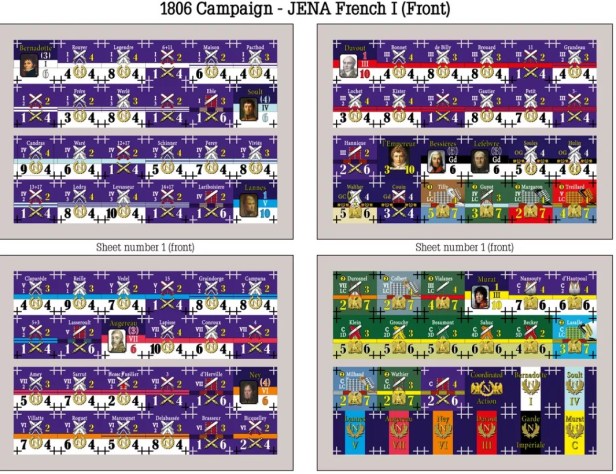
Large Napoleonic wargames are always interesting. Operational Studies Group does some big games on the subject and their newest offering is called The Coming Storm II: Quadrigames of the Fourth Coalition: October 1806-June 1807 and deals with four different battles including Jena-Auerstadt, Pultusk/Golymin, Eylau and Friedland.
From the game page, we read the following:
These four games explore the major battles of 1806–07, where the French Army encountered two different opponents with different capabilities, from the leadership-challenged Prussians in Saxony to the chaotic battle conditions in winter against the Russians. Based on OSG’s Special Studies, which provide a turn-by-turn narrative of the four battles. Each game shows the approach to the battlefield on the day before battle. The Jena-Auerstadt game has both battlefields on one map and allows both sides to redeploy before battle.
We are offering a new edition, with new maps—not too much different in detail—but rendered in Charles Kibler’s naturalistic style. TCS2 will be updated to use the Universal Deck and latest series rules (deck not included). With few exceptions, the counters will be identical to the first edition.
This is a very popular series of games amongst Grognards and I have heard many people recommend these titles to both of us. We have yet to take the plunge and get one but one day we will…one day!
If you are interested in The Coming Storm II: Quadrigames of the Fourth Coalition: October 1806-June 1807, you can pre-order a copy for $98.00 from the Operational Studies Group website at the following link: https://napoleongames.com/products/the-coming-storm-ii
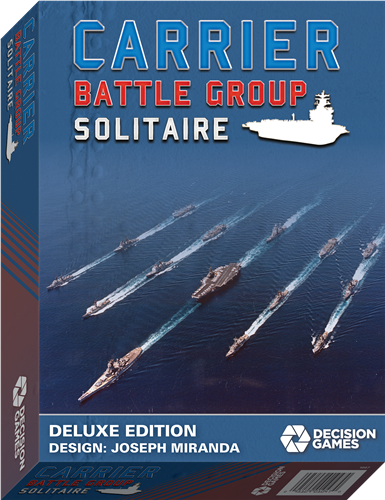
11. Carrier Battle Group Deluxe Edition from Decision Games
You have to love a good old fashioned modern Cold War air naval Aircraft Carrier solitaire game! And Carrier Battle Group Deluxe Edition is one that looks to be really good designed by Joseph Miranda.
From the game page, we read the following:
You are in command of a US Navy carrier task force in the North Atlantic, operating against the Soviet fleet during the 1980s at the height of the Cold War. As the commander of a carrier task force, you must complete various objectives in the North Sea, facing Soviet naval and air opposition. As the Cold War goes hot, you may be called upon to secure the Denmark Strait, support a special operations force in the Arctic, attack a Soviet naval base in Murmansk, escort reinforcements to NATO’s northern flank in Norway, conduct a joint amphibious landing behind Warsaw Pact lines in the Baltic, provide air support over the Central Front in West Germany, even hunt for a rogue Soviet nuclear ballistic-missile submarine.
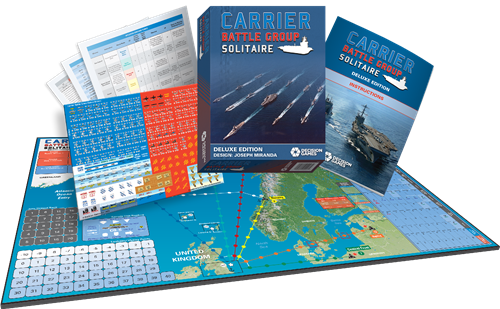
Carrier Battle Group Deluxe Edition is a solitaire game where the player contests against the game system, fulfilling scenario objectives, randomly generated by a Mission Orders chit pull. You must manage your US Navy Nimitz-class carrier, its air group, and your escorts, while encountering Soviet warships, aircraft, and missiles controlled by the game system. As the Carrier Group Commander, seeing the situation from the bridge of an aircraft carrier, you will be confronted with unexpected opportunities and challenges, represented by random Incident chits. Carrier operations are shown in considerable detail, while other US Navy and opposing Soviet actions are more abstracted. An Alert Level, representing how much the Soviet Navy’s command is concentrating its resources against your task force, increases the possibility of running into enemy forces. Once contact is made with enemy forces, the game’s Tactical Routine is used to resolve combat. A scenario ends when you reach your Objective. Scenarios can be played individually or linked together to form a Campaign Game. Optional Rules allow for multiple players, having them each control various aspects of the US Navy force.
Carrier Battle Group Deluxe Edition updates the game first appearing in Modern War #14, offering new map and counter artwork, a mounted game board, updated rules, new player aid cards, and a campaign analysis article. Can you successfully command your carrier battlegroup against numerous threats in the North Atlantic, helping NATO to victory in the war that never was? There is one way to find out—play Carrier Battle Group.
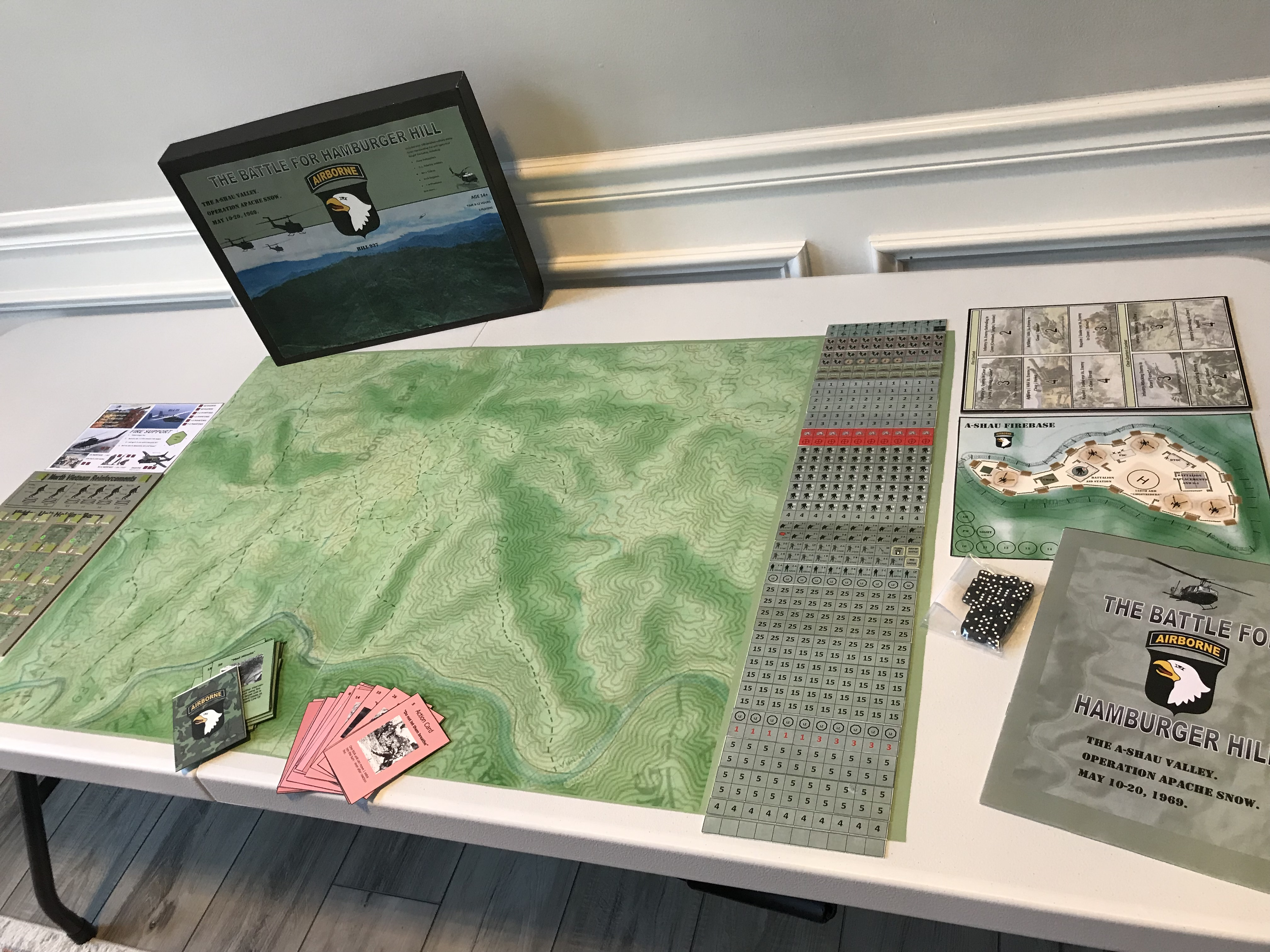
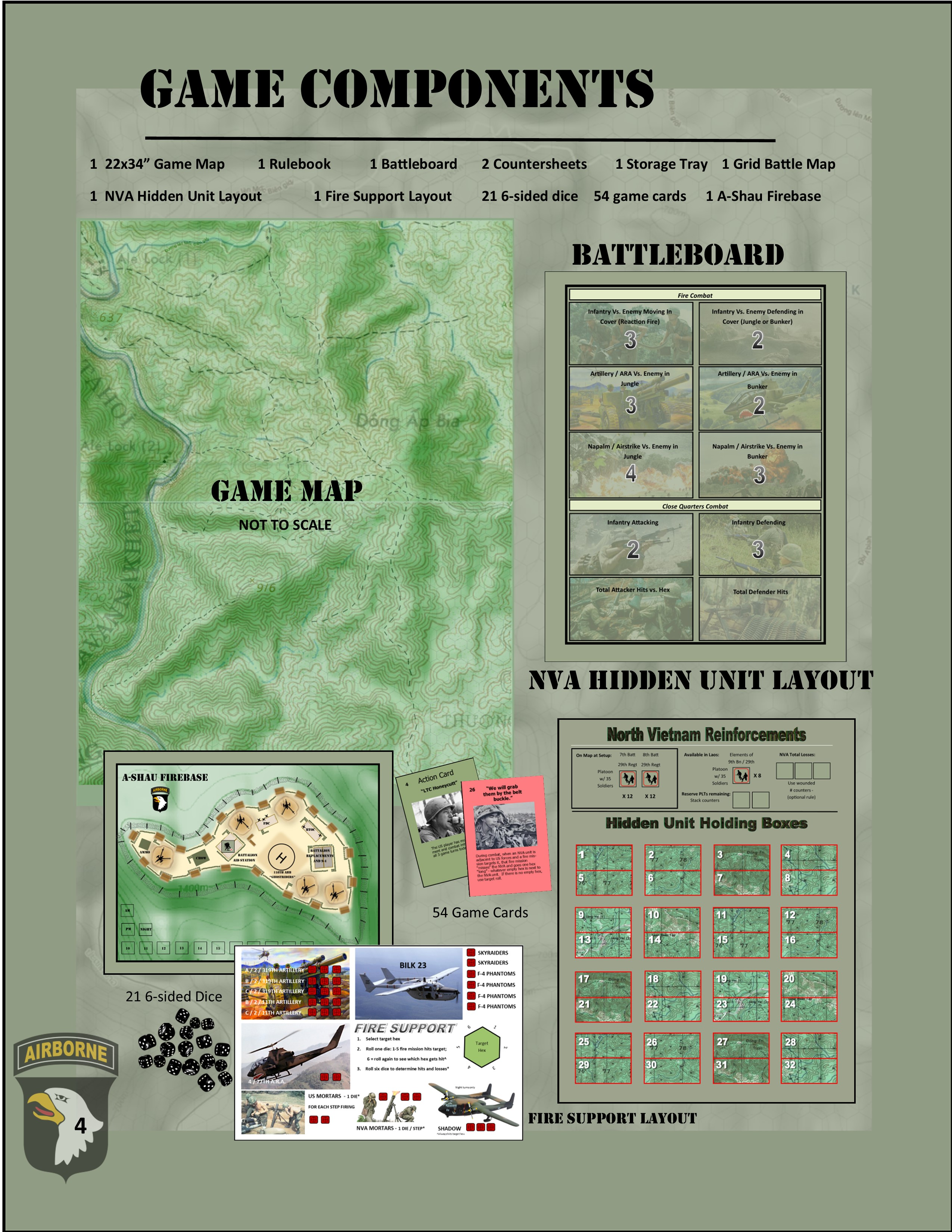
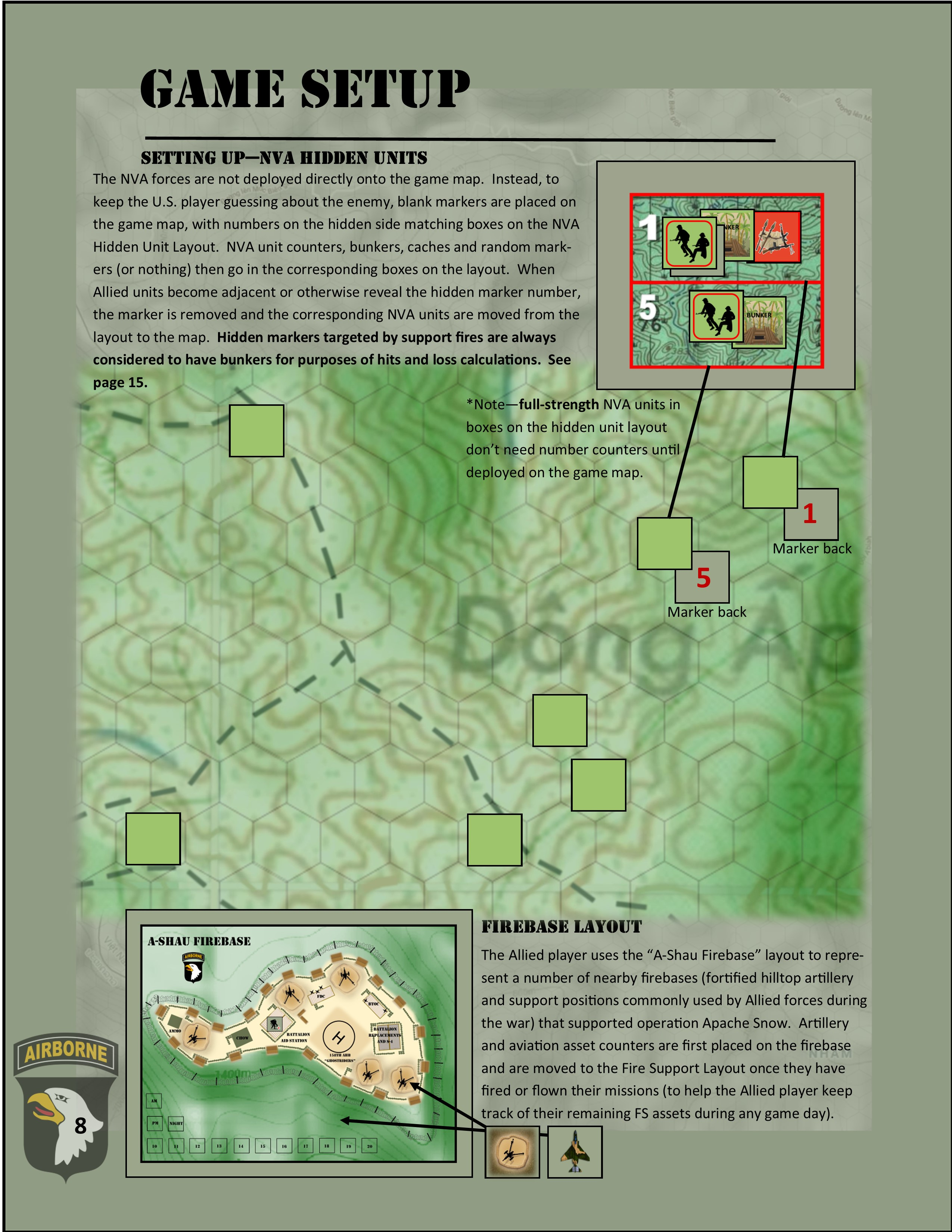
The combat systems and fire support mechanics for They Were Soldiers were originally developed for this game back in 2020, but the much shorter Ia Drang battle for LZ X-Ray was an easier overall design subject, and so TWS got the first crowdfunding campaign and final development ahead of Hamburger Hill (HH). Since then, other designs have been in the production que ahead of this one – but we decided early in 2024 to get this one back off the shelf and get it through some of its remaining design challenges to see what we could do with it. We ended up with a VERY credible simulation of the real battle for Hill 937, and a super looking game with very accessible rules (dare I say…fun?).
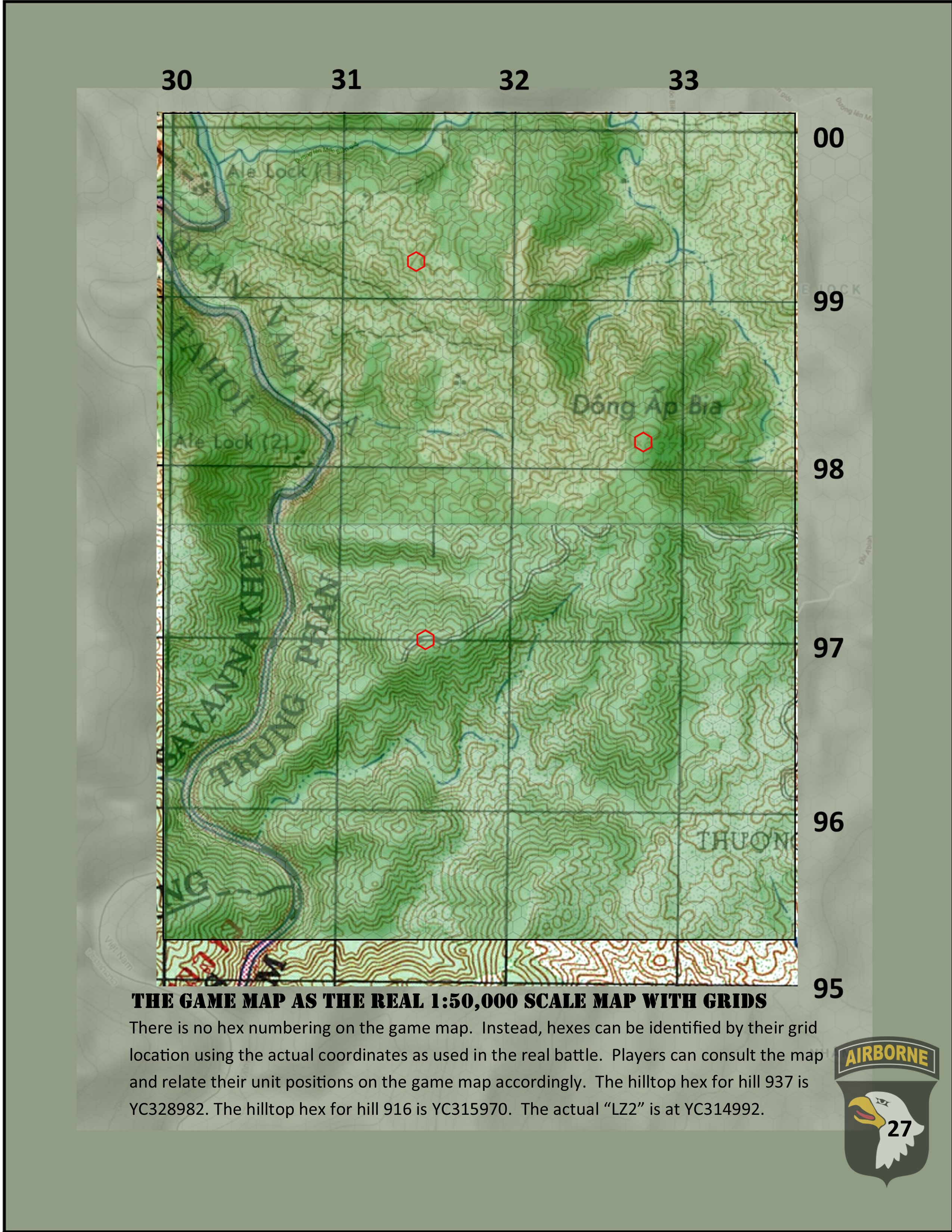
There were things that just didn’t work out well in play testing vs. the actual battle with our initial design ideas back in 20/21. We had lots of time to consider how to improve the game and that’s just what we did. One result was to change HH from a mini/chip design to a traditional 1/2″ counter game. This was not done to save table space or expense (we’re super used to minis and big maps) – but really because the game just worked better with counters. The whole map concept (using the original UTM 1:50,000 scale maps from the actual Vietnam War battle) worked brilliantly at 22×34 (just look at the map – the A-Shau terrain physically rises up out of the table!). But once it was magnified up to be 44×34, the 3D terrain effect was seriously diminished. And the little mini figures (especially when stacked and placed adjacent to each other) diminished the 3D effect of the terrain as well. Counters worked much better to preserve the actual appreciation for the “real” terrain of the historical battle – which was the reason we chose that map concept in the first place.
Here are some pages from the rulebook so you can get an idea of how the game is designed.
The campaign is set to launch sometime in March and I will edit this post once I have the exact date.
New Release
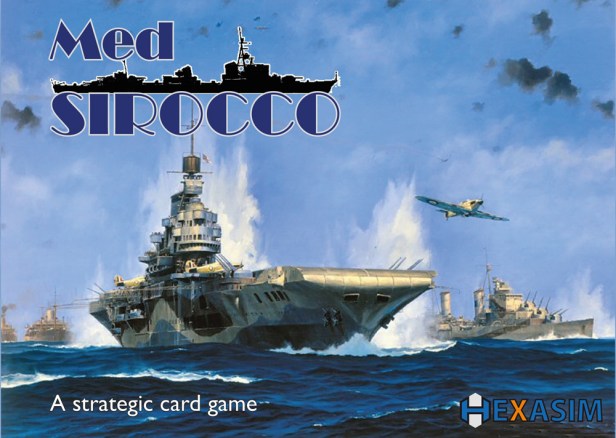
1. Med Sirocco: A Strategic Card Game from Hexasim
I always enjoy a good simple strategic card game. If the game is historically themed, then I am even better. This month, I saw where Hexasim was offering this new card game called Med Sirocco: A Strategic Card Game designed by Florent Coupeau (of Nuts! Publishing fame) and it looks pretty good.
From the game page, we read the following:
June 1940-December 1943, Mediterranean Sea – Standing alone, the British Empire must replenish its strategic bases in Malta and Alexandria by convoys coming for the most part from Gibraltar. Each journey is long and dangerous facing Italian SM-84 torpedo planes and German U-boats. On the other side, Italy and Germany are sending more and more troops to North Africa under constant threat from aircraft in Malta and facing the imminent entry of the United States into the war.
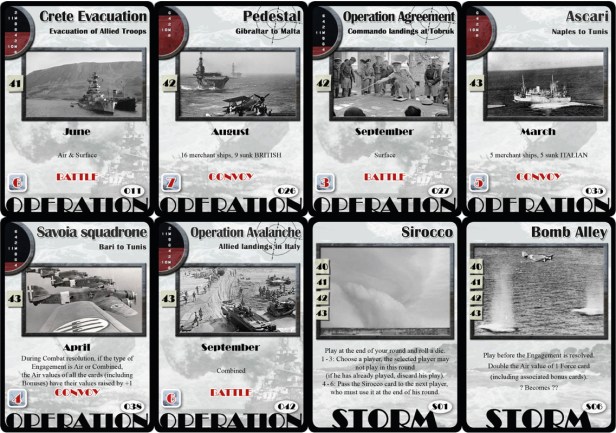
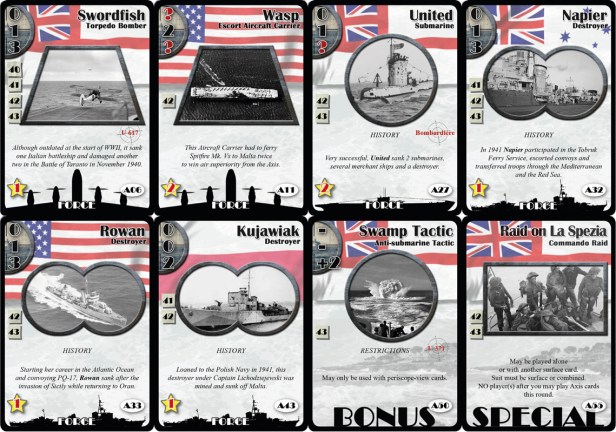
Med Sirocco is a strategy card game for 2-6 players. The game uses the same system that first appeared in the popular (and out of print) 1997 Avalon Hill card game Atlantic Storm and Pacific Typhoon published in 2008 by GMT Games. In this original card game, the cards represent units that took part in naval engagements or fought near convoys in the Mediterranean during the Second World War. For each trick called engagement, a player takes an Operation card (Battle or Convoy) and declares the type of attack to be used (air, surface, underwater or combined).
He follows that up by playing a Force card which has the specific values representing a historical Allied or Axis unit. The other players subsequently play either a Force card or pass. When all the players have made their selections, and any possible dice rolls have been made, totals of both sides are compared to determine whether the Axis or the Allies won. The player who contributed the most to the winning team gets to decide how the convoy and the opposing enemy ships, which are all worth victory points and possibly an increased hand size, are to be distributed amongst the players who were on the winning side. After twenty-two convoys have been fought over in this manner, the player with the most victory points worth of convoys and captured ships wins the game!
If you are interested in Med Sirocco: A Strategic Card Game, you can order a copy for 15.00 € ($15.75 in US Dollars) from the Hexasim website at the following link: https://www.hexasim.com/en/2032-Med-Sirocco.html
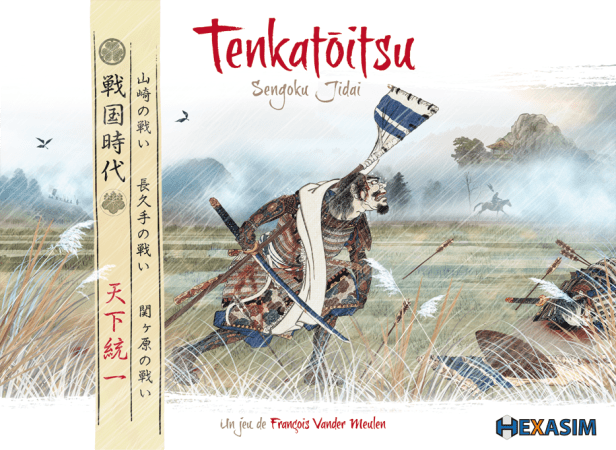
2. Tenkatoitsu: Sengoku Jidai Volume 2 2nd Printing from Hexasim
I’m going to be honest here. Any game that is set in the Sengoku Jidai or fuedal Japan is a game that I am keenly interested in and want to play. Such is the the case with a new offering from Hexasim called Tenkatoitsu: Sengoku Jidai Volume 2 2nd Printing. I saw this one about a year ago or so on Facebook and the art style immediately grabbed me and I began to follow its development.
From the game page, we read the following:
With Japan torn by war for decades, Oda Nobunaga, the first unifier, succumbs to the blows of his own vassal, Akechi Mitsuhide, in 1582. This event is an opportunity for Hashiba Hideyoshi, who defeats Akechi at the Battle of Yamazaki. Hashiba Hideyoshi must then confront Tokugawa Ieyasu, another vassal of Oda at the Battle of Nagakute. Hideyoshi then becomes the second unifier of Japan under the name of Toyotomi Hideyoshi. Bound to the status quo, Tokugawa Ieyasu awaits Hideyoshi’s death before returning to the pursuit of his ambition. His accession to power is decided in the gigantic battle of Sekigahara. He will force the heir to Hideyoshi to commit suicide at the end of the siege of Osaka. This time, the unification of the country is final, and Tokugawa’s heirs will lead Japan for 250 years.
Tenkatoitsu is the sequel of Kawanakajima 1561. Tenkatoitsu means “Unity under the Sky”. That was the name given to the era during which one Clan was victorious over the others, which in turn led to the end of the war (Sengoku Jidai).
The game emphasizes orders assigned to each army’s Clans as much as the inertia of the battle. A game turn is divided in activation phases drawn from a recipient containing Clan chits and obligatory chits (for combat, movement, etc.). The game system is also remarkable for the battle plans that each players may choose before starting the engagement.
Sieges played a key role in the battle of Yamazaki included in this game, and as such have their own specific set of rules.
If you are interested in Tenkatoitsu: Sengoku Jidai Volume 2 2nd Printing, you can order a copy for 60.00 € ($63.00 in US Dollars) from the Hexasim website at the following link: https://www.hexasim.com/en/1866-Tenkatoitsu.html
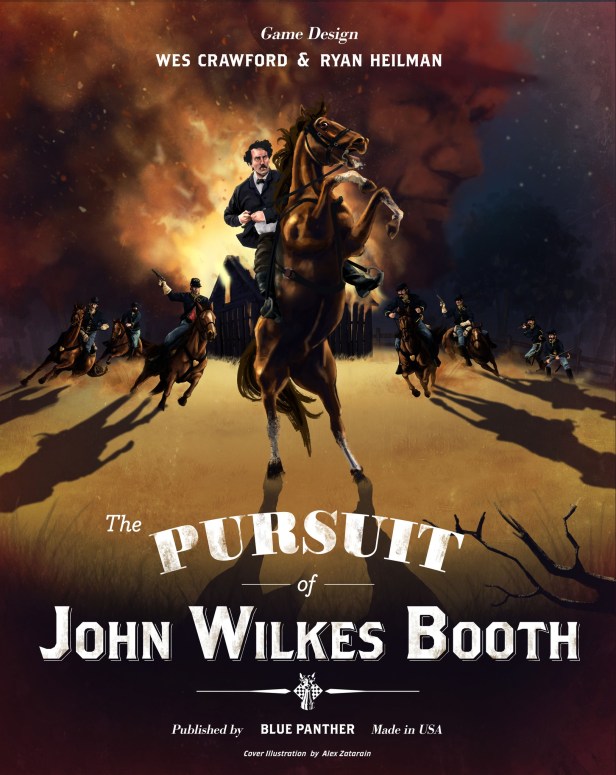
3. The Pursuit of John Wilkes Booth from Blue Panther
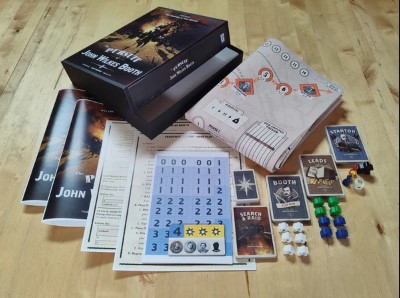
A few years ago, while attending the WBC, I had the chance to meet Wes Crawford who was demoing his upcoming game Engine Thieves. He was a very nice guy and his game was pretty interesting as well. Since that time, he has another game ready to see the light of day designed in partnership with Ryan Heilman in The Pursuit of John Wilkes Booth that will be published by Blue Panther. I had a chance to play the game solitaire (with Wes overseeing the game and giving me guidance and pointers) at this past year’s WBC and had a really great time with it. Great little solo game with several other modes where the player uses resources like police and detectives to search for clues in the hunt for Lincoln’s assassin after the events at Ford’s Theater on the evening of April 14, 1865. There really is a lot to like with the way that clues are found and chits are blindly drawn to verify clues from a bag. There is also a great little movement mechanic with police and detectives to try to acquire more clues.
From the game page, we read the following:
President Abraham Lincoln has been assassinated! Members of Lincoln’s administration have identified John Wilkes Booth, a famous actor, as the culprit. As the nation descends into chaos, the relentless pursuit of Booth and his cronies begins.
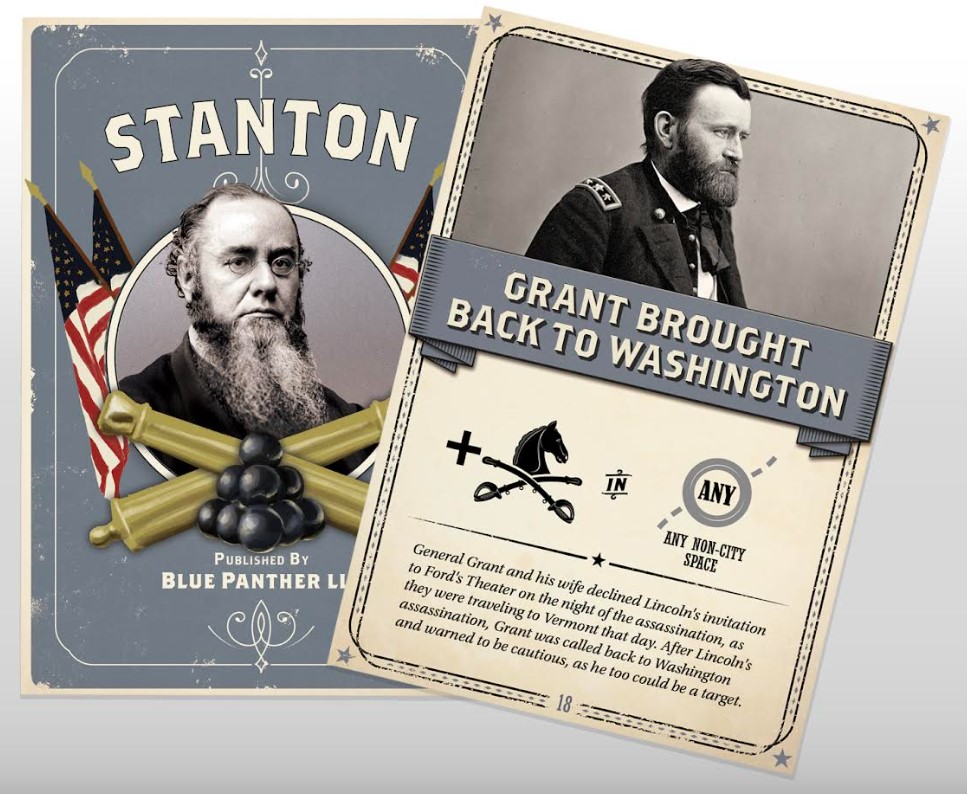
The Pursuit of John Wilkes Booth is a game of deduction and investigation. Players step into the roles of Detectives, tasked with capturing the assassin. Union authorities were uncertain of Booth’s destination. As Detectives, players must follow Leads, uncover Clues, and piece together Booth’s Trail as he evades capture. Players can enlist Secretary Stanton’s assistance to aid in their mission. Ultimately, Detectives must pinpoint Booth’s exact location by executing a successful Search, and then Raid to either capture or kill him.
The game offers multiple ways to play including solo, cooperatively (2 players), or competitively (2 players).
Competitive mode closely mirrors the historical race to catch Booth. Additionally, a player can assume the role of Booth and his accomplices, introducing a thrilling twist.
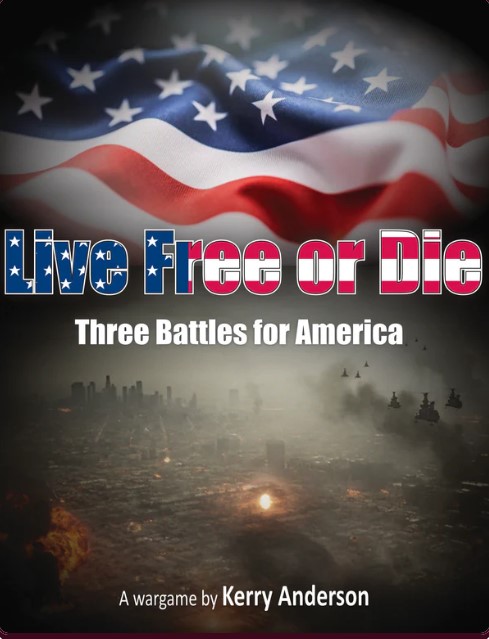
4. Live Free or Die: Three Battles for America from Microgame Design Group
I don’t really know much about the Microgame Design Group but this month I saw that Blue Panther had a new game of theirs that was up for sale and it looked to be pretty interesting. The game is called Live Free or Die: Three Battles for America and is designed by Kerry Anderson and really looks kind of interesting. The game is an alternate history game set in the near past with 3 different invasions of the United States of America.
From the game page, we read the following:
Following the successful deployment of missiles on Cuba in 1962, the Communists gained much support in Latin America. Western Europe became less convinced of American commitment to defend the continent. This led to the NATO alliance being dissolved and replaced by a neutral bloc.
America was now alone!
Live Free or Die is an alternate history simulation of battles associated with a Communist invasion of the continental USA. Live Free or Die is a game set consisting of three independent games (also referred to as scenarios): Asian Invasion captures the Peoples’ Asian Alliance landings in California; Remember the Alamo covers the Organization of Central American States drive into Texas; and Southern Discomfort focuses on a Warsaw Pact invasion of Florida and Georgia.
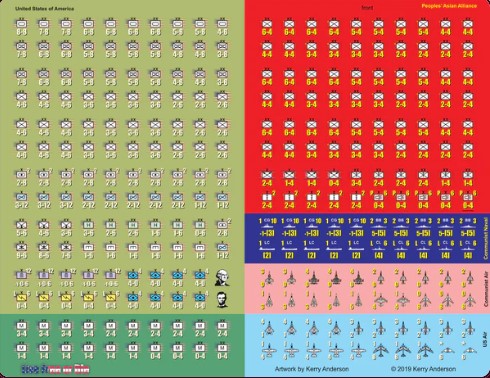
The three 11″x17″ map boards represent battle grounds in California, Florida, Georgia and Texas. The 520 1/2″ counters (die-cut and back-printed) show brigade and divisional level forces of the US, the Warsaw Pact (Soviet Union, East Germany, Poland and Czeckoslovakia), the People’s Asian Alliance (China, North Korea and Viet Nam), and the Organization of Central American States (Cuba, Mexico and Nicaragua).
I know that for many this topic will not be of interest but as I think about it, I am taken back to memories of my childhood in the 70’s and 80’s growing up under the threat of constant nuclear holocaust and with the paradigm that America was alone and could be invaded. I remember playing games like Fortress America and watching movies like The Day After and Red Dawn! I am very much interested in this one and have ordered a copy.
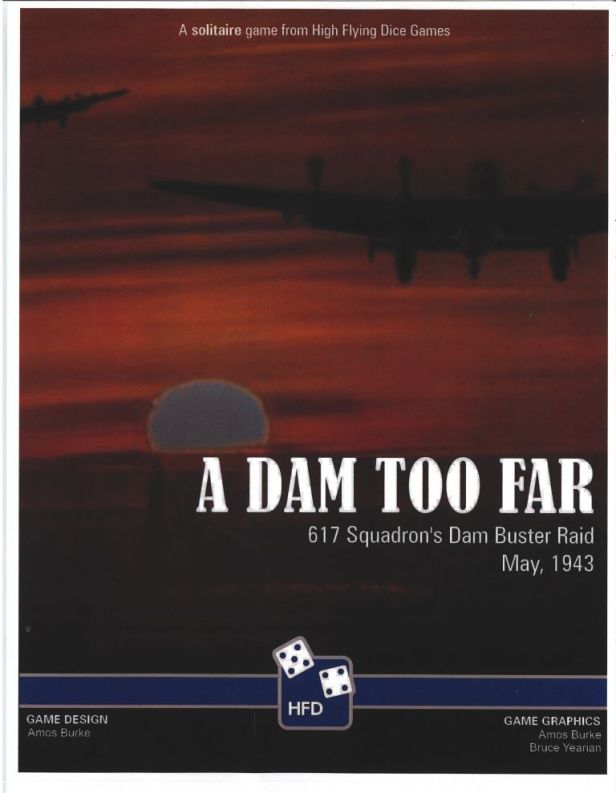
5. A Dam Too Far: 617 Squadron’s Dam Buster Raid, May, 1943 from High Flying Dice Games
Paul Rohrbaugh and his company High Flying Dice Games is a designer I love to follow. He is always doing games on smaller or lesser known conflicts and I just find his work to be superb and really draws me in. Recently I saw where he was releasing a game on the Dambuster’s Raid called A Dam Too Far: 617 Squadron’s Dam Buster Raid, May, 1943. The game is a solitaire game and should be a pretty interesting take on the subject.
From the game page, we read the following:
Operation Chastise, commonly known as the Dambusters Raid, was an attack on German dams in the Ruhr industrial area. Carried out on the night of 16/17 May 1943 by 617 Squadron RAF Bomber Command, later called the Dam Busters, using special “Bouncing Bombs” developed by Barnes Wallis, who also oversaw the modifications of 19 Lancaster bombers specially adapted to carry the “Upkeep” bouncing bomb ordinance.
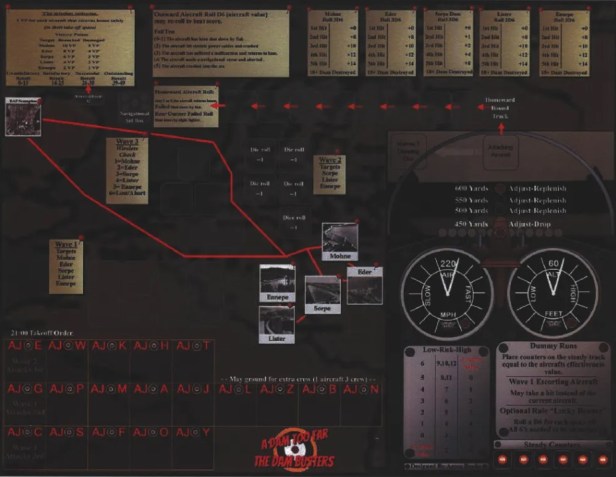
In A Dam Too Far, players allocate 19 randomly chosen crew members to their Lancaster bombers. These crew members are the best of the best, and consist of the Front Gunner, Pilot, Navigator, Engineer, Bomb Aimer, Wireless Operator and Rear Gunner. These crew members can help at certain stages of the mission. The outward bound journey will be a matter of pushing your luck with the aircraft for the best results. Will you risk trying to get a better attack value or lose an aircraft from flak or flying so low you hit power cables? On the bomb run it will be the challenge of balancing height, speed and position as you approach with the available “Steady” counters to achieve the perfect bomb release point. It’s all about accuracy; if your bombers come in too fast or too low, they will miss the target. Taking a bomb run will be a higher or lower risk choice. How many bombs will the dams take before they are breached, how many dams can be destroyed or damaged, and how many aircraft will make it back on the homeward bound journey? All these factors will determine if the mission was a success or a failure. Can you do better than the historical counterparts?
If you are interested in A Dam Too Far: 617 Squadron’s Dam Buster Raid, May, 1943, you can order a copy for $22.95 from the High Flying Dice Games website at the following link: https://www.hfdgames.com/dambuster.html
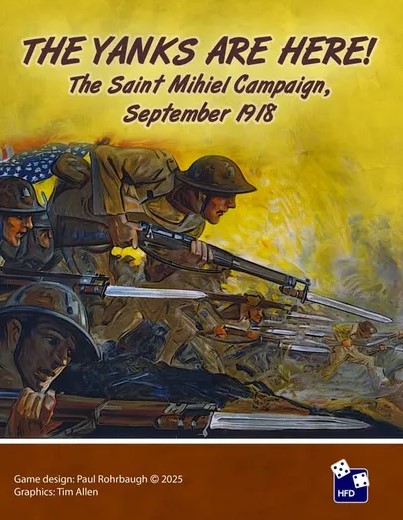
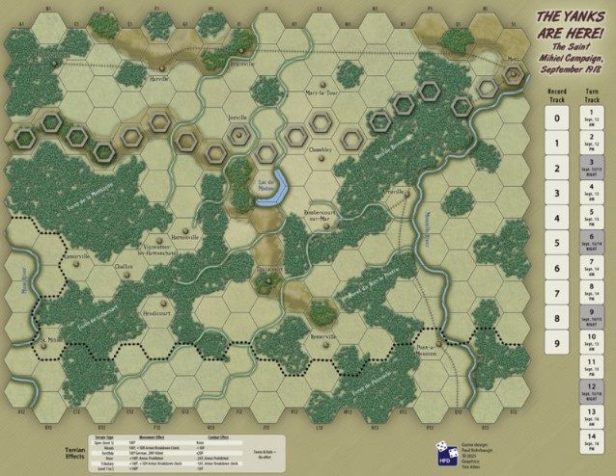
6. The Yanks Are Here!: The Saint Mihiel Campaign, September 1918 from High Flying Dice Games
The 2nd game this month we are highlighting from High Flying Dice Games is The Yanks Are Here!: The Saint Mihiel Campaign, September 1918 that deals with the Battle of Saint Mihiel, which was the first large scale offensive by the United States Army in WWI.
From the game page, we read the following:
“It was like a moving picture battle. Tanks were crawling up along the muddy roads and khaki-colored figures could be seen moving about in ones and twos and fours along the edges of the woods and across the grassy plains…Overhead the shells were still screaming from our heavy artillery with a good deal of answering fire from the German batteries which caused most of our losses.” –Father Frances McDuffy, 165th Regiment of the US 42nd Infantry Division.
The Yanks Are Here! is a moderate complexity level game of the battle of Saint Mihiel. This was the first large scale offensive by the United States Army in WWI. General Pershing had insisted since he first arrived that US soldiers would only fight under the command of US leaders and as a unified force. The offensive of Saint Mihiel was first planned as two-part effort to first reduce the German held salient that threatened Verdun, and then take Metz to breakthrough the German fortified lines. Allied commanders, however, wanted the US Army to more directly support their offensive along the Aisne and Somme Rivers further north. Only four days of supplies and material were granted General Pershing for the Saint Mihiel offensive. Although the US First Army was successful in reducing the salient, the German Army was in the process of withdrawing anyways and were able to limit the American’s advance to just short of their newly established fortified line. It would be American’s Meuse-Argonne offensive in October that would result in a more decisive decision, but at a much higher cost in American lives. Can you do as well or better than your historical counterpart?
BONUS: Players can play the Fighting Eagles game in conjunction with The Yanks Are Here! Additional Rules contain that option!
If you are interested in The Yanks Are Here!: The Saint Mihiel Campaign, September 1918, you can order a copy for $22.95 from the High Flying Dice Games website at the following link: https://www.hfdgames.com/yanks.html
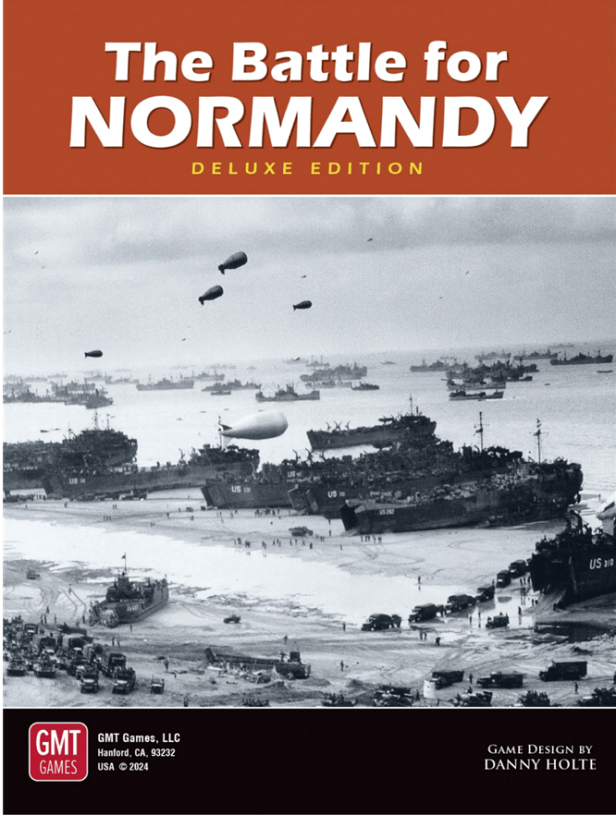
7. The Battle for Normandy Deluxe Edition from GMT Games
I love it when GMT does these Deluxe Editions of their great games. The one that I first experienced was Here I Stand and it was amazing the amount of changes and additions that were added to the game. In 2009, The Battle for Normandywas originally published and while I have never played it the game is very well respected. Since 2009, new research has been made available, and the game has been played many times by many different players and they all have provided various feedback. The game system remains basically the same as the original, but allowing players to focus on planning and strategy and not an overbearing rules system. Based on that new research and feedback, many units have been adjusted, all of the maps have minor changes, and some whole rules sections have been revamped to better represent the historical reality, while minimizing further complexity. The original expansion is included in this Deluxe Edition (while remaining optional), and there are also new scenarios.
From the game page, we read the following:
The Battle for Normandy is a game that represents the climactic campaign in Normandy from D-Day, 6 June 1944 to the first week of August 1944 at primarily battalion level. Numerous scenarios are included to play out various smaller battles in Normandy. It is intended for two players or player teams. Numerous scenarios are included to play out various smaller battles in Normandy. It is intended for two players or player teams.
The Battle for Cherbourg: 1 map, 18 June – 27 June
Campaign: 5 maps, 6 June – 10 Aug
Bloody Omaha: part of one map, 6 June – 10 June
Cobra: 2 maps (most of play on one though), 25 July – 31 July
Goodwood & Cobra (combined): 4 maps, 18 July – 31 July
Operation Epsom: 1 map, 26 June – 1 July
The game also includes a few next components including a Random Events Table and 12 Interdiction level cards.
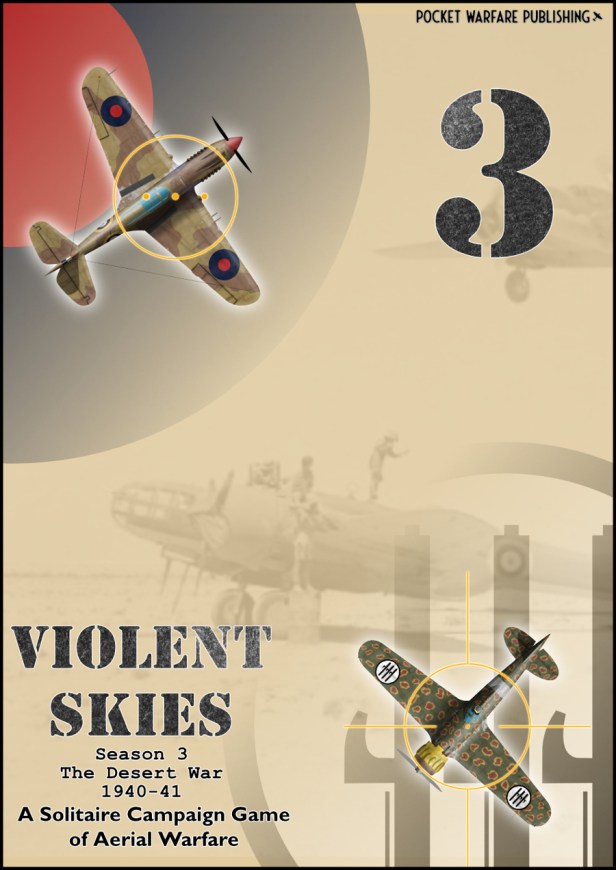
8. Violent Skies – 1940/41 – The Desert WarPrint and Play from Pocket Warfare Publishing
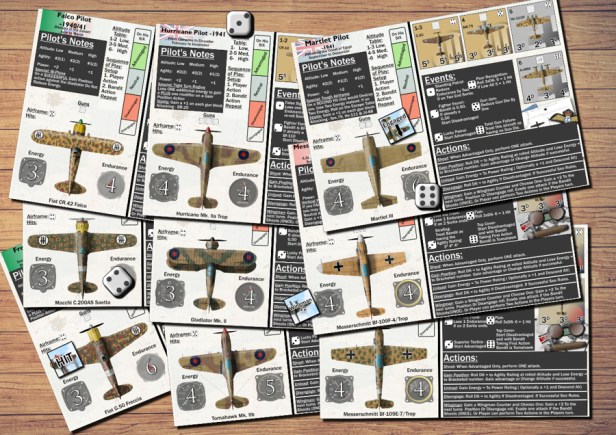
In the category of new and small publisher I previously knew nothing about, but a few years ago saw a game called Violent Skies from Pocket Warfare Publishing that deals with aerial combat during WWII. That game has done pretty well since then and they now are releasing a Season 3 edition called Violent Skies – 1940-41 – The Desert War.
From the game page, we read the following:
Sat inside the cockpit with the engine rattling through your bones, you turn to engage. Managing your energy and fuel, can you gain position to get a shot off? Or will the Bandit get the better of you? Sometimes it is better to disengage than push a losing fight. Violent Skies is a solitaire game of aerial combat in the Second World War. Using a game card that acts as your cockpit and also as a mission generator. The Player and Bandit take alternating actions to try and get a shot on the opposition’s aircraft.
This Third Season of the game puts you in the cockpit of the main fighters during the first two years of the North African Campaign. From the Italian invasion all the way to Operation Crusader, you will be flying Sorties, shooting down Bandits and trying your best to survive.
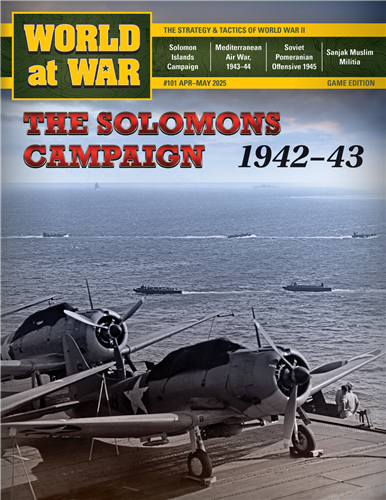
9. World at War Magazine #101 – Game Edition – The Solomons Campaign 1942-43 from Decision Games
I don’t always share wargaming magazines on this post but when they have an interesting looking game included I definitely make an exception. The upcoming edition of World at War Magazine #101 has an interesting looking game covering the Solomons Campaign during World War II in 1942-43 called The Solomons Campaign 1942-43.
From the game page, we read the following:
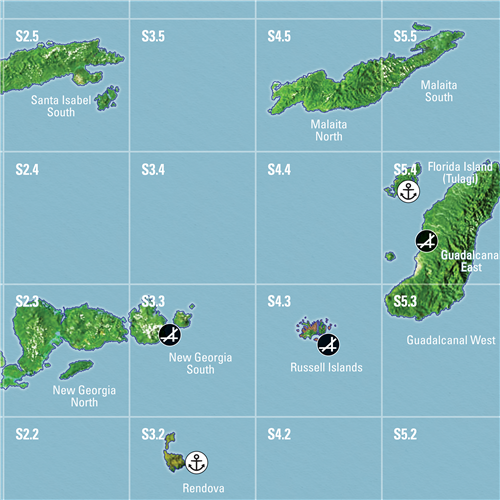
The Solomons Campaign 1942–43 is a solitaire, operational-level war game of the struggle for control of the Solomon Islands during World War II. Victory is attained by accomplishing campaign milestones ahead of what was done historically, thereby opening the way for an earlier isolation of the Japanese base at Rabaul. The player commands the US forces, and moves and engages the Japanese forces according to the game system.
The player moves and engages with the Japanese forces according to instructions provided by the rules. The map uses an area grid map system; ground units represent divisions, regiments or battalions. Aircraft units represent air groups or wings (two to eight squadrons) and are identified by the primary type of aircraft in those units. Naval units represent individual fleet aircraft carriers, battleships, cruisers and divisions of two light or escort carriers and squadrons of destroyers with various numbers of other ship types.
Each grid box on the map is 50 miles from side to side. Each turn represents one month.
22 x 34 inch map sheet and counter sheet of 228 9/16 inch counters.
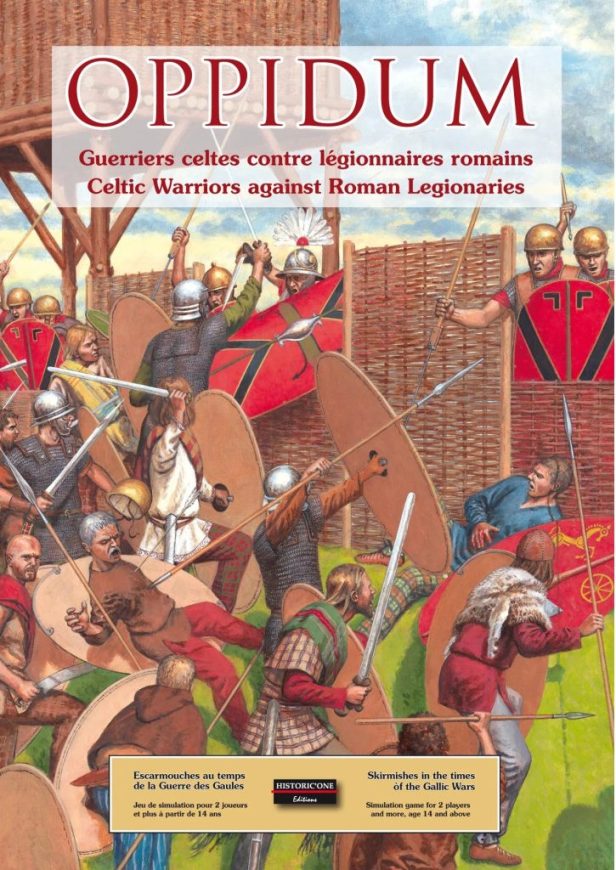
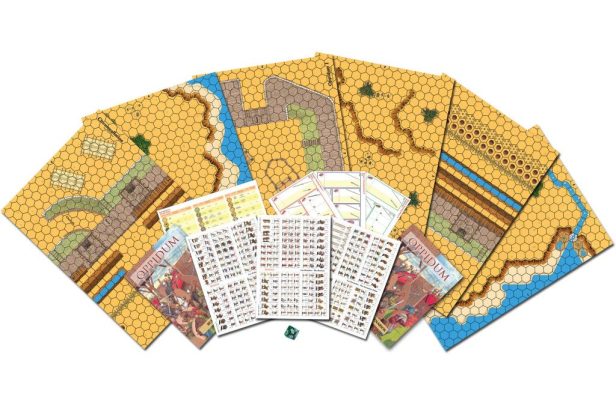
10. Oppidum: Celtic Warriors against Roman Legionaries from Historic One
I missed this one last month but appreciate someone pointing that out to me. This is a new company to me as I don’t know that I have ever highlighted one of their games but this one does look very good. The company is Historic One and the game is Oppidum, which deals with Celtic warriors against Romany Legionaries in Ancient Gaul.
From the game page, we read the following:
Oppidum (the name of Celtic fortified towns) is a simulation game set in modern France, Belgium and England in the first century BC. Celtic tribes fought to resist Caesar’s ambitions.
You can play as Gallic, Breton, Germanic or Roman characters, Germanic or Roman characters and attempt to land in Brittany against escort a forage convoy through hostile territory, or attack the redoubtable hostile territories, or attack the formidable fortifications that Caesar built in front of Alesia.
16 scenarios of increasing complexity make learning the rules easy and gradual.
The rules are designed to simulate man-to-man combat, including different formations of Roman legionaries or shooting with bows, spears, javelins, slingshots and the deadly Roman scorpion.
Celtic and Roman fortifications with all their obstacles can be attacked with a variety of siege equipment.
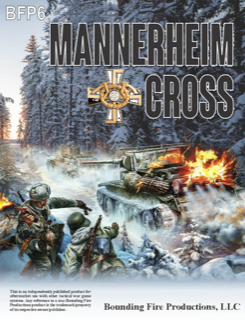
11. Mannerheim Cross from Bounding Fire Productions
For those that are addicted to Advanced Squad Leader, today I have a new product from Bounding Fire Productions called Mannerheim Cross, which deals with tactical level action in Finland during WWII that is described as “meat and potatoes ASL” (whatever that means!).
From the game page, we read the following:
BFP 6: Mannerheim Cross is a another huge package that will thrust players into the battles involving Finland. This is meat and potatoes ASL, so there is plenty of action in Mannerheim Cross for everybody!
The size of this product is even bigger than Poland in Flames. This was under development for years, and all 44 scenarios were very thoroughly playtested. Shipping will begin in January/February.
Mannerheim Cross includes the following:
44 Action-Packed Scenarios
3 full sheets of counters, depicting more units, weapons, fortifications, vehicles, and planes
1 double-wide 16″x22″ geomorphic mapboard. This map represents the terrain and villages of Finland and Russia, and is printed in two 8″x22″ sections on heavy card stock (BFP DW‑10)
1 half-wide 16″x11″ geomorphic mapboard. This map represents the “tank-country” and villages of Finland and Russia, and is printed in two 8″x22″ sections on heavy card stock (BFP HW‑1)
3 8″x22″ geomorphic mapboards, also printed on heavy card stock (BFP S, T, U)
Rules pages describing new terrain counters, vehicle listings/notes, and special units
If you are interested in Mannerheim Cross, you can order a copy for $149.00 from the Bounding Fire Productions website at the following link: https://boundingfire.com/buy/mc.html
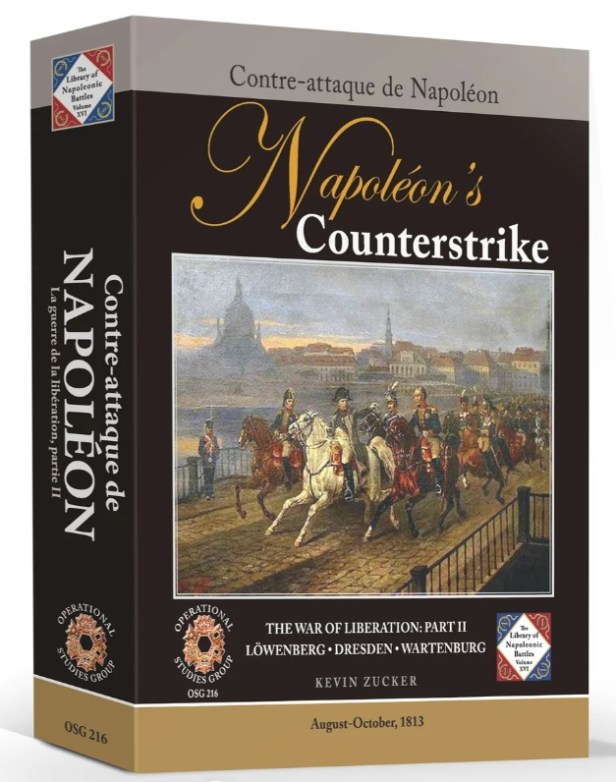
12. Napoleon’s Counterstrike: The War of Liberation: Part II from Operational Studies Group
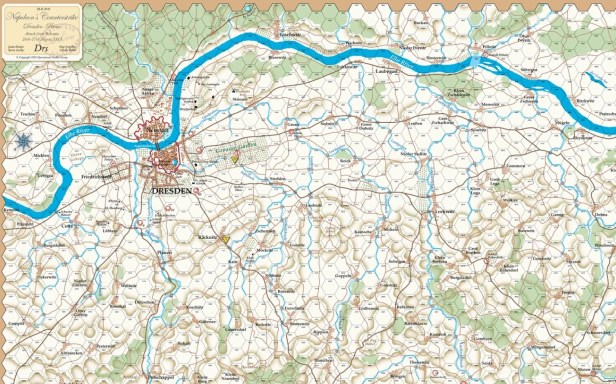
Another large Napoleonic wargame from Operational Studies Group this month is Napoleon’s Counterstrike: The War of Liberation: Part II. The Coming Storm II: Quadrigames of the Fourth Coalition: October 1806-June 1807 and deals with Löwenberg, the Battle of Dresden and Wartenburg.
From the game page, we read the following:
Schwarzenberg with 182,000 men against Napoleon with 155,000, saw a chance to capture Napoleon’s main base, breaking the agreed-upon Fabian strategy to avoid the battle with the Emperor in person, known as the Trachenberg plan.
BATTLES SIMULATED: The first of the battles, Löwenberg, took place on August 21st, leading to the Battles of Goldberg and the Katzbach, on the 26th that day was the first day of the Battle of Dresden. In early October, Wartenburg led directly to the epic battle of Leipzig.
Also NOT INCLUDED: Optional Card Decks This game uses the two TLNB Universal Card Decks (French and Coalition). If you do not have them in Napoleon’s Wheelor another OSG game, they can be ordered separately.
UNIVERSALITY: The same decks can be used for every game in the series. Click the link above for a description.
If you are interested in Napoleon’s Counterstrike: The War of Liberation: Part II, you can order a copy for $126.00 (normally $140 but currently on sale) from the Operational Studies Group website at the following link: https://napoleongames.com/products/napoleons-counterstrike
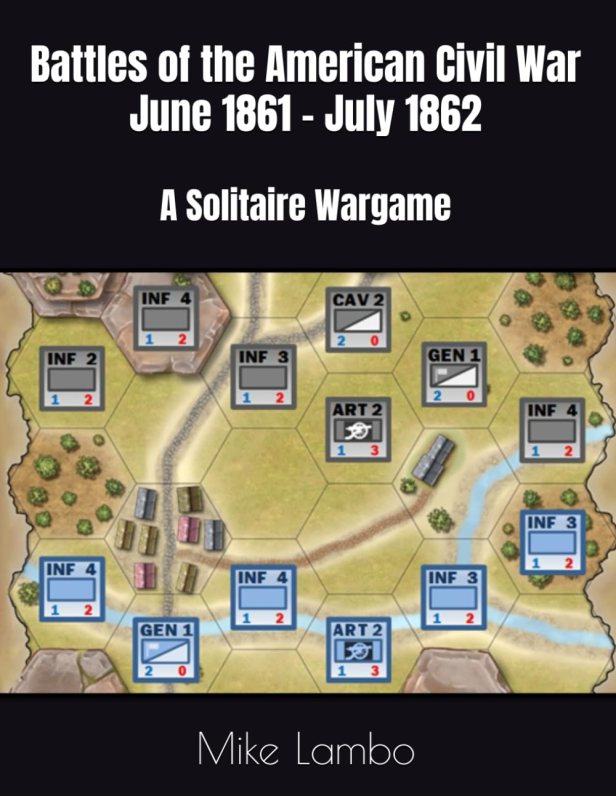
13. Battles of the American Civil War June 1861 – July 1862: A Solitaire Wargame from Mike Lambo
Last year, I gave this system a try and I very much enjoyed my experience with Lone Sherman: The Pacific. Mike Lambo has created a system of simple tactical level solitaire book wargames that have done very well over the past couple years and have many devotees. The newest volume is Battles of the American Civil War June 1861 – July 1862: A Solitaire Wargame and is available on Amazon for purchase.
From the game page, we read the following:
The American Civil War was a conflict between the United States (the Union or the North) and the eleven states that had seceded from the Union and formed the Confederate States of America (the Confederacy or the South). It lasted from 1861 to 1865. One of the key issues fought over was slavery and the power of the federal government to prohibit it in certain territories. Abraham Lincoln, the first Republican president, promised to keep slavery out of the territories, which was seen as hostile by the South. At the time, the North had well-established industries, but in the South there was far more reliance on large-scale farming, which itself relied on enslaved people. War began in 1861 when Confederate forces opened fire on Fort Sumter in Charleston, and ended in 1865 when the Confederates surrendered.
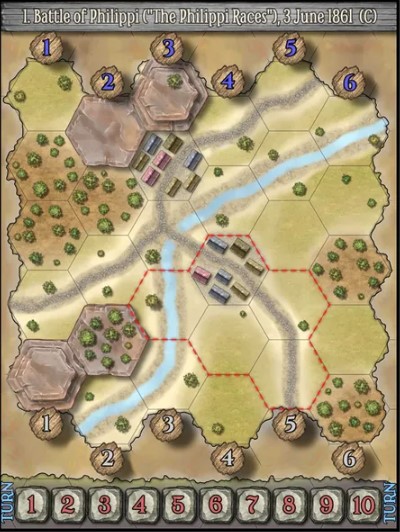
In the game, the player will be commanding various units, often representing many hundreds or thousands of men each, seeking to achieve a wide variety of Objectives. 20 Battle Scenarios from the years 1861 and 1862 are included in this game.
The aim of the game is to present a simple, clear, accessible, and quick to learn game, so that players can get into the action quickly. It does not try to replace more complex wargames which often take many hours to learn and to play. It also does not pretend to be entirely realistic, and many concepts have been simplified or abstracted for gameplay purposes – it is not a simulation. Each of the 20 Battle scenarios can be played in around 20 to 30 minutes, and each one should provide plenty of replayability due some random set up of the initial forces and depending on how the Battle plays out. Note that some Battles represent a specific part of the conflict within that Battle rather than the whole Battle.
This game is a solitaire wargame. You play the game, and the enemy is controlled by the game. You will need a good handful of standard six-sided dice to play (nine is ideal, although fewer will do).
It is highly recommended that the counters provided on the final page of the game are used to play this game. Simply stick them to card and cut them out. A video demonstrating how generally to do this can be found on the Mike Lambo Solitaire Book Games YouTube channel.
On the same channel you will find an instructional playthrough video for the game, which walks players through the rules of the game. Here is a link to that video: https://www.youtube.com/watch?v=PP24XU1Mglo
Rules, 20 full color Battle Maps, and suggested counters (to be mounted on card) are included.
As usual, thanks so much for reading along and sticking with me this month as I navigated through the many websites and game pages looking for new and interesting games to share.
Finally, thanks once again to this month’s sponsor Hexasim!
I ordered Market Garden, Crete and Desert Tide. I really enjoy the Tide series games. I am interested in Med Sirocco as well.
I saw where you are jumping into ASLSK. I played full blown ASL for years, then sold all of it and I play starter kit only and I have never looked back. I look forward to reading your thoughts.
I played my first scenario on Friday night of ASLSK#4 and enjoyed it although the system is very detailed and full of minutiae but I did like it. I would only ask is the juice worth the squeeze?
It feels like we are in a golden age of wargaming and I really hope that current antics of the US presidency doesn’t ruin it economically. The run of games coming have been in the pipeline for a while I hope this time next year doesn’t have you highlighting just four games.
That being said, maybe I need a forced slowdown to get the ones I have on the shelf of opportunity played 😀
As usual, thanks a lot for putting 4-5 new games on my radar. My fiancé doesn’t thank you.
















I ordered Market Garden, Crete and Desert Tide. I really enjoy the Tide series games. I am interested in Med Sirocco as well.
I saw where you are jumping into ASLSK. I played full blown ASL for years, then sold all of it and I play starter kit only and I have never looked back. I look forward to reading your thoughts.
Keep up the great work!
LikeLiked by 1 person
I played my first scenario on Friday night of ASLSK#4 and enjoyed it although the system is very detailed and full of minutiae but I did like it. I would only ask is the juice worth the squeeze?
LikeLike
It feels like we are in a golden age of wargaming and I really hope that current antics of the US presidency doesn’t ruin it economically. The run of games coming have been in the pipeline for a while I hope this time next year doesn’t have you highlighting just four games.
That being said, maybe I need a forced slowdown to get the ones I have on the shelf of opportunity played 😀
As usual, thanks a lot for putting 4-5 new games on my radar. My fiancé doesn’t thank you.
LikeLiked by 1 person