The States of Siege Series is one of my favorite solitaire wargame series. The games in the series cover lots of great historical and non-historical topics ranging from World War I (Ottoman Sunset, Hapsburg Eclipse and Kaiserkrieg!), the English Civil Wars (Cruel Necessity), the Russian Revolution (Soviet Dawn), Ancient cultures (Mound Builders, Gift of the Nile and Nubia), World War II (Malta Besieged, Global War and We Must Tell the Emperor), the American Civil War (Jeff Davis) and even the fall of Communism (Gorbachev). The series even includes a game on a future zombie apocalypse (Dawn of the Zeds). A series that has this much flexibility and range means that the mechanics are solid and adaptable. The States of Siege Series was first published by Victory Point Games and it all began with Israeli Independence: The First Arab-Israeli War. The Series is a collection of solitaire games in which the player is the overall commander of a typically desperate historical situation that includes being beset on all sides and surrounded by enemies, where the player’s decisions focus on the use and management of scarce military, political and economic resources to mount a defense.
There are over 40 titles in the series, and several others that are not specifically included but use the same mechanics. I have played about 20 different games in the series and find them to be engaging, fast playing and interesting and am always on the lookout for the next entry or to find a reasonably priced copy of one to purchase and get on my table. Without further delay, here are my Top 10 favorite States of Siege Series games.

10. Levee En Masse Deluxe Edition from Worthington Publishing

Over the past few years, Worthington Publishing has been securing the rights to these States of Siege Series games and giving them new Deluxe Edition treatments with new art, components and even some minor rules edits. One of those Deluxe Editions was Levee En Masse designed by John Welch. Levee En Masse tells the story of the French Revolution through its key events and decision points. The player must stop the advances of foreign armies and counter-revolutionary forces within France to protect the new form of government called Republicanism.
The game takes this political battle to a new level as the player has to fight against both a return to Monarchy and the advance of Despotism through the Emperor and his goal of ruling the world. This is done on a track and players must use their scarce actions to try and push their ideals and suppress the uprisings of the others. If you do this well, you will gain advantages and sometimes you want Despotism to reign as you will gain a benefit from the leadership of Napoleon as you fight off the foreign invading powers of the English, Prussians and Piedmonts. But in the end, victory is only obtained if Republicanism is the final reigning form of government.
I really liked that this game seemed quicker playing than some other States of Siege Series games but it still gave me a meaty feeling with the different aspects. A really great production as well as the cards are absolutely beautiful and the board is well done with the various paintings incorporated into the background. Of all of the games in this series, I feel that this one did a great job of capturing the essence of the French Revolution and forcing the players to really deal with them to create the movement going, especially with unruly citizens in the capital and their efforts to gain their pound of flesh from the corrupt King Louis VI with the Disorder counters.
You can check out our unboxing video to get a good look at the components:
Next, I shot a full game playthrough that will teach you the game:
I also posted a video review of the game and you can watch that at the following link:
9. Keep Up the Fire!: The Boxer Rebellion Deluxe Edition from Worthington Publishing

I have had a great time playing Keep Up the Fire!, partly because the board and its other components are absolutely beautiful and the production value on this one is extremely high, but also because it is an interesting game with some very tough choices to be made about how to best advance the Relief Column and also defend the Legation Compound. I have played this one about half a dozen times and have only ever won once as I was able to move the Relief Column pretty quickly toward their goal of Peking.
The best part of the game is the fact that this is really 2 games in one with the player carrying out the actions needed for the defenders to hold off the advancing Qing Army but also needs to focus on ensuring that the Relief Column makes progress on the Relief Column Map. The Relief Column Map tracks the progress of the Eight Nation Alliance Relief Column army that is making their way across hostile Qing Army held territory to attempt to relieve the besieged Legation Compound in Peking. The Relief Column starts in Taku and must move space by space to get to Peking prior to the end of the Draw Deck or the fall of the Legation Compound. You will notice the two tracks on the side and bottom of the board which is the Column Speed and the Column Combat Value. The Speed Track is the modifier that the player will get to the die roll to attempt to advance a space on a track once the Qing Blocking Army is defeated. The Combat Value Track is the modifier the column will receive when attempting to defeat the Blocking Army. When I look at this board, I get the feeling that I am examining a topographical map of the area as we look for a means of advancing. The backdrop is that of a drawing of the countryside leading up to Peking and shows the flowing Peimo River and its tributaries. In the distance is a nice drawing of Peking showing its varied districts by name including Chinese City, Tartar City, Imperial City and the Forbidden City. In the corners of the board are found various Chinese characters which brings a feeling of connection to the subject.
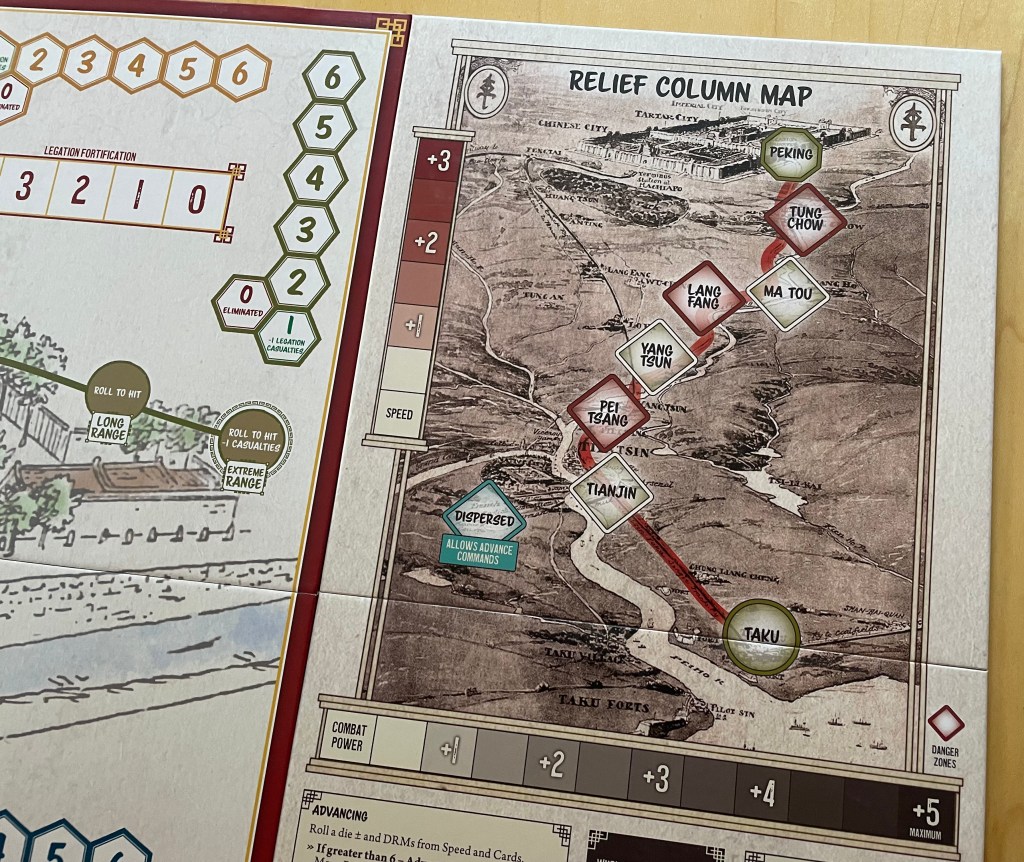
The Danger Zones, the squares that are shaded red, are dangerous areas for the Relief Column as various Events found on the Relief Column Cards may force them to retreat, take additional losses in combat or be unable to attack. These Danger Zones stand out from the other areas and reinforces the trouble that awaits the Relief Column in their difficult advance.
I also feel like this is the best production of all of the Deluxe Editions from Worthington and the board itself is simply amazing. It really reinforces the theme and setting for the game which really draws the players in. I highlighted this board in my ongoing The Beautiful Boards of Wargaming! Series and you can check that post out at the following link: https://theplayersaid.com/2023/09/22/the-beautiful-boards-of-wargaming-keep-up-the-fire-the-boxer-rebellion-deluxe-edition-from-worthington-publishing/
We also posted an interview with the designer John Welch on the blog and you can read that at the following link: https://theplayersaid.com/2021/02/15/interview-with-john-welch-designer-of-keep-up-the-fire-the-boxer-rebellion-deluxe-edition-from-worthington-publishing-currently-on-kickstarter/
Here also is a link to a video review put together by Alexander:
8. Jeff Davis: The Confederacy at War from White Dog Games
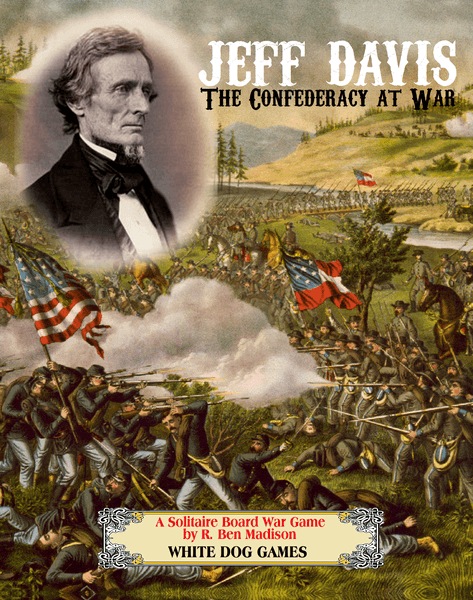
I love a really hard and involved solitaire wargame and I found a really good one in Jeff Davis: The Confederacy at War. The game is designed by Charles S. Roberts Award-winner R. Ben Madison and he does a great job with his games. The player takes on the role of President Jefferson Davis, and you have to manage the Confederate government and the Southern war effort during the American Civil War. The choices help determine the fate of armies and the struggle between Robert E. Lee and Ulysses S. Grant. The game uses the States of Siege Series model with a central point being defended from advancing forces on 5 different tracks.
One of the more interesting design choices in this one was the inclusion of slaves held by the South. Their focus in the game is as a resource to advance and assist the war effort through their labor. These human resources are used to take extra actions and for the Confederate States of America, as the noose of the Union closes around them, they will be starved for Action Points as their factories and railroads are taken over by the advancing Federal Troops. I truly appreciate this focus in the game to give a glimpse into the political and social issues that contributed to the start of the American Civil War. I think that all too often our wargames sanitize and whitewash history of all of the darker and less desirable aspects but I think that including this element into the game was a wise choice by the designer.
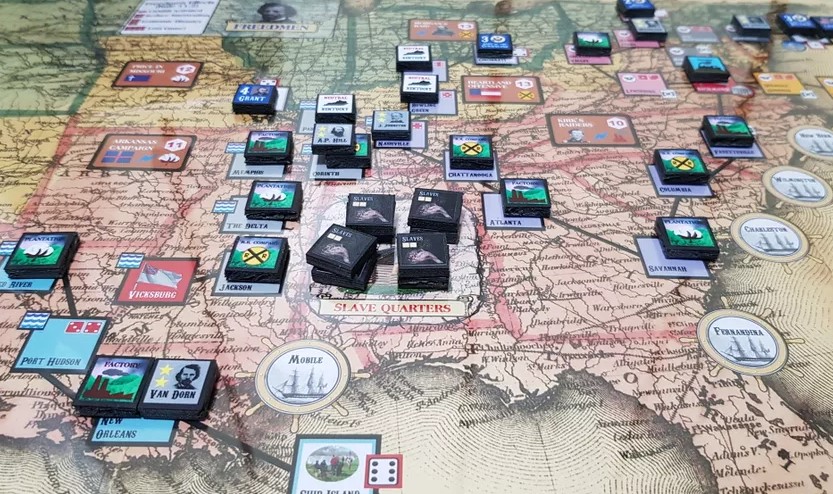
The game also uses a very interesting method of determining your per turn funds as you have to run blockades against the Union to get funds to supply armies, move your troops and invest in actions to build defenses. You can also use the Slave tokens as a sort of currency to take actions but then those tokens are used up and cannot be reused. I have really enjoyed this one although it is a full 3 hour game as you have to get through 40+ chits to survive to the end. Lots of tough choices, lots of interesting side issues, such as dealing with slaves in the southern economy and keeping politicians happy. This is a great solo game! I have now played most of Ben Madison’s games and really feel that this one might just be one of his finest efforts to date.
You can check out our unboxing video to get a good look at the components:
7. Ottoman Sunset: The Great War in the East 1914-1918 from Victory Point Games/Tabletop Tycoon
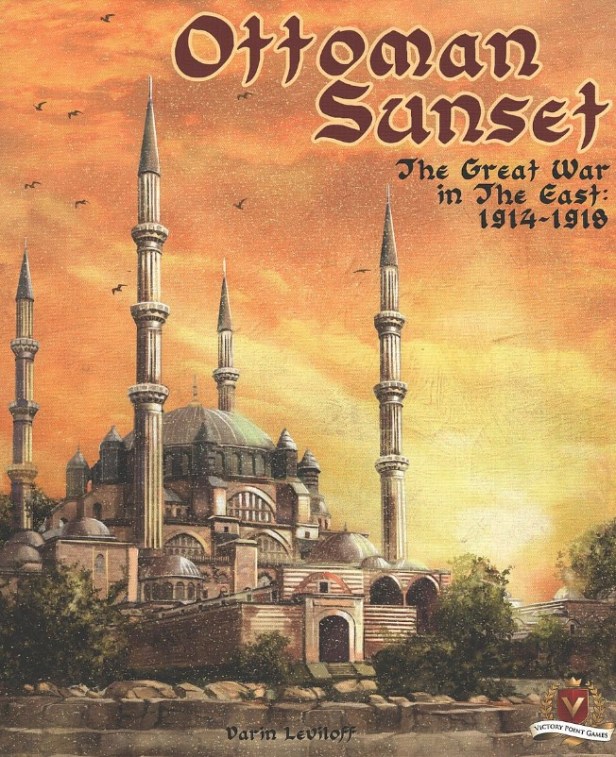
This past year, Victory Point Games and Tabletop Tycoon brought us new and improved 3rd Editions of two of the classic States of Siege Series games in Hapsburg Eclipse and Ottoman Sunset. I obtained copies, played them both multiple times and found that I gravitated more toward Ottoman Sunset as my favorite of the two games. Both were great and both were extremely challenging but I just liked the setting and mechanics of Ottoman Sunset more. Ottoman Sunset: The Great War in the East 1914-1918 is set in the period of 1914-1918 and covers the Great War in the Near East with a focus on the Ottoman Empire and their efforts to support the Germans in the war. As with most States of Siege Series games, the goal is to survive through the drawing of all the action cards in the deck, which consists of 3 distinct parts that ramp up in difficulty as the game wears on. cards.
As this is a new 3rd Edition, I wanted to let you know that they really pulled out all of the stops on upgrading the art and components for this entry. The board is mounted and very well done. The colors used for the varying tracks are really eye popping and the game plays better because of the quality of the board. The cards are made of a very thick linen quality paper and are illustrated nicely with some great flavor and historical text to explain the significance of the historical event depicted. The writing is a bit on the small side though and you will need your readers to see the instructions clearly. The counters are really nice and thick and there is something to make every single event which is nice as you are allowed to focus on the game and not the components.
As a States of Siege Series game, the system is based on the concept of drawing a card from one of the three decks and enacting the effects of the card in the form of moving various armies on the paths toward Constantinople, adding negative effects for the round or causing revolts. Some of the cards will have more of a wide ranging global war effect that then trickles down and effects the Nation Will of the Ottomans or other aspects. No significant event is left out of the game. After performing the action listed on the drawn card, the player gets a number of actions that they can then decide best how they will use. With just a few actions per turn, typically 1-4, the player will be unable to do everything that they have to do and will have to prioritize what is most important, such as defeating the army knocking at the gates and pushing them back. Then you typically roll a die, with various positive and negative modifiers, and either succeed or fail. If you fail, you may have to do the same action again but might end with the same result and this is why I love these games. It is about choice but then there is a bit of luck with dice rolling and you have to make the best decisions consistently to win the game. Finally, this game is not easy to win. I have played about 15 times and only won once. I got extremely fortunate with my rolls and made what was most important matter at the right times to eek out a victory.

One of the best parts of the game is a game-within-the-game or mini-game in the proper management of the Narrows. As you can see the Narrows Display which shows the waters where the British will attempt to sail up in order to reach Constantinople at which time if they successfully arrive the game will be lost. The player can use an action to build one of the defenses for the Narrows which include Minefields and Gun Emplacements. As you look at the board, you will see that there are a total of 3 buildable Gun Emplacements and 2 Minefields. There are several Gun Emplacements printed on the board found at the entrance to the Narrows in both Seddülbahir and Kum Kale and then further in is Canakkale and finally Constantinople. These are printed guns that the player will always have access to but there are 3 additional guns that can be optionally built at Yildiz, Dardanos and Nagara using actions as previously mentioned. This gives the player a total of 7 Gun Emplacements that all get to roll a d6 when the British invade the Narrows via the Forcing the Narrows Event Card. Once this event is pulled, the player will place the marker on the British Fortitude Track in box 4. The British Fleet will then pass each of the defenses built in the Narrows, including both the Gun Emplacements and the Minefields and if the defense is there, meaning it has been built by the player or it is printed on the board, the player will roll 1d6 at a time for each active
Turkish Defense starting in the southwest corner (skipping the Seddülbahir Gun Emplacement if it has been previously destroyed by an Event Card) and proceeding up toward Constantinople itself, which is resolved last.
The player will then compare the die roll to the indicated Turkish Defense’s Battle Value. If the result is greater than (>) that defense’s Battle Value, there is no loss to British Fortitude. If the result is less than or equal to (≤) that defense’s Battle Value, then the player will reduce the British Fortitude marker by one box. If they British Fortitude is dropped to the 0 Box, they will withdraw from this attempt and the player will gain an end of game Victory Point and will stave off an immediate defeat. Building the Minefields is very important to accomplish first followed by at least 1 or 2 Gun Emplacements being built. If the player doesn’t focus on this, they will find the game come to a sudden and immediate end before it really even gets going as the Forcing the Narrows Event Card is found in the first group of cards.
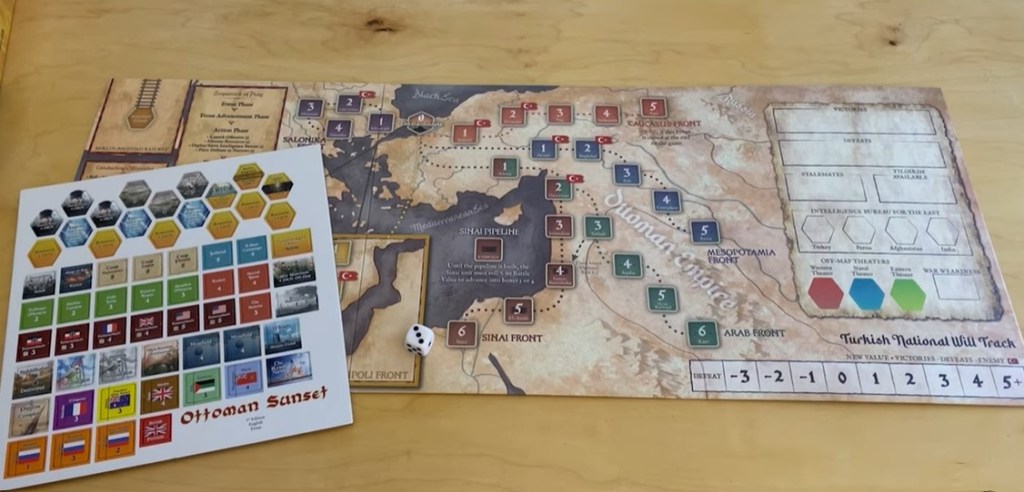
With that I am very pleased to add Ottoman Sunset 3rd Edition to this list and really look forward to playing it again in the near future. Such a great little game that plays in an hour (or less if you lose quickly) but is really well done and thematic.
Here is a link to our unboxing video to give you an idea about the quality of the components:
I also shot a playthrough and you can watch that at the following link:
I also did a video review and you can watch that at the following link:
6. Global War: World War II Worldwide 1939-1945 from White Dog Games
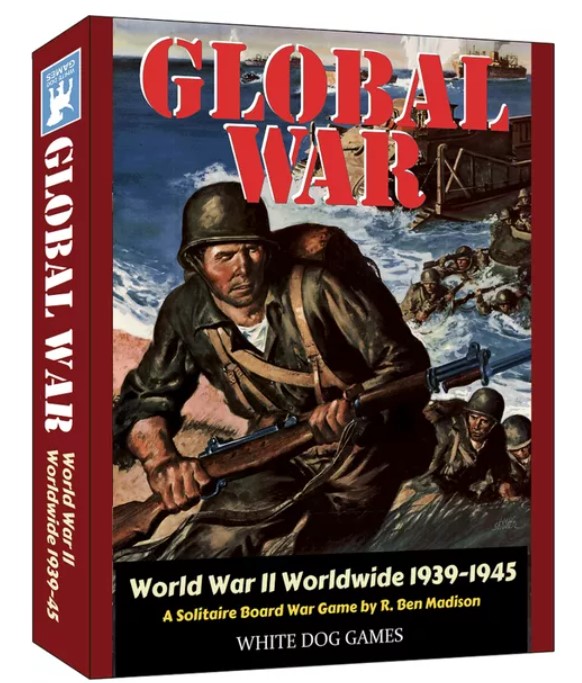
A few years ago, Kaiserkrieg! was a huge strategic solitaire wargame that covered the First World War from the period of 1914-1918. The game is a States of Siege Series game that takes a slightly different look at the venerable system by focusing on a horizontal model versus a vertical model where there are no tracks converging on a central point but various staging areas that buildup until they then attack. Ben then used this same focused system, or version, of the States of Siege Series in his next game called Global War: World War II Worldwide 1939-1945 from White Dog Games.
Global War is also a strategic solitaire wargame covering World War II globally from 1939-1945. Players will have to deal with all fronts as the Allies attacking into France, the Eastern Block and the vast Pacific to challenge the Germans and Japanese forces for control of the world. As is the case with most of Ben Madison’s designers, the game attempts to cover all aspects of the war with various abstracted elements such as the war in various theaters outside of Europe and with several operations such as the Naval/Air Warfare Phase. But it all works together beautifully to create a very interesting and engaging experience.

One of the major differences in this game, as well as its sister Kaiserkrieg!, from other States of Siege Series games is that the game is driven through chit pull rather than cards and the player must draw a chit at the outset of each turn to decide what the Axis forces do, where they will attack and then what world events happen that can either help or hurt their efforts. This improves the speed of this part of the game and really keeps the player guessing.
I also really enjoy how the player earns their actions each turn by having to run the gauntlet of the major shipping lanes to and from the different parts of the board. The player has a number of Liberty Ships that they will have to place in a number of sea zones and then roll on a chart that shows where the U-Boat wolfpacks are at that time of the year. If the roll places the U-Boats in the spaces where the player’s Liberty Ships are they will lose that income this round. The player will then add up the value of each space where the U-Boats didn’t enter and that will be the amount of actions they have to spend that turn. This will usually be between 4-7 actions, sometimes more and sometimes much less. The more U-Boats that are placed out on the board the worse the income will be but the player has options for combating this with escort ships.
Ultimately, this game’s strength is in the choices that the player has each round. There is a lot to worry about and the game keeps coming at the Allies each turn. You have to spread your actions out across multiple fronts or they will build up and you will be defenseless so you have to make wise choices. Once a front is closed, because you were able to beat back their armed forces, you can then shift your focus to other parts of the globe and taking out the other factions. Just a really well made game that provides a good playing experience. The only downside to this game is the play time clocking in at 3-4 hours but as a solitaire game you simply play a turn here and there when you can, leave it and come back later. Just a really great solitaire experience.
I did a video review and you can watch that at the following link:
5. Soviet Dawn: The Russian Civil War 1918-1921 Deluxe Edition from Worthington Publishing

Soviet Dawn: The Russian Civil War 1918-1921 Deluxe Edition is an updated version of Darin Leviloff’s States of Siege Series game focused on the Russian Civil War from 1918 to 1921. I played this one a ton last year and really came to enjoy the interesting choices that I was presented with to either try to focus on simply attacking the advancing tracks (Offensives), to try and win a political victory (Political) or to invest in the “stock market” per se and take a risk at gaining really interesting and useful advantages (Reorganization) to aid me in fighting off the advancing enemies of the movement. These three different types of actions are all very useful but some you will use more than others. Offensives will always be your most frequently used action because you will need to drive your enemies back as they advance down the various tracks. Political actions are necessary to keep your supporters behind you and to avoid difficulties in taking your other actions but also can be an immediate source of victory if you near the top of the track.
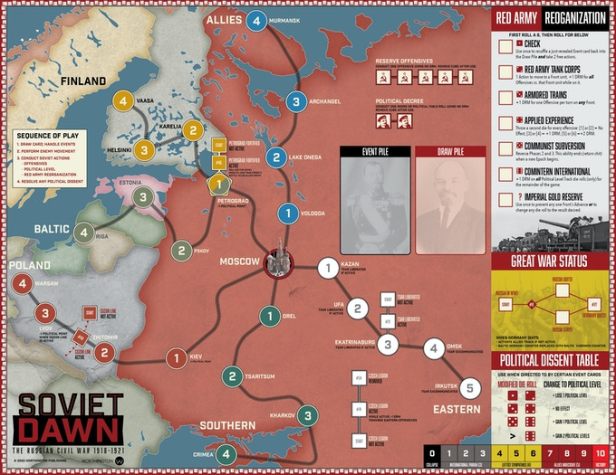
The Reorganization actions though are quite a bit different and this is what makes Soviet Dawn a winner and earned its spot on this list. There is a lot more risk involved in this course of action as these Reorganization chits, which provide certain advantages, are very hard to obtain. You will have to get a bit lucky and roll a modified 6 in order to successfully pull off these Reorganization actions. So most of the time these efforts will fail and you will kick yourself for wasting that action this turn. But when you succeed, there is great celebration! These include Armored Trains and Tank Corps (that gives a +1 DRM against the enemy on a specific track for the turn), the Comintern (that gives a positive modifier on Political Actions) and my favorite the Imperial Gold Reserve (which allows a player to change fate in the game by either negating a critical advance or changing any die roll to the result you want). These are very evocative inclusions that came out of the era and was a great addition to the game. It felt quite a bit like Axis and Allies and the technology rolls. Remember that in Axis and Allies, you had limited resources available, but if you could afford it, you could gamble on a chance to obtain some sort of strategic advantage, ranging from improved submarines to long range aircraft. Darin included this aspect into the game with the Red Army Reorganization Chart and it really deepens the narrative and the tension of the game.
I really liked Soviet Dawn and it still remains in my collection today and will hit the table when I am in the mood for a quick playing yet interesting solo game on the Russian Civil War!
Here is a link to my video review of the game:
And also a link to a video playthrough:
4. Gift of the Nile: The Rise and Fall of Ancient Egypt from White Dog Games

Another new Ben Madison offering is called Gift of the Nile: The Rise and Fall of Ancient Egypt from White Dog Games and is a solitaire only game that uses the States of Siege Series System and delves into Ancient Egypt and the rule of the Pharaohs covering over 30 dynasties starting with the Old Kingdom in 2,600 BC to the Late Period starting in 700 BC and ending with the intervention of Rome. This is a long and involved game (ranging from 36 turns to something less based on certain conditions happening or a player loss) that really gives the player a good feel for the might and power of the Egyptians, as well as the various threats and enemies they had to deal with to survive for nearly 3,000 years.
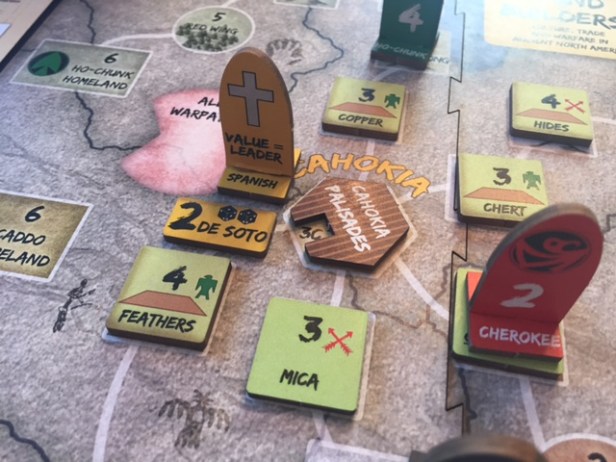
One of my favorite games designed by Ben Madison is the fantastic and interesting Mound Builders published by Victory Point Games in 2014. Mound Builders tells the history of 2 of the largest pre-Columbian Indian “mound builder” cultures that dominated eastern North America from before the time of Christ until the coming of the European colonists in the 17th century. The player’s empire represents the earlier Hopewell culture and the later Mississippian culture that derived from it. This game focuses on the building up and expansion of these cultures while then having to survive the oncoming Spanish and other cultures trying desperately to keep hold of what their society means and its identity.
That model was used in this game as well and borrows many of the same elements with the most important being the way resources are used to earn Action Points. See as the player expands and builds their kingdom during the Old Kingdom, they conquer or incorporate established Sepats (chiefdoms) into their fledgling empire. As the empire expands, if you happen to have 2 different Sepats with the same Trade Good, you can count that as having that Trade Good to build your economy during the Nile Phase as it will earn an Action Point from the Trade Goods List if the dice say you will. These Sepats each have a different type of Trade Good that they are good at procuring and once that Sepat has become a part of your empire the player can Temple it (spend Action Points to build a temple in the area) and it will be more valuable as it will create a Trade Good on its own without having to rely on having two of that Trade Good to create an Action Point.

The Old Kingdom is about expanding your empire’s reach into the various lands located on the Tracks surrounding Men-Nefer so you can earn more Action Points in order to take more Actions each turn to build your empire including things such as building Monuments, attacking interloping civilizations called Khastis who have wandered into your kingdom, hiring mercenaries and troops to aid you in this fight and improving the education and literacy of your people. Each of these different Actions are each important and the player must make many decisions about how to spend their scarce resources over the course of the game to build and expand.
I love this game and have really enjoyed my 8 plays at this point. I have done better than I expected as sometimes the dice don’t hate me. But that doesn’t mean that I didn’t have to work for those victories. They were very hard fought and the decision points are really intense as you have to consider what to do each and every turn. This game rewards planning as well as thinking ahead and not just about the problem in your face.
If you are interested, we posted an interview on the blog with the designer Ben Madison and you can read that at the following link: https://theplayersaid.com/2024/03/11/interview-with-r-ben-madison-designer-of-gift-of-the-nile-the-rise-fall-of-ancient-egypt-from-white-dog-games/
I have also shot two separate 1-hour playthroughs of the Old Kingdom (3rd Dynasty through 10th Dynasty) and the Middle Kingdom (11th Dynasty through the 17th Dynasty) and am still working on finishing that series. But they are not yet on the docket for the YouTube Channel and you will just have to wait. But this one is fantastic and I would definitely recommend getting yourself a copy and begin “walk[ing] like an Egyptian”!
3. Mound Builders from Victory Point Games
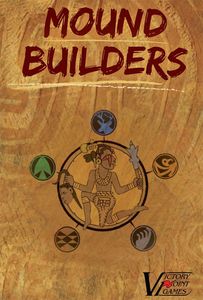
Mound Builders from Victory Point Games is a solitaire States of Siege game that to me has a very intriguing theme that hasn’t been gamed very often and really caught my eye. In Mound Builders, you represent the two largest pre-Columbian Indian “mound builder” cultures that dominated eastern North America from before the time of Christ until the coming of the European colonists in the 17th century. Your empire represents the earlier Hopewell culture and the later Mississippian culture that derived from it.
The game plays in two distinct sections or modules. The first module deals with the Hopewell culture, which is the earlier of the two cultures in the game. During this phase of the game, your goal is to simply expand the influence of your empire across the land, trading with various chiefdoms and trying to incorporate their dominions into your own in order to increase your economic power through the accumulation of various types of resources. As time passes, your empire will grow and regress due to various factors including warfare, disease and drought, but more often than not, the real threat to your culture is simply that of the existence of other ways of life and beliefs that will ultimately mix with your own culture.

During the second phase of the game, you will be beset on all sides by competing tribes as well as the nasty Spaniards and will watch as the empire that you worked so hard to build during the Hopewell Era simply disappears from history. Each turn, a card will be drawn that tells you which of the 5 opposing cultures will move into your lands along a siege track. Sometimes only 1 will move but up to 3 can all move at once, and some can be moved more than once each turn. If you do not attack those cultures when they occupy one of your chiefdoms by the end of your turn and chase them off, your resource will be taken from you and you will no longer be able to produce or trade for that type of good, thereby weakening your economy. This States of Siege system is so very cool and has been replicated in may other additions to the series (such as Ottoman Sunset, Dawn of the Zeds and Hapsburg Eclipse but also has spawned, or at least inspired several other designers to create equally cool and interesting simulations (Pavlov’s House and Castle Itter). I have definitely reaped the benefits of this States of Siege Series and love me a good solo game with this cool mechanic.
This is a link to a video unboxing of the game showing off the great components but unfortunately we have never done any other videos on this game:
2. Kaiserkrieg! The Great War 1914-1918 from White Dog Games
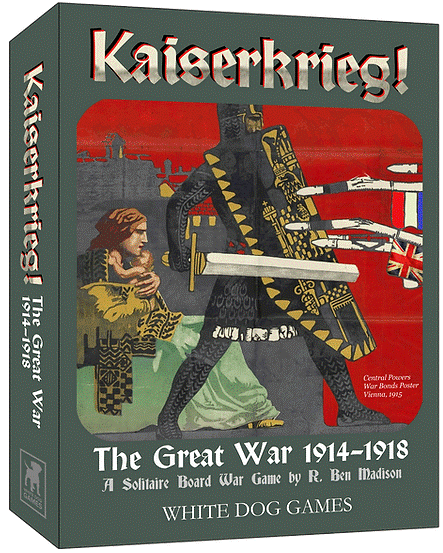
This one is simply fantastic! A solitaire treatment of The Great War using the States of Siege Series model but with a change to a horizontal rather than vertical layout of spaces where enemy forces can build up and perform an “Over the Top” move if you don’t destroy their troops before then. The player takes the side of the Central Powers and must deal with events that replicate the history of the period and the tumult of various revolutions, threats and opportunities. Well done game by Ben Madison that uses chit pull to activate the enemies and cause events. Lots of chaos. Lots of tough choices. Lots of history. And it always seems to come down to the very end. The only draw back to the game though is that it is long, taking 2-3 hours to play through an entire game. Each chit drawn has lots of information and there are always lots of things to do each turn with your very limited actions.
One of my favorite parts is the use of Blockade Runners to gain your funds for the turn. During the Naval/Air Warfare Phase, the player will place out their available Blockade Runners on various seas zones numbered 1a, 1b, 2a, 2b, 2c, 3 and 4 in order to attempt to break Allied blockades and deliver goods and funds to Germany to fuel the war effort. Each of these numbered sea zones will provide a haul of Reichsmarks based on the number of the sea zone if they are able to evade the British Cruisers. This is determined by rolling 2d6 and consulting the British Cruisers Table to find out in what sea zones the available British Cruisers will be placed. If there is a Blockade Runner in the determined sea zone, it will be destroyed and placed in the Neutral Ports box where it will wait to be built later at a cost of 2 RM. If the rolled sea zone contains a Blockade Runner and the High Seas Fleet marker, the British Cruiser will be unable to destroy the Blockade Runner and a naval combat will ensue.
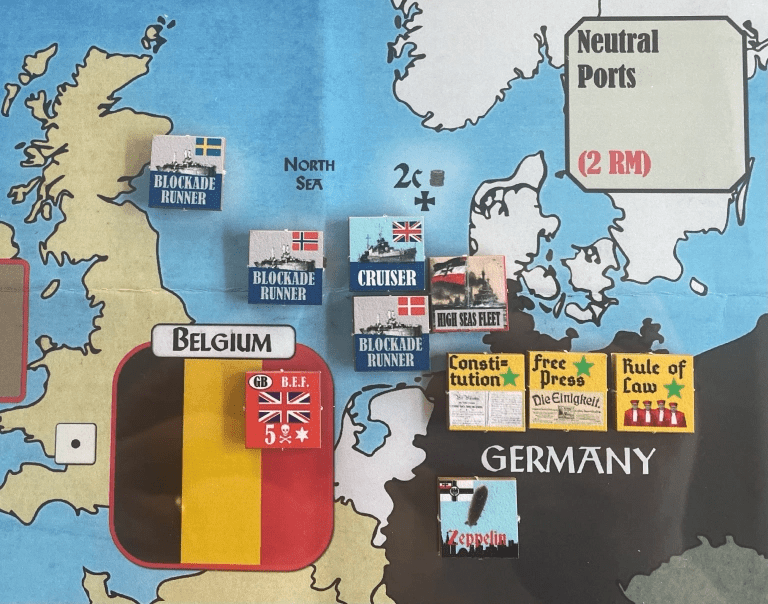
In the above picture, the Central Powers defeat the British Cruiser with the High Seas Fleet and the 3 Blockade Runners placed in seas zones 2b, 3 and 4 bring home a cash haul of 9 Reichsmarks that will be used to take actions and push back the amassing Entente forces in the various staging areas to avoid an Over the Top chit from being placed and prevent the built up forces there attacking into Germany. This process of gaining income is very interesting and unique and it really feels correct as you are trying to do your best to avoid and destroy the British Cruisers so that you have your choice of the best producing sea zones without the fear of Entente intervention.
You can check out our unboxing video to get a good look at the components:
Here is a link to my video review:
1. Dawn of the Zeds from Victory Point Games
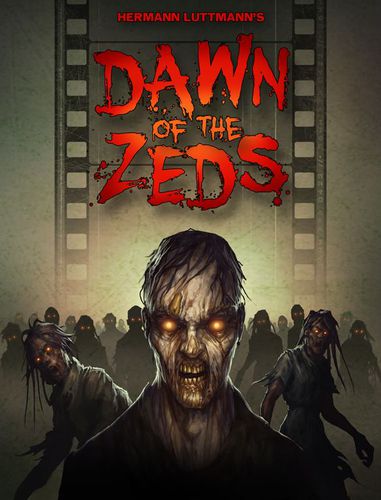
So the #1 spot on this list is a non-wargame, so I apologize but Dawn of the Zeds is just so damn good and I have such good experiences with this one that it dawned on me that this one is my favorite States of Siege Series game. Personally, I love the zombie horror genre and have enjoyed movies from the classic George A. Romero’s Night of the Living Dead, to Day of the Dead and even on the small screen with shows like The Walking Dead. All tell a fantastic story about a gruesome future where people die and come back as slobbering, flesh eating zombies. There is something in the terror. Something in the fight for life and how character’s have to hack out a living in a bleak future. It just hooks me every time.
Dawn of the Zeds is a very versatile game from the States of Siege Series, in that it can be played fully co-operative, competitive, or even solo. There’s also 6 or 7 game modes (difficulties) within that, so you can tailor the game to what you want it to be. Would you like an easier, relaxed, and trashy B-Movie zombie slaughter? Or would you like a soul-crushingly difficult, dread filled horror film, where your favorite characters are the first ones to fall?
The players will have to pick their characters and some NPCs to play with, after selecting a difficulty level, then construct the event deck that will run you through the course of the game. You can also adjust the length of the game (which in turn adds to the difficulty again) by including more cards in the event deck. Depending on the game level selected you’ll then play through the deck one card at a time, going through a series of game phases, triggering zombie placement and movement, attacks, and other random (usually awful) events. The game turns have a great structure to them, and are simple and cleanly laid out. Once you’ve played two turns you’ll know exactly how to play the game without picking up the rulebook. Each player gets one, and only one action, then the players have a collective number of event actions ranging from 1-4, but mostly 1 or 2, as dictated by the event card. With these meager actions the players have to cobble together some kind of defense against the waves of oncoming zombie hoards attacking Farmingdale from all sides.

As the zombies start flooding onto the board and tracks advancing on Farmingdale in droves they’ll quickly overrun the outlying villages and attack the civilians. The game gives incentives (end game scoring) for protecting them, because they’re pretty much fodder when fighting alone. As you can see above, most times you’ll end up with at least a few in the cemetery, but as the game scales the body count will escalate very quickly. If you can outlast the event deck you’ll win the game, and then you count up your score of surviving units and supplies and ammo and then cross reference the epilogues book for a blurb describing how well you won.
For me, the main appeal of this game is how replayable it is. You can either treat it seriously, or tongue-in-cheek, you can play it super easy or super hard, you can roleplay a ton, or not at all, you can play co-operative, or competitive. The decks have cards removed so no game will look the same, and while the board is static the deck that moves everything on the board is wildly variable. There are many things in this game that might take you time to acquire and understand how best to use such as conducting research in order to build superweapons, there’s also rogue groups and anti heroes that will try to sabotage your efforts. Each of these things make the game harder, and harder – but ultimately more deep, rich, and tension filled.
Alexander and I both love this game. It’s a great implementation of an overdone theme. One of the best things is that the game contains nearly every trope you can think of from every Zombie B-movie ever made, so gear up, get ready to fight, and die and enjoy the ride.
Here is a look at a long ago done video review of the game, when Alexander and I were much younger, thinner and had more hair:
I appreciate you following along as I shared my Top 10 States of Siege Series games. There are so many great games in the series and this list it was extremely difficult to put together and I sweated over my choices. Having to leave out such great games as Malta Besieged, Hapsburg Eclipse, Cruel Necessity and others was very painful but I stand by this list as those games that I have enjoyed the most! What States of Siege Series games are your favorites?
-Grant
 The Players' Aid
The Mission would top my list, followed by Kaiserkrieg! and Ottoman Sunset. The entire SOS series is truly excellent for the solitaire gamer – there is so much to explore and enjoy!
LikeLiked by 1 person
I really like The Mission, its theme, mechanics and history. I’ve played it a few times and while I like it, it just seems to interest me less once the caliphates attack.
LikeLike
Great list. I don’t have Keep Up the Fire! yet, but I will look at it now. Some of my first SoS games were Gorbachev and Nubia from Ben Madison. Both have similar mechanics, but I find the shorter playtime to hit a sweet spot with me. Mr. Madison is the king of these SoS designs right now. I love every one of them.
LikeLiked by 1 person
I agree with you on both counts. Nubia is great and plays fast. I also enjoy Gorbachev and Ben is the emperor of SoS!
LikeLike
Dawn of the Zeds is a very fitting choice for #1. I love it! I’ll have to add Kaiserkrieg! The Great War 1914-1918 and Mound Builders to my wish list.
LikeLiked by 1 person
It is so GOOD!
LikeLike
This was a great read and a really fun list with a few surprises. I never would’ve expected to see Kaiserkrieg above Global War.
I still need to get a few of these games played and all of your Gift of the Nile coverage has me excited for that one in particular.
Looking forward to more States of Siege coverage, thanks Grant!
LikeLiked by 1 person
Both of those titles are great and use similar elements but Kaiserkrieg just clicked more with me.
LikeLike
No mention of “We Must Tell the Emperor”?
This is the most pure of the original SoS games. The narrative arc is different because the player can achieve a Military Victory early. Alas, typically, it comes down to a desperate final stand on the Home Islands. But, the theme and narrative come through so strongly.
You must play with the “expansion” kit to get the full experience.
LikeLiked by 1 person
I can’t say I was surprised to see you post here! Your help was invaluable in cobbling my sad home copy together – until I finally purchased a copy of my own.
LikeLiked by 1 person
I just haven’t had the good fortune to play this title yet. I have played about 20 of them but still have at least that many more to have played them all.
LikeLike
Dawn of the Zeds… excellent pick. It renewed a love of the zombie genre for me. Brutally hard, but fun and creates funny moments!
LikeLiked by 1 person
Yes. Agree. We have played about a dozen times and each play is so unique and interesting!
LikeLike
Nice reviews!! Thx much G-man Sent from my iPhone
LikeLiked by 1 person
This is one of my favorite genres of solitaire gaming! We Must Tell the Emperor is one of mine – I had to build a copy from pictures I cribbed from the internet until I was finally able to find a copy to purchase. Sadly stuck in some sort of licensing deal with a Japanese game company and can’t currently be reprinted.
LikeLiked by 1 person
I would love to get my hands on a copy of We Must Tell the Emperor.
LikeLike