
Today was a very busy game filled day. I’m tired tonight so I’m not sure how long this post will be but here goes. We played a total of 4 games today including 1943: Race to Rabaul from PHALANX, Checkpoint Charlie from GMT Games, Coast Watchers from GMT Games and Thirty Years of Misery from VUCA Simulations.
So here is a quick summary of each.
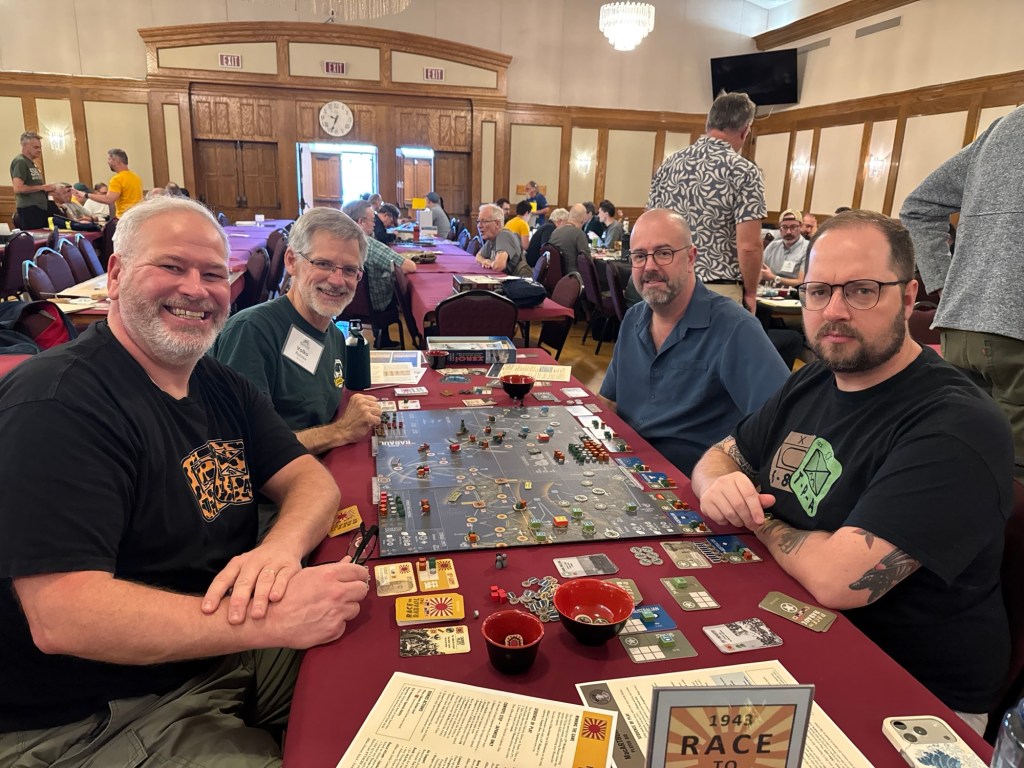
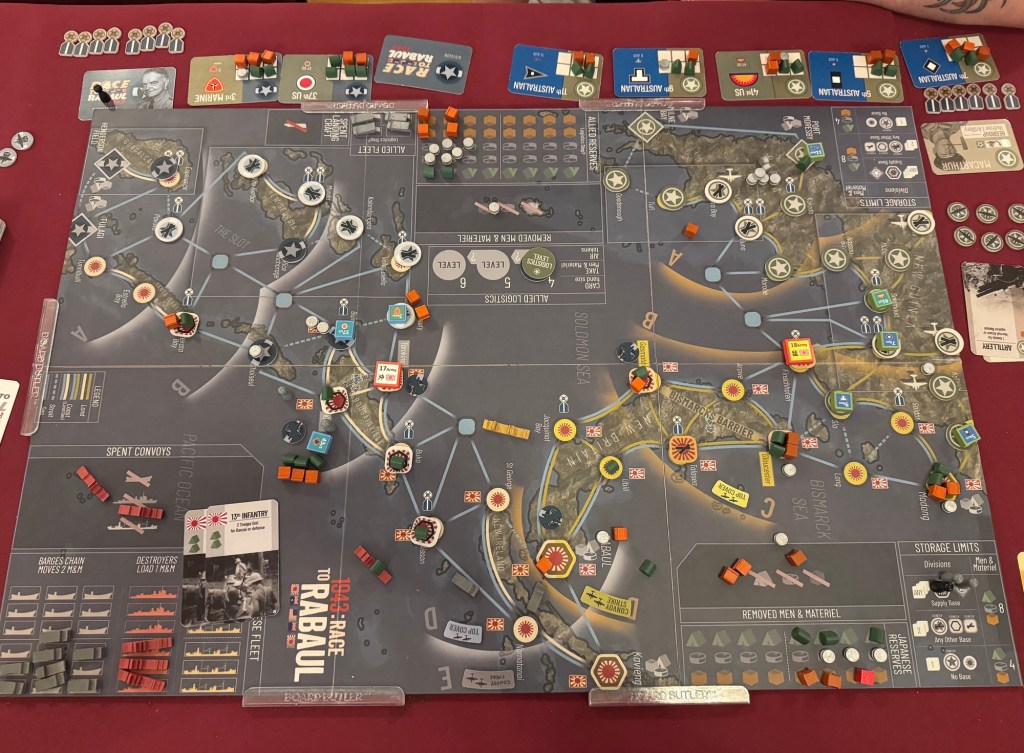
1943: Race to Rabaul is designed by Volko Ruhnke and is a part of Keep ‘Em Rolling Series of logistics focused wargames that includes titles such as 1944: Race to the Rhine and 1941: Race to Moscow. We have played both of the other games in the series but this one is deeper and more involved than the previous volumes. It also feels very much more like a wargame.
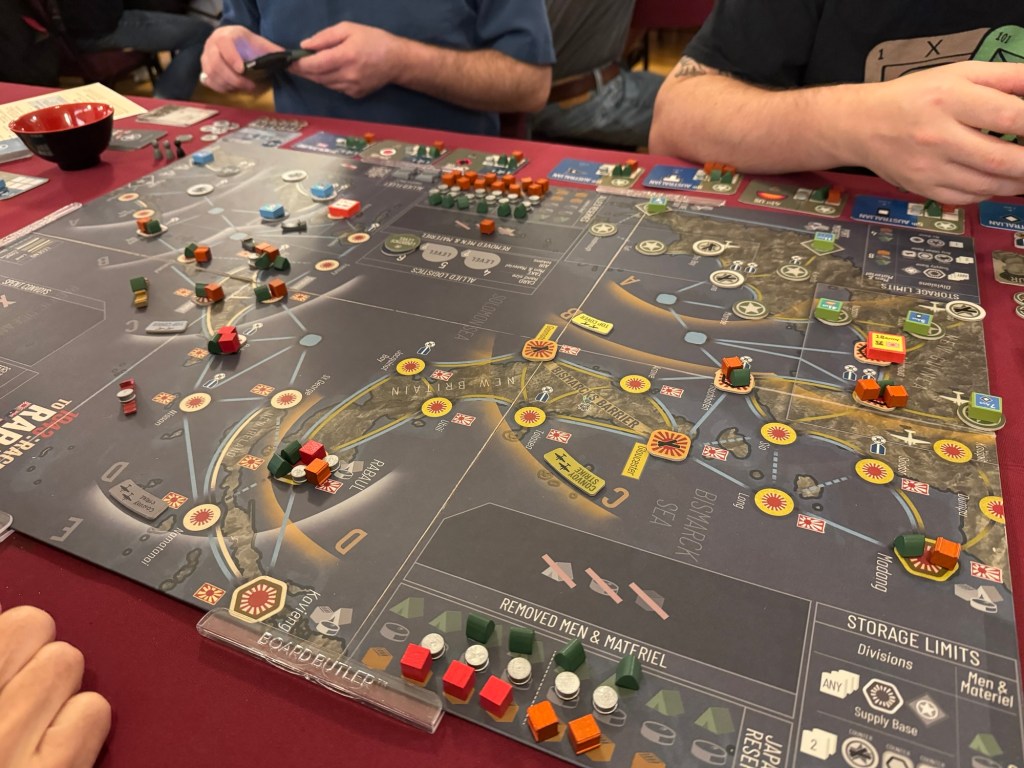
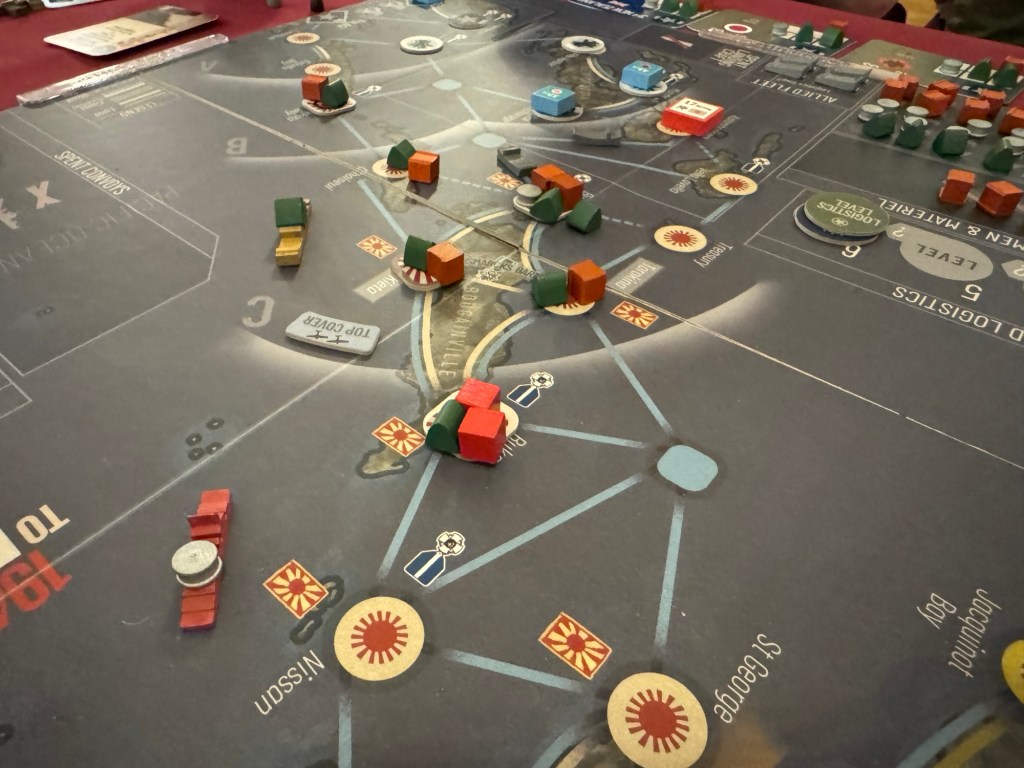
The fighting takes place across the South Pacific with the twists that there are 2 teams of players who are fighting each other but also have to contend fur the same pool of supplies and men and have to manage sea, air and land operations.
The Japanese must use Convoys and have to deal Allied Convoy Strikes that eliminate them and the supplies they are trying to deliver. The Allies have it easier as they have an abundance of transports and can move supplies more easily under Air Cover. The problem is that they must take ground and build Air Bases to extend that Air Cover and Convoy Strike range.
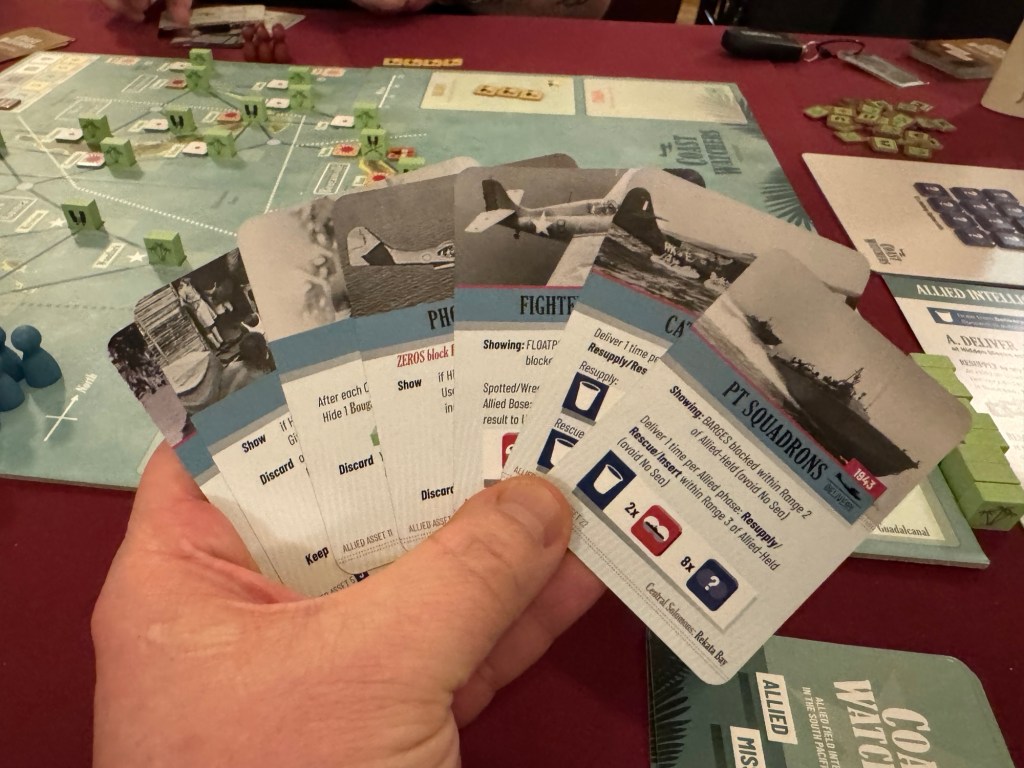
Each side has cards that include operations as well as units and these are played to take actions and can be used in battle to increase strength.
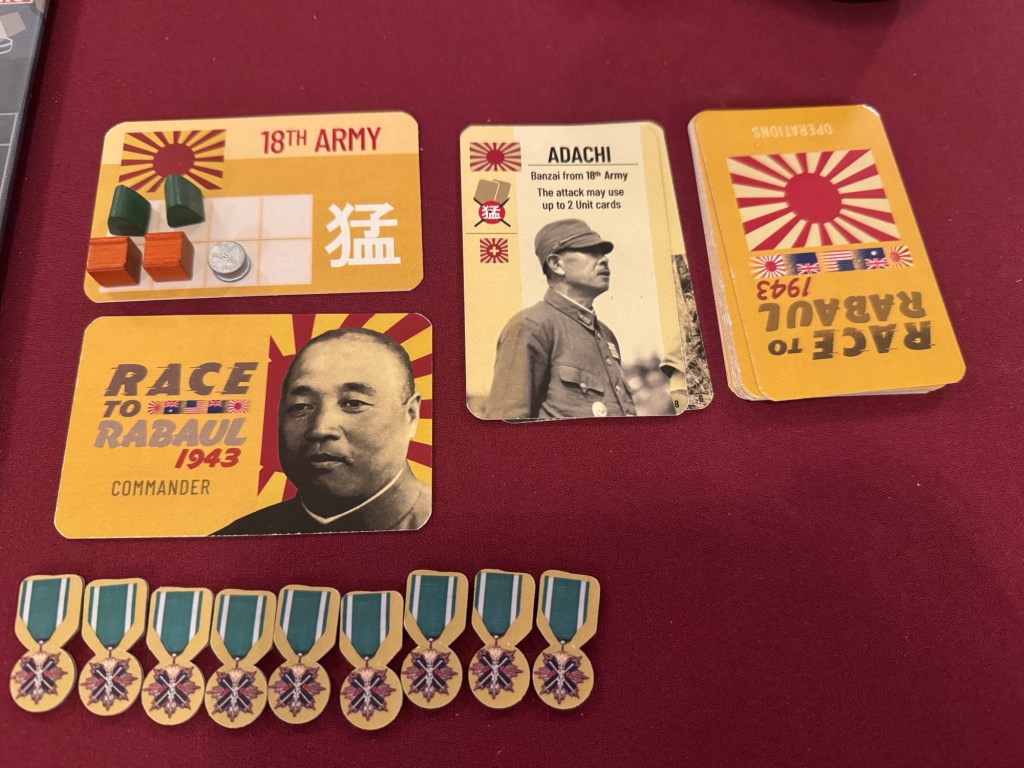
The ultimate goal is to reach a total of 12 medals which come from taking key areas for the Allies and taking Japanese units in battle and for the Japanese preventing the Allies from reaching the Bismarck Barrier and the Japanese causing Allied losses. This one is very well done and we very much enjoyed the experience.
We published an interview with Volko and you can read that at the following link: https://theplayersaid.com/2026/06/15/interview-with-volko-ruhnke-designer-of-1943-race-to-rabaul-from-phalanx/
Next up was a look at a prototype game called Checkpoint Charlie with designer Russell Brown and is a solitaire or cooperative game of British Secret Intelligence Service (SIS) espionage missions in Berlin in the early 1960’s.
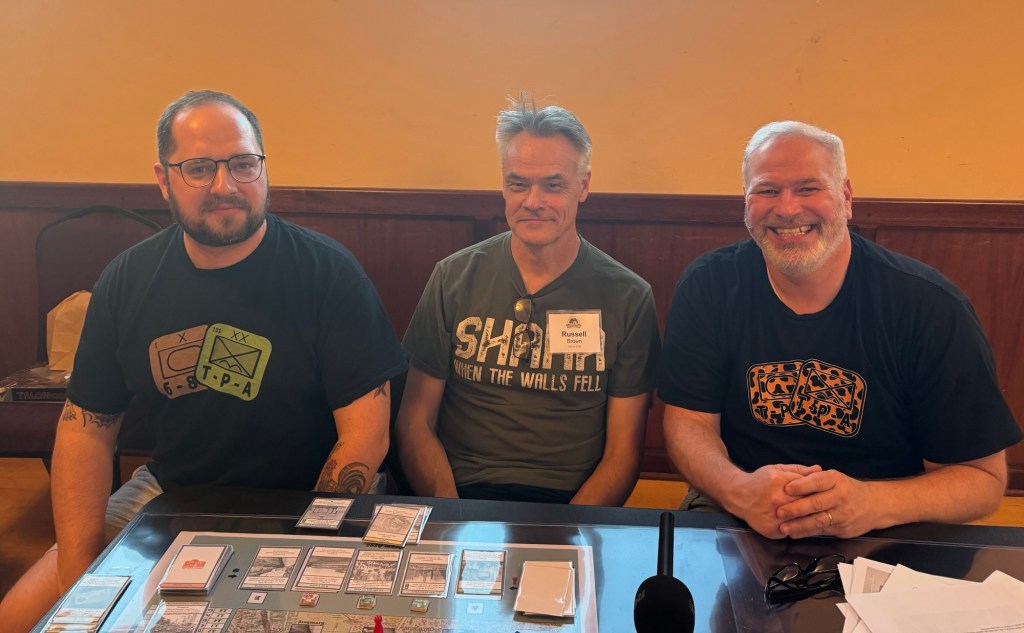
The game is scenario-based, and players must manage a tableau of 5 cards to move their assets and spies around a board showing various locations in Berlin.
Each turn players will draw 1 of the 2 cards on the ends of this row of 5 cards, and then all the other cards shift before refilling the empty position. No card stays in the same location from turn to turn. This is important, because these cards are used to determine where tokens move on the map. Each card location can have a chit above it corresponding to an asset or KGB agent on the map, and every turn, after the cards shift, that asset or KGB agent moves toward the location, item, or asset depicted on the card below their chit. In addition to their role in moving tokens on the map, each card also has an effect printed on the bottom that applies whenever that card is showing in the draw area. As cards are drawn and new cards replace them, these effects come and go and can have significant impacts on the mission.
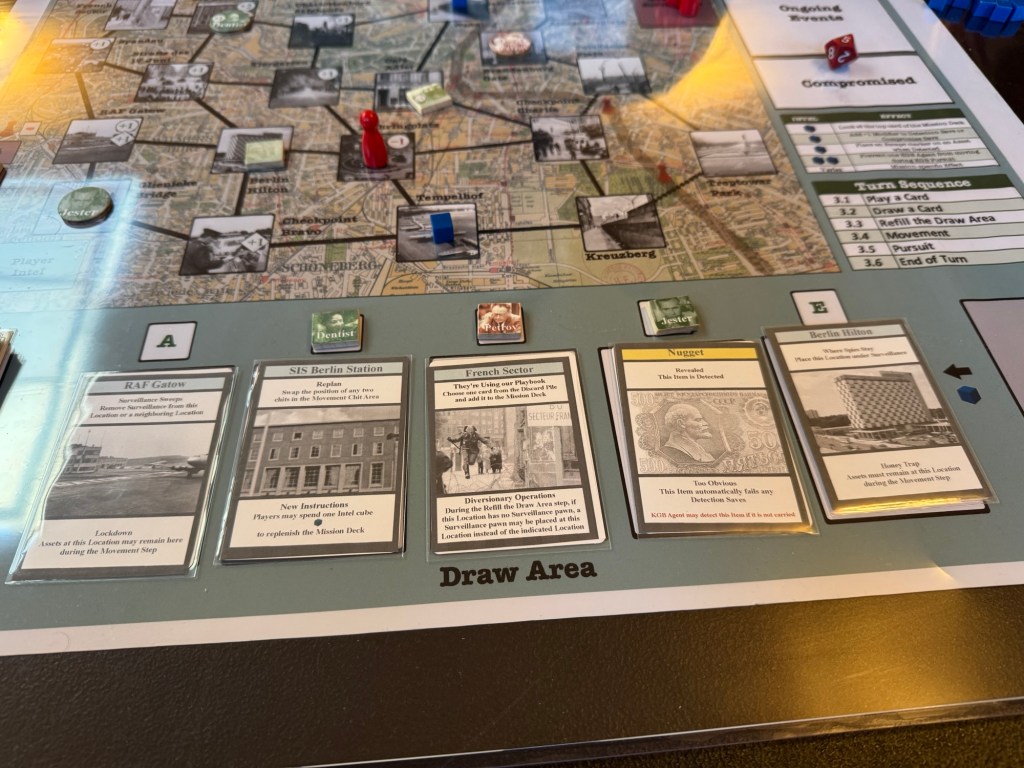
This is a very good game where players have to plan but these plans are imperfect as you are at the mercy of the lineup of cards. You have to be patient and try to move away from the KGB before your assets are discovered and captured.
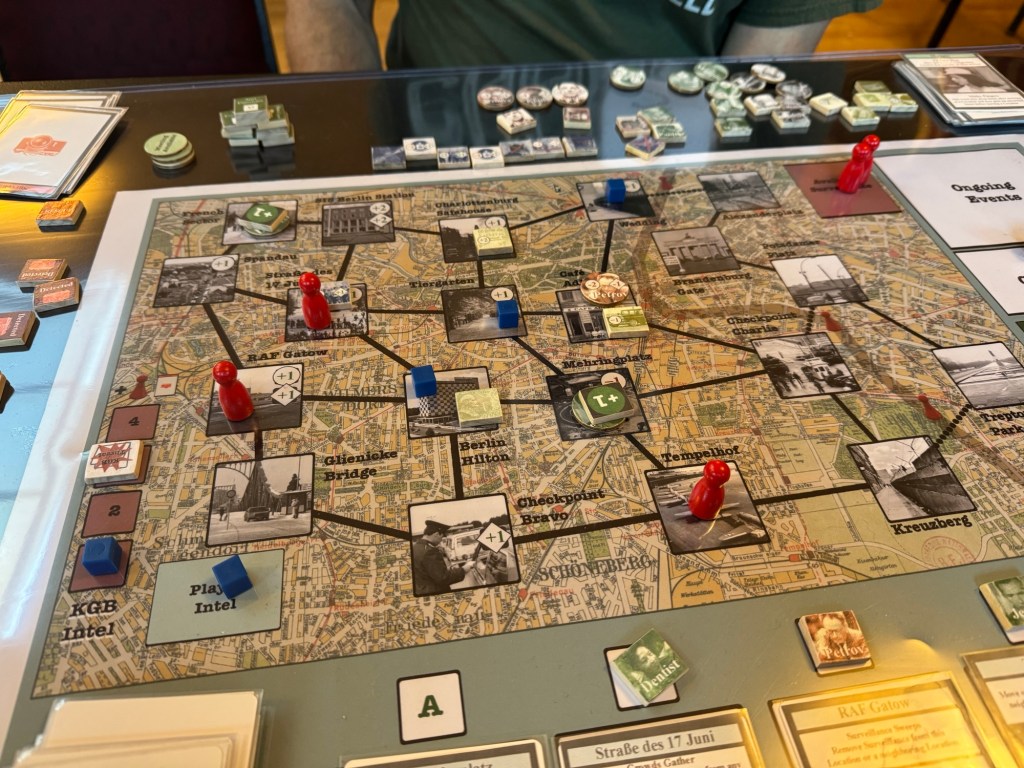
We had a great time with this one as we played cooperatively and I think this will be a huge winner.
We published an interview with Russell and you can read that at the following link: https://theplayersaid.com/2026/02/23/interview-with-russell-brown-designer-of-checkpoint-charlie-from-gmt-games/
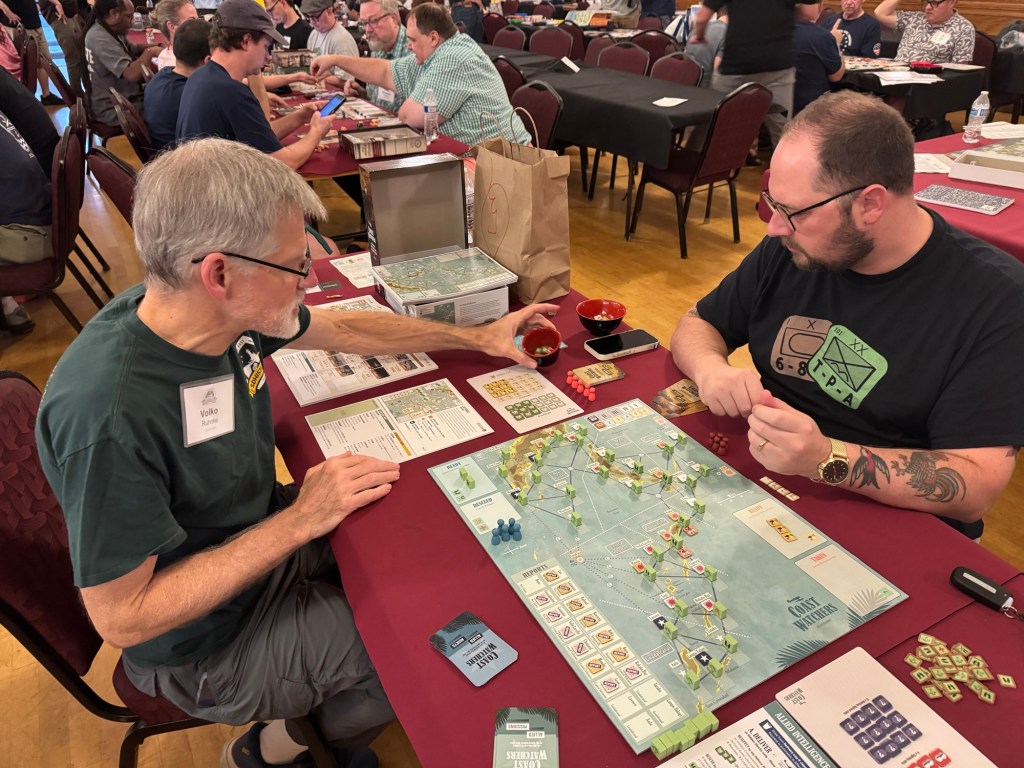
Then we played Coast Watchers from GMT Games with Volko taking us through the game and teaching us. This one was great and I’m looking forward to playing more in the future.
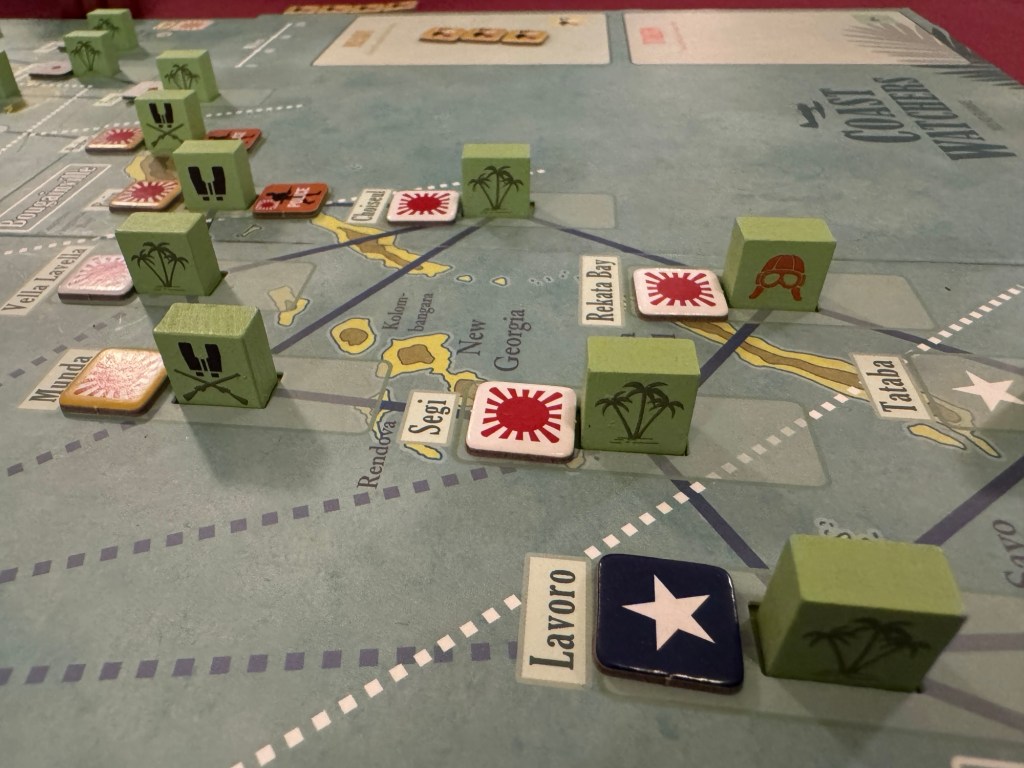
The game is intelligence operations focused with hidden coast watcher units trying to find out information on enemy build-up, movements and to report this information to Allied operations in the South Pacific. The hidden information is via status blocks, secret markers for Japanese movements, blind draw chit cups (Patrol and Delivery) that test success rather than dice and asymmetric objectives.
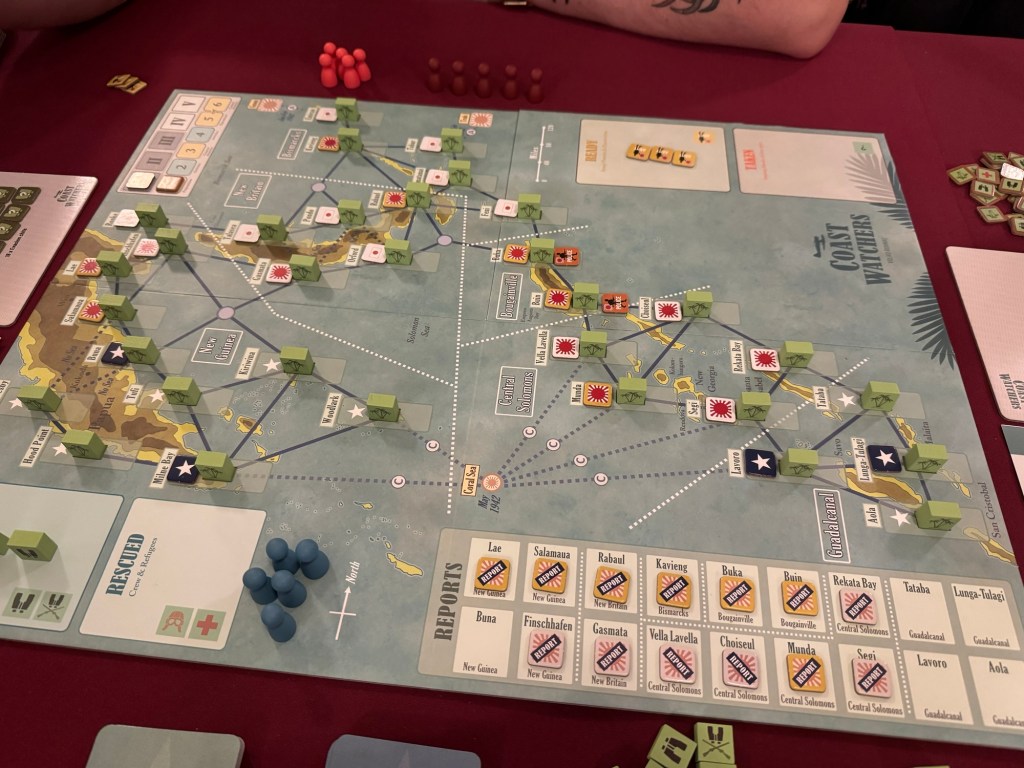
The game uses cards as well in the firm of missions and assets and players have to choose their cards carefully to be able to have the capabilities and benefits to perform their operations.
I very much enjoyed this one and am still thinking about it several hours later. I think that this one is going to really be a great series as the other games deal with intelligence in different wars and time periods. Just fantastic!
We published an interview with Volko and you can read that at the following link: https://theplayersaid.com/2024/11/04/interview-with-volko-ruhnke-designer-of-coast-watchers-allied-field-intelligence-in-the-south-pacific-1942-1943-from-gmt-games/
At this point we were tired and enjoyed the USMC birthday celebration and had cake that was cut by a Marine saber. We then played a very short learning game of Thirty Years of Misery from VUCA Simulations.
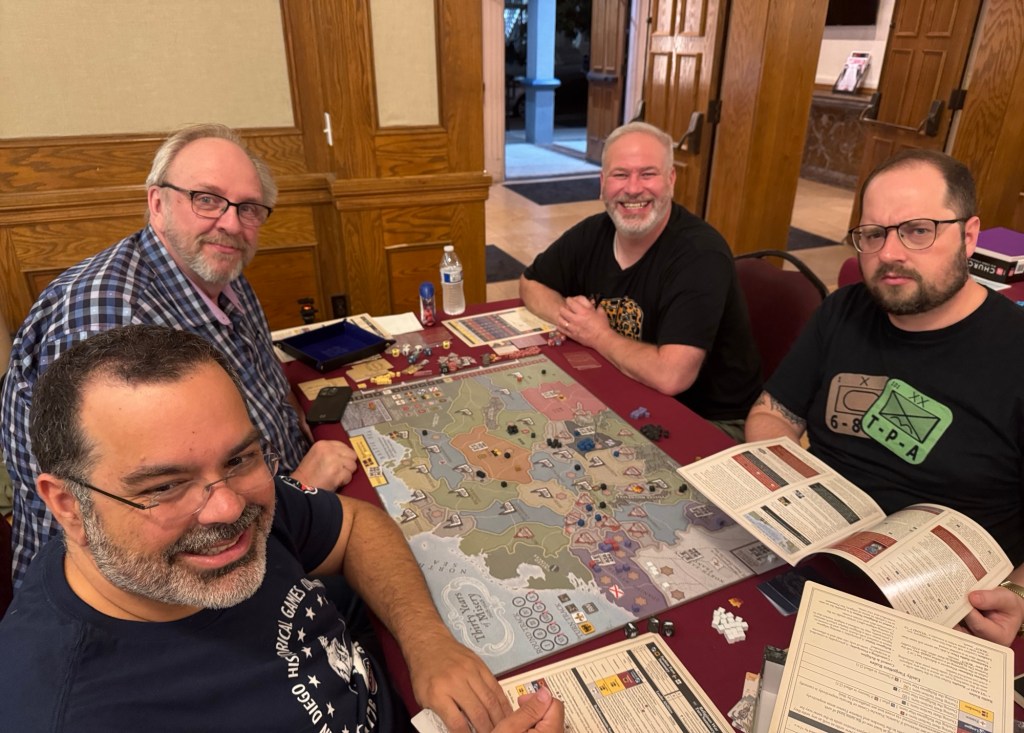
Th game covers the Thirty Years War of 1618-1648 and plays up to 4 players with 2 teams of 2. Players on the same side, the Imperials or the Protestants, must coordinate and work together to win the war, but the victory conditions only allow a single faction within the alliance to win the game.
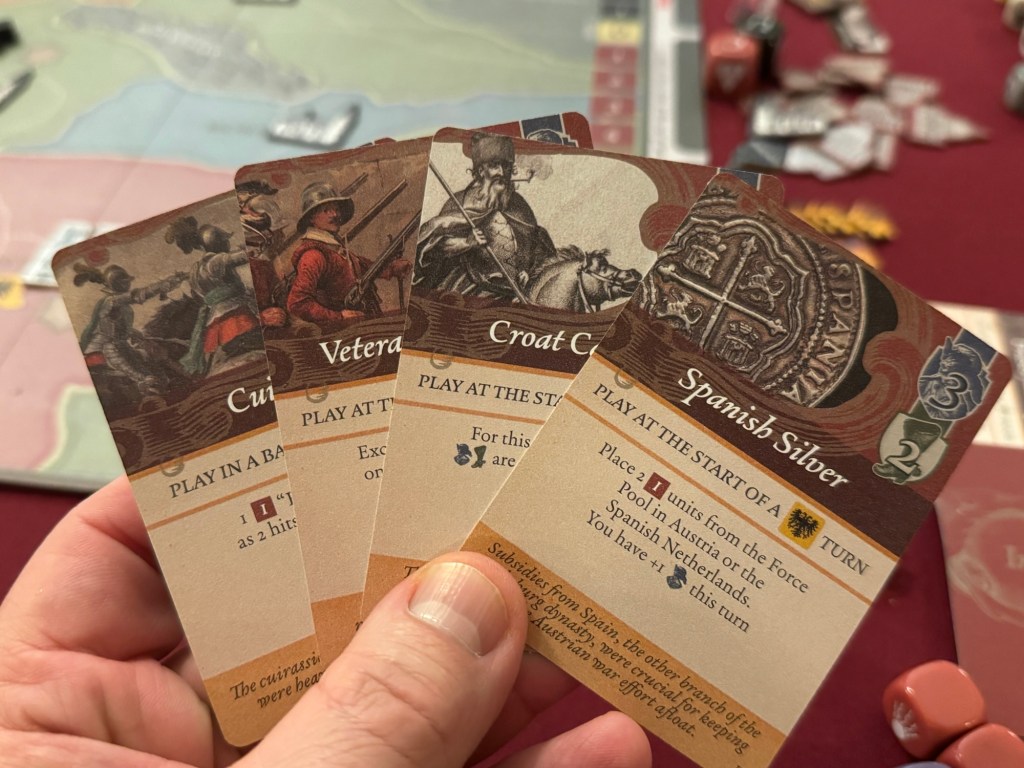
The game is card driven and is based on the Birth of America Series from Academy Games. Random chit pull determines turn order and combat resolution uses different custom dice fur each nation.
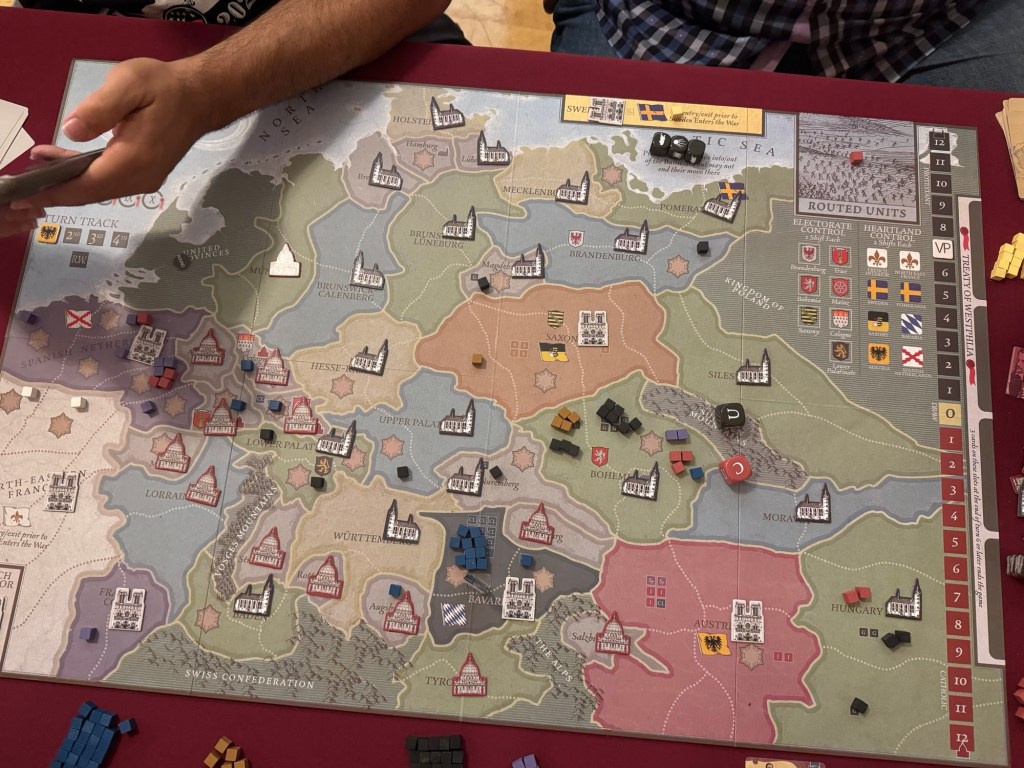
This is a fun one and it is designed to be very approachable. Simple movement and combat but there is depth here as you have the religious struggle as players can convert spaces and then can lose them later. Lots of fun and we ended up playing just 3 rounds. We will look for a chance to play more in the future.
Tomorrow is our last day and we have a game of The Other Side of the Hill from NAC Wargames planned. See you tomorrow evening!
-Grant


Great review Grant. Checkpoint Charlie looks really interesting. On all the pics Alexander looks like he’s really pleased to be there 😂.
LikeLike