One of the more interesting topics to play a wargame on is that of a sustained siege. I am not talking about a game that has a siege mechanic that is used over the course of the game but a game that is based wholly around a specific historical siege. A siege requires a lot of different takes to be included in a wargame to make it work including things such as supplies, manpower, defenses such as walls, trenches and other fortifications, siege engines, morale and the ability and will to continue the fight. I really have very much enjoyed the siege based wargames that I have played over the years and I wanted to share 3 of my favorites in this post. So, without further adieu, here are my Best 3 Games with…Sieges!
I want to make one thing clear. I love the States of Siege Series of games and have played dozens of them. But I don’t consider those games in the same vein as these siege focused games that I am sharing.
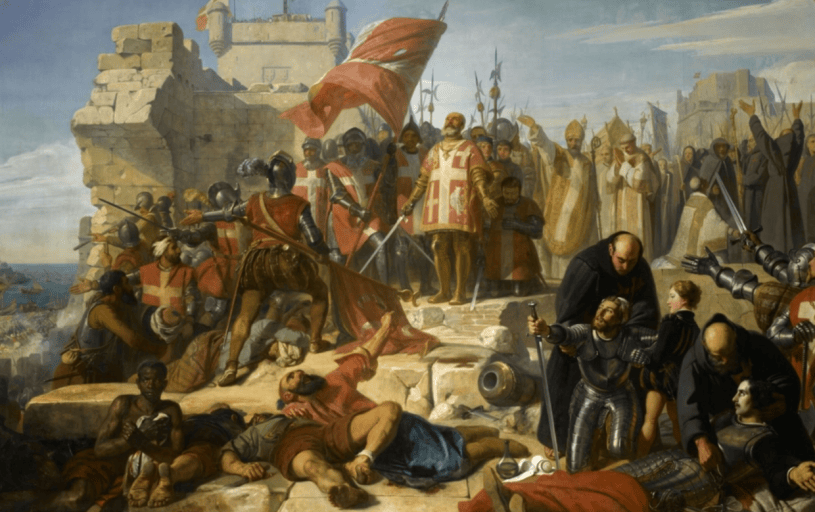
*The image used as the featured image for this post is called Lifting of the Siege of Malta painted by Charles-Philippe Lariviere.
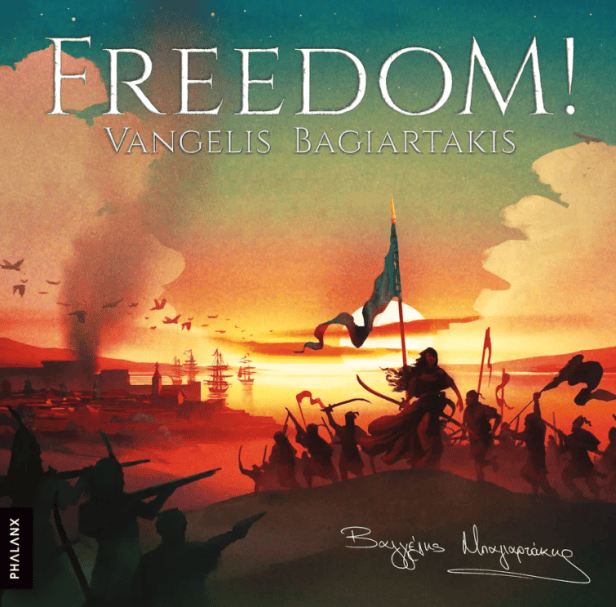
3. Freedom! from PHALANX
Freedom! is a card driven siege game that pits the Greek freedom fighters and the besieging imperial forces of the Ottomans against each other. The siege is of the Greek Holy City of Messolonghi during the Greek War of Independence in 1825-1826. Freedom! features asymmetrical play with the goal of the invading forces being to manage to get inside the city before the end of the game or to force the citizens to abandon the cause by dropping their morale to zero while the defenders, on the other hand, try to withstand the siege and protect the city long enough for the invaders to abandon their attempt either by deciding to leave on their own or by having their morale dropped to zero. The actions of the players are driven by the cards in their hands, which highlight actual events and personalities of that time, while the combat is dice-driven to allow for quick and exciting game-play.
The rebel player is largely focused on grinding out a victory by surviving over the course of 6 rounds and are simply trying to hang on, unless of course they can somehow reduce the morale of the besieging units enough to where they give up and go home. However, nothing about this is a grind for the defending player and that is a problem that can be endemic with siege games. You as the defender, are as much a part of the action and must try to follow your own plan whenever possible to get a win. In other asymmetric siege games, the defender is often just reacting to the aggressor’s moves. As the insurgents, it never feels like you are simply reactionary and just along for the ride.
The really interesting thing about this one is that that there are actually two maps that are used to play the game. One of the maps shows the actual city and the forces involved in the siege while the other shows the surrounding areas, highlighting the support that each of them provides to both players. The art is gorgeous and this one is a game that we had a really good experience with. There also is a solitaire module that you have to buy separately but it works very well and provides an opportunity to play this game when you can’t find an opponent.
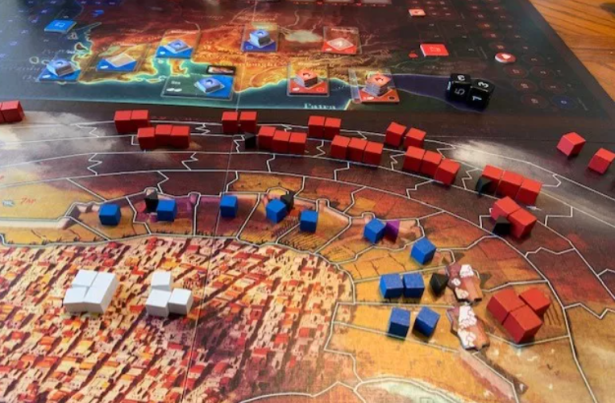
Players will find that they are competing for a number of nearby Greek regions on the board and there will be a tug-of-war played out by using various support actions that are focused on cutting off your opponent’s supplies. This is what I liked most about Freedom! It’s not just a continual back and forth trying to knock out your enemy’s units but there are multiple paths to victory, and all of them seem to be viable. By lowering your opponent’s morale and cutting them off from the supplies they need, you completely change their plans. Of course, there is nothing to stop you from pushing aggressively against the enemy’s walls.
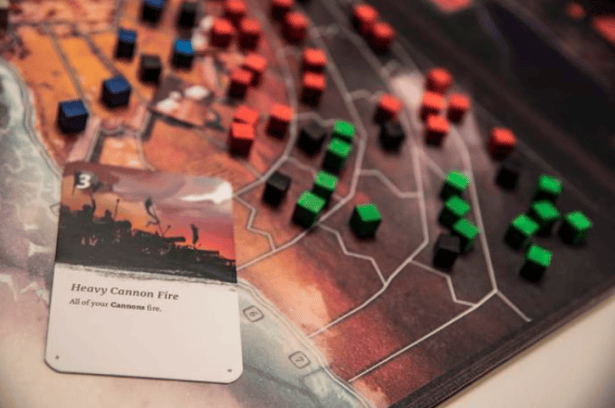
Each side of the conflict really gives a different feel to the game and creates a new experience once you switch sides. As the Ottomans, you are generally going to undertake aggressive maneuver and attacks in an attempt to push forward and put pressure on the defenders and their walls of security. But when you play the Greeks there is a real feeling unpleasant feeling of desperation, which only gets worse with the arrival of Turkish reinforcements.
Here is a look at our unboxing video so you can get a good look at the components:
Here is our video review used for the Kickstarter campaign so you can understand our thoughts on the game:
If you are interested in Freedom!, you can purchase a copy for €69,00 ($80.00 in US Dollars) from the PHALANX website at the following link: https://phalanx.co.uk/games/freedom-board-game/
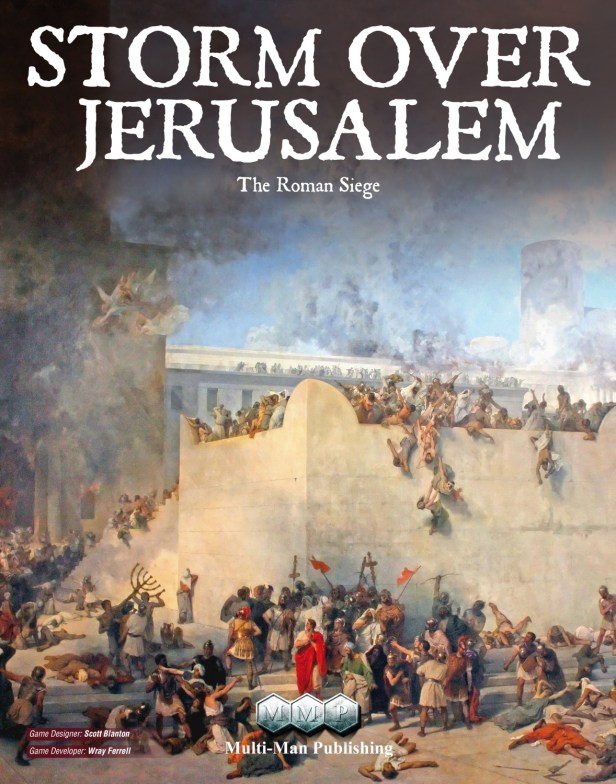
2. Storm Over Jerusalem: The Roman Siege from Multi-Man Publishing
The Storm Over Area Impulse Series has been around for a while and includes games such as Storm Over Arnhem (1981) from The Avalon Hill Game Company, Storm Over Stalingrad (2006) from Multi-Man Publishing and Storm Over Dien Bien Phu (2014) from Multi-Man Publishing amongst several others. The hallmark of the series is relatively low complexity for a wargame and a very simple combat system that calculates total attack versus total defense and adds a roll of 2d6. The losses from combat can be absorbed by either retreating from the attacked areas or destroying units. The game system has mostly been used to model more modern wars including the Franco-Prussian War, World War II and the French conflict at Dien Bien Phu in Vietnam.
Storm Over Jerusalem: The Roman Siege is a 2-player wargame that simulates the Roman siege of Jerusalem during 70 AD. One player controls the mighty Roman forces, who are truly master of siege warfare with their siege towers, ballista, battering rams and onagers, and the other player controls the Judean forces, which are divided into 2 separate factions with different leaders. The game is 8 turns long, but can be shortened by the play of a few event cards, at the end of which time the winner is determined by calculating victory points that come from overall losses, holding of certain VP areas and keeping the Romans out of the city.
We were very impressed by the game and its overall clarity of rules, quality components and interesting tactical choices and really had a good time learning and playing it. The Judeans are obviously outclassed by the powerful and skilled Roman Legions but they have several of their own tricks to use to hold out long enough to win the day. There is a lot to like here and I am really glad that we decided to give the system a try. There were some changes specially made to introduce the style of Ancient sieges to the Storm Over Series and this is where the game really shines. The Siege Towers were an evolution of the trenches found in Storm Over Dien Bien Phu game and are very important to the Roman efforts. The walls historically were such a physical presence in the city, and were a major impediment to the Roman efforts, that they had to come up with rules to cover them. The walls provide a defensive modifier against Roman Attacks and Assaults. This Defense Value starts at +4 and can be reduced over time by successful Roman Assaults. Since Judean units have a defense of 7 or 8 the bonus provided by the walls of +4 really helps hold onto areas. Once a wall is damaged from a successful attack though, the defensive modifier can be rebuilt by the Judean player but can never be increased to its full value of +4.

The Roman player also has specific cards (Catapult, Onager, and Battering Rams) that can be used to damage or breach the walls. Once breached, the walls don’t provide any defensive bonus and allow Roman troops to flood into the city. We found that the Romans tried to focus on a specific area of the walls and made their attacks there first in order to bring the maximum attacks possible each round to force the Judean player to have to spend their time and actions on fixing the walls and bringing up reinforcement to replace those lost in retreats. To repair a wall section, the Judean player can discard a card and use the Repair Value of that card to repair walls in an area. This action though requires a fresh unit in that area to be flipped to spent to complete the repair. Walls can only be repaired back up to +3, not the original +4. You can’t rebuild them completely.
I really enjoyed our play of Storm Over Jerusalem. The game was beautifully put together, with fantastic components, but also had some really amazing details and depth to the gameplay. This one is a winner and really has me interested in the other games in the series. I know that this game had a siege focus, which is not necessarily in each of the other games, but I really liked the simple combat system, great card play and very interesting tactical choices that were there for players to have to make.
Here is a link to our full unboxing showing off the beautiful components:
Here also is a link to our full video review:
If you are interested in Storm Over Jerusalem: The Roman Siege, you can order a copy for $86.00 from the Multi-Man Publishing website at the following link: https://mmpgamers.com/index.php?main_page=product_info&products_id=355
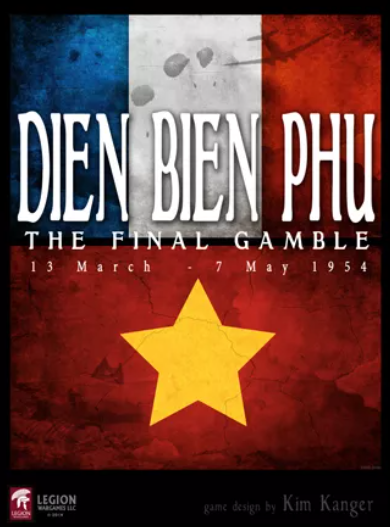
1. Dien Bien Phu: The Final Gamble from Legion Wargames
Dien Bien Phu: The Final Gamble from Legion Wargames is a 2-player wargame about the decisive battle of Dien Bien Phu in 1954 that not only ended the French Indochina War but also had political repercussions far outside the region itself. One player represents France and her colonial troops. The other player represents the armed force of Viet Minh, the communist/nationalist independence movement of Vietnam. This game is not a traditional wargame and has different victory conditions than normal and also some unique and interesting supply rules. The Viet Minh win by forcing the French troops to surrender and France wins by not surrendering.
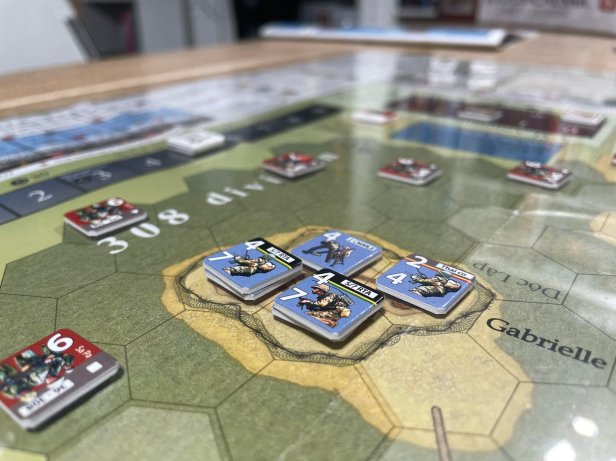
The board covers the former village of Dien Bien Phu and surrounding areas. There is a small submap of the French strongpoint Isabelle further south in the valley. There are several groups of French strongpoints scattered around the map, each one with a female name, which are all named after the commander de Castries’ mistresses, according to lore. The map is divided into three divisional sectors. Each sector has several zones that represent Viet Minh trenches winding from the map edge towards the center of the map. Each hex represents 150 meters and each game turn covers three days. There are 21 turns in the game, but historically, it ended after 19 game turns with a Viet Minh victory. The scale allows stacking of three French units in a hex, but there are no stacking limits for Viet Minh battalions, which creates a chess like feel.
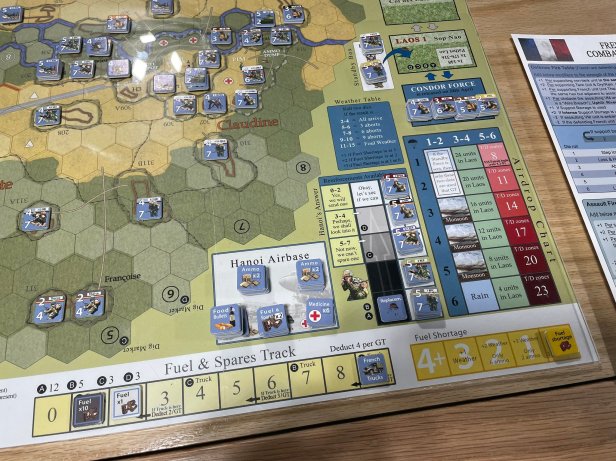
French supply is a bit of a mini-game within the game. As this battle took place far out in the wilderness of Vietnam and both sides had to adjust to the limited flow of supplies that could be brought forward, through the air to the French, and through vast forests to the Viet Minh. Supplies tend to be a lot less than wished for. There are several supply tracks on the map showing how much ammo, food & bullets, fuel & spares, medicine as well as the amount of truck transport available for the French. The process for doing this supply phase is really pretty interesting and fun. Each game turn air transports will bring in a mix of supplies together with replacements and reinforcements. This is done on a chart with a grid where a mix of supply markers are placed together with eventual reinforcements and replacements. Weather will then decide what will arrive and what will abort back to Hanoi. The French player will never know for sure what type of supplies and how much will arrive and has to take that into account as they plan out their turns. And this is one of the best parts of the game and kept me thinking about the struggle with keeping my efforts going with the French. This one is not an easy game for either side and I think that it keeps the game very balanced and interesting to play.
Here is a link to our full video review:
If you are interested in Dien Bien Phu: The Final Gamble, you can order a copy for $54.00 from the Legion Wargames website at the following link: https://www.legionwargames.com/legion_DBP.html
A few other games that I have played on the subject of sieges, and that I very much liked, were games such as Halls of Hegra from Tompet Games, 1565 Siege of Malta from Worthington Publishing, 414 BC Siege of Syracuse from Worthington Publishing, Keep Up the Fire! Deluxe Edition from Worthington Publishing, Castle Itter: The Strangest Battle of WWII from Dan Verssen Games, Siege Works: A Napoleonic Siege Roll & Write from Solo Wargame, Crusaders: The Siege of Acre 1291 from Blue Panther/Art of Wargames, Castelnuovo 1539 from Draco Ideas and The Alamo Remembered from Victory Point Games.
What are your favorite siege based wargames?
-Grant


+1 for Dien Bien Phu. It really transmits the tension of the reducing space for the French and the grinding on the Vietnamese forces.
One of my favourites about the National Liberation War (as the Vietnamese call it).
LikeLiked by 1 person
Great to see Kim Kanger’s DBP here at number 1 – it was the game that got me back into board wargaming after two decades of (historical) miniature gaming. An utterly enthralling experience.
LikeLiked by 1 person
Really enjoy Storm Over Jerusalem. You can replay the siege in one sitting, unlike AH’s classic Siege of Jerusalem, which requires a lot of time and table space.
LikeLiked by 1 person
FYI – the new game from Cadet Games “The Great Anglo-Boer War – the Battle for South Africa 1899-1902” features three sieges at the outset of the Campaign – Kimberley, Mafeking, and Ladysmith. These three sieges were then (and are now) the most important Victory Point opportunities for the Empire or Boer Forces at the outset of the conflict. Anyone who knows the history of that war knows how these sieges impacted the strategic options available to the Empire at the outset of the war.
LikeLiked by 1 person
Looking forward to experiencing those.
LikeLike
I like Fire & Stone by Robert DeLeskie on the Ottoman siege of Vienna 1683! It plays fast and tense… although I feel it is very hard for the Ottomans to win!
LikeLiked by 1 person