
Day 5 has involved a lot of driving. We had to make our way from Caen in northwest France to Mons just over the border in Belgium, which was a bit over 300km.
So why did we want to go to Mons? Well a couple of reasons but mainly because it lied in our path to Waterloo and ultimately onto the Netherlands. But in 1914, Mons was the location of the Battle of Mons, which was the first engagement of the war for the British Expeditionary Force or BEF and Alexander wanted to see it. The British were forced to retreat by a numerically superior German force made up of 3 full Corps and 2 Cavalry Corps and the town remained occupied by the Germans until its liberation by the Canadian Corps during the final days of World War I. There are several memorial placards related to the World War I battles around town and we found one.

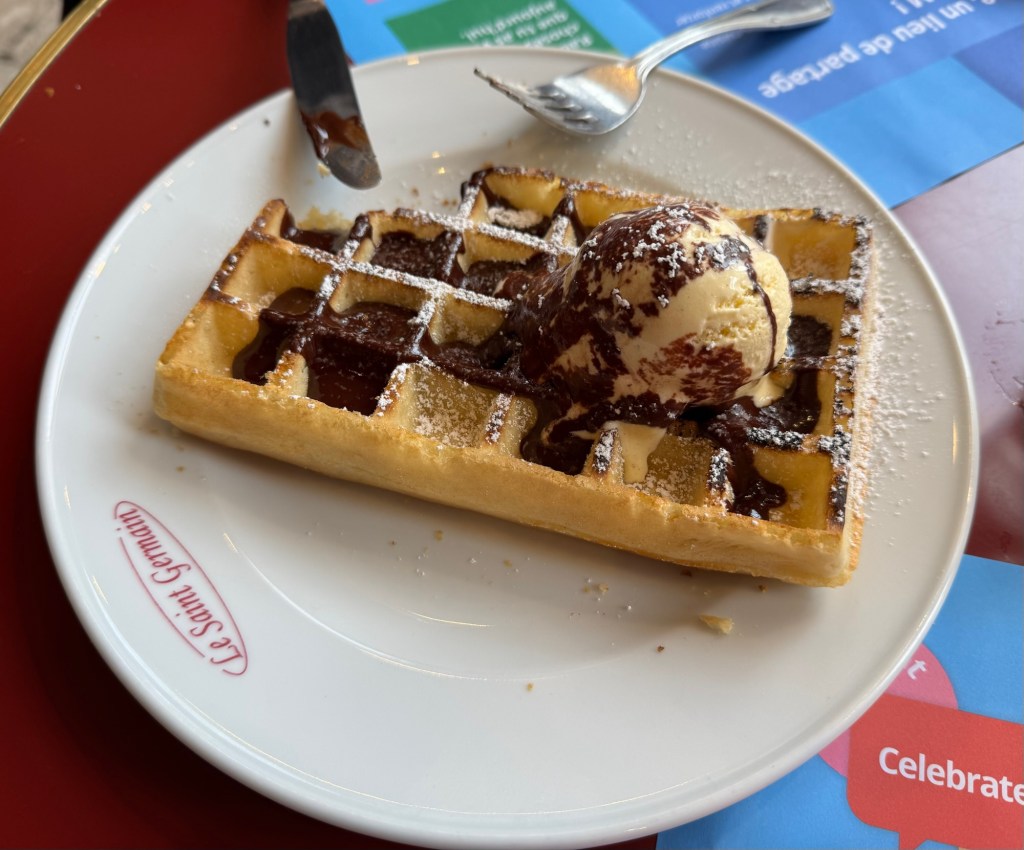
But first, upon our arrival we went a local restaurant in their downtown and some delicious croque monsieur, which is a French hot sandwich of ham and cheese with a creamy béchamel sauce that is broiled until bubbly and crispy. Think of a fancy grilled cheese! We then had a nice Belgian waffle with ice cream and dark chocolate sauce. It was amazing and I felt that I should have gotten my own and not shared. Hahaha. My waist line is not doing well this week but the food is so very good.
Back to our history tour. Mons was an interesting battle as the Germans occupied one side of the canal and the British BEF the other. The fighting centered around a bridge and the BEF were soundly defeated with over 1,600 casualties.

At the site there was a simple plaque and sign memorializing the event and particularly the exploits of Lieutenant Maurice James Deason and Private Sydney Frank Godley of the 4th Battalion. These two men fought bravely to cover the retreat of the British soldiers back across the bridge and were each given a Victoria Cross, Dease posthumously and Godly who survived the war.


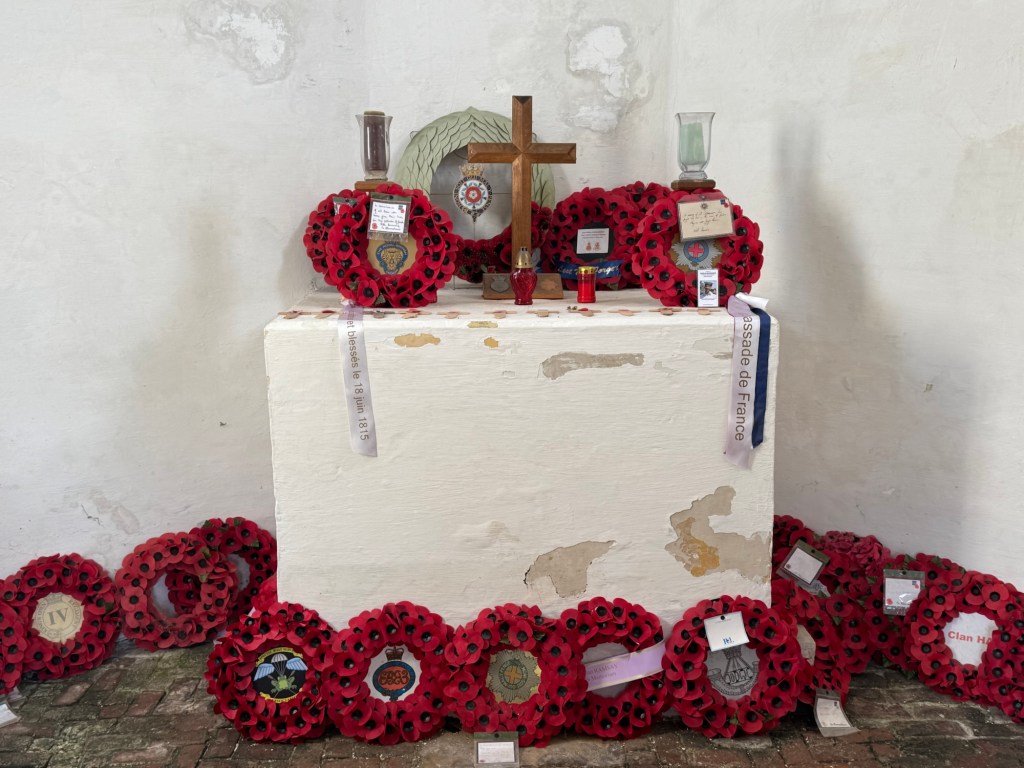
We spent a few minutes cleaning up the memorial as it had some weeds overgrown and trash that had collected and also straightened the crosses and wreaths. Alexander seemed very moved and I am glad we were able to find something that honored his people.
We then traveled to Waterloo to see the battlefield where Napoleon was defeated by Wellington. As we drove up on the site, you couldn’t help but notice the Lion’s Mound (Butte du Lion). The Lion’s Mound is a large artificial hill. King William I of the Netherlands ordered its construction in 1820, and it was completed in 1826. It commemorates the spot on the battlefield of Waterloo where the king’s elder son, Prince William of Orange, is presumed to have been wounded on June 18, 1815, as well as the Battle of Quatre Bras, which had been fought two days earlier.

We had contacted designer Kris Van Beurden prior to our trip and met him at the site as he lives about 40 minutes away. It was great to finally meet him as we have corresponded over email for the past few years and done several designer interviews with for his games such as Europe in Turmoil: Prelude to the Great War from Compass Games, Sparta! Struggle for Greece from Plague Island Games and Barbarians at the Gates: The Decline and Fall of the Western Roman Empire 337 – 476 from Compass Games to name just a few. He is a great guy and it was awesome to meet him and chat. He also gave us a lot of insight into the battle which was very helpful in us understanding. I will talk a bit more about Kris and some of his upcoming games later in the post.
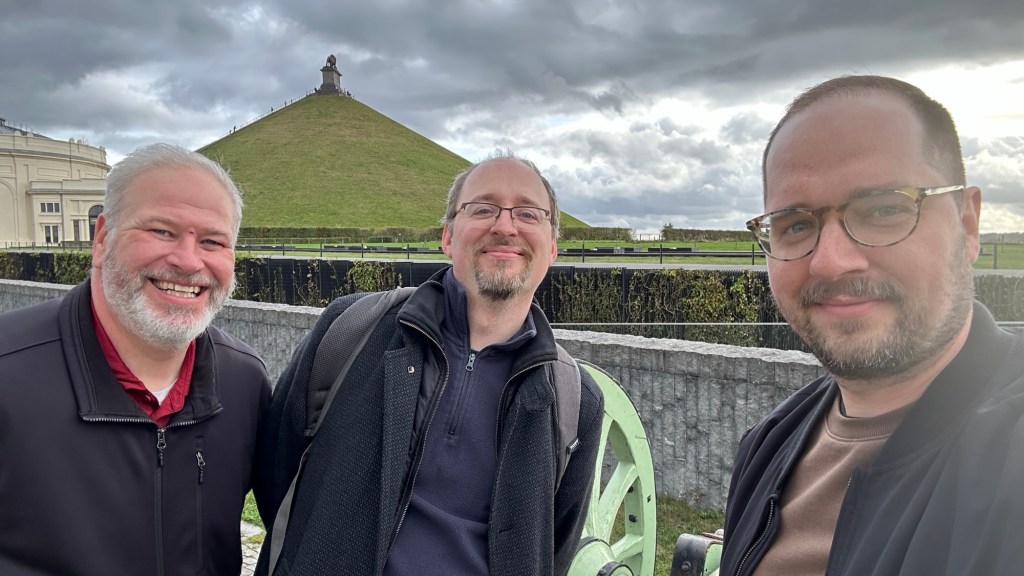
We climbed up 226 steps to get to the top, and while this was extremely challenging and saw us stopping twice to catch our breath, the effort was definitely worth it as it provided a commanding view of the entire battlefield and also had a lovely plaque showing the disposition of the troops that day. Such a great find and one that I enjoyed immensely!
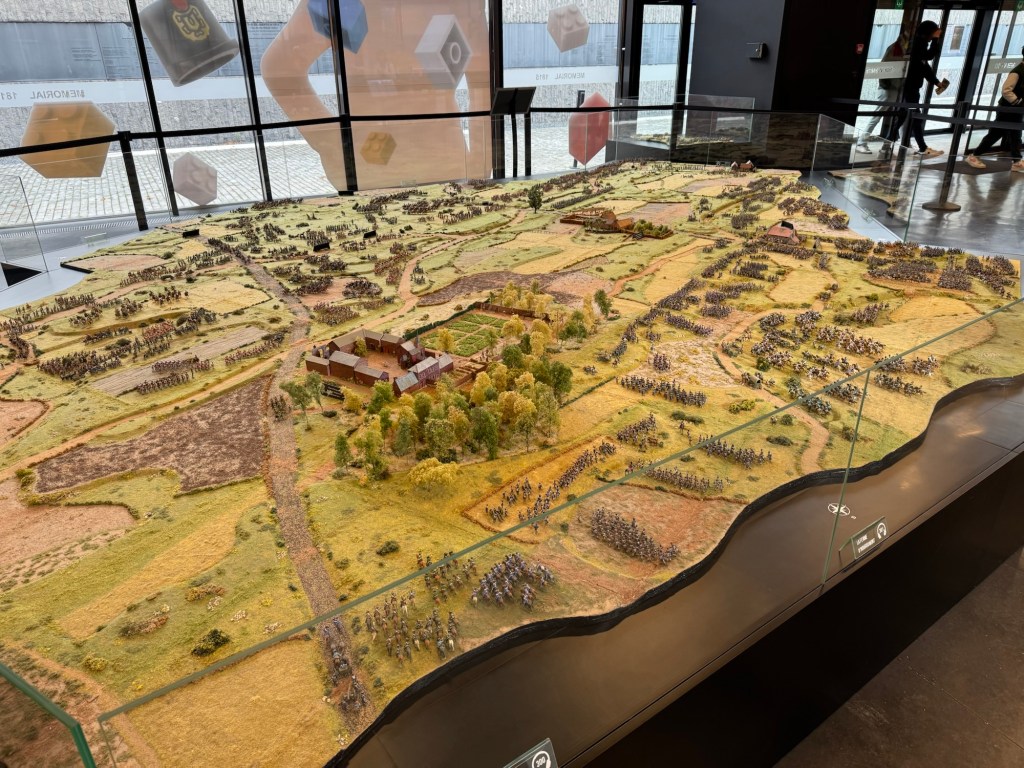
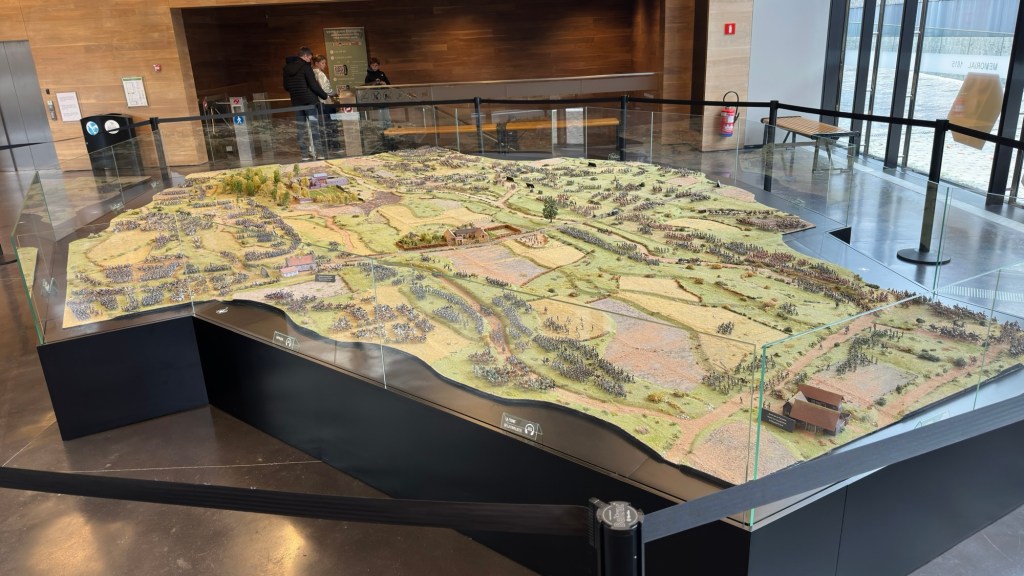
After this, we checked out the gift shop and museum and they had this awesome static miniatures diorama of the whole battlefield of Waterloo. I wish that we were able to get a bit of a closer look to see the individual formations and soldiers but it was grand.
We then entered a rotunda building that housed the panorama of the entire battlefield which was very striking and somewhat moving.

The panorama is an oil-on-canvas painting completed by French artist Louis Dumoulin in 1912, with 14 canvas panels sewn together to create a cylinder approximately 360’ in circumference and 39’ high.
The painting depicts several different episodes from the battle, concentrating on charges by the French cavalry. Physical elements in front of the painting, including cut-out figures, fences and bodies made of plaster and papier mache, disguise the lower edge of the painting and enhance its immersive quality.

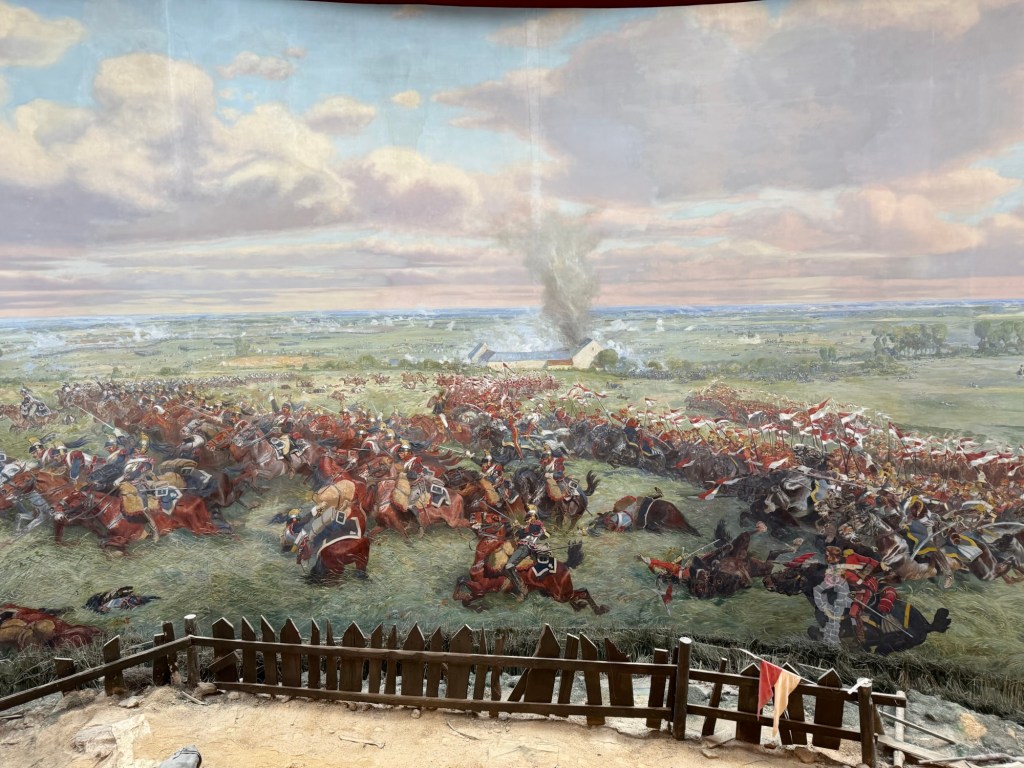
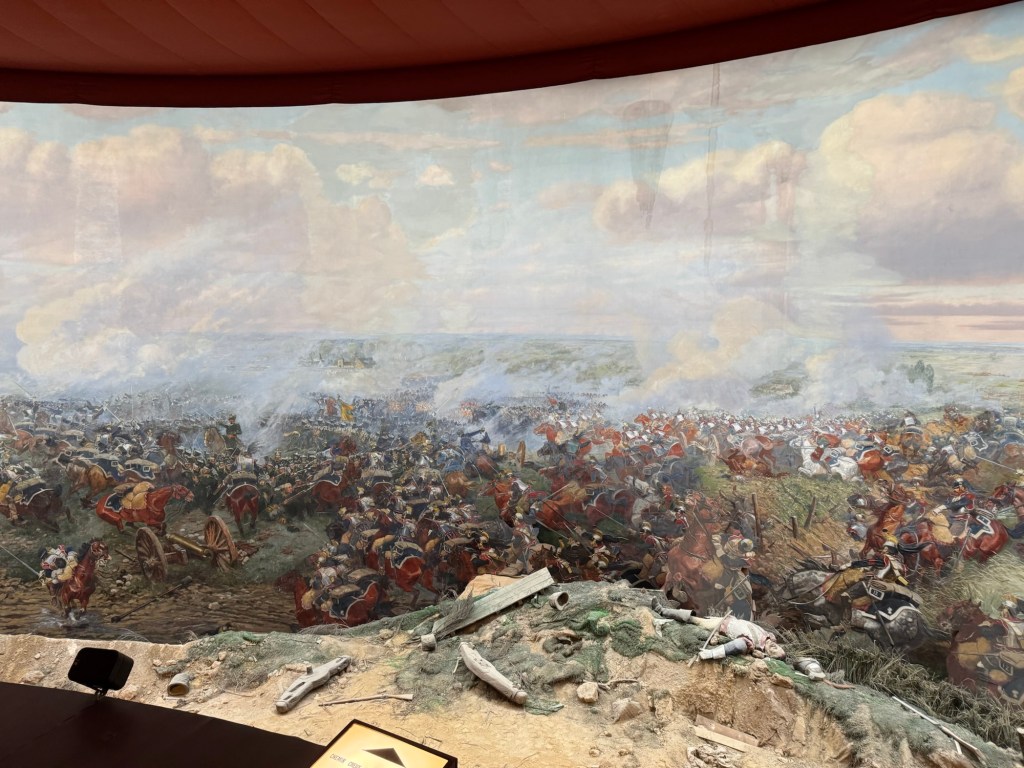
It really was a beautiful work of art and we probably stared at it for at least half an hour as there was just so much detail to be seen.
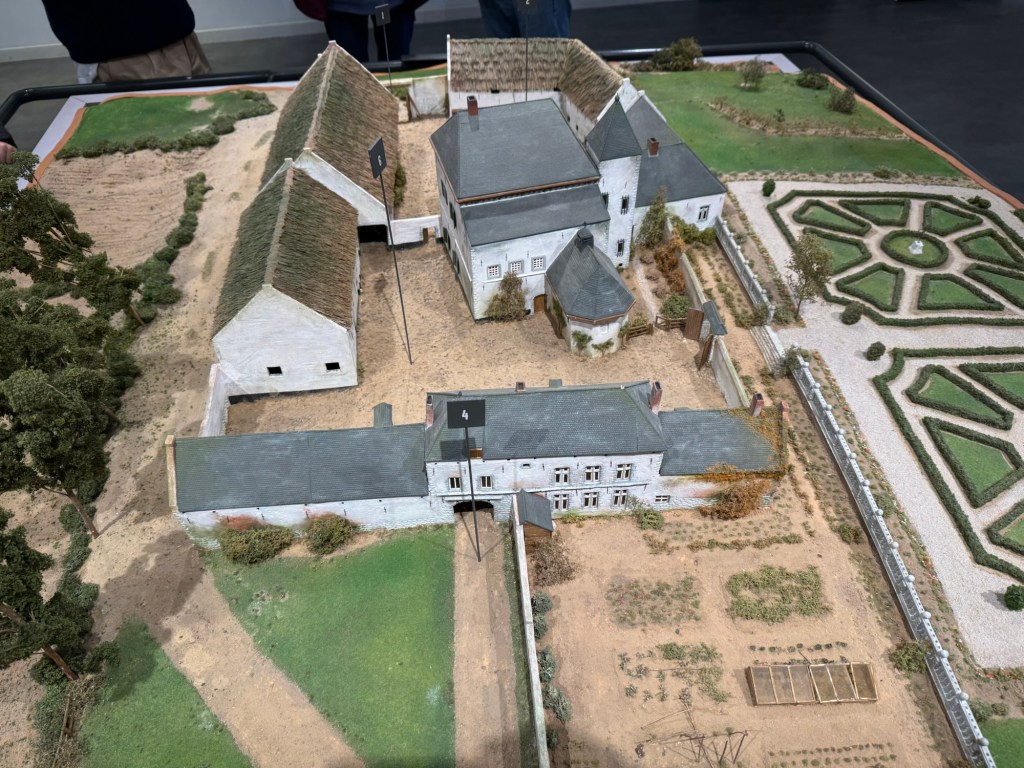
We then made our way to the last of the exhibits on the property which was the Hougoumont Farm. Château d’Hougoumont is a huge and beautiful walled manorial compound, situated at the bottom of an escarpment near the Nivelles Road near Waterloo. The site served as one of the advanced defensible positions of the Anglo-Allied army under the Duke of Wellington.
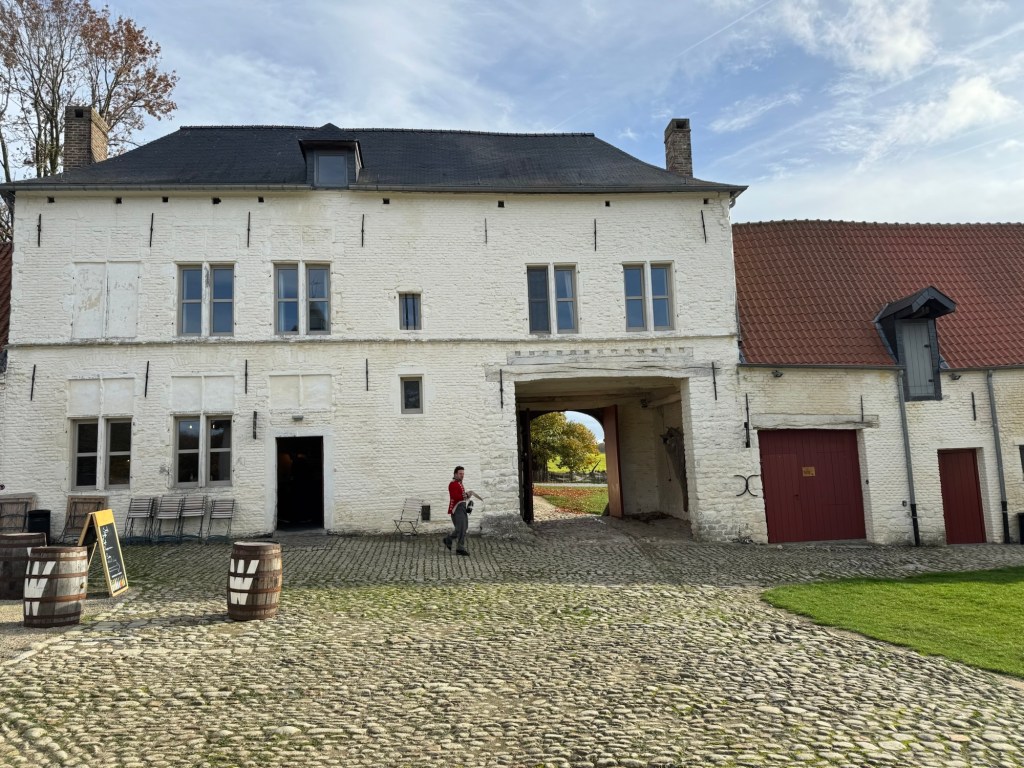

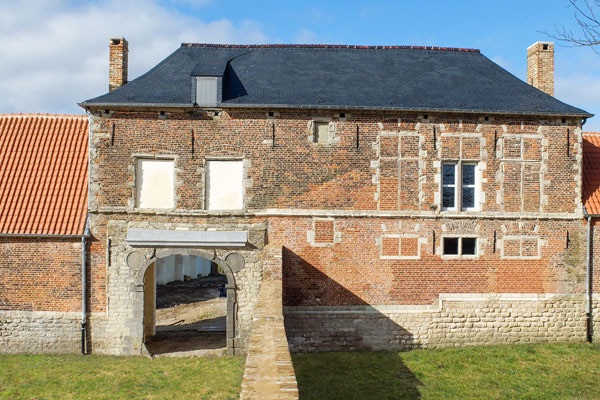
The fighting at the Hougoumont Farm began around 11:30am on June 18th, marking it the first action of the Battle of Waterloo. A French diversionary attack against the farm, which protected the Allied right flank, was launched after a bombardment and continued fiercely throughout the day. The French were unable to take the farm and only were able to breach the north gate where 40 French soldiers led by Sous-Lieutenant Legros entered but were locked in and killed to the last man. It was amazing to see this site and truly get a feel for the battle and how it unfolded. There was a small scale model of the compound in the exhibit and it was awesome.
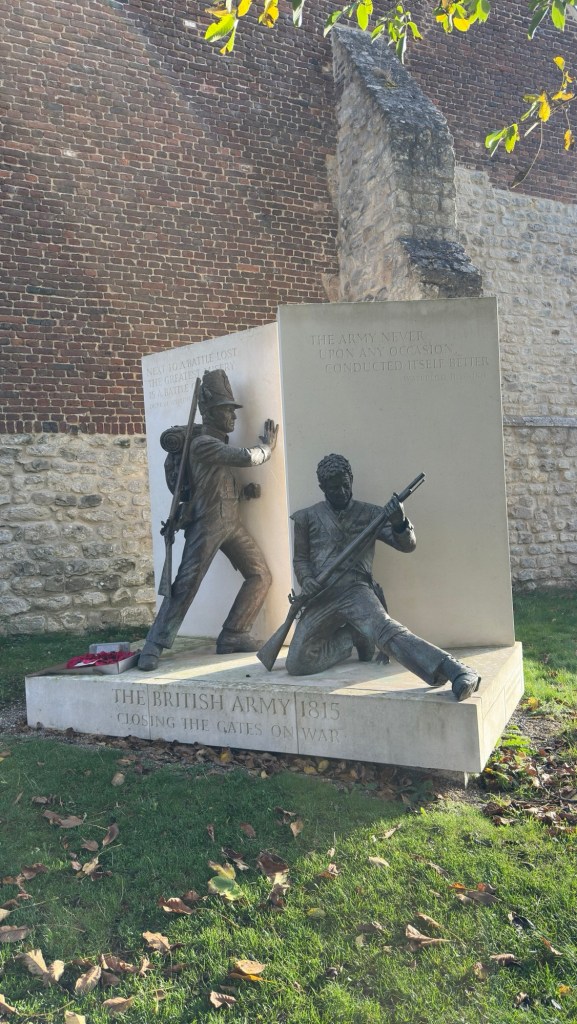
At the north gate was a monument to the defending British troops who fought off the incursion.
This was one of the most violent parts of the battle and was key as it tied up lots of French soldiers and denied them the cover the manor provided.
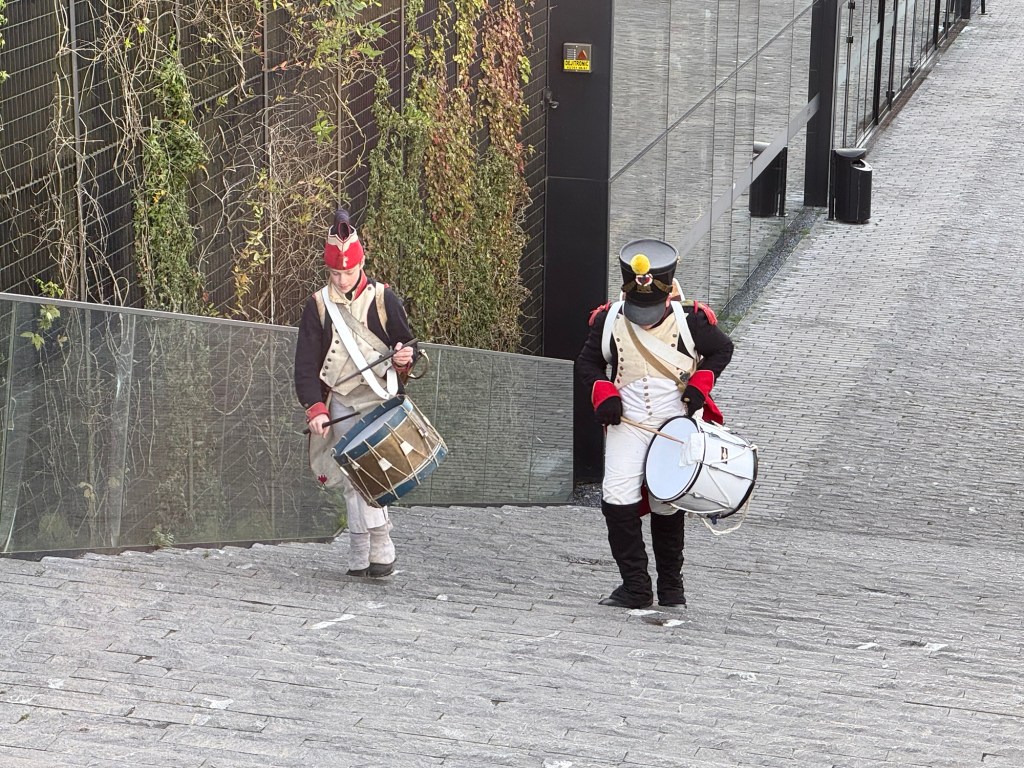
This site was very good and I was very pleased with our experience here. If you haven’t seen it, I would highly recommend it.
Back to Kris. He discussed several of his in-design games with us and I wanted to share that with you.
First he showed us Sulla Felix which is a card driven game covering the last 50 years or so of the Roman Civil Wars. Think a modified and simpler version of Twilight Struggle as a base with a very unique method of using cards. The game plays in a few hours.
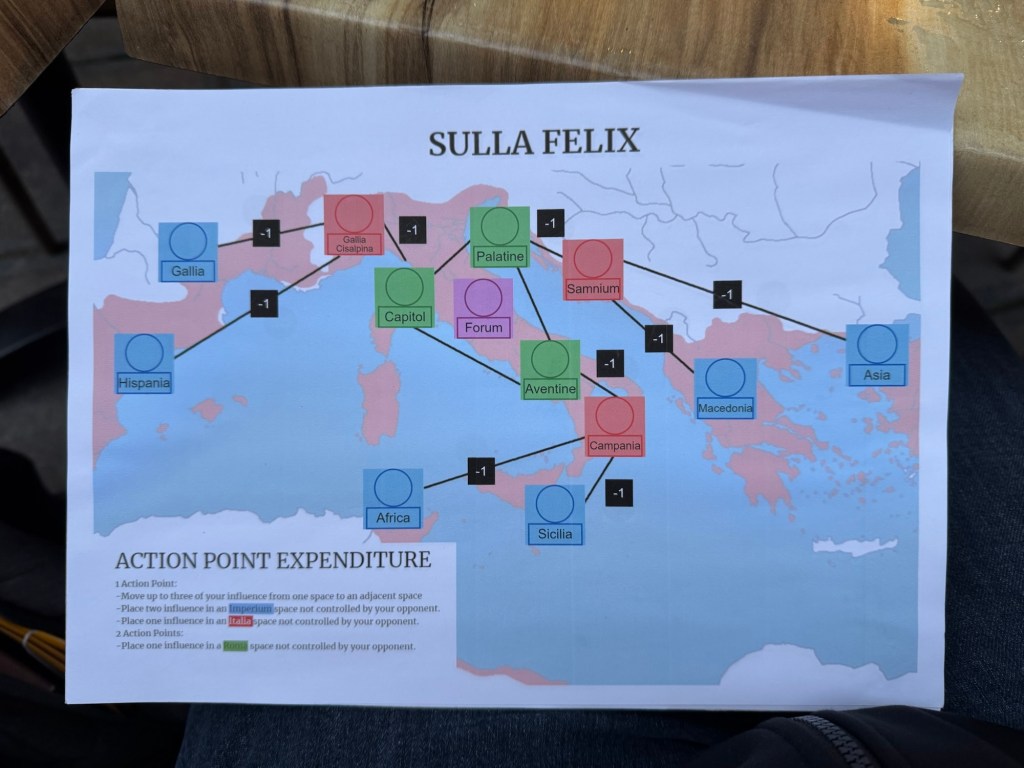
We then discussed a new planned series of operational level wargames called the Area Combat Series, which will be published by Hexasim. The first game in the series will cover Sedan and the second will cover Bastogne both during WWII.
He also discussed a card driven game on the American Civil War at the strategic level and a game using the No Peace Without Spain Series on the 100 Years War.
He is a very talented and smart designer and we were grateful for him meeting up with us and having dinner after our tour. Thanks Kris!
Tomorrow is the last day of our history touring and we are staying tonight in Eindhoven tonight with the goal of driving up Hell’s Highway to see the 3 bridges of Operation Market-Garden. We will then make our way to Essen for the gaming convention starting on Thursday.
-Grant
 The Players' Aid
Great and intense day, thanks for the report!
LikeLiked by 1 person
Looks like an awesome trip. Love to see you embracing metric and KM.
LikeLiked by 1 person
Yet another fabulous post! Well worth the effort and the battle of the waistlines.
LikeLiked by 1 person