I know it is now April….I am usually done with this post by mid-March but this year we had a bunch of great games that came out in November and December and we just had to get several of them to the table before we shut 2024 down. And now comes the impossible task of distilling an entire year’s worth of gaming down to a list of the 10 games that we most enjoyed. I hate doing this. I love writing about, thinking about and sharing my experiences about the games we have played but hate having to make somewhat objective choices about which is better and which games should even be considered for the list. The first comment I would have is that not all games are the same. Not the same scale, the same play time, the same mechanically or even historically. Each game is unique and in my opinion, all games have something objectively good about them. Secondly, we didn’t get around to playing some of the new releases in 2024. I say some but we actually didn’t play a lot of the new releases and did the best that we could to play as many as possible. So we might leave off a game that you thought was very good and deserving and it probably is but we either didn’t get around to playing it or it just didn’t hit with us. But, in the end, I have to make this list and this is my best effort at doing just that!
In 2024, we played 36 unique titles from 26 different publishers. Some were operational, strategic or tactical scale and in the list this year I didn’t include any solitaire games. Some used counters. Some used cards. Some used wooden bits and some used miniatures. Some were only card games with no other components and some were cooperative. We played a lot of games! And here I present to you my list of the Top 10 Wargames of 2024!
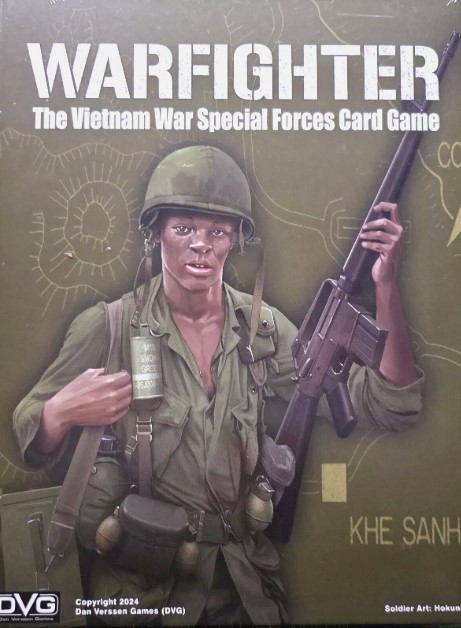
10. Warfighter: The Vietnam War Special Forces Card Game from Dan Verssen Games
If you know nothing about Warfighter, you simply need to because it is a really fantastic solitaire and 2 (or more) player experience that gives lots of tension and decisions about how to attack your enemy and how to traverse difficult terrain to reach your objective before the timer runs its course. Warfighter is a tactical card-based game for one to six players, where players will select and equip a squad of soldiers, and then attempt to execute the mission assigned by fighting their way to achieve the objective. This system is just FUN! It’s a type of side scrolling, pulpy, run-and-gun romp that elicits the feeling of a 1950’s style comic book. The game is very much customizable and we have a good time trying to choose our soldiers, their skills, weapons and other equipment to stay within their allotted points for the scenarios. The decisions that players have to make in this game start from the outset and you have to know what your objectives are and the type of things that you might need to take along with the team to successful.
There’s been several iterations of the system over the years in their own stand alone products, providing you with different theatres, weapons, nationalities, etc. This year, they released the newest addition to the series in Warfighter: Vietnam. Well, actually, the title is Warfighter: The Vietnam War Special Forces Card Game but it is colloquially referred to as Warfighter: Vietnam. To date, we have played 6 scenarios together cooperatively, with each of us controlling 1 Player Soldier, and I have also played a few scenarios solitaire in the comfort of my game room. I have very much enjoyed the experience and really have enjoyed the new tricks the designers have added to capture the thematic feeling and atmosphere of the Vietnam War. This is not your father’s Warfighter! It has been given a total facelift, including new graphic design, art and card backs and that is not all as they have also added new Keywords, new enemy abilities and a whole new level of requirement for a successful mission.
One of the best additions to the system that really makes the game feel historically thematic and also ratchets up the difficulty is the concept of Body Count. As you may know, one of the ways that the United States tracked their progress in the Vietnam War and how they determined whether they were winning or losing the war or a single battle was counting the number of enemy dead killed by US soldiers in battle but also during various search and destroy missions. This was extremely controversial because it lead some commanders in the field to count killed civilians and unarmed non-combatants as well as enemy combatants killed as well as the inflation of these numbers reported to command. General William Westmoreland required this practice and felt that it was a good indicator of progress of operations. The Body Count in the game is earned by Soldiers whenever they cause an EKIA (Enemy Killed in Action) on a Hostile after a hit with a weapon. This Body Count is tracked with circular markers and held in the Body Count Box on the left side of the board and when an EKIA happens, the player must decide to either Bank the Body Count to count toward the required Mission Threshold or Keep it to be spent on special abilities during the Mission after the play of Action Cards. These Action Cards will call out the use of a certain number of Body Count held by the Soldiers, not those that have already been Banked, to activate certain abilities such as access to new weapons, equipment and ammunition from the bodies of the fallen enemy to other benefits such as increasing your Defeat Cover roll, which is required to actually confirm a hit on a Hostile unit.
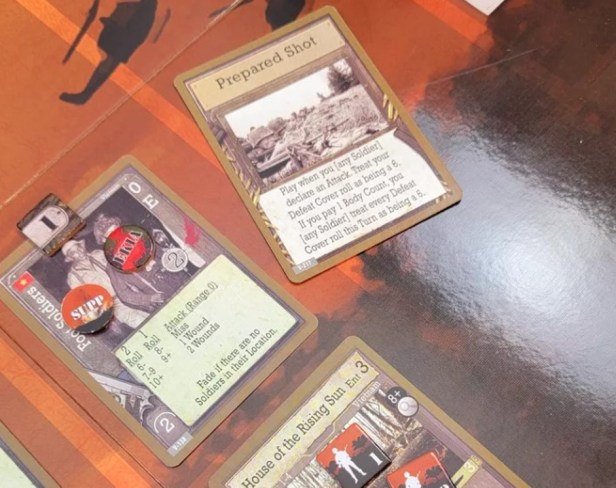
Another really great addition to the game is the inclusion of the Fade mechanic. Similar to the inclusion of Body Count, this mechanic really represents the hit and run nature of the combat including ambushes and other tactics that are not necessarily a large scale stand up fire fight. During the Fade step of each of the Hostile Turns, Hostiles that have the Fade Keyword have the condition checked to see what effect it might have. If the condition listed on the Hostile Card is met, the Hostile unit will be discarded, and no additional Body Count or Experience is awarded. In fact, the player now loses the ability to continue hitting this possibly wounded and less effective enemy as they tucked tail and ran to the bush. Some of the Fade conditions have costs listed on the cards that require the player to have to pay those costs to avoid the unit from leaving the board. These costs can be paid to prevent the Hostile from Fading but is also a choice as you never seem to quite have enough of any resource, including Action Cards, Ammunition, Health, Experience Points and other things. In the example picture below, if there are no Soldiers present in the location where this Hostile is found, then it will Fade away.
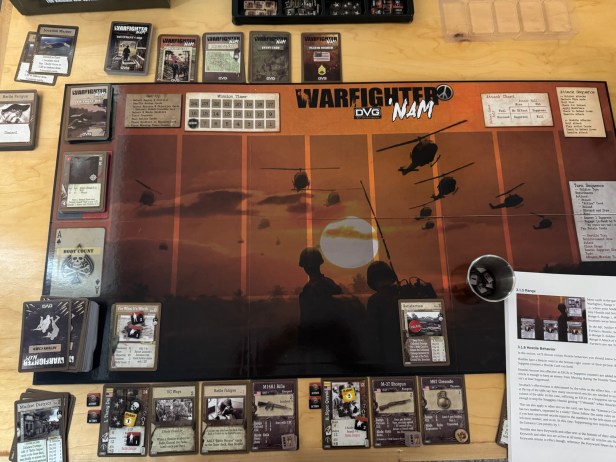
I hope that you can see the changes that were made to this entry and how DVG has stepped up their production game! I have very much enjoyed my plays of this game and look forward to cracking this back out as we begin to explore their numerous expansions and take the campaign out for a spin.
If you are interested, I wrote a fairly in-depth First Impression post that you can read at the following link: https://theplayersaid.com/2024/12/10/first-impressions-warfighter-the-vietnam-war-special-forces-card-game-from-dan-verssen-games/
We also shot a video review and you can watch that at the following:
If you are interested in Warfighter: The Vietnam War Special Forces Card Game, you can purchase a copy for $69.99 from the DVG website at the following link: https://dvg.com/product/warfighter-vietnam/
9. Undaunted 2200: Callisto from Osprey Games
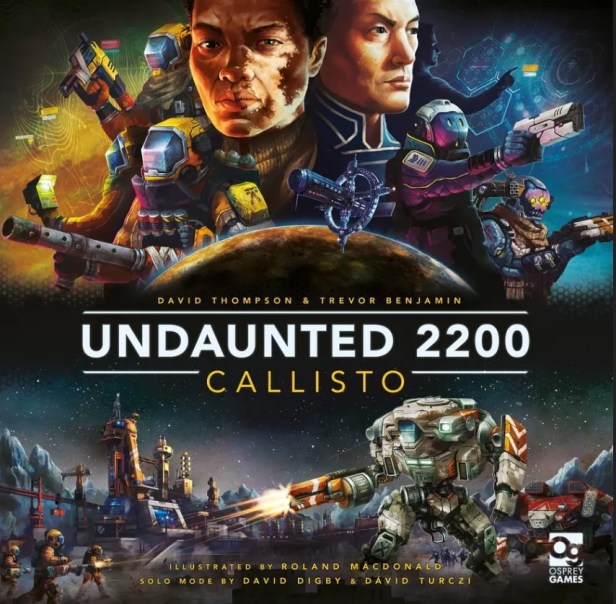
The Undaunted Series is a tactical card based game that uses very interesting mechanics to simulate small scale combat. Typically the games are set in history, including the initial volume in the series Undaunted: Normandy, the follow-up effort Undaunted: North Africa, Undaunted: Stalingrad and Undaunted: Battle of Britain. But this past year, there was a new volume that is set in the world of science fiction called Undaunted 2200: Callisto. Despite the setting, the game is scenario based and uses deck building to force the action and move unit counters from space to space to gain an advantage, take cover from enemy fire and scout new locations as you position yourself to control the area. The game is designed by David Thompson and Trevor Benjamin and illustrated by the very talented Roland MacDonald and it is just special! Special in its theme. In its game play and in its presentation.
We were a bit hesitant about this entry, probably because of the setting but also because we were wondering if the series was getting stale and would be just another similar entry with a new setting, but after playing it a few times we were really sold on the system and how it has changed to keep the game fresh and interesting. First off, the game has varying modes, which really gives it a new and fresh feeling, with 2-player, 4-player and solo game modes. I really loved playing Undaunted: Reinforcements with the new 4-player mode and that mode is just as good here, changing the base initiative system so that players share it form turn to turn and can give it away with the play of a specific card from their decks. This keeps the game a bit tense as you know might know you could be able to end the game next turn if you can only go first but you won’t know until your buddy plays their hand. This is really, really neat how it works.
The game also adds in some high-ground mechanics that will change the type of dice that are rolled depending upon whether you are on top of the high ground attacking down or at the bottom attacking up. The base dice used in the combat are 10-sided dice but when attacking down a high ground position you will modify those dice to 12-sided dice and when attacking up they degrade to 8-sided dice. This small change really added some great tactical layers to the game and we found that we were desperately trying to get to the high ground first to take advantage of the benefit and control the battlefield. Most of the high ground terrain was well positioned in the center of the boards to add to this tension and the struggle for the high ground.

The game also adds in some new units with a focus on Mechanized Robots or just Mechs as they are referred to. These units are more powerful, with varying attack types and abilities that the players will have to use to their greatest advantage, and are asymmetric so each faction has their own unique types. Some are better at attack while others are used to push units out of an area before they can control that location. This new change to the game really has created some interesting tactical challenges and each side must figure out how best to utilize the Mechs advantages and use them well to claim victory. The Mechs are activated by the play of their operator cards so you will have to add these cards to your deck throughout the game to increase your chances of activating those units from turn to turn. But, you also have to worry about making sure your deck includes the other units types that can scout terrain, opening up paths to the objectives, and those that can actually capture and control the objective spaces.

If you are a fan of sci-fi, and love your tactical level wargames, Undaunted 2200: Callisto is for you and I cannot recommend this game enough. It is just a really fantastic and unique experience and creates some very interesting new tactical puzzles to solve.
If you are interested in Undaunted 2200: Callisto, you can order a copy for $85.00 from the Osprey Games website at the following link: https://www.ospreypublishing.com/us/undaunted-2200-callisto-9781472862846/

8. Red Dragon/Green Crescent Deluxe Edition from Decision Games
We have not played all that many modern warfare games in our time as wargamers. But, in 2024, we played several including the likes of Next War: Poland from GMT Games, The Enemy is at the Gates from Compass Games and now the last of the year was Red Dragon/Green Crescent Deluxe Edition from Decision Games. These games all typically focus on warfare at all levels including the use of new technologies such as EMP’s, Cyber Warfare and Hacking as well as air, air/naval, ground combat and various commando style operations and missile strikes, including tactical nukes. But, typically these games are extremely detailed and complex and tend to lean toward the unplayable side of the ledger. But that was not what we found in the game as we very much enjoyed our experience with Red Dragon/Green Crescent Deluxe Edition and frankly were blown away with how good it was.
The game is a strategic level conflict simulation that is focused on major military operations that entail everything from typical movement of troops and ships, including reinforcements and rebuilding damaged units, to missile strikes, both conventional and nuclear, political interventions with neutral partners and various logistical operations. In fact, there are 13 different Ground Operations, 6 different Joint Operations, 7 different Logistical Operations, 12 different Naval Operations, 7 different Air Operations, 6 different Intervention Operations and 7 Optional Operations. That is a total of 58 different choices for the players. That is staggering and at first was a bit daunting but once we picked up the players aids, which are very good and detailed, it was pretty evident how to take each of these Operations. At first though, I was somewhat like a kid in a candy store and just couldn’t make up my mind what I wanted to accomplish each turn. But with some thought, as well as a good understanding of the tactics and capabilities that you have with your units, any wargamer can pick up this system. Repeated plays are going to be where you truly get the output you are looking for though as we had so many tactical blunders and misappropriation of assets so as to cause us to have a bit of a laugh at our ineptitude.
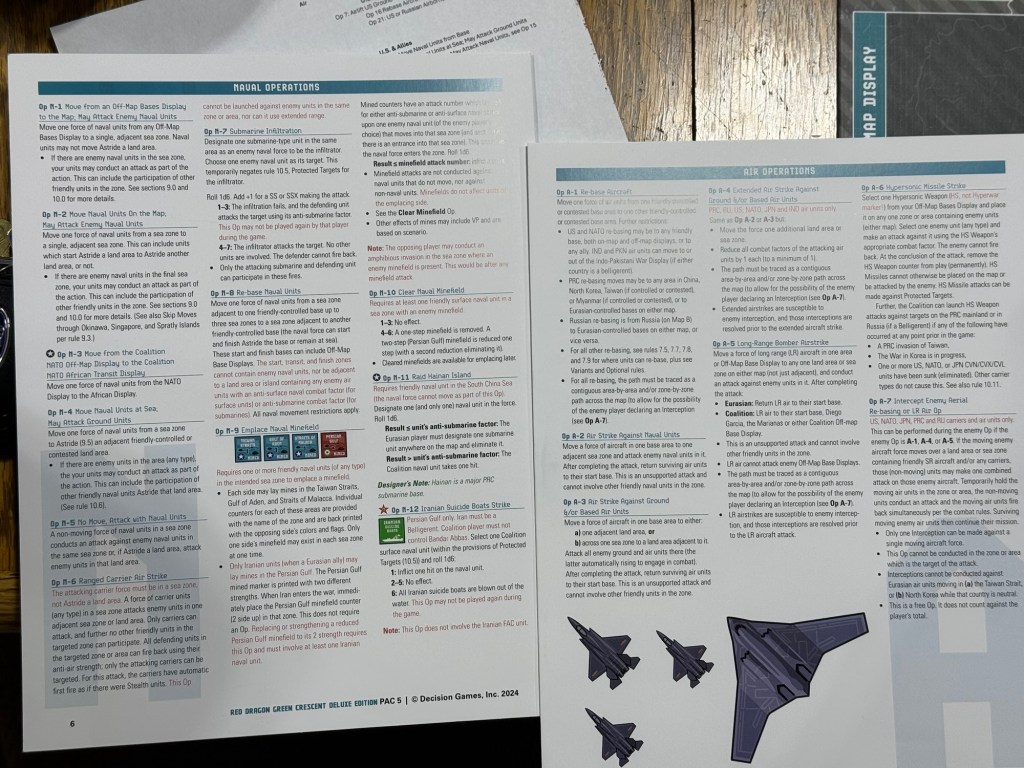
The game system is a modified I-Go-U-Go system where each player gets to take a total of 2 different operations per turn, with one being focused on the east board focused on the area around the East China Sea, Philippine Sea, Japan and Indonesia and one on the west board focused on the Indian Ocean, Bay of Bengal, Arabian Sea, Indian subcontinent and the Horn of Africa followed by the other player doing their 2 operations. These operations have to be from units that are based on one of those 2 boards or using units that have long range capabilities to strike from one board to the other such as strategic bombers. This means that each turn consists of 4 actions being taken by both players and the game really moves along at a pretty brisk pace. In about 3 hours, we were able to play a full 7 rounds and experience every major portion of the game, including a tactical nuclear strike on Taiwan.
Combat in the game is pretty straightforward and just works very well. Fire occurs when a player rolls a die and the result has to be less than or equal to the printed combat factor on the firing unit to hit the enemy. The attacker must call out the target of their attack as well and this can be pretty interesting as it can be death by a thousand cuts if your units target and fire at the best units even though your combat factors are low. Each of the units that are firing must choose their target before rolling though so you have to make some cagey decisions about who to assign what targets depending on your confidence in your dice rolling. There is nothing quite worse than not assigning that one additional unit to fire at a key target when your other units ultimately miss.
There are different types of fire though as would be excepted in a modern war game including air to ground, ground to air, surface to surface of naval units and anti-submarine. These values are generally pretty low and it can be very difficult to hit regularly except with your best units that are typical 3-4 combat factors. This fire in simultaneous and hitting and taking out a good unit does not prevent it from firing back. Most units were one step units and were eliminated upon being hit but some units were 2 steps and could be repaired in later turns utilizing one of the Logistic Operations.
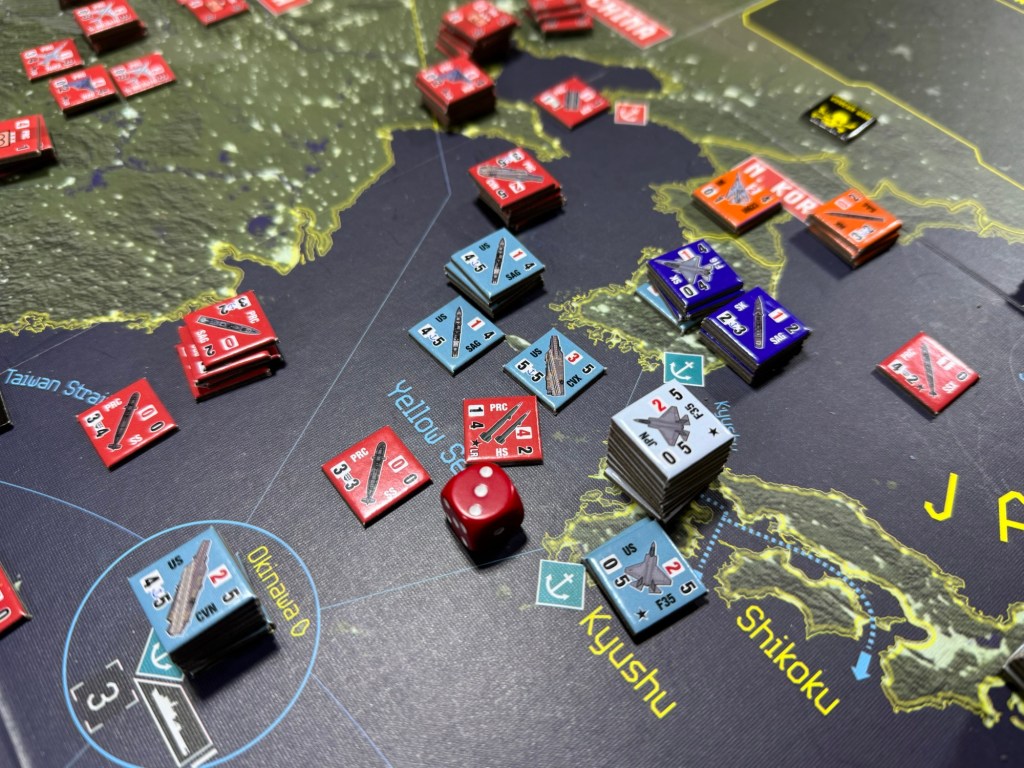
There are a certain amount of protected units, such as Aircraft Carriers and Amphibious Landing Craft, that are effectively screened by all of the other ships in the taskforce. They can only be targeted once and if all other units have been hit and destroyed. This rule made a great deal of sense to us and we had no issue with its inclusion as it made for the realistic possibility of amphibious landings. And it also gave us the courage to throw caution to the wind and take some chances by moving in our big guns even though we might lose them. This made for a very chaotic and kinetic situation and we had a blast with the combat. I am not an expert on this geopolitical situation but my initial thought was that the PRC was a bit underpowered. They didn’t really have the number nor power that the United States and her allies did, which is probably fine but it struck me as a bit odd.
As for the experience of the game, this is a very approachable, very simple yet not simplistic system and anyone can pick this up. I think that we were initially worried about the rules, as they didn’t seem to be all that great when we started out, but once we got into them they just came into view and we understood what was being intended. We did have some issues with clarity though as several of the rules just were not fully fleshed out, either on the player aid or in the rulebook. This lead to us having to make a few judgement calls and it really wasn’t that big of a deal. There are a lot of optional rules that are more advanced that can be added and we would recommend their use as the extra overhead was not a problem and we did get some fun out of the ones added. This game is just a fun experience and we had a really great time with it. It is very much a beer and pretzel style wargame but there is nothing wrong with that. The rules were approachable and not overly complex and they worked together well.
If you are interested in Red Dragon/Green Crescent Deluxe Edition, you can purchase a copy for $140.00 from the Decision Games website at the following link: https://shop.decisiongames.com/ProductDetails.asp?ProductCode=p1029

7. The Enemy is at the Gates: Battle for Berlin, 1985 from Compass Games
The games in this list seem to be getting bigger as we go along! The Enemy is at the Gates: Battle for Berlin is the second installment in the Modern War Series using the Company Scale System but that adds in some new rules to show the type of bitter fighting that would have bene involved in this Cold War Gone Hot game set in 1985. While this game is huge, and absolutely is not for a beginner, the game is truly highly playable and has a major emphasis on command and equipment. With a game this big though, it’s fascinating to play with company scaled units, because you get huge grand strategy, but also micromanagement of heavy weapons teams and mortar platoons from battalion. To me the way this game played out was not only very enjoyable as a game, but I felt some real gravitas for the terrors of war whilst playing this one as the game models the effects on daily life in the city of Berlin with disruptions to the power grid, spreading fires from combat and the effect of transportation gridlock for civilians.
The Company Scale System uses an chit draw system that really puts some unknown in what groups of units can activate and even when they will activate. There are also events and if the chit cup runs dry before all of the units can activate due to the end round chit then you are just sore out of luck. You have to prepare for this inevitability and I loved the concept of prioritizing your activations and making sure you activate what you absolutely have to before doing those units that would be beneficial to activate.
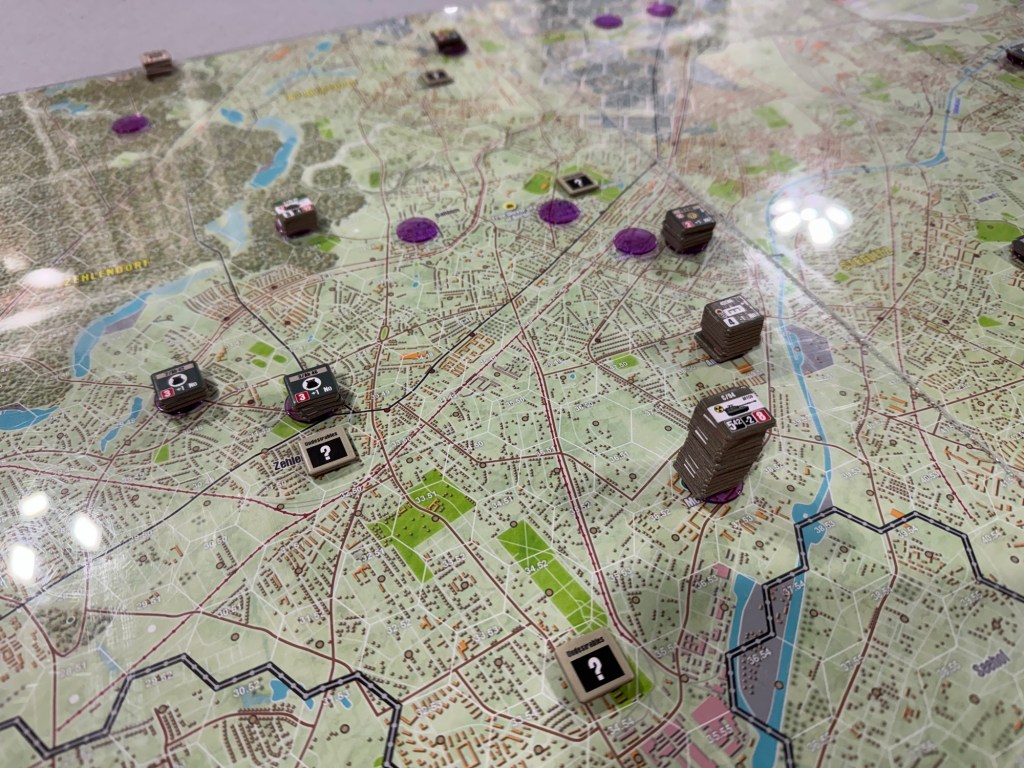
Another aspect that we love is the concept of the use of Company assets such as bazookas, anti-tank units and other special weapons, that have to be managed and moved around the battlefield to get these units where they are most needed. The simple rules governing this element are well done and add some very interesting choices to the players about how and when to deploy these assets. I also really liked the various elements that were included in the design such as air power, helicopters, electronic warfare, chemical weapons, and sabotage. There also were some very interesting rules about movement of troops utilizing the public bus system and the acquisition of those buses that really was a challenge. Using all your weapons effectively will determine who wins the battle and this one definitely is a good simulation of a fictional battle. We still need to explore this game more, as there are multiple scenarios, as well as a campaign game that can take upwards of 40 hours to play, but it is good. The game is huge but actually feels much more up close and personal than I expected.
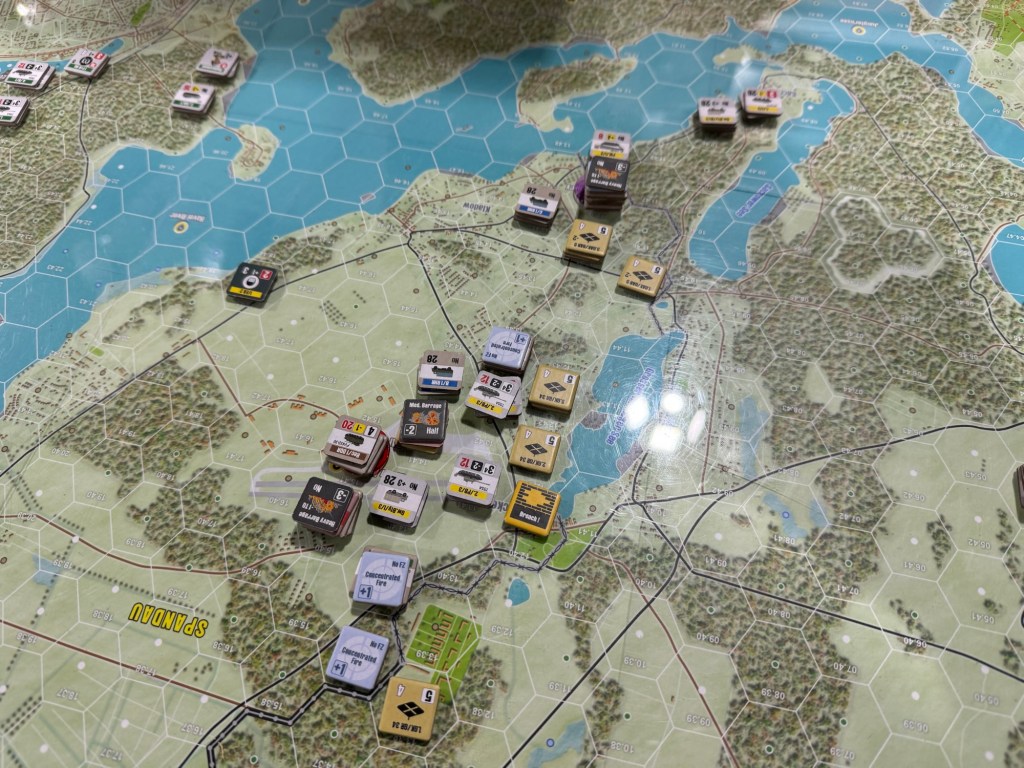
If I had one complaint about this game it’s that there’s a lot of counters, and the stacking can get a bit unwieldy. You’ll definitely want a pair of tweezers. With a game this big though, it’s fascinating to play with company scaled units, because you get huge grand strategy, but also micromanagement of heavy weapons teams and mortar platoons from battalion. The initial fighting is furious, but the eventual grind of the fighting will lead to a feeling that you are simply throwing stones at one another and this is a very solemn game and will cause much reflection. To me the way this game played out was not only very enjoyable as a game, but I felt some real gravitas for the terrors of war whilst playing this one.
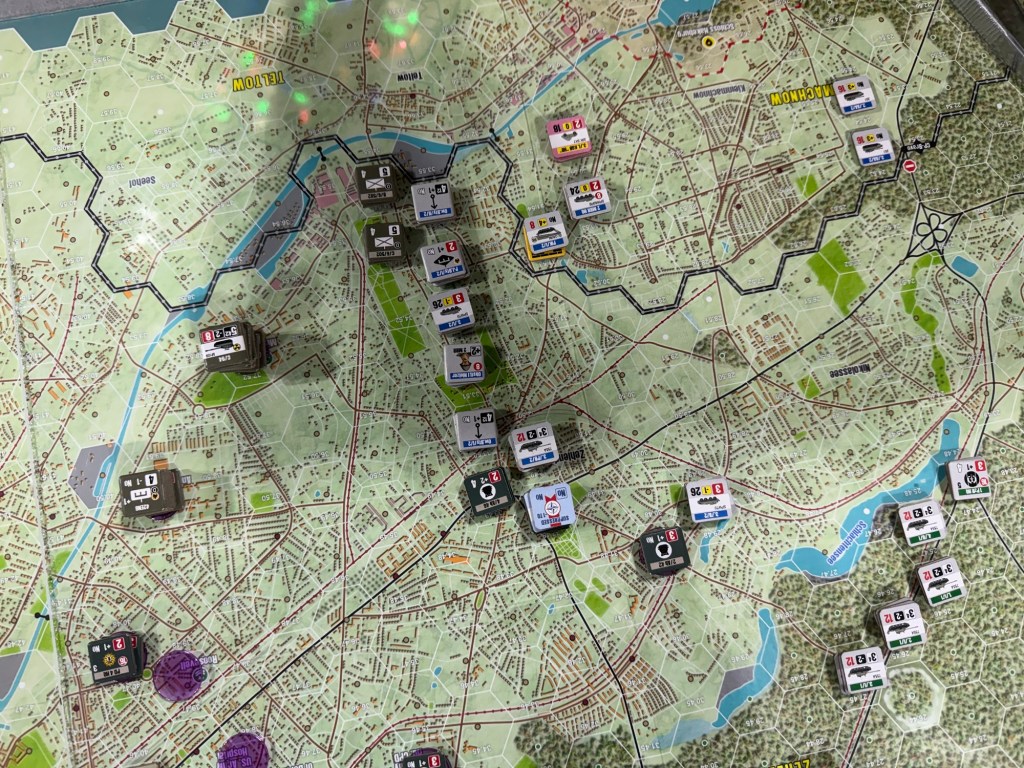
We also have sought out a copy of the first game in the series called The Fulda Gap: The Battle for the Center because we just enjoyed the game that much.
We posted the following RAW video on the game immediately after playing a shorter scenario:
And you can also check out Alexander’s unboxing video to get a feel for the size and scope of the components:
If you are interested in The Enemy is at the Gates: Battle for Berlin, 1985, you can order a copy for $149.00 from the Compass Games website at the following link: https://www.compassgames.com/product/the-enemy-is-at-the-gates-berlin-a-css-game/

6. Shiloh: The First Day – Crisis in the West April 6, 1862 from Revolution Games
Prior to 2024, we had not had the chance to play any game in the vaunted Blind Swords Series. Well, that statement isn’t totally correct as we have played a few games in adjacent series that took their genesis and inspiration from Blind Swords including games liked At Any Cost from GMT Games and A Most Fearful Sacrifice from Flying Pig Games. But, while attending the SDHistCon in November last year, we met up with Grant Linneberg of Pushing Cardboard fame and played our first official game of the Blind Swords Series titled Shiloh: The First Day from Revolution Games. And the game was just as good as the company and Grant was a fantastic teacher. We also benefited from the presence of Steve Carey who is the designer.
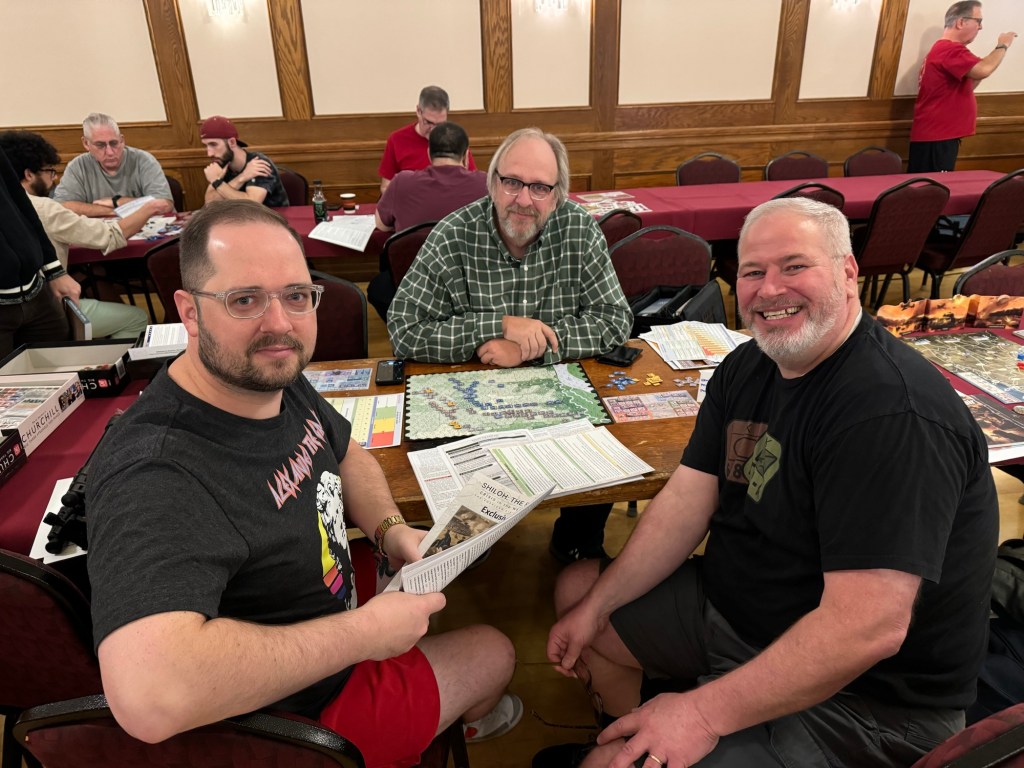
The Blind Swords System is a chit pull system originally designed by Hermann Luttmann for Position Magnifique: The Battle of Mars-la-Tour, 1870. Since then several games have been published using it from several publishers, covering action in the US Civil War and the Franco-Prussian War. The system is famous for its emphasis of the three FOW’s of military conflict: fog-of-war, friction-of-war and fortunes-of-war. The system mixes events with activation chits and does not guarantee that each unit on the board will be able to activate each turn or that each unit will only activate once. The system is designed to force players to make tough decisions with each chit pull.
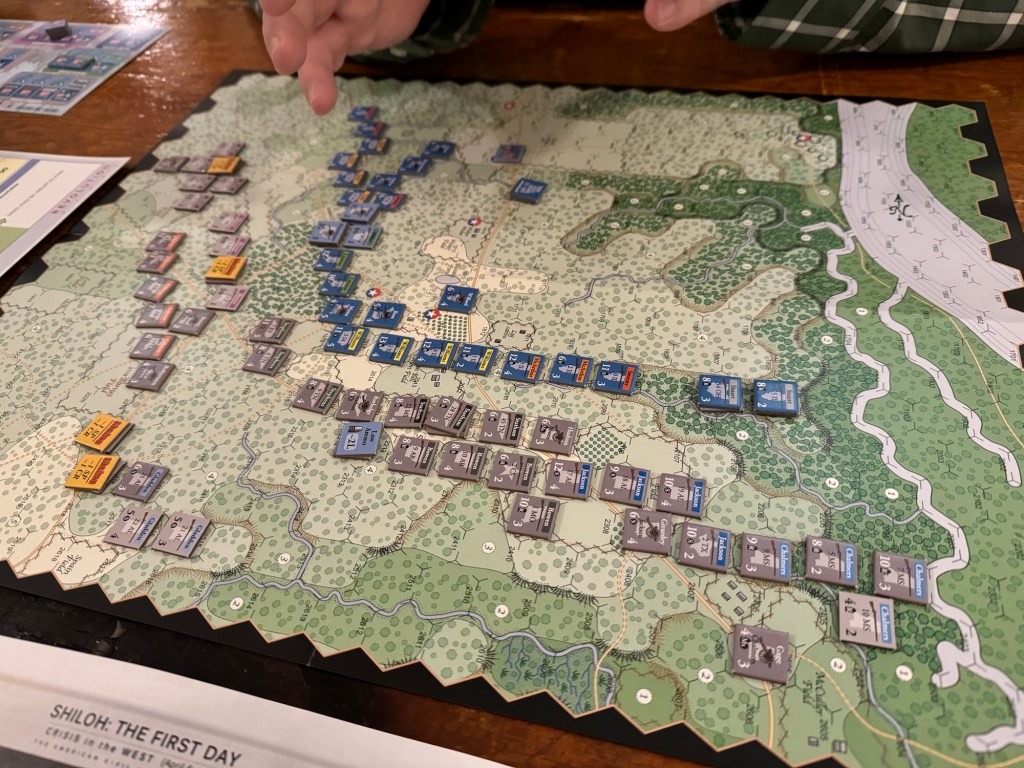
Even though this was our first foray into the series, we very much enjoyed the experience. We were able to win an auto victory by seizing the roads at the top of the board. This came about because we pressed the center pretty aggressively and broke through the Union lines causing Grant to move up a few rearguard units to plug holes. This allowed out beat up and fairly weak units who were in the back to advance with a couple of fortuitous chit draws to squeeze the auto win hexes. We had a blast and Grant can roll dice as he rolled plenty of 5’s and 6’s.

I was very impressed with the playability of the game and how it told a fantastic and plausible narrative as we progressed through the battle. Maneuver was a huge part of the game and units that were able to break through the front lines typically pressed that advantage and moved toward objective hexes in order to force the defender to react disrupting their plans for their coming turn. I would also say that the system is very crunchy and has some calculation of various modifiers based on all type of things from terrain, to command range and various unit strengths and weaknesses. This created some very interesting decisions about how to go about attacking specific areas of the board and the use of other elements such as artillery to soften up stronger units before the attacks.
The Blind Swords Series is just really that good and this game was amazing and we are so glad that we were able to get it tabled. IT was chaotic and frustrating all the while being very charming and accessible. It did help that we had a veteran of the series teaching us but I would definitely say the system is approachable and that anyone can learn it and play. We actually have multiple other volumes in the series in our collections and we look forward to playing those over the next few years through our Shelf of Shame series.
Here is a link to our interview video while at SDHistCon with Steven Carey and Grant:
We also did a much further discussion of the game in our SDHistCon Debrief Video:
If you are interested in Shiloh: The First Day – Crisis in the West April 6, 1862, you can order a copy for $100.00 from the Revolution Games website at the following link: https://stores.revolutiongames.us/shiloh-the-first-day-boxed-edition/
5. Assault Sicily ’43 – Gela Beachhead from Assault Games
There are a bunch of different tactical systems out there, and most of them are very good, but some are much better than others. There is always a new designer that will add some new tricks to the established formula and make a new experience. Such is the case with the Assault System from Assault Games, which adds some very cool Formation Cards, custom dice and lots and lots of scenarios and even a new Campaign Mode. The newest game in the series is called Assault Sicily ’43 – Gela Beachhead and is distributed by Sound of Drums in cooperation with Assault Games. This game is huge and had a lot of content in the box but also a lot in the system.
This new volume in the series covers the Italian invasion during WWII and we have really enjoyed the new elements added to the system as well as the updated spiral bound (really nice touch) rulebook. The game simulates the tactical level of battles so each of the counters represent a single man or a few men. The players have troops in the strength of one to two platoons or, in the case of larger battle scenarios, reinforced companies. The players command the individual vehicles, guns, infantry squads or teams and move them around the board taking objectives, destroying enemy troops and vehicles and trying to control the battlefield. For the Gela Beachhead campaign, players will receive a larger contingent of combat formations to lead the battle over the two days of the landing with a much more diverse offering of troop types and vehicles.
After playing this game, and with my knowledge of the system from Assault Red Horizon ’41 this system serves the niche between a veteran wargamer and the younger casual player. Because of the Formation Card mechanics, this system offers extremely high replay value as no two battles are the same and players can choose their Order of Battle quasi-randomly or deliberately. This adds a lot of variety. Overall, the Assault Game System is focused on game flow and little downtime. Once the game mechanics are understood, players don’t have to constantly look at flowcharts or tables to progress. It just seems to play intuitively and feels right. The rules are easy to understand, well structured and very logical.
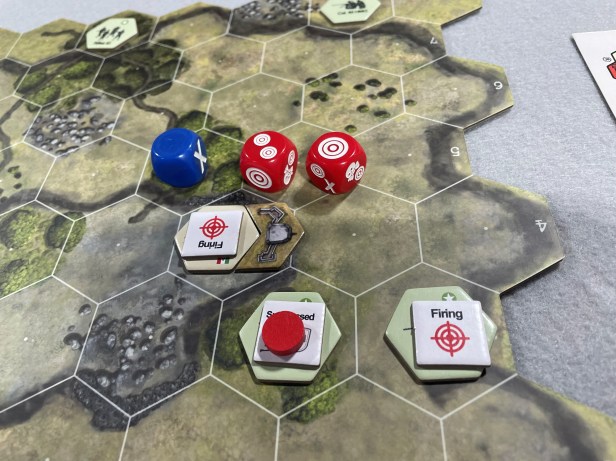
But the best part is the dice system. The different colors of dice represent the possible strength of the dice result. It is very quick and easy to estimate what the possibilities of success or failure are at any given moment. The combat system is also very novel as it uses different colored dice that have different hit numbers so units will have better or worse chances to hit based on the dice they are rolling. These dice can be modified, by providing another die of the type or increased to the next color due to several factors including cover, range, etc. This type of custom dice system always is very interesting to me and keeps the game light and interesting as you simply never know what is going to happen. Plus there is always a defense roll to avoid the frustrating aspects of many other games where you feel that you just can’t do anything against many actions. In this way, the game really focuses on the experience and keeps players playing the game and not the rules.
Here is a link to our preview video for the Gamefound campaign from 2023:
If you are interested in Assault Sicily 43: Gela Beachhead, you can order a copy for €130.00 ($142.00 US Dollars) the Sound of Drums website at the following link: https://soundofdrumsgames.com/shop/assault-sicily-43-gela-beachhead/
4. Vijayanagara: The Deccan Empires of Medieval India, 1290-1398 from GMT Games
Vijayanagara: The Deccan Empires of Medieval India, 1290-1398 from GMT Games is the first game in the new Irregular Conflicts Series. This new game is not a COIN Series game but it shares some of the same elements and its genesis was in a design contest held called Consim Game Jam where designers had to repurpose a COIN Series game and it’s components and make a new playable game in about 48 hours! The game that won the competition was Vijayanagara. The game is an asymmetric 1-3 player game depicting the epic, century-long rise and fall of medieval kingdoms in India over two dynastic periods.
Vijayanagara is very COIN like but with some new tricks that keep the game fast paced and interesting. We have now played the game 3 times and really love how it models the 3 unique factions with their own goals and abilities that have to fight each other, but also the 2 insurgent like factions of the Vijayanagara Empire and the Bahmani Kingdom must team up and work together somewhat to defeat the mighty Delhi Sultanate. The game plays in about 90 minutes and one of the coolest things about the design is that events are very powerful and when they are taken about half of them allow the player taking the event to remain eligible. This makes the game very interesting and fast paced with little to no downtime for any player.
The game looks like a COIN Series game with multi-colored wooden discs, cubes and cylinders. The Vijayanagara Empire (yellow starts out in the south of India) while the Bahmani Kingdom (blue) starts in the west central portion of the board. The Delhi Sultanate has both green troop cubes as well as black Governors to enforce the rules and ensure that tribute is paid on time to the Sultanate.

Gameplay and turn order is organized around a deck of Event Cards, with each new card, factions have the option to carry out the event or to select from faction-specific Commands and special Decrees; Commands such as the Conscription of new troops, Governing in Tributary Provinces, and Migration to spread influence and claim new lands, and Decrees ranging from Demanding Tribute, Conspiring with Delhi’s Governors to betray the Sultan, and forming new Alliances with minor regional powers.

This one is a really well designed 3 faction game that allows 3 players to work together, if only temporarily, to achieve their individual victory conditions. I just think that the dynamics here represented and the concept of the 3 different factions having to keep each other in check is a constant source of tension and angst. I have played now the Bahmani Kingdom (twice) and the Delhi Sultanate and it is very interesting to see how the 2 factions are so separate but also do have to combine their efforts, at least early in the game, to keep the Vihayanagara Empire in check lest they control the tip of India and make it nearly impregnable. I found that trying to play keep away with the game through the manipulation of the Sequence of Play was also very interesting and keeping the best spaces from the other players at times is the way to go. But, you have to make progress toward your own goals or will find yourself left out in the cold of the Himalayan mountain passes and the ire of the invading Mongols. Just a great game that is best played with 3-players.

We published an interview with the design team (Saverio Spagnolie, Mathieu Johnson, Cory Graham and Aman Matthews) on the blog and you can read that at the following link: https://theplayersaid.com/2021/11/16/interview-with-saverio-spagnolie-mathieu-johnson-cory-graham-and-aman-matthews-designers-of-vijayanagara-the-deccan-empires-of-medieval-india-1290-1398-from-gmt-games/
I also hosted a series of History Behind the Cards posts written by Saverio Spagnolie and you can read those at the following links:
Card #2: Uprising in Daulatabad
Card #3: Kakatiya Empire Extinguished
Card #4: The Hare and the Hounds
If you are interested in Vijayanagara: The Deccan Empires of Medieval India, 1290-1398, you can purchase a copy from any online retailer or can pre-order a new 2nd Printing for $54.00 from the GMT Games website at the following link: https://www.gmtgames.com/p-1133-vijayanagara-the-deccan-empires-of-medieval-india-1290-1398-2nd-printing.aspx
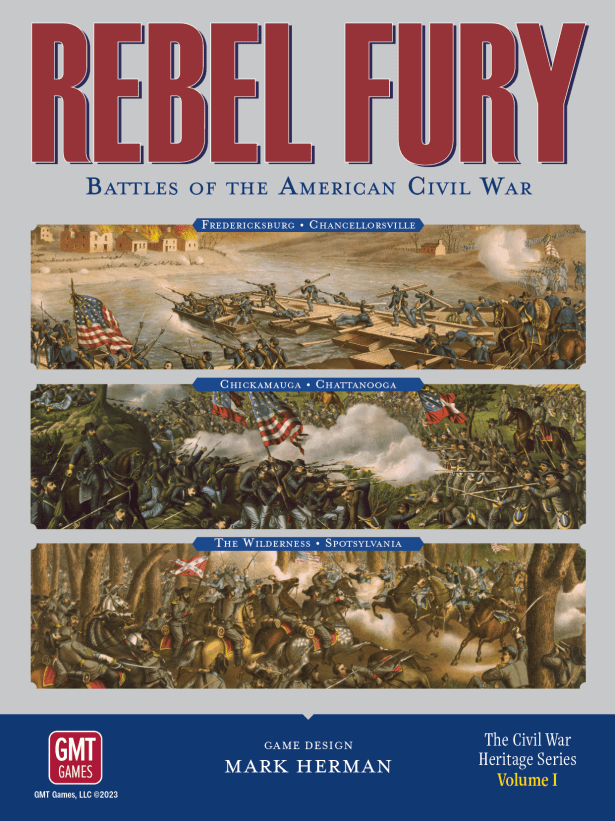
3. Rebel Fury: Six Battels from the Campaigns of Chancellorsville and Chickamauga from GMT Games
A few years ago, Mark Herman designed a small scale low counter density simple system game for a magazine wargame called Gettysburg found in C3i Magazine #32. We played the game at the World Boardgaming Championships and really loved the focus on maneuver and positioning of forces. Fast forward a few years, and Mark was dabbling with that same system to establish a new American Civil War series of games called the Civil War Heritage Series with its first entry called Rebel Fury from GMT Games that takes a look at 6 battles from the Chancellorsville and Chickamauga campaigns in 1863-1864. These battles include Chickamauga, Chattanooga, The Wilderness, Spotsylvania, Chancellorsville and Fredericksburg. We have played a few of these scenarios (including Chickamauga and Fredericksburg) and I have really enjoyed the system. It is matured since the entry in C3i Magazine and has definitely rounded out into a well balanced system of maneuver and combat.
I mention maneuver because that is one of my big takeaways from the design as there is a concept called Zone of Influence and Zone of Control and these effect movement. Basically, units can move unobstructed as much as they want, according to their movement allowances, but once they enter a unit’s Zone of Influence then they have to switch from their marching side of the counter to their battle side which has a vastly reduced movement allowance. Then units must stop once they come into contact with enemy units and their Zone of Control. Nothing really fancy here but the way that it creates some required thought and planning for unit is very well done and creates a very interesting tactical puzzle of move and countermove. We found that we would move units until they were just within range of a Zone of Influence and then stop that unit so we can see what the enemy is doing in response to these movement. This was really great and created some fun and entertaining moves. Detachments, which are represented by smaller counters, cannot move but are placed during the Command Phase. These units are in essence a static road block as they will force advancing units to breakdown from their formation side to their battle side and will act as a slower on the battlefield.
This series of alternating moves approach really is genius and adds so much to the design and creates a very interesting experience. Once each side has made the decision that they don’t want to move any further, they pass with their opponent receiving a variable number of additional moves based on a modified die roll. This is a mechanic that allows you to game the system a bit in defense, but you run the risk of that die roll being high and the now active player getting to move unimpeded to get into position for the battles.

The battle system is also really well done and I learned this past summer Mark’s design intent behind it. There is a geometry of battle lines in the American Civil War and how angles and placement of formations was key to get the most fire on opposing troops. This was added to the design to provide some very interesting choices for the players about how they go about maximizing these angles and attacks. One of the best parts of the attack sequence is the use of artillery.
Each side has a determined amount of artillery points to use from the start of the scenario. When battle occurs, each of the players will secretly determine whether they are going to provide artillery
support and use their artillery decision marker and then both simultaneously reveal. It is important to remember that only attacking or defending infantry may use artillery support, never cavalry or detachments. If a side reveals the are using artillery support, they spend an ammunition point. This gives a DRM to the combat roll and also things like quality and leadership are taken into account in the final calculation. It all boils down to a roll off on a D6 with various modifiers and results are varied with the worst result being blown where the unit is removed from the board but can be reformed later in a future turn. This combat system is really smart and fun and we loved the custom dice as well.
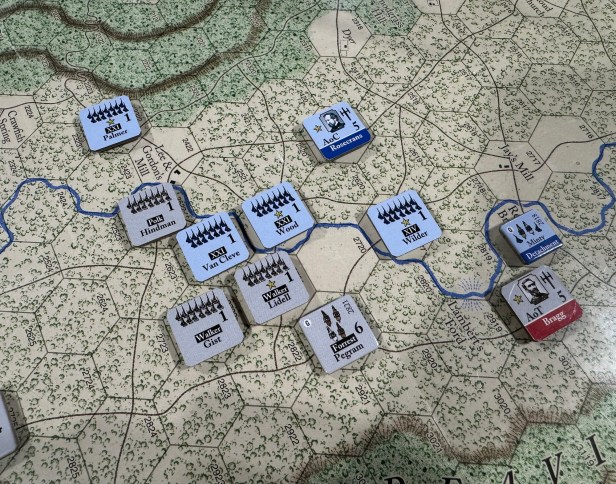
I knew that we liked Gettysburg when it came out but I was not expecting this follow-up design to be this good. I should have known it would be as Mark Herman is one of the best designers on the planet and we really loved this game.
Here is a look at our unboxing video to get a feel for the beautiful boards and the counters:
Here also is a link to our review video:
If you are interested Rebel Fury: Six Battels from the Campaigns of Chancellorsville and Chickamauga, you can find it on several large online retailers but if not you can pre-order a 2nd Printing copy for $47.00 on the GMT Games website at the following link: https://www.gmtgames.com/p-1151-rebel-fury-2nd-printing.aspx

2. Purple Haze from PHALANX
Purple Haze is a very thematic story-creation tactical level campaign wargame that is set in 1967 Vietnam. The player takes charge of a squad of U.S. Marines and must lead them through the terrain and battlefields of south Vietnam on various missions such as Search and Destroy, Patrol, Rescue and Long Range Recon. The game forces tough choices on the player to determine the outcome of the mission and your squad as you encounter enemy resistance, booby traps, a dangerous physical environment all with a black cloud hanging over the team as they will be forced to make moral decisions in furtherance of their objectives and to preserve their own lives.
The game has a narrative generation focus as your choices will lead to specific outcomes and additional challenges or boons while also incorporating tactical combat on a battle board and building a campaign arc over a series of several missions. The writing builds a vivid story about the situation and includes historically accurate situations as well as cultural and period specific jargon and experiences. The goal is to move from mission to mission, building experience and gaining new abilities to be used to survive the jungles of Vietnam, while following orders to the best of your ability. Nothing is easy with this game and Trait tests will force the players to roll dice to determine the outcome of all types of challenges including physical, perceptive, diplomatic and emotional situations as squad members will track both their health and mental fatigue as it effects them over the course of the mission and the campaign.
One of the best parts of these type of games is the construction of your squads and this game has a ton on choices in what you can bring along in the form of weapons, gear and other equipment. I always love a tactical game that gives me the power to choose what I want to take on the mission. Having to do this during the setup of a mission helps me to understand what the objectives are, what might be needed to more effectively achieve the objectives and how I can support my squad by distributing the load of heavy weapons ammo. Some people don’t like this level of granularity in their games but I really do and that is why I love a game like Warfighter from Dan Verssen Games because you have to choose wisely and cannot simply carry everything that you might need.
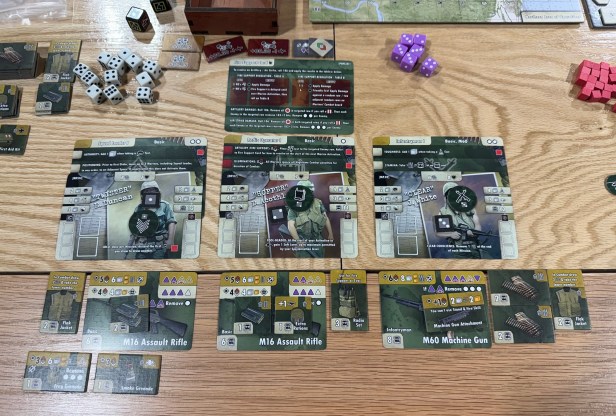
The game is played by players moving around on the Strategic Map as they are reconnoitering the various objectives and locations outlined in the scenarios. There are 3 Strategic Maps including Northern, Southern and Quang Long and what map to use will be set out in the mission set up instructions. The maps are based on Pictomaps that were produced by the US Army in 1965. They represent fictional areas in the southern part of what was known as I Corps in South Vietnam, near the DMZ. Each square on the map represents an area of 1km by 1km and each of these spaces has a terrain symbol printed in them to give the player an idea about what they will have to march through in order to get to where they are going. The different terrains include Urban (built-up areas with streets and buildings), Paddy (cultivated rice paddies or no jungle which are mostly flat areas with some small villages), Jungle (heavily wooded areas), Hilly (heavily wooded areas with significant elevation increases and decreases in the terrain) and Mountainous (heavily wooded areas with mountains or significant elevations). Each of these different terrain types will have a movement cost in the form of move time. March is the most common squad action the players will use and it will have to be managed as an exhausted squad is not effective and can be hampered in the game. Marching can be either straight (up or down, left or right) or diagonal. A march takes time and costs stamina points. If the stamina has reached zero, each time the squad has to move after that will inflict damage on the individual Marines which is determined by a random D6 roll and then placing a damage marker on that Marine’s Profile card.
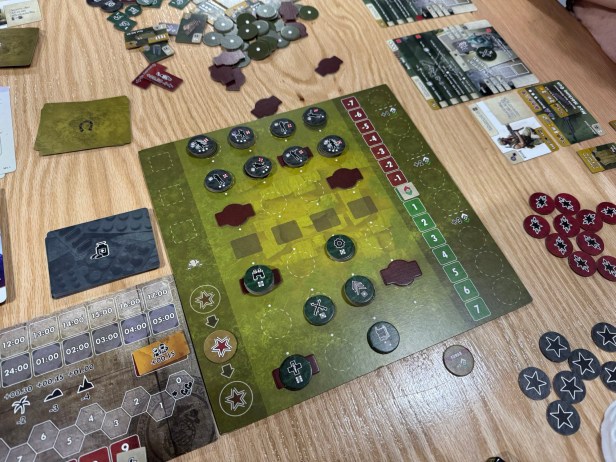
One of my favorites parts about the game is the combat. Combat is triggered by Events and once triggered will be decided on the Combat Board. The Event text will lay out the Combat Board set up, including the number and type of Enemy units that you will face, which will vary depending on the Threat level and the consequences of earlier Events and choices that have already been resolved. Depending on the outcome of the combat, the squad may earn experience, acquire new skills and find new Boon cards, which will help with future challenges.
One of the more interesting parts of the narrative portion of the game is the concept of keywords and writing them in your Logbook. As you make your way through each of the scenarios, some of the encounters you come across will note that you should write a specific keyword into your Logbook noting the choices or outcomes of your mission progress. An example might be Rice Tax, which is a result of the squad stopping the VC from using their stock piled rice in a certain village or the name of a Marine you met and freed from capture. These keywords will then factor into later missions if mentioned and the players have them in their Logbook and provide you with a slightly different outcome or reaction from an encounter.

I am a big fan of these “smart” methods to inject a slightly different lean with each scenario and to effect the outcome in favor of or even against the player. These keywords are not really dynamic as much as they are a static way to affect the outcome. It just is really well done in the game and does make you consider your actions against what the mission might include, measured against or in relation to your objective and then how each encounter could potentially affect it.
Here is a link to our unboxing video to give you a good look at the components and the fantastic production:
Here also is a link to our RAW video on the game, which is more a spewing of our thoughts and a discussion about the intricacies and parts of the game:
If you are interested Purple Haze, you can order a copy for €105,00 ($114.00 in US Dollars) from PHALANX website at the following link: https://phalanx.co.uk/games/purple-haze-board-game/
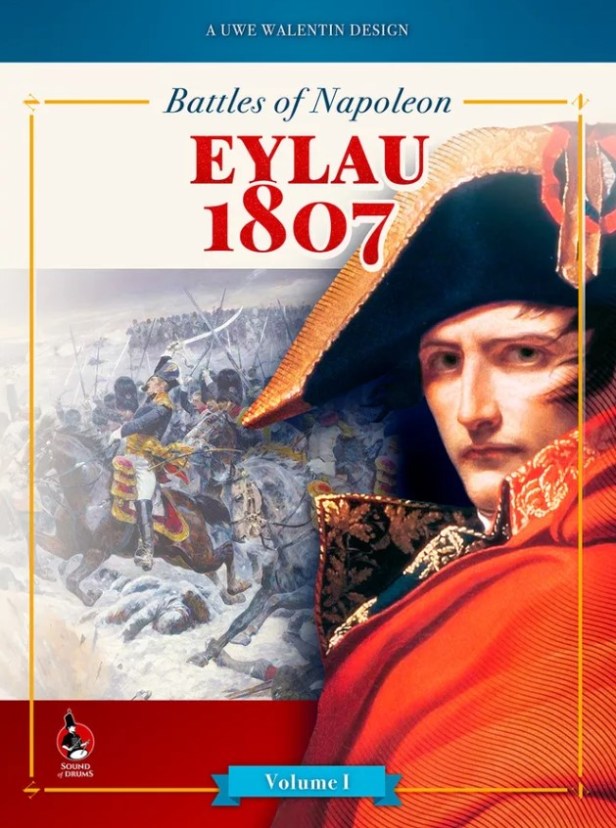
1. Battles of Napoleon – Volume I: Eylau 1807 from Sound of Drums
We have not played a ton of Napoleonic Era wargames. Really just a handful focused on the Nappy 100 Series from Victory Point Games, several of the games from Shakos (Napoléon 1806 and Napoléon 1807), the recent released Limits of Glory – Campaign I – Napoleon’s Eastern Empire from Form Square Games and some card games from Worthington Publishing (Napoleon Returns 1815). There are many of them out there and real wargamers usually play them a lot but we have just really only scratched the surface on getting into the genre. But, there is something with these games that does draw me in. Even though I am not into the history or feel a connection to the subject matter, they are somewhat magical in my humble opinion. Typically, these Napoleonic Era wargames are large hex and counter affairs with lots of units, large stacks, deep CRT’s, even sometimes using a base 6 math equation to divine combat results (I am looking at you La Bataille). They are REAL wargames and I am very glad that there are so many titles out there as there is a lot of fertile ground to expore! Recently, we played a very fine example of a Napoleonic Era wargame in a new offering called Battles of Napoleon: Eylau 1807 from Sound of Drums. This game is a fantastic example of a deep and interesting simulation of the period but with very approachable rules and mechanics designed to be able to appeal to any level of wargamer. While we didn’t experience the grand campaign game contained in this box, we did play a very approachable and relatively low counter density scenario that taught us the basics of the system and really gave us a taste for more!
The game does an exceptional job at balancing approachability with the simplicity and straightforwardness of the rules while causing a slew of difficult and very interesting and impactful choices for the player to take. This is a bit of a rare thing in this type of hex and counter wargame as contiguous lines of units limit your choices about when and where to attack and how to go about defeating your enemy. The way that these choices are forced on the players is through the fantastic orders system and the take on the tried and true chit pull activation.
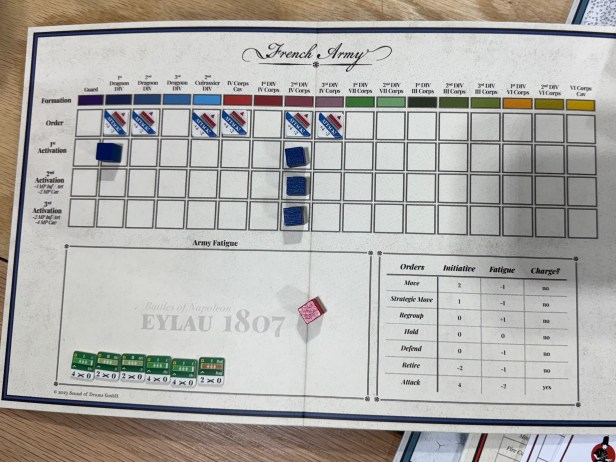
During the Order Phase of the sequence of play, each player will get to choose the specific orders that each Division will have for the entire turn. This process is done in secrete as each side want sot hide their intentions for as long as possible to really create the fog of war that many games need to keep them interesting and inject thinks such as bluffing that lead to various tactical surprises. Once each of the active Divisions received its orders, they cannot be changed until the beginning of the next turn. There are no restrictions to changing of any order as long as the Leader has enough command points and the Division leader is within range of the units they wish to activate. This range is typically 12 to 18 hexes and is a major part of what each player has to focus on to keep their formations in unison and to create good attacks and maneuver. If the Division’s commander is not in range it will have to roll a die against their command rating to check if they succeed in changing orders.
Just so you get a good understanding of the orders, there are a total of 7 different orders. Each of the orders gives the army that it is given to a specific number of Initiative Points and for some orders the players will lose Army Fatigue Points as they are doing less strenuous moves. The more Initiative Points an army has, the more likely it will be the Initiative side, which is sometimes very important but is a case by case decision and the more Army Fatigue Points it has it may lose the Initiative. The player then draws out a cube from the draw back and it will activate one of their armies of those of their opponent. Each of these activation cubes will be placed under the army shown on the chart above and then each order has a fatigue cost, which is then substracted from the player’s pool at the beginning of each turn. This concept of fatigue is really central to the game and the campaign game will be won and lost on this level of fatigue. Fatigue will lead to a number of victory points, which ultimately determine the winner.

The game system really emphasizes the maneuvering and coordination of different units between different Divisions. Maneuver is always a great part of any wargame and Eylau 1807 does this very well. Moving your units into position, all the while planning on how best to to use them, is very important. As a commander, you will have to make your choices wisely about how you move and where with an understanding of the activations that you have remaining in the draw bag. Moving your units into range of your enemy with their artillery knowing that you have no activations is a recipe for disaster and you really have to understand your current state and situation. I really liked this as I feel like this is what commanders do on the battlefield. Make decisions about their unit’s capabilities, status and available assets to set their strategy and battlefield orders. Also of great importance is the concept of facing.
As the game moves along, infantry assaults and cavalry charges will lead to gains and losses in battlefield positioning as casualties are accumulated with markers but will also cause the defending units to have to fall back and change the look and order of the battlefield. The game is more than just about losses though and punching holes in lines and isolating units will lead to more favorable attacks and positioning to keep your units as safe as they can be. You have to keep this in mind.
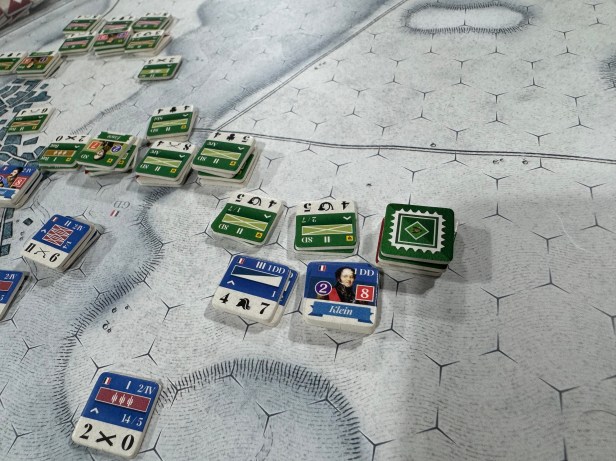
We just really had a great time with Eylau 1807. And even though we played a smaller scenario to break ourselves into the system and get an idea about how it works, this one is going to come back to the table as I believe that the intent of the game is best realized in the play of the campaign. Here is where fatigue will matter more and the attritional style of the combat losses will begin to add up. But this system is top notch and very fun. I was super impressed with the design and really feel like what we were doing and how we were trying to do it. Uwe did a good job with this one.
I do wish that the rules were a bit clearer but there are living rules that have been edited on the Board Game Geek page and I would recommend printing those out and using them rather than the rules that come in the box. I am very much looking forward to Volume II in the series and really think that this one has some legs to it and should be a system that we all can embrace and enjoy for years to come!
Here also is a link to our review video:
This game is very much worthy of this spot on the list and truly was a joy to play. I was very surprised by my like of this game and am very much looking forward to future volumes.
If you are interested in Battles of Napoleon – Volume I: Eylau 1807, you can order a copy for €89.00 ($97.00 in US Dollars) from the Sound of Drums website at the following link: https://soundofdrumsgames.com/shop/battles-of-napoleon-eylau-1807/
Honorable Mentions:
Each year I feel compelled to tack on some games to this list just because they were so very interesting or dealt with unique settings that I feel they are worthy of mentioning. While they didn’t make the Top 10 list, they are each good games in their own right.
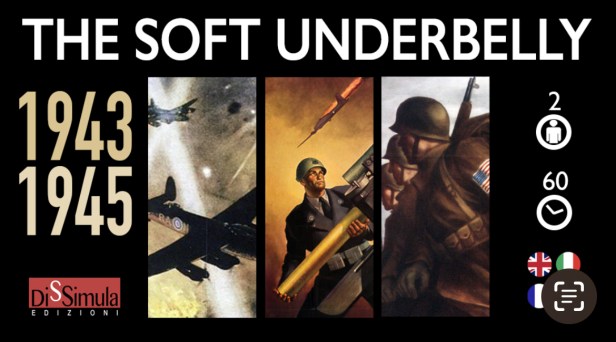
The Soft Underbelly: 1943-1945 from Dissimula Edizioni
The Soft Underbelly: 1943-1945 is somewhat of an abstract strategy game about the Allied Italian campaign in 1943 during World War II that plays in about an hour. The game deals with the second part of the war in the Mediterranean, that period which starts from the operations in Tunisia and reaches the Italian campaign and the landings in southern France from 1943-1945. The game uses some counters but also uses cubes and other more Euro focused elements and really gave us a feeling of the Combat Rations Series from Nuts! Publishing with games like 300: Earth & Water and Port Arthur as well as an as of yet unreleased game called Guerre Eclair that we had a chance to play while attending SDHistCon this past November. Even though it is a bit abstract and uses wooden bits, the game is very well done and creates some interesting opportunities to try some new strategies out but with plausibility all while having a bit of fun! This is a completely new system created by Sergio and is truly simple yet not simplistic. The players have to consider how they utilize their forces and must maintain a combined arms stance to ensure better results as there are bonuses in combat when infantry, tanks and planes attack together.
Here is a link to our video review:
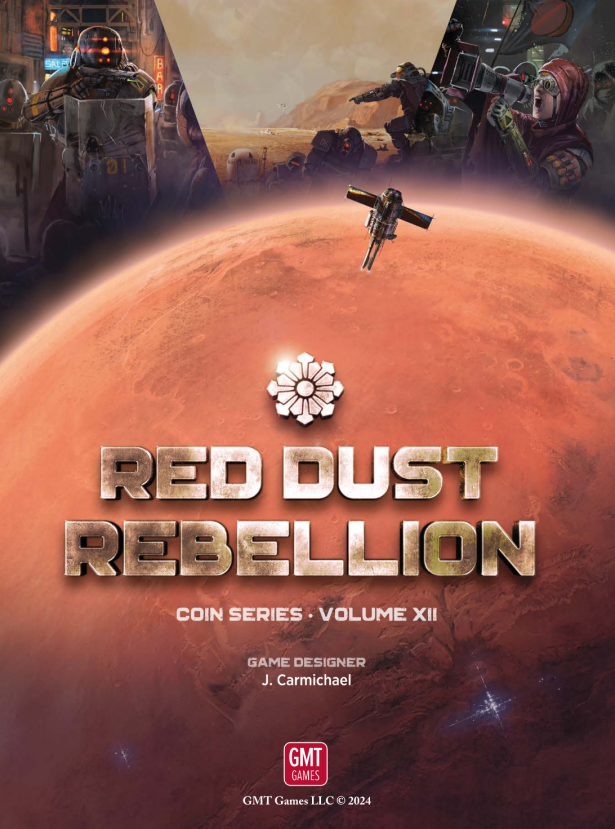
COIN Series Volume XII: Red Dust Rebellion from GMT Games
I love the series and there are lots of titles still in design and development with more coming. And I love that the series is now being taken in a new direction with its first volume that is not based in history but has a Sci-Fi setting on the red planet of Mars. Red Dust Rebellion, designed by newcomer J. Carmichael, tells the story of a future in which Mars has been colonized and forms its own government called the Martian Provisional Government. The game delves into the conflict of a fictitious Martian revolt of the 2250’s and the rise of Martian nationalism. This game is frankly amazing! I have only played it once but it was such a great experience and was very well designed. I just loved it.
Here is a link to our RAW video:

Limits of Glory: Bonaparte’s Eastern Empire from Form Square Games
Limits of Glory that will take a look at the campaigns of Napoleon. In Campaign I, which is called Bonaparte’s Eastern Empire, the game is focused on the campaign of the French in Egypt between 1798 and 1801. It covers everything from the invasion fleets leaving France trying to avoid Nelson and the British Navy, to the final surrender of the remnants of the French Army to an Anglo-Ottoman force in 1801. The game is very interesting and uses some new ideas to focus on the luck and skill of commanders through a mechanic called the Glory Rating. This Glory Rating can be used as a type of currency by commanders to do several things such as re-roll dice for movement or in battle. This becomes a sort of push your luck and resource management aspect and the players who more wisely use this scarce resource will find themselves victorious.
Here is a link to our video review:

Rommel’s War from Worthington Publishing
Rommel’s War is a 2-player game (with a solo mode) about the first year of the war in the desert, from March to December of 1941. One player takes the role of Rommel in command of Axis forces, and the other player takes the role of the British commanders (Wavell and Auchinleck). The game is very straightforward and has only has 8 pages of rules and a playing time of 1 hour so you will be in an out before you know and can play this again in the same evening. The best part of the game is the movement, having to choose the paths that you take to and from Tobruk and further to the east, and also the fact that the game is a block wargame and you have no idea about what you are attacking. You can use your recon units to determine the makeup of enemy formations but there is a risk as you might get caught and have to fight it out. Just a very well done simple wargame that really caught on with both of us.
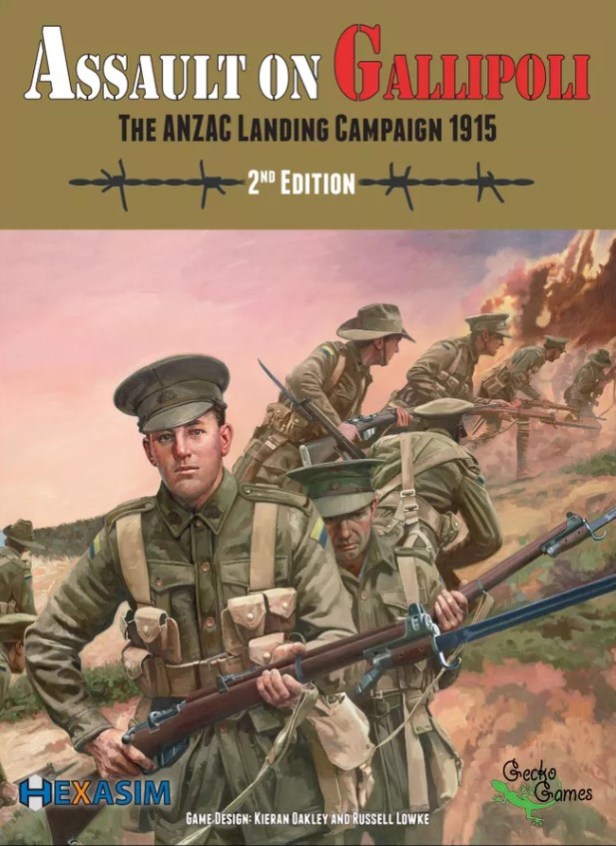
Assault on Gallipoli: The ANZAC Landing Campaign 1915 2nd Edition from Hexasim
A few years ago, I was able to do an interview with a new designer named Kieran Oakley who had established a new publishing house called Gecko Games to release his first game called Assault on Gallipoli. Since that time, the game released and quickly sold out and was then picked up by Hexasim to do a 2nd Edition print run. Assault on Gallipoli is a moderately complex area control wargame that covers the key battles of the Gallipoli Campaign of World War I in 1915. It does focus on the Australian and New Zealand Army Corps (ANZAC) sector of the campaign rather than the main British landings, so it doesn’t include the landings that occurred further south at Cape Helles. I actually very much enjoyed our play of the game and feel that this game is a perfect introductory medium weight and complexity wargame that appeals to both rookies and veteran wargamers. with great art and production, easy to grasp rules and helpful play aids, anyone can play this game. I also know that this is the first game in a planned trilogy that covers Australia’s most famous battles. In an interview that I did with the designers in 2022 they mentioned that the games will be Assault on Tobruk ‘41 then followed by Assault on Kokoda. They have already started working on these titles and hope to have them out soonish. In the interview they mentioned late in 2023 but that has obviously come and gone.
Here is a link to our video review:
There I am finally done. My list of the Top 10 Wargames published in 2024. I had fun playing them and putting this list together as I got to revisit each of the games and think about why they were included on this list.
Please let me know what your top games of the year were and what you think of my choices and what games you would have placed on such as list.
-Grant
 The Players' Aid
I purchased Undaunted 2200: Callisto after watching your video and was not disappointed. My first foray into a sci-fi game and it is a lot of fun to play. I am also looking at Shiloh: The First Day, It seems easy to get started and on the table. Rebel Fury is great and i have really enjoyed it. The Steam version is nice. I have just ordered Assault on Gallipoli and I am looking forward to it.
I stay away from Vietnam era games, but that is just a personal choice. Thanks for sharing these games. Keep up the great work
LikeLiked by 1 person
I totally get the avoidance of Vietnam War games. They are not for everyone and I know that those who served are always hesitant to play a game on the war they were part of.
Assault on Gallipoli is very good and simple and I liked it a lot. Just couldn’t get it on the Top 10 proper so added it as an Honorable mention.
LikeLike
Thanks Grant,
Here i’m looking for Vijayanagara. I’m more into ancient historical themes.
LikeLiked by 1 person
You will enjoy it! I promise. I have really loved it and want to play some more.
LikeLike
I’d be curious if you’ve played any of Sebastian Bae’s Littoral Commander series of games; “Indo-Pacific” and just released, “The Baltic”? These are, IMO, the best of the current modern era tabletop wargames, bridging the gap from professional game to hobbyist game. They score extremely well on BGG.
LikeLiked by 1 person
We have not as of yet.
LikeLike
As there is currently a not favorable currency exchange rate and our prices on the webshops are based in EUR US and Canadian gamers will get a 10% on our prices. SRP of our games are 1:1 EUR : USD. Just drop me a line and I will take of it.
Thanks so much for that list, Grant, we feel honored and appreciate it.
LikeLiked by 1 person
Huh, I played the top 4 games on your list + previous games in the same system as #5 & #6, nice! 🙂 I’m really glad Purple Haze got the ‘silver medal’, of course, I hope you’ll get around to playing the expansions, too 😀
LikeLiked by 1 person
Great stuff Grant! Really enjoy Purple Haze myself and have Eylau but have yet to get it to the table. After reading your thoughts on it, that needs to change soon!
LikeLiked by 1 person
You will enjoy it. It’s just that good!
LikeLike