One of the more active series out there today is the Levy & Campaign Series from GMT Games from the mind of Volko Ruhnke. The series had its start with Nevsky: Teutons & Rus in Collision, 1240-1242 and then followed that up with Almoravid: Reconquista and Riposte in Spain, 1085-1086. Since that time, there have been 2 other games published including Inferno: Guelphs and Ghibellines Vie for Tuscany, 1259-1261 and the most recent Plantagenet: Cousins’ War for England, 1459 – 1485. In addition to the released volumes, there are 3 others on the P500 with at least another dozen (or more) that have yet to be announced but are being developed and playtested.
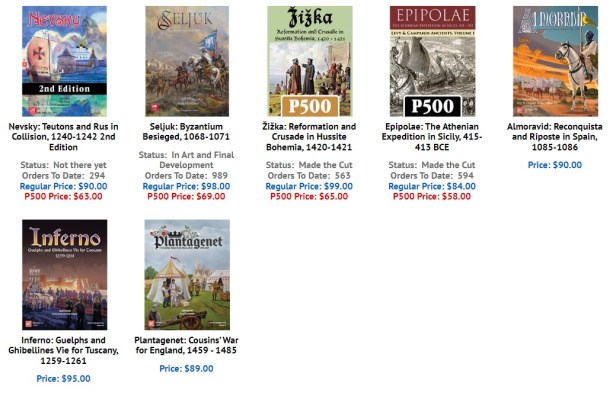
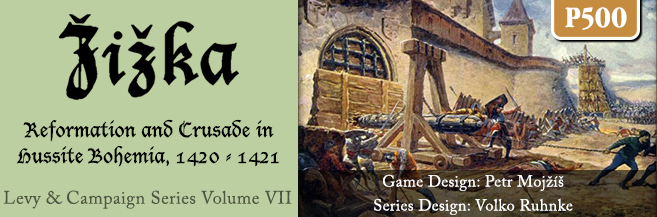
With the August 2023 Update from GMT Games, we got this new Volume VII announced in Žižka: Reformation and Crusade in Hussite Bohemia, 1420-1421 designed by Petr Mojžíš who also has also designed the upcoming The Bell of Treason: 1938 Munich Crisis in Czechoslovakia which looks really good! I reached out to Petr and he was more than willing to share the design with us and answer our questions.
*Please keep in mind that the artwork and layout of the various components shown in this interview are not yet finalized and are only for playtest purposes at this point. Also, as this game is still in development, rules and scenario details may still change prior to publication.
Grant: How is your other game Bell of Treason progressing?
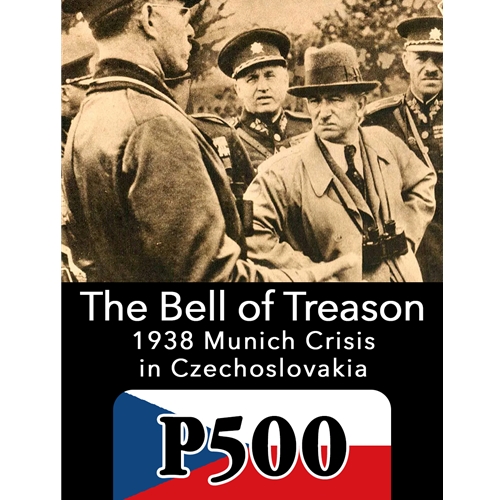
Petr: Hello Grant! I am happy to chat with you again. After a small break, work on The Bell of Treason are on again with the broader team involved. The artwork started and Jason Carr has designed solo bots which we are fine tuning and playtesting now. Also, there are fresh new names within the playtest team which is also good.
Grant: How have lessons learned from that design helped you with your other projects?
Petr: I am still learning as we are in the project stages that I have never experienced before. The most valuable lesson is probably about working with playtesters. People willing to play your unfinished game are precious. Even more so those who hold on all the way to the finish line. But as they are all dedicated fans and friends of the project one must observe the details of each playtest. When a playtester says it was a good game you still must watch for what could have been better.
Grant: What is your upcoming Žižka about?
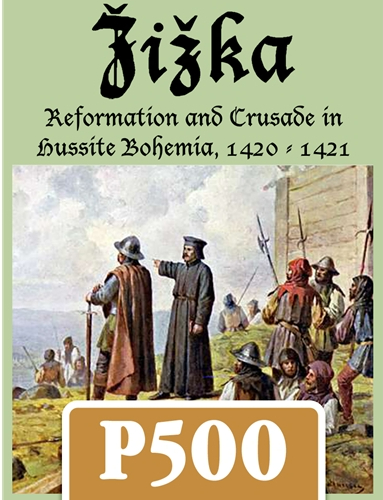
Petr: Žižka: Reformation and Crusade in Hussite Bohemia, 1420-1421 is about the first two years of the Hussite Wars. These wars were the first major bloody attempt to reform the church that set the stage for Martin Luther’s Reformation a hundred years later. The game also captures the first two crusades against Hussites that may have crushed the movement right at the beginning. Hussites instead became a power that threatened Europe for more than a decade.
Grant: Why was this topic a good candidate for the Levy & Campaign Series?
Petr: I have been thinking about the Hussites for a long time. The main hook was also the issue though. I am talking about the main character, one-eyed Hussite general Jan Žižka. He is one of the few in history with a record of never being defeated in battle. Pair it with the famous defensive Hussite tactics of war wagons. My initial ideas about making a classical card-driven game on this felt short on those lines. Why would anybody ever attack his stack of units? Then, I played Volko Ruhnke’s Nevsky. Right away I knew I wanted to make Žižka using the Levy & Campaign System. While others saw its glory in logistics I saw the mats (best even hidden!), the battle system, the use of capabilities and events, the model for lord’s service and it all clicked with my vision for a game on the subject.
Grant: What has it been like designing a game in an established and revered system?
Petr: It is easier. All my public work so far is following the series (Wing Leader, Final Crisis Series, and Levy & Campaign). My reason for making series games is not to make it easy for me. It is to make it easy for the players. When you make a game with a niche subject using a brand-new system it is hard to find its audience. On the other hand when the system is established, and therefore the barrier to learning the game is low, people are more willing to try more unusual subjects. Designing is then mostly about striking the right balance between the new (interesting) and the old (easy-to-learn).
Grant: Why was this a subject that drew your interest?
Petr: If you visit Czechia (my country) you will find a Žižka Street in nearly every town. I think it was natural to tackle the Hussite Wars subject. Or imagine there is no game on Gettysburg (can you?). What would you design a game about as an American? 🙂
Grant: Why do you believe the events in Hussite Bohemia between 1420-1421 create an interesting canvas for a game?
Petr: The Hussite Wars were part of significant military changes of the late middle changes. The reformation itself is also an interesting subject even if this one was not successful yet. And I think the first two years were the most important as the Hussite movement could have been crushed right at the beginning.
Grant: Why did we need another volume in the Levy & Campaign Series?
Petr: That is up to the players to say 🙂 I as a player always prefer a new game in the series covering fresh new subject than another take on Gettysburg. I think Žižka brings several new experiences to the series.
Grant: What can we expect that this volume will add to the series?
Petr: It is about the transformation of a small vulnerable mostly peasant army to a force able to repel huge crusader armies. It is about the conquest of Bohemia. There is no back and forth between the campaigns, as seen in Nevsky, Almoravid, and Inferno. It also brings a religious aspect to the table.
Grant: What is your design goal with the game?
Petr: My goal was to capture the beginning of the Hussite Wars accompanied by the innovations Hussites brought to the medieval art of war. The Hussites were mostly led by lesser gentry. Without innovations, shrewd leadership, and the ability to turn peasants into soldiers, the movement would have been crushed early. By early I mean exactly those two years portrayed in the game. I wanted players to be surprised by how the dynamics of the game are changing throughout the campaign. And as I already mentioned I wanted to stress the religious aspect.
Grant: What sources did you consult about the details of the history? What one must read source would you recommend?
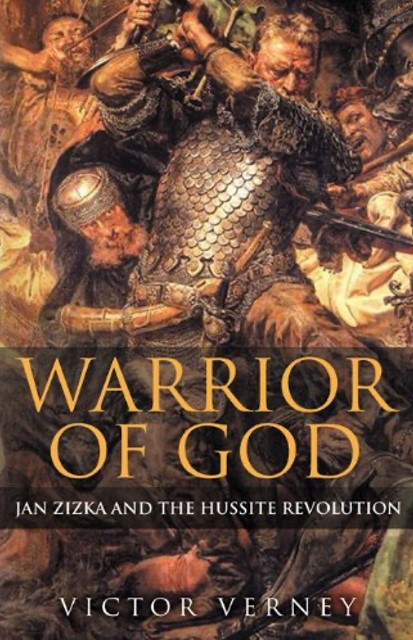
Petr: As with The Bell of Treason, I have the advantage of Czech sources. While in the case of the former I needed to watch out for bias of the authors, in the case of Žižka it was not an issue. The Czech historians have a much better understanding of the Hussite Wars as it is one of the most studied subjects in the country. Therefore, my best resource is the latest Žižka’s biography by Petr Čornej which is unfortunately unavailable in English. For an English audience, I would recommend another Žižka’s biography Warrior of God by Victor Verney. Or there is of course a good take on Hussite warfare from Osprey Publishing: The Hussite Wars 1419-36 by Stephen Turnbull.
Grant: What important elements from this period were important to model in the game?
Petr: The peasants gradually turned into soldiers. The religion. It created the initial centers of Hussite power. Hussites followed the Maccabean example and rallied on so-called mountains (hills in reality). Religion also laid out the basis for negotiations which were a noteworthy part of the conflict. There were also Crusaders not necessarily welcome by Bohemian nobility and led by Holy Roman King Sigismund of Luxembourg, the heir to the Bohemian throne. His role was also intricate as his brother Wenceslas died on the eve of the Hussite revolution leaving the throne empty.
Grant: How are each of the sides different? How have you taken care to model their strengths and weaknesses?
Petr: Christophe Correia, the developer of the series, thinks Žižka is the most assymetric game in the series thus far. It is not to be seen from the Forces player aid though. The list of unit types is the same as in Nevsky (even more simple). The asymmetry is in the composition of forces on each side. While nearly all Catholic Lords have Knights, there is only one Knights unit on the Hussite side. Žižka himself has nearly no units and must recruit the weakest units in the game – serfs (here called Cziepnici – flailmen) in the field. They should be crushed easily right? Fortunately, there are Arts of War Cards which are not for a flavour only here. Crossbows, various early handguns, and of course war wagons were a must for Hussites to survive early. Later in the campaign, they can (and should) attack even without wagons which were defensive tools.
Grant: What different lords are available to both sides?
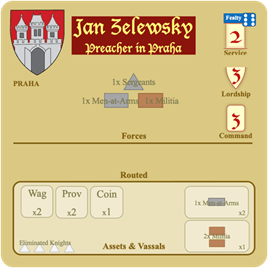
Petr: There is a spectrum of leaders on both sides. Hussites have one lord from Bohemian nobility. Others are lesser gentry (including Žižka) or even preachers. For example, the Prague Hussite force which is one of the better in the game is led by zealous preacher Jan Želivský. On the Catholic side, there is more Bohemian nobility of either Czech or German origin. There are huge armies of Crusaders from the Rhineland, Bavaria, Austria, Saxony, and Silesia (the Papal Legate is back!). So massive that it carries a headache for Catholic player managing their supplies. And there is Sigismund the main figure on the Catholic side. While he is the Holy Roman King and therefore in charge of all Catholics, his main force comes from his base – Hungary. You might even see Cumans ravaging the land (via card).
Grant: How have you modeled the differences in leadership and strategy in the game?
Petr: That is something experienced Levy & Campaign players will see right from the beginning. Hussite lords in general have better ratings. The trick is how the Hussite player will use this flexibility while the Catholic player is challenged to handle a stronger but more clunky force. There are of course exceptions to that. Smaller Catholic horse forces are very flexible in hunting of Hussite heretics which might do the job early in the game.
Grant: What is the makeup of the calendar?
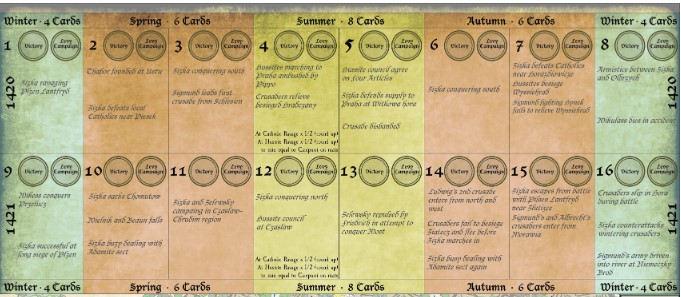
Petr: The calendar is something you would expect to find in a Levy & Campaign game. The timeframe of the game is very tight as the first small battle took place in December 1419 and the Second Crusade was routed out of the country in January 1422. There may be some lull period in the campaign which is handled by a special procedure to skip up to three turns. An interesting challenge for the Hussites comes from the need to keep their armies in the field. As they are not rulers of the country (yet) they can’t tax the subjects to get money. Therefore they must extensively ravage and conquer strongholds throughout the campaign.
Grant: What different types of units are available to each side? What are their relative advantages?
Petr: Catholic units have better armor in general. They can afford to attack repeatedly without risking the loss of their entire fighting force. This very historical behaviour is also encouraged by some cards. Hussites have mostly weak foot units. Empower them with the war wagon tactics, crossbows, guns, and maybe at least some armor stolen from Catholic town armories and you might have a hard-to-defeat force.
Grant: What is the layout of the game board?
Petr: The game board represents the map of almost all of medieval Bohemia which has the same borders as the current west part of the Czech Republic. It was a densely populated area in the 15th century, therefore far many important towns and castles were omitted from it. Prague deserves a little note as we decided to create special rules for her. The siege of Prague during the First Crusade against the Hussites was a pivotal moment. As it was very much about the supply lines to the city we have created a box with two fortresses guarding the approaches to her. Hussites built another fort on the third hill next to Prague during the Crusade which is also a possibility in the game.
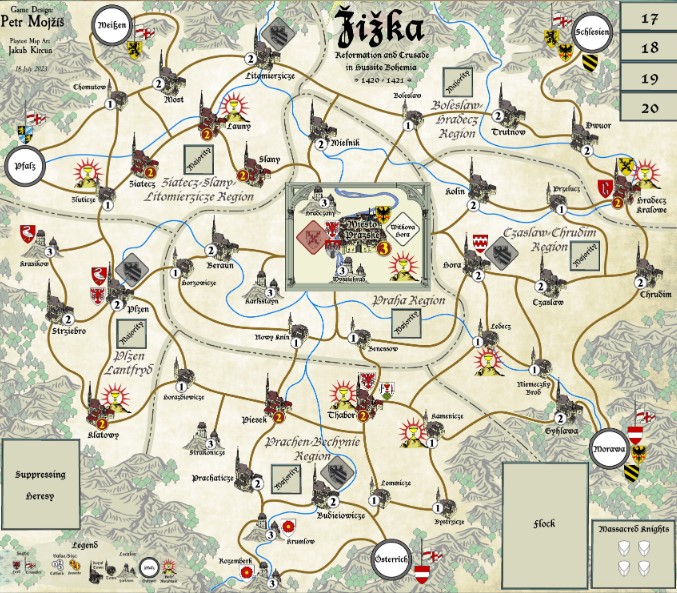
Grant: What strategic considerations does the terrain and geography create for the players?
Petr: To make it simple, there is only a single type of Way and every space in the game is a stronghold. There are other aspects of geography to watch for though. Various Crusaders can enter the country from various entry points. And both players must watch for those mountains I mentioned earlier. Those centers of the Hussite movement may give (not only) Hussite player diverse advantages. In general there is no front. Campaigns will be held back and forth across the country.
Grant: How are the Arts of War Cards used?
Petr: Arts of War Cards are very important in this volume. Hussite battles are known for plenty of unorthodox tactics and nasty surprises from both sides. What about running cattle against the wall of war wagons to be protected from the Hussite missiles? Therefore the game is heavily dependent on the use of these cards. The rules for their use are the same as in the rest of the series though.
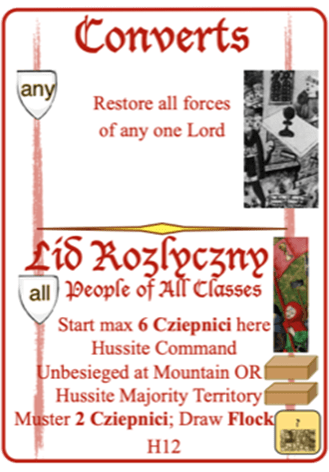
Grant: Can you show us a few examples of these cards and explain their uses?
Petr: This is one of the basic Hussite cards found in the design. It is a way to muster the peasant army (bottom part referred to as People of All Classes). You may notice that it asks you to draw Flock. Flock is a burden in the game. It represents untrained peasants and their families who would follow the camp along as they traveled through the countryside during war. It limits and slows the Hussite operations. It is also removed from the game when Hussite lords are at their war camps so it gradually disappears during the campaign as people would return home during the winter season after campaigning was completed for the year.
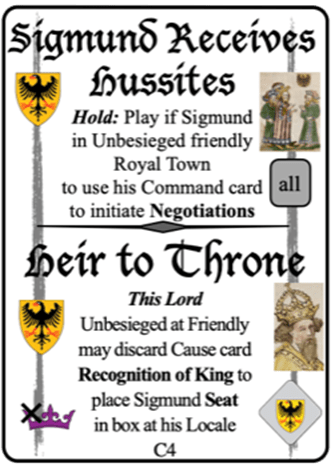
This card allows the player to initiate an entirely new mechanic in the series referred to as Negotiations (top part). Negotiations are for the most part a way to massively shift Hussite service. Service is a well-established mechanic in Levy & Campaign that is about keeping the lords in the field. Via Negotiations, Hussite lords may make peace with their enemies temporarily (or entirely) giving the fight. They may also strengthen their will to fight using the same mechanic. And what is it? It is a simple embedded card mini-game using a new deck of so-called Cause Cards which simulates negotiations between both sides. Players who know power struggle from 1989: Dawn of Freedom will be right at home with this mechanic. The sole strengths may not be always helpful here. For example, local Catholic lords may negatively influence Hussite negotiations when not actively fighting (or when a Lord is not mustered).
Grant: What are Cause Cards?
Petr: Cause Cards represent the ideological struggle the sides were fighting for. There are three suits: two religious and one political (recognition of Sigismund as the King). They are the main tool for already mentioned Negotiations but they have other usages as well.
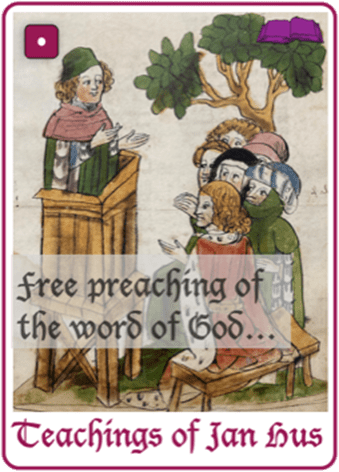
Grant: Can you show us a few examples of these cards and explain their uses?
This card called Teachings of Jan Hus represents the teachings of the reformer and the martyr Jan Hus, whose burning sparked the Hussite Wars.
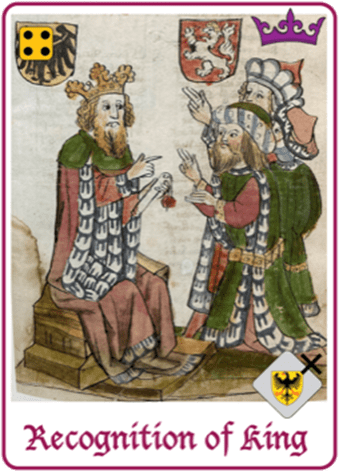
The second one is political. Apart from use during the Negotiations there is another very important use of these cards. In Žižka you don’t need to besiege or sack every town. Towns may simply open the gates to the marching forces changing their side. It comes via a die roll not any different to surrender rolls commonly used in the series. It is much more frequent than the treachery in Inferno though. Both players can influence those rolls by the play of Cause Cards. The more important the cause (higher value) the higher the chance of the town opening their gates. The Opponent can counter by discarding the same suit and lowering the chance. Imagine that as a super-quick version of negotiations at the gates of the town.
Grant: What are you most pleased about with the outcome of the design?
Petr: I am very happy with the different feel of the various scenarios as well as the transformative nature of the campaign. I initially thought there would be a need for something like an early-middle-late deck but it turned out it works with common Levy & Campaign Series rules. I am also very happy with how the Cause Cards function, the gameplay around them, and the historical situations they simulate.
Grant: What has been the feedback of your playtesters?
Petr: The number of playtesters is steadily growing. I know it is not hard to get a group of people to play your game once. But when they want to play it regularly month to month, I think it is a good sign. They say they feel like they are playing an already-finished Levy & Campaign Series game. Of course, I still see some imbalances and stuff that needs to be improved.
Grant: What other designs are you currently working on?
Petry: I am still waiting for my first game to get published so I am focusing on that and don’t want to deep dive into any new design before. That being said I have plenty of concepts on the table. The one I am thinking about the most now is about the end of WWII from the perspective of the doomed German units wanting to save their necks by surrendering to the U.S. Army or by showing themselves in a good light at the end of the war. Two such factions happened to clash in Prague, in May 1945, when both American and Russian armies were close to the city.
Thanks for the chat! I am grateful for the opportunity to discuss the details of my designs at work.
Thanks for your time in answering our questions Petr. It is really refreshing to see and hear about your take on design as a relative newcomer. I am impressed at your approach and feel that it will lend itself well in leading to a compelling and tense struggle in this game.
If you are interested in Žižka: Reformation and Crusade in Hussite Bohemia, 1420-1421, you can pre-order a copy for $65.00 from the GMT Games website at the following link: https://www.gmtgames.com/p-1060-ika-reformation-and-crusade-in-hussite-bohemia-1420-1421.aspx
-Grant
 The Players' Aid
Looking forward to this one!
LikeLiked by 1 person