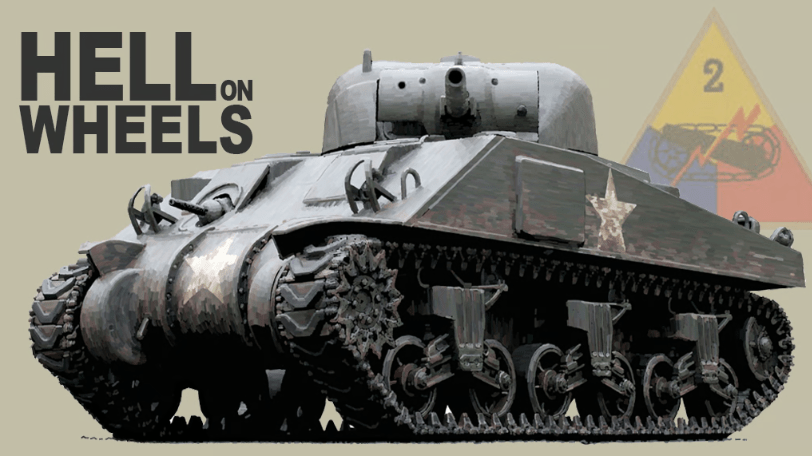
Over the past several years, we have done interviews with Matt White, publicized his games and played a few of them as well and he always has something cooking. Recently, I came across his newest offering on Kickstarter called Spearhead: Hell on Wheels – Tank Battles in Normandy. This game is a solitaire or 2-player print and play tactical game that allows players to take command of US tanks in German occupied France. I reached out to Matt and as always he was more than willing to share on the design.
If you are interested in Spearhead: Hell on Wheels – Tank Battles in Normandy, you can back the project on the Kickstarter page at the following link: https://www.kickstarter.com/projects/mattwhite-wargames/spearhead-hell-on-wheels-tank-battles-in-normandy
Grant: What is your new project on Kickstarter called Spearhead: Hell on Wheels?
Matt: This is a brand new solitaire and co-op World War II print and play tactical wargame. In this game you are in command of a group of 3 US tanks in brutal and intense tank combat in enemy-occupied territory.
The players must lead their tanks, through unforgiving terrain, finding and then engaging the enemy in fierce fire fights. They must defeat any encountered enemy tanks and forces, whilst meeting the objectives as they move across the map.
Grant: What was your inspiration for the name? What do you want it to convey about the design?
Matt: My biggest inspiration was reading accounts from various US armored units. Keeping your tank crews alive and positioning your tanks whilst dealing with unexpected enemy positions is key to survival and success and truly seemed to be “Hell on Wheels”.
Grant: What about the battles during Normandy inspired you to make this game?
Matt: Basically I wanted to focus on and show the difficulties with the survivability of the armored crews and their vehicles during the D-Day invasion and the days after as the Allies broke out into France. That was the biggest point I wanted to make.
Grant: What research did you do on the subject?
Matt: As with all my games, in trying to get the historical aspects correct both in the mechanics of the game as well as the look and feel of the art, I basically try to do lots and lots of reading! I read as much as I can on the subject, from various authors and viewpoints, and when I am not spending time playing games or making them, I basically read! This knowledge is part of the inspiration for my games as I draw upon things that I have rad and then translate them to the page.
Grant: As a tactical level wargame, what are the most important areas of focus for the design?
Matt: The positioning of your tanks in relation to where the enemy could be, and not only the tank hull but also the turret. Keeping your tank crews alive and positioning your tanks whilst dealing with unexpected enemy positions is key to survival and success. This game is point-to-point based where you must place your tank orientation and can aim the turret separately. Being able to keep the front of the hull forward towards the enemy tanks whilst hopefully being able to fire on their flank is critical.
Grant: How does the game differ in its 2 modes including solitaire and cooperative?
Matt: In the game you are in command of a number of US tanks – these can be split between players if you wish. Its quite unlike a number of solitaire WW2 tank games where you are in command of one tank. In this game you have a number which makes it really suitable for co-op play.
Grant: I know the design is a Print and Play offering. Why do you feel this model is best suited for your designs?
Matt: I like making print and play games as it forces you, as the designer, to make every component count and making the most of the physical space on a sheet of paper. I find that challenge one of the most interesting parts of the creative process. I also like the print and play model because it is very affordable for all parties, both me and the players, and allows the game to be available to anyone at anytime and on their terms.
Grant: I see that the board has a point-to-point movement layout. Why was this your chosen method of conveying information about the battlefield?
Matt: As much as I love traditional hex based games (and continue to play a lot of them), I also like point-to-point too. I like the way you can combine not only line of sight but also information about the environment in the game.
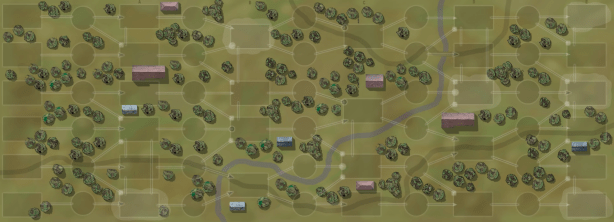
Grant: What is the meaning of the different symbols that appear on the board?
Matt: Movement is from point-to-point and where you move from a Position Point (the rectangle points) to an Observation Point (the circle points) where you will test for observation and perform the majority of combat. If combat is successful then you will be able to move to the next position point.
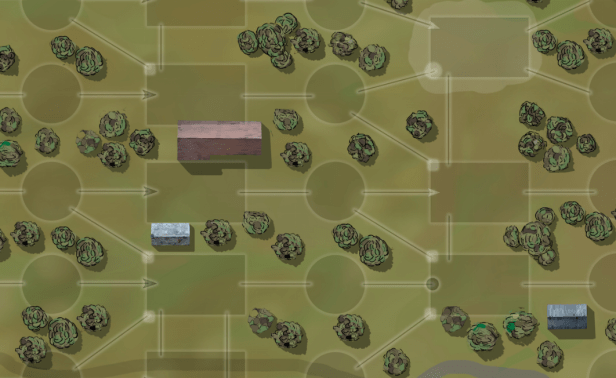
As you can see from the map there are multiple paths from Position Points to Observation Points and then onto other Position Points. Plus there are a variety of pros and cons to various paths to allow for a variety of terrain types and observation challenges. These paths are illustrated on the map in the shape of lines which are known as Movement & Observation Lines.
For each Movement & Observation Line there is a symbol at one end. The most common symbol is a black arrow, which denotes normal terrain and normal observation. There are other symbols which mean more difficult terrain or harder observation. These are:
Black Arrow – Normal Movement – Normal Observation
White Arrow – Normal Movement – Hard Observation
White Square – No Movement – Normal Observation
Black Circle – Difficult Movement – Normal Observation
White Circle – Difficult Movement – Hard Observation
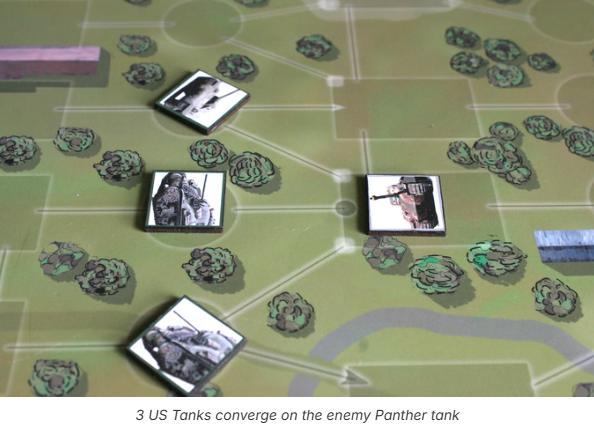
Grant: What difficult decisions do players have to make in the game?
Matt: You will have to deal with enemies and you discover them but you don’t know where they are and so you must make some decisions based on information you do and don’t have. The player will also have several simultaneous objectives that must be obtained and will have to contend with both the German forces defending them that you know about and those that you do not.
“Lady luck” plays a part, as with any military operation, but your decisions and tactics are crucial, especially in how you position your tanks on the map when facing enemies as you cautiously roll through the environment.
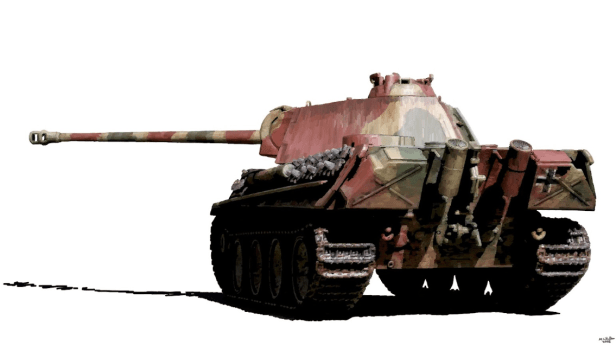
Grant: What dangers and threats meet the players on the battlefield?
Matt: There are a variety of dangers but not only the enemy forces as tank obstacles and mines can be a serious threat, combined with the environment itself.
Grant: What objectives does the player have to accomplish?
Matt: For each game session the objectives are randomly generated with Objective markers provided. All you have to do is safely get your tanks to those Objective markers, all the whilst dealing with the enemy!
Grant: How are hidden German units handled?
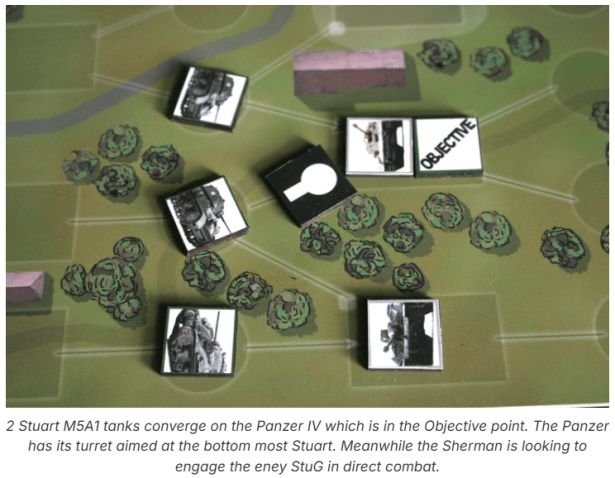
Matt: Every time you move your tanks you will need to check what they can observe and into which other points then can see. At this time you will roll on a couple of charts to see if you can see enemy units. However, just because you can’t see any doesn’t mean that they are not there.
Grant: What is the makeup of the Tank Cards? What information do they contain?
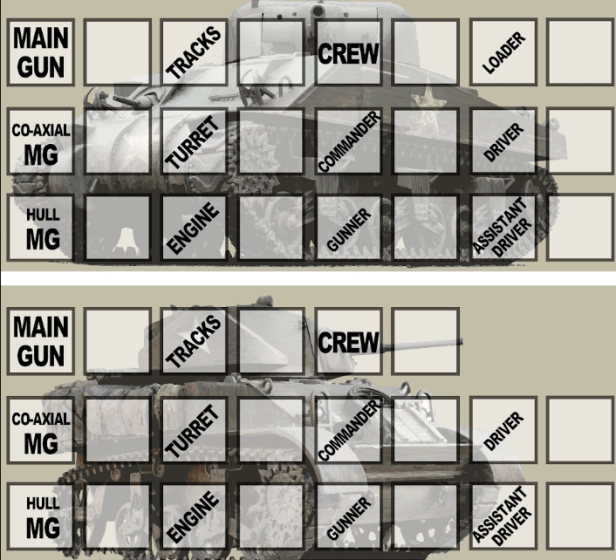
Matt: Using the Tank Cards you record the status of the major components of your tank such as the engine and tracks plus any gun jams. You also record the status of the various tank crew, all of which can have an impact in the game. Counters are provided to record all the status of both the tank and the crew.
Grant: What different types of tanks are included on both sides?
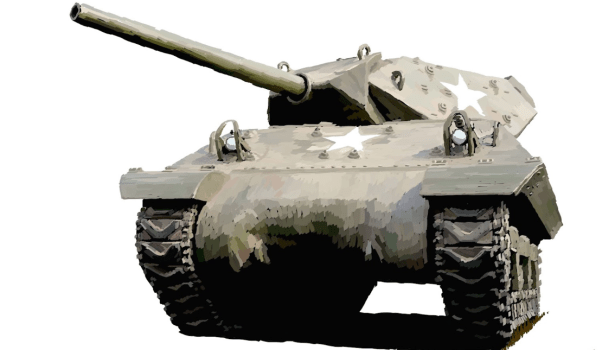
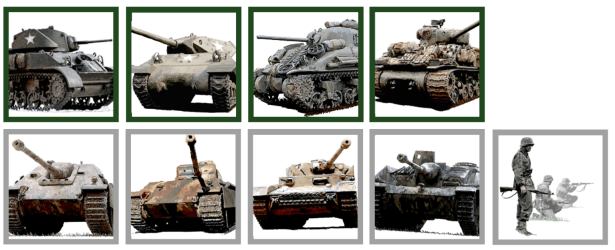
Matt: There are variety of tanks in the game with each tank having its own unique gameplay – for example the M10 tank destroyer has no hull machine gun (but does have a better anti-tank weapon). There are also Stuart M5A1 Tanks, StuG’s, Panzer IV’s, and many more.
Grant: How does combat work?
Matt: In the combat phase, you determine the order in which both your tanks and the enemy tanks fire. This is crucial to how the combat plays out as in real life WW2 tank combat, the results will favor the tank crew who can fire first on their target.
You will roll a few dice, depending on your tank positioning and other factors, and retain the highest number. You can increase your number of rolled dice by certain criteria – the more dice you roll the better! For example, if your tank turret is facing the enemy, the terrain type, the health of both the tank and the crew and if the enemy have been observed all are major factors. The enemy tanks will be doing the same, so factors such as successful enemy observation in the previous phase are crucial!
Grant: What is the goal of the game? How is victory obtained?
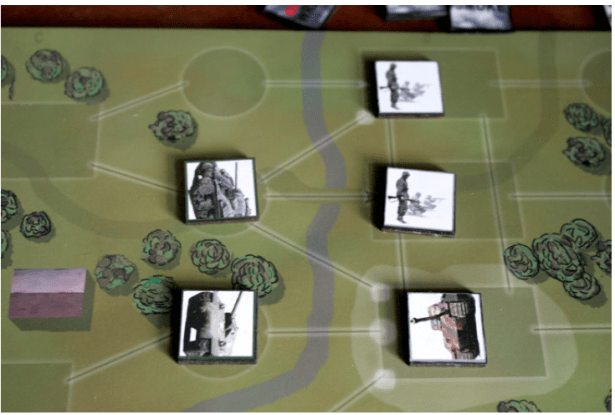
Matt: Your goal is to reach your various objectives on the map, whilst trying to keep your tanks and crew alive.
For each game session the objectives are randomly generated with Objective markers provided. All you have to do is safely get your tanks to those Objective markers, all whilst dealing with the enemy!
Grant: What are you most pleased about with the design?
Matt: I am most pleased to be coming to the end of the design and getting it ready for people to play! Finishing or coming close to it, is the hardest part of the development. In terms of the actual game, I really enjoy being able to get a game that has depth and is engaging that can be printed on just a few sheets of paper.
Grant: What kind of an experience does the game create?
Matt: I hope that the game creates a thoughtful representation of actual tank combat and how decisive it can be!
But that is not all. The game is modular and has several options included. As well as the map shown above, the game will also come complete with another map, additional counters and a rulebook which allows for you to create your own unique scenarios.
This map has the same points but where you will roll on tables to determine the various Movement & Observation Lines from each Position Point and Observation Point. There will be counters that you can place between the Position and Observation Points as an aid. You will be using various charts and tables to procedurally generate your map as you play, determining those gameplay elements as you progress. This type of game session will present you with a new challenge as you really have to deal with more unknown elements as you progress your tanks across the map.
Grant: What other designs are you currently working on?
Matt: I have a few games I am working on – currently working on something involving WW2 Mosquito aircraft!
For a YouTube video overview of the game, please check out Matt’s overview video here:
Thanks to Matt for his time in answering our questions and for his great little print and play games. I love it when one of these new games is brought to light as I get to oodle over the art and see what new things he has created!
If you are interested in Spearhead: Hell on Wheels – Tank Battles in Normandy, you can back the project on the Kickstarter page at the following link: https://www.kickstarter.com/projects/mattwhite-wargames/spearhead-hell-on-wheels-tank-battles-in-normandy
-Grant

