We became familiar with the work of Javier Romero when we played his game Lion of Judah: The War for Ethiopia, 1935-1941 from Compass Games in 2017. Since that time, we have done 6 designer interviews with him for World War Africa: The Congo 1998-2001 in Modern War No. 52 from Strategy & Tactics Press, Soviet Fallout: The Nagorno-Karabakh War: 1992-1994 in Modern War No. 54 from Strategy & Tactics Press, Santander ’37 from SNAFU Design, The Chaco War, 1932-1935 in World at War #86 from Decision Games, Caporetto: The Italian Front 1917–18 in Strategy & Tactics Magazine #337 from Decision Games and most recently Bosnian War 1992-1995 in Strategy & Tactics Magazine #351 from Decision Games. A few months ago, I saw where Javier was redesigning a formerly published game of his from World at War Magazine called Partizan! The War in Yugoslavia, 1941-1944 from a Chinese wargame publisher called Kilovolt Studio. I immediately reached out to him and he was more than willing to talk with us.
Grant: Javier welcome back to the blog. What historical period does your new game Partizan! cover?
What did you want the title to imply to the players?
Javier: Many thanks. Glad to be back.
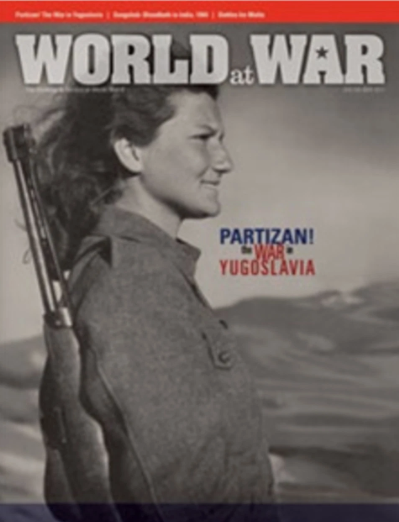
Well, I wouldn’t call it a “new” design. A first version of Partizan! was published in World at War Magazine back in 2011. Partizan! is a simulation of the Guerrilla warfare in World War II, from the Axis invasion in the spring of 1941 to late 1944, when the Soviet forces entered the region and the guerrilla struggle ended in the south and east of the country, even though the war iWan Yugoslavia would go on until May 1945.
The title, of course, evokes the epic of the Partisan struggle, the foundational myth of the Communist Yugoslav regime of Josip Broz Tito, “Tito” is a prime example of “Sic Transit Glory Mundi” if there is one. Upon his death, in May 1980, Tito went from being idolized at home and hailed abroad as one of the most outstanding leaders of the 20th century, to being reviled in his own country and all but forgotten abroad.
Grant: Who is publishing this new edition of the game?
Javier: Chinese editor Kilovolt Studio did this new edition.
Grant: How has the game changed from its original publication in 2011 in World at War Magazine?
Javier: It is a boxed version complete with upgraded graphics, a sturdier map and pre-rounded counters. The editor added errata, rules and counters that were left behind from the original version and later published as add-ons online and in later issues of World at War Magazine. Apart from that, the game is basically the same.
Grant: What was your inspiration for this game? Why did you feel drawn to the subject?
Javier: Well, that region of the world (let’s call it Southeastern Europe – “Balkans” can be found offensive by the locals for a number of reasons) is one of my pet subjects, so to speak. So far I have designed several games on WWII in Yugoslavia (Partizan!, Balkans ’44) as well as on the Yugoslav Wars of Independence in the 1990s, including War Returns to Europe: Yugoslavia 1991 and Bosnian War for Strategy & Tactics. As mentioned in earlier interviews, I have travelled extensively across former Yugoslavia and the neighboring countries and always had a great time there.
Grant: What was your design goal with the new edition?
Javier: The game mechanics basically remain the same, although the editor added an important element that was left out from the first edition, namely the Chetniks or Yugoslav royalists that played a key role in the war.
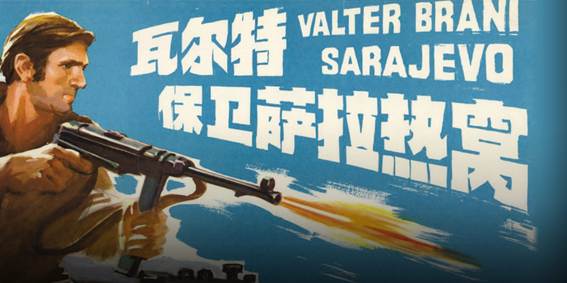
For the Chinese wargaming public, this subject has a particular interest as well because in the People’s Republic of China the Partisan epic (one of the ideological/propaganda foundations of Socialist Yugoslavia) was, and is, wildly popular so much so that the Chinese edition is called Walter’s War. “Walter’s War” refers to the 1972 Yugoslav film Walter Defends Sarajevo (Serb Croatian: Valter brani Sarajevo) based loosely on the military feats of Vladimir Peric, aka “Valter”, who defended Sarajevo during the German retreat from the southern Balkans in late 1944.
Walter’s War is one of the most famous examples of the “Partisan movies” subgenre, a series of films on the Partisan epic made in Yugoslavia between the 1960’s and the 1980’s. It was particularly popular in the Eastern bloc countries-on the year of its release, it was viewed by some 300 million people in the People’s Republic of China alone. Fifty years later, it is still something of a cult movie in China and other countries.
Grant: What type of research did you do to get the details correct? What one must read source would you recommend?
Javier: Thankfully, over the last 20 years quite a few books have been written on the Yugoslav War. This interest in guerrilla warfare was partly due to the use of historical models to understand modern insurgencies such as Iraq in the GWOT years.
Another historical player that began to receive long overdue attention were the Yugoslav Royalists, or Chetniks, that until the early 21st century were almost forgotten or considered a footnote when compared with the Partisan epic of Tito and his guerrilla army. The military museum in Belgrade, Serbia reflects this perfectly. The first time I visited the military museum there were two floors, one dedicated to praise the feats of Tito and his partisan army, the other covering the rest, from Medieval times to the 1999 War against NATO. The second time I visited the museum, in the early years of the 21st century, I found out that the “Partisan” area was closed for reforms, and all Communist era exhibitions were being replaced with exhibitions dedicated to Col. Draza Mihailovic and his Chetniks.
Grant: What from World War II in Yugoslavia was most important to model?
Javier: Simulating what was de facto a three player game (Partisans, Chetniks, Axis and local Allies).
The third player – the Chetnik – presents a major problem. Basically, they didn’t fight the Axis- their policy was to wait for the Western Allies to arrive while preparing for the final showdown against the Communists. On the other hand, while the Partisans had a central command, the Chetniks were a loose coalition of local leaders that followed orders when it suit them to do so, and often reached temporary agreements with the occupying forces to fight the Communist Partisans. Tito had mobile troops which could operate everywhere and hit the enemy targets without concern about the inevitable and brutal enemy reprisals. In fact, the reprisals ended up being a source of recruits for his Partisan army. Mihailovic’s units, however, were strictly territorial, and he could not control them. Most of them (especially the Chetnik units in Bosnia) recognized him only as an honorary leader, but only followed their orders when, and if they matched with their own priorities. So, in practice, the Chetniks are not a “player” in the game, but they can be mobilized by the two players (Axis and Partisans) depending on a number of circumstances.
Grant: What is the scale of the game?
Javier: Turns are quarterly (three months per turn, covering from mid 1941 to late 1944). So to speak, each turn condenses several major operations and smaller actions.
Grant: What different unit types does each side have access to?
Javier: Being a guerrilla war in the Balkans, the standard unit is leg infantry, of course. There are a handful of motorized/armored and cavalry units, but almost all units are infantry. There are air support markers and a Special Forces unit or two.
Grant: What is the anatomy of the counters?
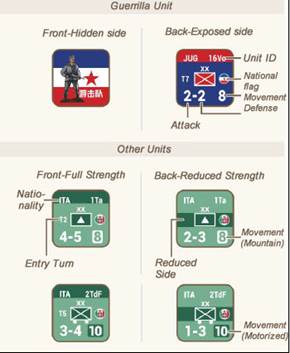
Javier: Units have two basic factors: conventional and guerrilla combat. Guerillas, of course, are better at guerrilla combat, regular units are better at conventional Combat. There are two Combat Tables, guerrilla and conventional-which that is used depends on leadership, initiative and terrain. A guerrilla force fighting in forest or mountain hexes for example has a better chance of using the Guerrilla Table. A conventional unit fighting in a railroad or clear hex has better chance of using the conventional table.
Grant: What is the general Sequence of Play? What type of experience did you want the Sequence of Play to invoke?
Javier: In general, the Guerrilla player has the initiative, while the Axis player has to react. The turn begins with the guerrilla phase were the Partisan player determines resources receives and recruits/upgrades units. This is followed by the objective placement phase, where players deploy a number of targets on map representing intelligence on possible targets provided by their network of spies and other intel sources. Then the Guerilla player moves and attacks targets, and/or enemy units. After that the Axis action phase begins. Upon receiving reinforcements, the Axis player may attack guerilla units. However, catching guerrillas can be difficult-they can easily avoid being forced to fight in particular in forest areas.
The Axis player begins the game with large forces (Germans, Croatians, Italians, Hungarians, Bulgarians) while the Partisan begins with a handful of odreds (detachments). However, as the play goes on, the Italians surrender and the Axis player is increasingly stretched thin. Besides, Bulgarians and Hungarians cannot move from their respective regions. The German and Croatian policies in Yugoslavia all but ensured that the population would join the Partisans.
Grant: What is the layout and area of Yugoslavia covered by the game map?
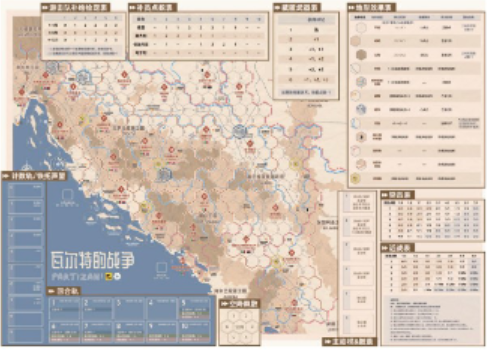
Javier: The map covers all of Yugoslavia and neighboring areas, from Slovenia to Macedonia and parts of Hungary, Albania and Bulgaria. The map contains all charts and tables needed to play.
Grant: What strategic pinch points does the terrain create?
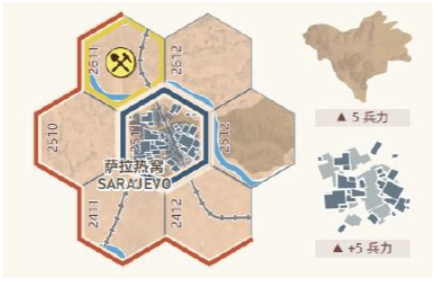
Javier: Terrain is important, like in the systemic cousin Red Partisans (published by Paper Wars in 2025). Forest, mountains and swamps are the Partisan’s friend. Avoid flat terrain, and particularly railway hexes, that can be reinforced quickly. However, railroads are a major objective of the Partisans, so the Partisan player must strike a balance here.
Grant: What is your focus on Zones of Control in the game?
Javier: In general there are no Zones of Control. Zones of Control are exerted depending on the unit and terrain type. Regular units, for instance, do not exert ZOC on mountain or forest hexes for Partisan units.
Grant: What is the Guerrilla Political Phase? What does this represent from the history?

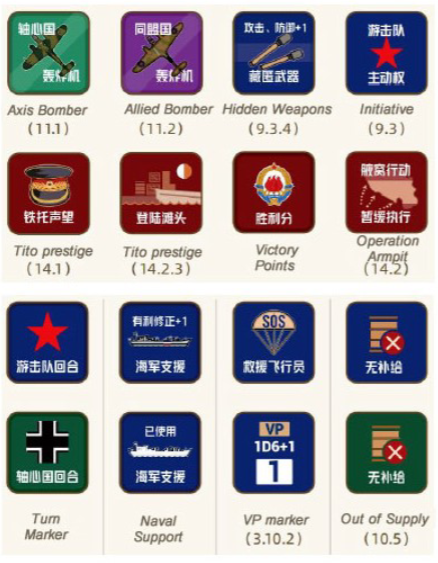
Javier: Basically, it represents the prestige of the Partisans among the local populace and abroad. If the guerilla player attacks at least one ground attack against an Axis ground unit, they roll for Tito’s Prestige. The higher the prestige, the more resources he can receive from the Western Allies. Tito’s prestige begins at box 1. When it reaches box 6, the Partisans can receive extra resources and the support of the Balkan Air Force (Allied bombers). When it reaches level 7, the Partisans can deploy and use a British Special Force unit, the 2nd SAS.
This simulates the increasing prestige of the Partisan guerrillas among the Western Allies, who initially opted to provide support to the Monarchist forces of Col. Mihailovic. After the reports by the Deakin mission came from Yugoslavia in 1943, and thanks also to ULTRA intercepts, Tito began to be regarded as the only effective guerrilla movement fighting the Germans, while Mihailovic did nothing, or, even worse, reached agreements with the enemy occupiers to fight the partisans.
Grant: What is the Allied Landing Scare roll? What does this represent?
Javier: Several of the major Axis anti-partisan drives in Yugoslavia (Operations Schwarz, Weiss…) were launched with the objective of clearing the coastal areas from hostile guerrillas and prepare the defense of the Balkans against an expected Allied landing. Beginning with 1943, there were several “landing scares” that had all sides (Partisans, Chetniks, Axis) scrambling to occupy the best coastal positions before the arrival of the Western Allies.
For instance, in January 1943, fearing Allied landings in the Balkans, the Axis launched Operation Weiss (White), the largest anti-partisan drive to date, involving 90,000 troops, aimed at destroying Tito’s stronghold at Bihac. Tito planned to move back to Serbia and Eastern Bosnia to destroy the Chetnik forces there before they could join forces with the Western Allies.
Grant: What is the purpose of the Weapons Cache markers? How are they concealed in combat?
How does combat work?
Javier: Weapon Cache markers represent weapons sent by the Western Allies along with arms captured to the enemy, used to improve Partisan detachments into Partisan brigades and divisions.
Grant: What is the makeup of the Combat Results Table? What unique odds are represented and why?
Javier: There are two Combat Tables, guerrilla and conventional-which one is used depends on leadership, initiative and terrain. A guerrilla force fighting in forest or mountain hexes for example has better chances of using the Guerrilla Table. A conventional unit fighting in a railroad or clear hex has better chances of using the conventional table.
Grant: How do Replacements and Withdrawals work?
Javier: The Guerilla player collects replacements-the more territories they control, the more replacements received. Control of towns greatly increases recruitment, but guerrilla units are much more vulnerable in urban terrain. Axis reprisals increased the number of recruits. They also receive “weapons caches” that can be used during the game. They represent clandestine weapon factories, and, as the game goes on and Tito gains popularity among the Western Allies, they represent weapons shipments from the West. Certain game results yield weapons caches as well. These can be used to upgrade partisan units into Brigades and Divisions.
The Axis reinforcements and replacements work differently-They receive a fixed number of replacements per turn, with the exception of “Allied landing scare” turns, when they received extra replacement with which to launch anti partisan drives and clear the coastal areas of Partisans.
Grant: How are Artillery, Air and Naval Support handled?
Javier: There are no artillery units in the game. It is modeled into the regular brigades and divisions. There are only two air support markers that add or decrease odds shifts in attack or defense.
The Partisan army, of course, had no air support units, although they can receive the support of the Allied “Balkan Air Force”. The Axis has only one marker -Yugoslavia was very low on the priority list of the Luftwaffe. Naval Support is handled by the “Partisan navy” counter that provides an odd shift in attack or defense in combats in coastal hexes. The Partisan navy counter enters play after the Italian surrender.
Grant: How do players win the game?
Javier: The Partisan player can add Victory Points by blocking railway lines from resource centers (there are five on map) to Germany. This represents the disruption of resource exploitation in the Balkans. Another way to score Victory Points is to destroy objectives such as fuel depots, train stations or bridges, or rescue downed Allied pilots, determined prior to the turn by the objective table. During the Victory check phase of each turn, the Partisan player rolls 1D6 for each objective marker under their control and adds the corresponding modifier for that objective. Destroying a Dam, for instance, adds +3 to the die roll. The final result is the number of VP’s scored for that objective. Control of towns and cities at the end of a turn gives extra VP’s to the Partisan player. (Control of towns and cities, even temporary, allow Partisans to recruit extra manpower and liquidate collaborationists).
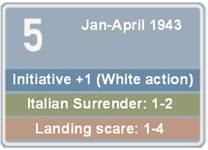
Finally, “Landing scare” turns allows the Partisan player to earn VP’s for controlling port towns and cities, from Bar in Montenegro to Zara/Zadar in Croatia. This simulates the chaotic fight that followed the Italian armistice of September 1943. The Italians controlled large parts of former Yugoslavia, and their surrender ignited a race to arrive first to the huge caches of arms and supplies in the Italian zone, in a free for all between Partisans, Germans and Chetniks. Tito was furious at the Allies for not warning him of the upcoming Italian surrender. Some of the Italian forces joined the Partisans against their former Croat-German allies. This is included in the game as well.
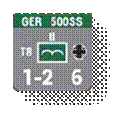
The Axis player must try to deny VP’s to the Partisan player, and make him pay dearly for every VP gained: each guerrilla ground unit eliminated deducts 10 VP. The Axis can also kill Tito. If Tito is eliminated, the Partisan player loses 2 VP’s at the start of each subsequent turn, and their prestige is reduced to 1, so they receive no more extra resources from the Western Allies. The Axis player can try an assassination attempt with the 500 SS Parachute Battalion that historically tried to kill or capture Tito in May 1944, in operation “Knight’s Move”.
Grant: What type of an experience does the game create?
Javier: The game creates a cat-and-mouse experience, quite similar to the history, where the Axis launched constant anti-partisan drives but Tito and his Partisan army always escaped to fight another day, despite of suffering huge casualties. By the mid to late game, after the Italian surrender, the Partisans are too powerful and the Axis player lacks enough resources to launch mass offensives, thus remaining mostly on the defensive. It is now time for the Partisans to gain as much terrain as possible before the arrival of the Soviet forces in the Fall of 1944.
Grant: What are you most pleased about with the design?
Javier: I think that the game gives a fair idea of what happened in Yugoslavia in 1941-44. It was an extremely complex situation, with many different national and political loyalties at play. The Axis conduct of the Balkan counterinsurgency was a case study of how not to wage a guerrilla war. Their policies, and in particular that of the Croat state, created the perfect conditions for the Communist movement to thrive and take over: they destroyed the existing authority, set the different nationalities against each other, but lacked sufficient strength and brute force to impose a different system. The final result was anarchy and an ideal situation for the triumph of a revolutionary war, which Tito exploited to the fullest.
Grant: What has been the response of playtesters?
Javier: As far as I know, many players really enjoy the Partisan hidden movement rules in Partizan! and found the cat-and-mouse game play quite engaging. They appreciate the combination of simple rules, short playtime, and asymmetrical game play, with a full game often completed in just one day. The scoring mechanism, which rewards destroying objectives, forces Partisan players to carefully consider their strategy—whether to focus on scoring points or increasing their forces. Axis players get a true feeling of frustration of counterinsurgency operations.
Facing an Axis player with a good memory can sometimes be challenging for the Partisan side. Partisans can counter this by swapping the positions of units within the same hex. Overall, the game offers a simple yet enjoyable take on Partisan warfare. Although some players find it a bit troublesome to place markers every turn, the Chinese edition includes tables and numbered markers to help the setup. Most players find the experience enjoyable.
Grant: What other designs are you working on?
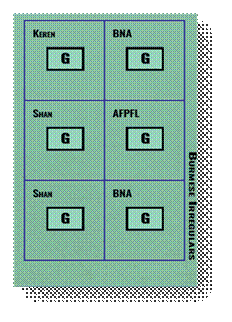
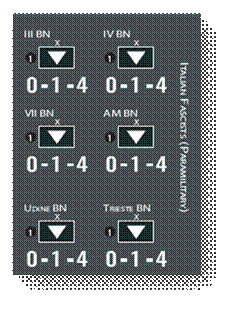
Javier: Strategy & Tactics just published Pensacola 1779-82, and soon will be publishing Forgotten Front: Italy 1944-45. Curiously enough, in these games are featured both irregular and conventional forces. In Forgotten Front, for instance, guerrilla and counter guerilla operations play a key role as the ORBAT includes not only regular Axis and Allied divisions and brigades, but also Italian partisans and Fascist Italian counter guerrilla forces, such as the infamous Black Brigades. Pensacola 1779-82 includes irregulars, militias and Indian levies that are highly useful for recon, foraging and to harass enemy regular forces.
World at War will publish my design on the 1945 Burma campaign, where (again) guerrillas played a decisive but little known role.
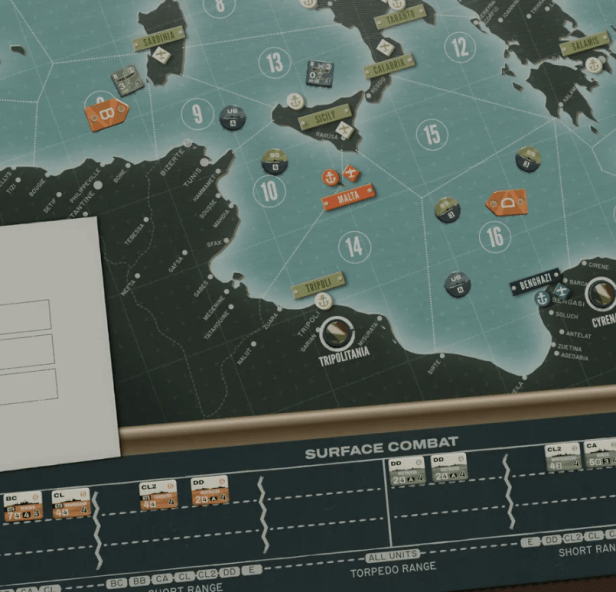
I am currently working on a number of designs for Decision Games, Paper Wars and Banzai Magazine. I am currently working on the playtest and development of Aragón ’38 for SNAFU Design and Battle for the Mediterranean for VUCA. You can see here some spectacular previews of Battle for the Mediterranean by Pablo Bazerque here.
As always, thanks for your time Javier in answering our questions as I know you are a busy man and always have lots of interesting gaming subjects on your design table.
-Grant
 The Players' Aid
I am really sorry to hear that this won’t represent the real situation during WW2 in Yugoslavia. The Chetniks were the real resistance. The Partisans were basically nowhere in the first 2 years of the war. They were recognized as the main resistance movement by the Germans only in mid 1943. Walter’s War is just communist fiction. The general perception of the resistance movements in Yugoslavia during WW2 is a direct result of Communist propaganda, repression, killings etc that lasted decades. The Chetniks were the real man, the general population who took weapons because they did not had other choices to fight the German, Ustashe and the Partisans (because they were also hostile and they often worked together with the Germans and the Ustashe). The Communists were playing very dirty from the beginning and it lasted until their ‘fall’ (in reality, still communist power structures are ruling the ex-Yugo states, unfortunately). There are books available now on this topic that presents this angle of things (resistance movements in WW2 Yugoslavia). Also Andreja Vrazalic did some videos on this with Barry Setser. The videos are great, I highly recommend them. Can be found on YouTube.
LikeLike
WTF is that fascist nonsense? by 1942–43 a lot of chetnik groups were collaborating with the axis and spending more time fighting partisans than fighting the germans. There are also plenty of documented massacres and ethnic cleansing campaigns against Croat and Bosniak civilians. Some chetniks like Đujić ended up working for the SS!
Meanwhile the Partisans were the ones doing sustained anti-Axis warfare, sabotaging railways, tying down German troops, and actually liberating territory. That’s literally why the Allies switched support from the Chetniks to Tito in 1943.
Sure, communists later hyped the partisans after the war, but pretending the Chetniks were the real resistance is just “nationalistic revisionism” or just plain simple neonazi bullshit.
LikeLike