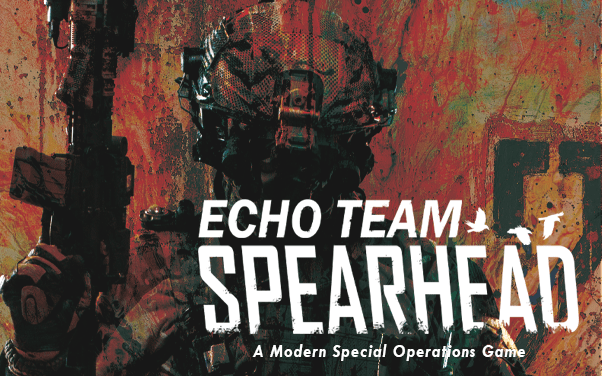
While attending SPIEL Essen last month, we came across a new game project that simply looks amazing! Echo Team: Spearhead is a tactical wargame where battles take place in and around urban terrain. The player takes command of a Delta Force unit that conducts operations around the world against various enemies such as Mexican Drug Cartels, Somali warlords or units of ISIS West Africa. I was able to have a fairly in-depth discussion with the designer Christian Blaßmann at his booth with the game laid out for display but was unable to get it played. I am very interested in this one and we asked Christian if he would do a classic written interview for the blog and he was more than happy to oblige us.
If you are interested in learning more about Echo Team: Spearhead, you can visit the Gamefound page at the following link: https://gamefound.com/en/projects/black-mask-verlag/echo-team-spearhead

Grant: Christian welcome to our blog. First off please tell us a little about yourself. What are your hobbies? What’s your day job?
Christian: My name is Christian. I don’t have many hobbies as such; I would say I am passionate about movies, art and comic books. However, I haven’t had much time for these lately because of my work as a game publisher and for Echo Team. We could call designing TTRPG’s and board games a hobby, even though it can be stressful at times. I also enjoy the artistic side of these projects.
Professionally, I am a printer and bookbinder in a small printing company, and I have worked in the printing industry for over 30 years, always with a variety of tasks. My profession naturally comes in handy for publishing projects and makes many things easier.
And I like traveling – with my girlfriend who also helps with the games publishing.
Grant: What motivated you to break into game design? What have you enjoyed most about the experience thus far?
Christian: It has always been my dream to publish my own role-playing game. That’s why we set up Black Mask Verlag to publish the game ourselves. We have now been operating for over seven years and have released a variety of products. Our first project was the TTRPG New Hong Kong Story, for which we have also published a range of adventures. A little over two years ago, I returned to wargames and the idea for my own wargame was born. During the early stages of development, I realised that Echo Team: Spearhead could potentially fill some gaps in terms of both theme and existing game mechanics.
As we travel a lot to conventions, we meet other publishers and gamers, and make new friends. That is really the experience we enjoy most.

Grant: What is your new upcoming game Echo Team: Spearhead about?
Christian: Echo Team: Spearhead is about a fictional special forces unit that is deployed as a shadow unit and about which few people have any knowledge. We have set the game in the year 2028 in order to include both fictional and existing conflicts. The missions take place all over the world and offer a wide variety of situations and missions. These include assassination, rescue, or sabotage missions to name just a few. The opponent in each mission is always a new group, such as ISIS, Boko Haram, cartel members, or other dangerous organizations.
Grant: Why was this a subject you wanted to focus on?
Christian: The main reason was the exciting topic of special forces, which I find fascinating. However, I also wanted to create a game with high replay value. Echo Team: Spearhead fulfils this thanks to its multitude of locations and possible missions. I tried to design the missions in a way so that players have to think about their strategy right from the start.
Grant: What are the unique features with the system used for the game?
Christian: Firstly, I should mention that I am not familiar with all wargames and their mechanics, and I can only comment on Echo Team: Spearhead. However, I can highlight some elements that we used in Echo Team: Spearhead, which may or may not also occur in other games. Firstly, we have random elements using so-called turn cards, which can give the players extra points to spend and control initiative. Some cards feature weather symbols that can alter the weather during the mission. The sun has also been integrated into the game, potentially blinding an attacker and reducing their attack power.
We also have so-called Area Cards, which are marked with letters. These letters can also be found on the game board, usually five per map. Depending on the mission, the Echo Team player or the opponent can hide units under these cards and reveal them at any time to place the units on the corresponding area of the game board and launch surprise attacks. This means that no player can ever be sure that they are moving into safe terrain.

I think what also makes it extraordinary is that we are trying to integrate a wide range of modern weapon systems. We have a variety of combat and kamikaze drones in the game, such as those currently being used in Ukraine, as well as reconnaissance drones, fiber optic drones, and weapon systems for the Reaper drone that are still in development. We have also integrated not only weapons but also such things as JTAC training. And perhaps I should mention the two different mission briefings for both players. Both players receive different information about the mission, which means that both players have to adapt to new events and circumstances during the mission, as these can change, for example, when hostages are not where they are supposed to be.

Grant: What is your design goal with the game?
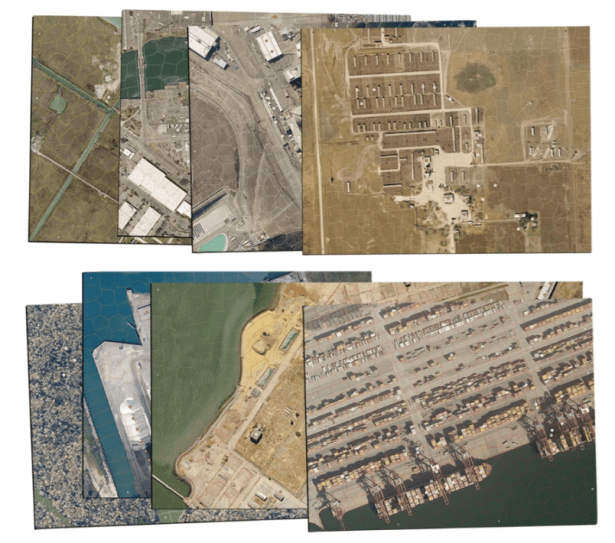
Christian: One of our goals was to create a realistic environment, which we achieved by using drone footage for the game boards. The images on the Command Cards also aim to convey the feeling of a real mission. It was important to me that the game should feel different every time, even if you play the same mission again. I also wanted players to have more freedom in setting up the game compared to other games where the locations of the units are fixed at the beginning.
It was also important to me that the game boards, buildings and surrounding fields remained as close to the original landscape as possible. Players must adapt to the situation and circumstances, using whatever is available. In other wargames, the map is adapted to the game, but in Echo Team, it’s the other way around. I also wanted to have variable elements like barbed wire, fences or tunnels so that I can use the same map for multiple missions and still have it feel different.
Grant: What other games did you use as inspiration?
Christian: Since I only rediscovered wargames a few years ago, my source of inspiration is not very extensive, nor is the number of wargames I have on my shelf at home. But of course, I have read up on some of the game systems such as Combat Commander, The Last Hundred Yards and Assault Sicily ’43. Games that I have played like Undaunted, Conquest and Consequence, and Squad Leader have also inspired me.
The dice-rolling system for Echo Team is loosely based on the TTRPG Shadowrun. However, it was also important to me to find my own approach to the game. That’s why I think it can be an advantage not to know so many other wargames, so as not to be influenced too strongly
Grant: How does the game use cards?
Christian: Players draw a hand of cards, which they can use to perform extra actions. Other cards bring uncertainty to the game. They randomly might give an advantage to one player or change overall conditions. However, the use of these cards is completely optional, so players can decide how much uncertainty they want. And there are cards that simply represent an area or piece of equipment.
Grant: What is the anatomy of the cards?
Christian: All cards have some artwork at the top for atmosphere with the text below. The actual text, of course, depends on the card type. I’ll detail that in the next question.
Grant: What different type of cards are there? What are each types purpose?
Christian: We have five types of cards:

– Command Cards are the ones the players use most. They are the players’ hand cards. The players can use them to perform extra actions, interrupt the other player’s turn or get support. There are two actions on each card and a point value. If the player doesn’t want to use any of the actions they can “sell” the card to get so-called Command Points, which are needed for movement and combat and to use special equipment.
– Turn Cards allow for random elements during each turn (optional). They give the players extra Command Points and they can be used to determine initiative.
– Environment Cards can restrict movement or visibility (optional). “Night”, for example restricts visibility and “Heavy rain” restricts movement and limits the usability of small drones.
– Mission Cards represent equipment, capabilities or support vehicles. They come into play via the mission description or a Command Card and their text specifies what the player can do with them and how many Command point they have to spend for that.
– Area Cards conceal hidden units or decoy counters. Their text consists of a single letter for the corresponding map area.

Grant: What type of units are included in the game?
Christian: On the Echo Team side there are Echo Team, Bravo Team and Lima Team with six members each. Depending on the mission they can be supported by CIA, DEA or Mossad agents or UN troops with only a few counters for each.
On the Opponent side, I want a different faction for each to he main missions. They include terrorist organizations like a fictional splinter group of UCK, foreign intelligence services like MOIS, or a Mexican cartel, Wagner mercenaries or an African warlord. Each of those factions has between ten and twenty units.

Grant: What type of assets and support units are included?
Christian: Echo Team units get individual weapons. For every type – assault rifles, submachine guns, shotguns, etc. – we include different makes and models. For support, we have a large number of drones in the game. They range from reconnaissance drones like the Vector to kamikaze drones like the Switchblade 300 or 600 and larger combat drones like the MQ-9A Reaper. Then there are helicopters and other vehicles and there is other equipment like a ghillie suit. I keep myself informed about new developments so that other assets could still find their way into the game.
Grant: What is the general Sequence of Play?
Christian: As a mission briefing at the start of the game both players read the description in their own mission booklet. This description specifies who will deploy their units first and who will start the game.
At the beginning of each turn a Turn Card is revealed. This can give the players extra Command Points and – starting in the second turn – can also determine which player has initiative.
Then, each player gets a fixed number of Command Points to spend, after which they they shuffle their Command Card Deck and draw Command Cards to make a hand of five.

The player with the initiative can now spend Command Points to move units, to attack, to execute Command Card actions or to activate support. When they are running low on Command Points, they can “sell” any Command Cards they don’t want to use for Command Points. They can perform any combination of these actions, as long as they have Command Cards and/or Command Points left. However, there are Command Cards actions featuring a lightning symbol and the other players could use these to interrupt. Once the first player has finished, it’s the other player’s turn.
Grant: How does combat work?
Christian: Unit counters have an attack value and a defense value. For individuals (Echo Team and Opponent Leader units) the attack value represents experience, and for Opponent squads it represents squad size. Each individual also receives a weapon, the attack value of which is added to their own.
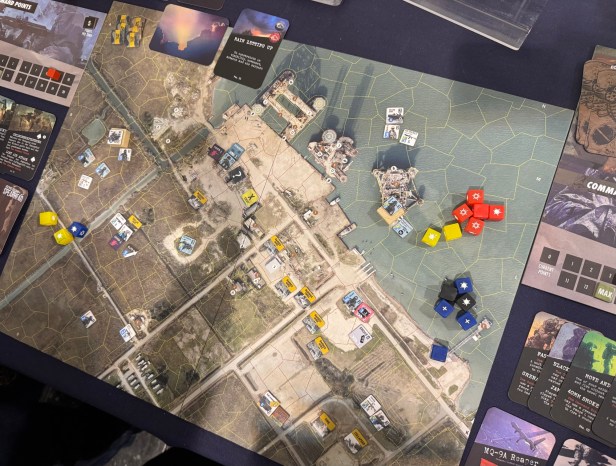
The attack values have a blue, yellow or a red background. These colors correspond to the colors of the dice. Blue causes the least damage, yellow is stronger, and red causes explosive or armor-piercing damage. Some vehicles, for example, can only be damaged with red dice. To attack, the player rolls a number of dice corresponding to their attack value. Then they add up the results: A star represents a full hit, while the outline of a star represents a partial hit. Two partial hits equal one full hit. A plus sign in the results means the player can roll an additional die of the same color once.

The enemy unit is reduced if the number of hits is equal to or greater than its defense value. An enemy unit that has already been reduced is eliminated.
The number of dice a player can roll may be increased or reduced by cover, Environment or Command Card actions. Or black dice may be added whose hits are subtracted from the result.
Grant: How is victory achieved?
Christian: The Echo Team player wins if they complete the mission objective before time runs out. If the last turn finishes without the convoy being stopped, the target person being extracted or the hostages being freed, the mission fails and the Opponent player wins. Echo Team will always be outnumbered, so they must leverage their technological advantage to successfully complete the missions.
Grant: What was the process for creating the boards?
Christian: From the outset, my aim was to use original footage in the game to create a realistic sense of the missions. We initially looked for satellite images but soon realized that their resolution was not high enough and that we would need aerial images. It took us a while, but we finally found a company willing to sell us drone images. Each map is pieced together from about 10–20 drone images.
It was also clear to me from the start, that I didn’t want to use hex fields. They wouldn’t have worked with the maps anyway. The unusual irregularly shaped areas follow the natural lines of the map and create the look that I wanted.
Grant: Who is your artist on the graphics?
Christian: I created all of the images found in the game myself. This includes the box, the covers for the booklets and the cards, and the graphics found in the booklets. People often ask me whether I used AI for the images. No — all the images I use as a basis for the artwork are photographs, either from the public domain or with the photographer’s permission.


Grant: What type of experience does the game create for the player?
Christian: That’s not an easy question to answer. The game challenges players to deal with situations beyond their control. You can never be sure that there aren’t enemy units lurking in an apparently empty area, or that you’ll be able to complete your turn without interruption. The optional random elements reinforce this effect. Players will often feel that they can no longer win the game, but in the next turn, the situation may be reversed.
Grant: What other games are you currently working on?
Christian: The focus is clearly on Echo Team: Spearhead at the moment. We are working on the layout and the translation of the rulebook and the missions. I already have an idea for a mercenaries variant/expansion for Echo Team, but ultimately it depends on the success of Echo Team: Spearhead whether we can continue the series.
I also have some notes for a firefighter board game, but that will have to wait for now, just like my cyber horror TTRPG Exogenom.

If you are interested in Echo Team: Spearhead, you can back the project on the Gamefound page at the following link: https://gamefound.com/en/projects/black-mask-verlag/echo-team-spearhead
-Grant
 The Players' Aid
Wow, the visual presentation of this game alone is enough to want to pull the trigger on backing. The cards, maps, custom dice, wooden blocks….Jeez, I’m in!
Brian
LikeLiked by 1 person
Agreed….but there is more to the game than just its looks. I think that they mechanics are really well done, the theme is very integrated and the dice system looks to be pretty neat. I am definitely heavily anticipating this one for 2026!
LikeLike