There are a bunch of different tactical systems out there, and most of them are very good, but some are much better than others. There is always a new designer that will add some new tricks to make a new experience. Such is the case with Assault Sicily ’43 from Assault Games that we played and really enjoyed. We have been looking forward to the planned expansions and future entries into the system as it was really that good. They are now launching a new expansion to the 2nd entry in the series Assault Sicily ’43 called Primosole Bridge Expansion that focuses on the east coast of Sicily in July 1943 and focuses on the British forces’ battle over several days to capture the strategically important bridge over the Simeto River. We reached out to the designer Wolfgang Klein to see if he could share some information about the game and its design.
Grant: What is your new expansion for Assault Sicily ’43 called? What is the focus of the expansion?
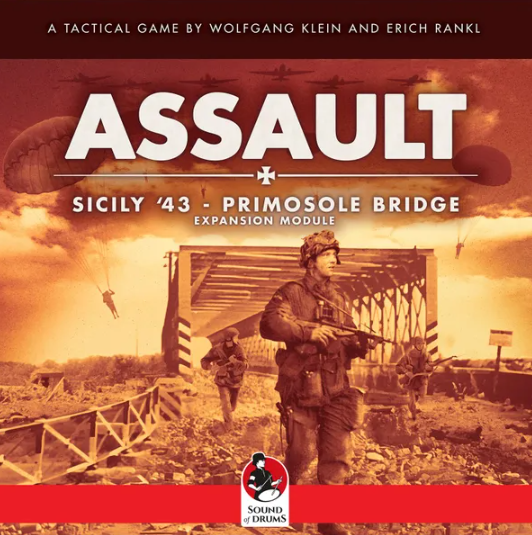
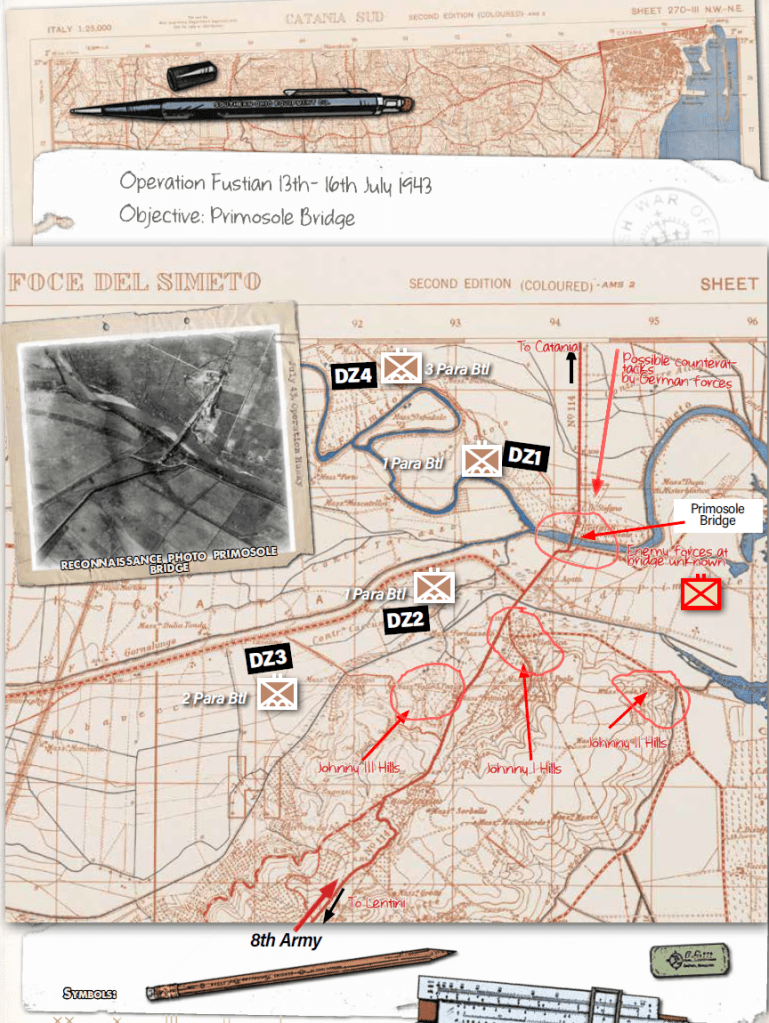
Wolfgang: Our new expansion is called Primosole Bridge. This campaign expansion takes players to the east coast of Sicily in July 1943 and focuses on the British forces’ battle over several days to capture the strategically important bridge over the Simeto River. This bridge was crucial for advancing into the Catania plain and continuing on to Messina. British paratroopers initially succeeded in occupying this bridge, but were displaced by ad hoc German paratroopers. A dramatic struggle lasting several days ensued over control of the 150-metre-long bridge. Before the famous Battle of Arnhem, this bridge could be seen as ‘the first bridge too far’.
Grant: How does this game fit into the existing structure of the system?
Wolfgang: To play this expansion, players need the boxed version of Assault Sicily ’43 – Gela Beachhead. The game components from Primosole Bridge are combined with the contents, e.g. the map boards and markers. The Assault rules v2.0 remain unchanged. This means that Primosole Bridge contains all the necessary counters and cards (e.g. formation cards for troop selection) so that the British units can be seamlessly integrated. In principle, Primosole Bridge expands the Assault System to include the British troops and German paratroopers factions. The expansion includes new map boards to represent the area around the Simeto River. Since all modules of the Assault System can be combined, players who own the Primosole Bridge Expansion can now also play the Gela Beachhead campaign from the Sicily ’43 box with British troops in addition to the Primosole campaign. Or vice versa, they can fight for the Primosole Bridge with US troops.
Grant: Are there plans to continue adding these type of modular expansions?
Wolfgang: Yes, there will definitely be more modules of this kind. We feel that expanding the game in this manner provides lots of opportunity to explore the campaigns of World War II while keeping special rules overhead to a minimum for those that wish to play expansions. Stay tuned to see what else is coming up.
Grant: What new units are included in the expansion?
Wolfgang: We introduce all new units into the game using our proven formation card system. Players can choose from historically documented formations. On the British side, we have units such as: 1st Parachute Brigade, 151st BDE Durham Light Infantry (DLI), 4th Armoured BDE “Black Rats” and No. 3 Commandos. The German troops are represented by units such as: 1st Parachute Division, 15th Panzer Grenadier Division. This selection gives us the opportunity to bring the following new units into play:
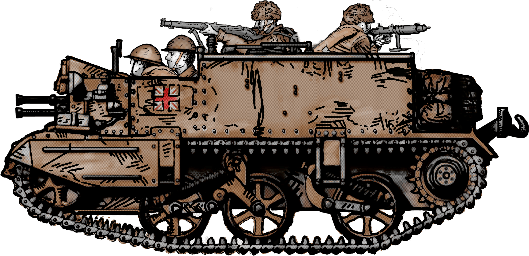
British side: Parachute Rifles, Rifles 43, Royal Engineers, Commandos, Service Troops, 2-inch Mortar, 3-inch Mortar PIAT Team, Vickers MG, Sniper 43, Bren Carrier, ATR Carrier, PIAT Carrier, M5 Halftrack, Daimler AC, M4A2 Sherman III, Valentine X, Churchill IV, M7 Priest, 2-Pounder ATG, 6-Pounder ATG, 17-Pounder ATG, 25-PDR-Howitzer, 40mm Bofors AA, Trucks.
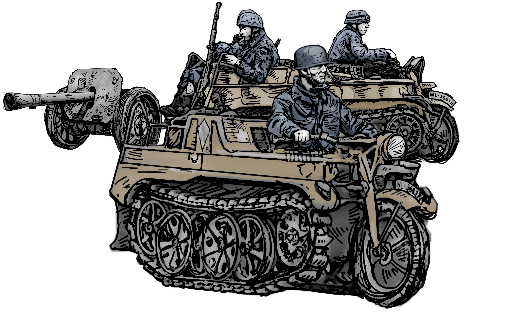
And on the German side: Fallschirmjäger Rifles 43, Service Troops, 50mm Mortar, Kettenkrads, 7.5cm LG 40 and 8.8cm RW 43.
Grant: How did you ensure the new additions were historically accurate and what sources did you consult to include the various units and their tactics?
Wolfgang: As we have always done, we spent a long time researching various media sources. I made my first notes on the battle for the Primosole Bridge back in 2021. To name a few sources of inspiration for this campaign game, I would like to mention a few books: Bitter Victory (Carlo D’Este), Sicily ’43 (James Holland), Fallschirmjäger (Joseph Klein), Sicily and the Surrender of Italy (Lt. Colonel Albert N. Garland and Howard McCaw Smyth), The First Bridge Too Far (Mark Saliger), and others.
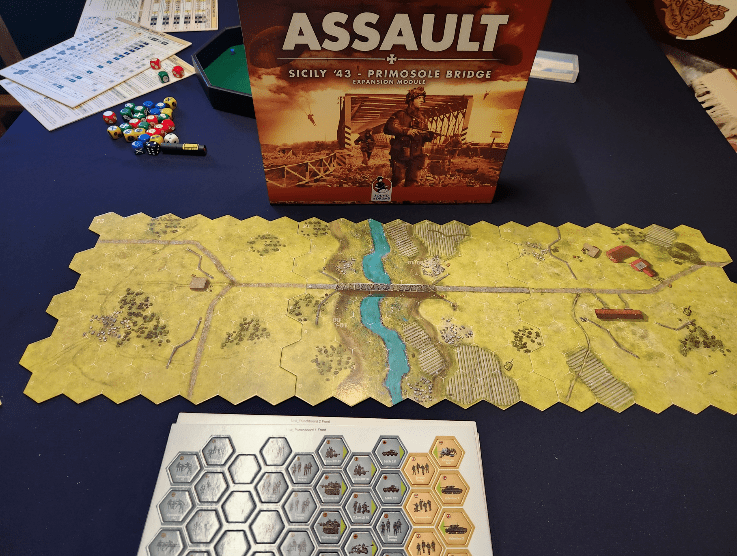
As far as the design of the map boards is concerned, we used historical aerial photographs and US military maps as a guide.
As always, my friend Erich is responsible for the historical accuracy of the unit values. He has a great deal of knowledge about the weapon technology of the time and its characteristics.
Grant: Who are the British Red Devils and German Green Devils? How did you differentiate these units in the game?
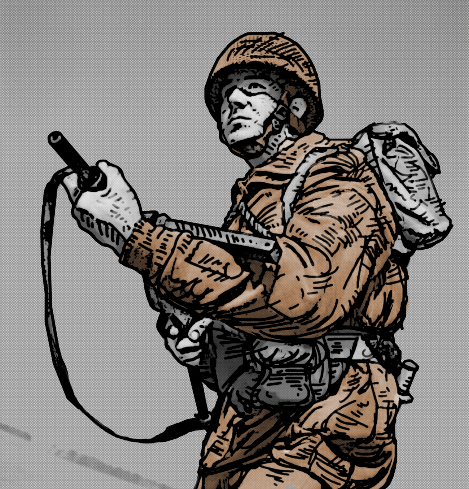
Wolfgang: Sources refer to the specific clothing worn by the soldiers (Denison smocks), which had become stained red during the landing in the red clay soil. The “Red Devils” is an appreciative nickname given to British airborne troops by German forces during operations in North Africa. allegedly, German radio communications were intercepted at the time, in which this nickname was mentioned.
The name “Green Devils” was given to German paratroopers during the Second World War by the Allies. It refers to the green paratrooper uniforms worn by the soldiers, as well as their ability to attack quickly and unexpectedly. The name was intended to intimidate the enemy and make it clear that the paratroopers were a serious threat.
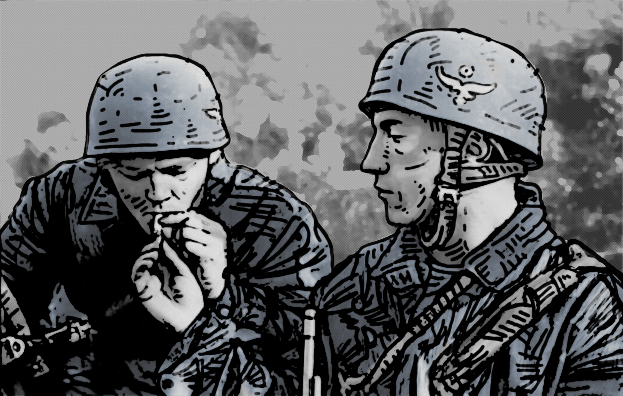
In the game, these units are visually distinguished from each other by their artwork. Of course, the game values of these units were transferred to the unit cards based on their actual equipment and manpower. A unit of British Parachute Rifles consisted of 10 soldiers equipped with 8 carbines (Lee Enfield), 1 submachine gun (Sten Gun) and 1 light machine gun (Bren). On the German side, a paratrooper group had 12 soldiers with 6 carbines (K98k), 4 submachine guns (MP40) and 2 light machine guns (MG42). This shows a difference in firepower in favor of the German group.
Grant: Can you share a few of these unit cards and discuss their relative strengths and weaknesses?
Wolfgang: In the previous question, I outlined the historical differences in manpower and armament between the two paratrooper groups. If you compare these two unit cards, you can see how this fact is reflected on the game board.
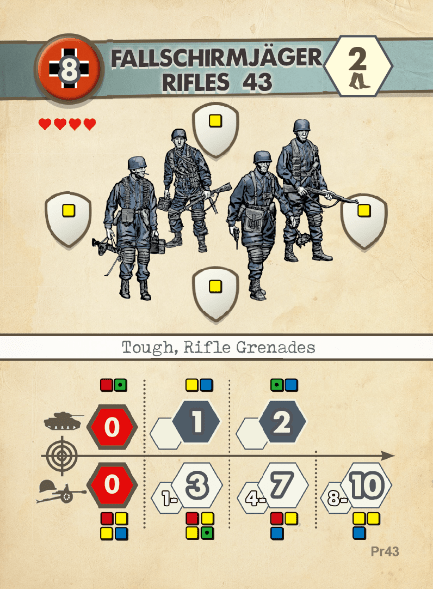
Above we see the unit card for the German paratrooper group. The four range categories (0 = close combat, 1-3, 4-7, 8-10 hexes) can be seen in the combat values against infantry/artillery units. If we compare these categories and the dice shown with the British Parachuters card, we can see clear differences. Each coloured square represents a die. The value of the die colors decreases from red to yellow, green and blue. This means that red dice have the highest chance of success and blue dice have the lowest. Now you can see that the German FJ are more effective in medium and long-range firefights than the British. This is due to their larger number of men (12 instead of 10 for the British) and their armament. The Germans have two MG42 machine guns with a higher rate of fire and range than the British with one Bren MG. In close combat, the Germans, with 12 men, half of whom are armed with automatic weapons, have a slight advantage in terms of dice colors. In addition, the units differ in that the German group also has rifle grenades.
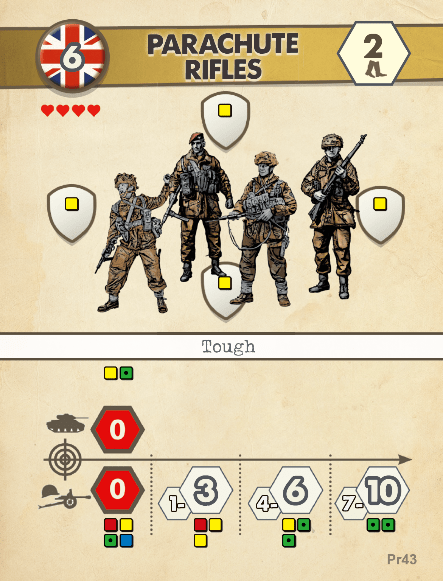
What both units have in common is their toughness in combat, represented by the ‘tough’ attribute. This ability allows the first damage point to be ignored in a close combat situation.
But it wasn’t just the elite troops who fought at this bridge. In the early hours of the German counterattack, the local commander Stangenberg had to call on every soldier he could find in Catania. He gathered kitchen staff, radio operators and mechanics to form an ad hoc combat group to lead to the bridge. We have depicted these ad hoc troops in the Service Troops. If you compare their combat values, you can clearly see the difference in quality on the battlefield.
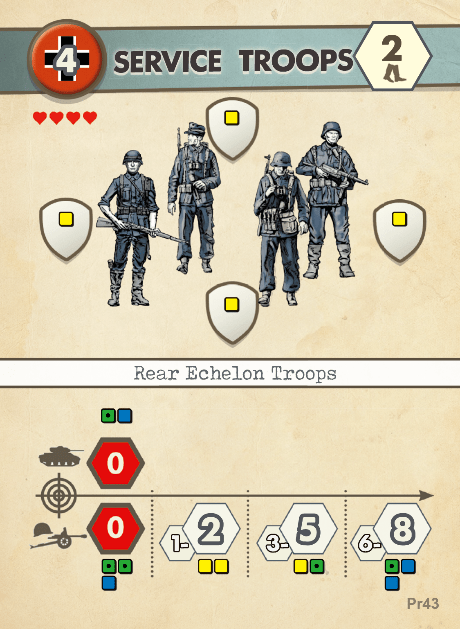
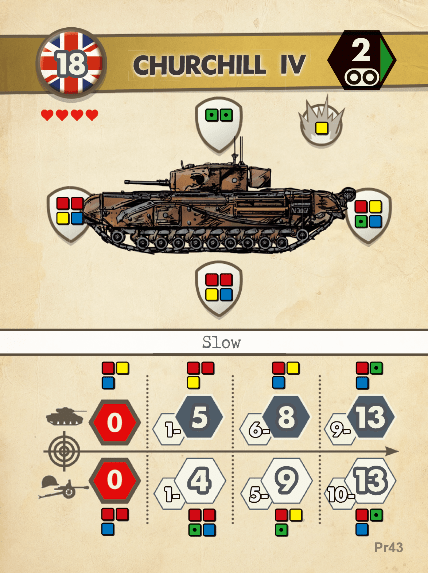
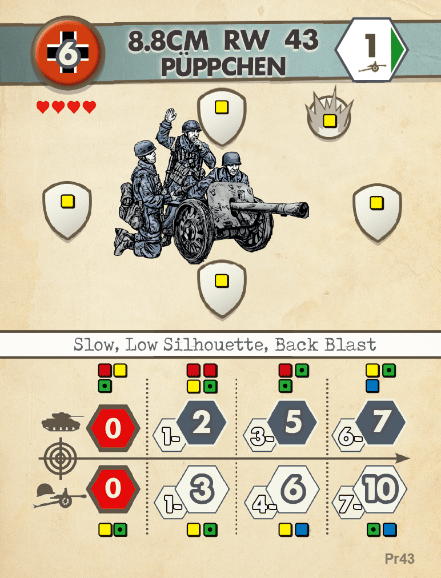
This type of troop is also at a disadvantage in terms of morale. The ‘Rear Echelon Troops’ characteristic means in the game: If there is no friendly unit adjacent, the attacker. automatically receives a suppression symbol when attacking this unit. The battle for the Primosole Bridge was uneven. On the very first evening, the first British tank units arrived south of the bridge to relieve the paratroopers. The German defenders had few or no armoured vehicles at their disposal and relied on infantry and a few guns. However, the perceived superiority of a British Churchill tank can be countered by skillful use of, for example, the 8.8 cm Püppchen rocket launcher. But be careful, as the back blast reveals the gun’s position and ensures that it will be detected.
Grant: What elements and components are included in the expansion?
Wolfgang: The Primosole Bridge box includes the following elements:
► Two factions: British Army, German
Paratroopers and Service Troops
► Six double sided geomorphic maps
► 240 unit counters
► 19 scenarios individual playable or as a dynamic campaign “Primosole Bridge”
► 31 different types of unit cards
► 19 Command cards
► 13 Tactical Cards
► 53 Formation cards
► 24 Tactical air and off-board artillery cards
► Deluxe inlay for game components
Grant: Can you show us a few Tactical air and off-board artillery cards and explain how these assets are used?
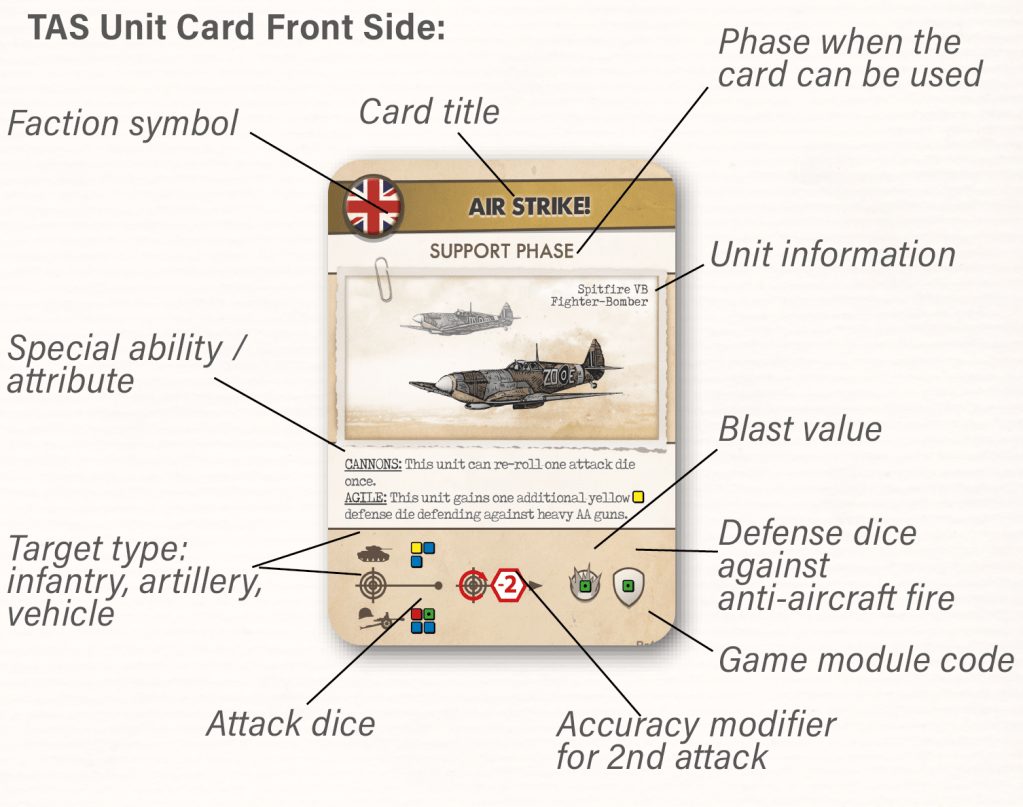
Wolfgang: Tactical Air and Off-board Artillery (TA/OAS) cards bring air strikes and artillery strikes into play with the help of so-called Command Cards. The Command Cards are part of the optional rules. This means that players can also leave them out to simplify the game. If the players decide to play with these cards, the Command Card deck is prepared before the game begins (deck-building). Each scenario specifies whether and what type of TA/OAS cards may be added to the command card deck. Both players then shuffle their decks and draw three cards to their hand. These hand of cards may then be used during the game rounds. If a player has one of the TA/OAS cards in their hand, they must plan this card during the support phase before the action phase. In principle, this simulates the request for an air strike, for example, during unit command. Depending on the type of air strike and the time of arrival, it is then implemented. If the opponent has units on the game board that have AA (anti-air) capabilities, for example, they can try to prevent the air strike. Otherwise, the aircraft arrives on the battlefield and fires at a target or drops its bombs. However, caution is advised in such a mission, as neighboring friendly units can also be hit.
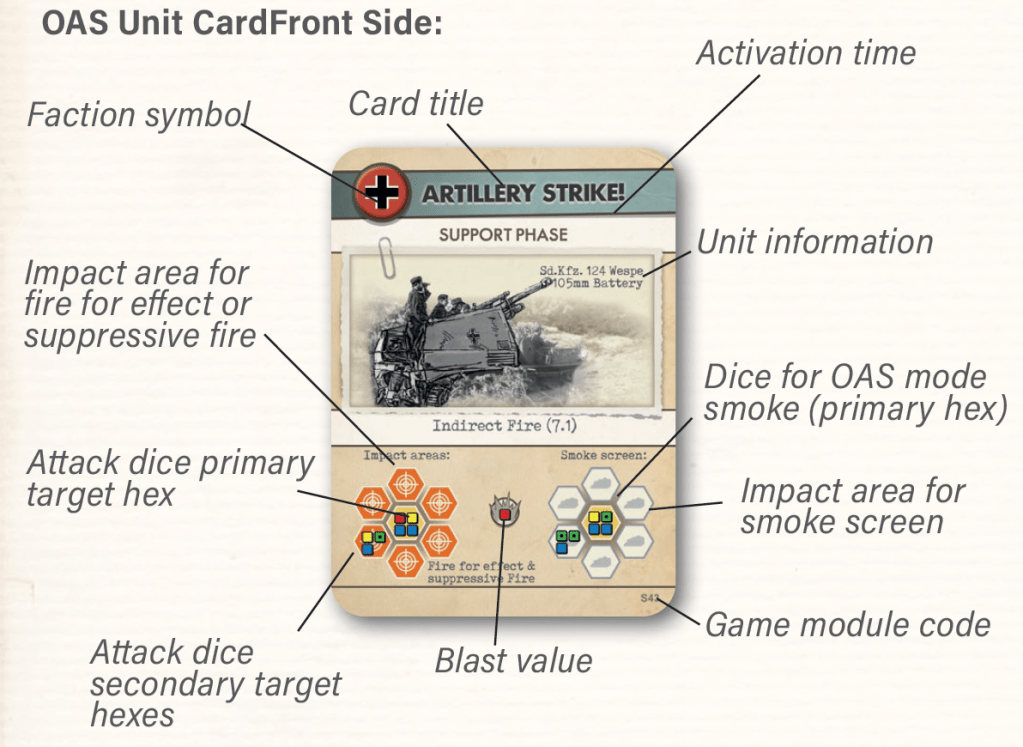
While aircraft can usually hit their planned targets very accurately, off-board artillery differs considerably. When such a card is triggered, the player must first select a unit on the game board to spot the target hex. Then, exploratory shells are rolled to see if the target hex is hit. This all takes place during the support phase. During the action phase, the effective fire can then be requested. To do this, the target field of the exploratory shells must be moved again or confirmed. A dice roll may result in a deviation from the planned target hex. The effective fire then occupies the final target hex plus the fields around it – i.e. up to 7 hexes. This can sometimes result in friendly fire.
Grant: What are the challenges offered by the terrain around the Simeto river and the Primosole Bridge?
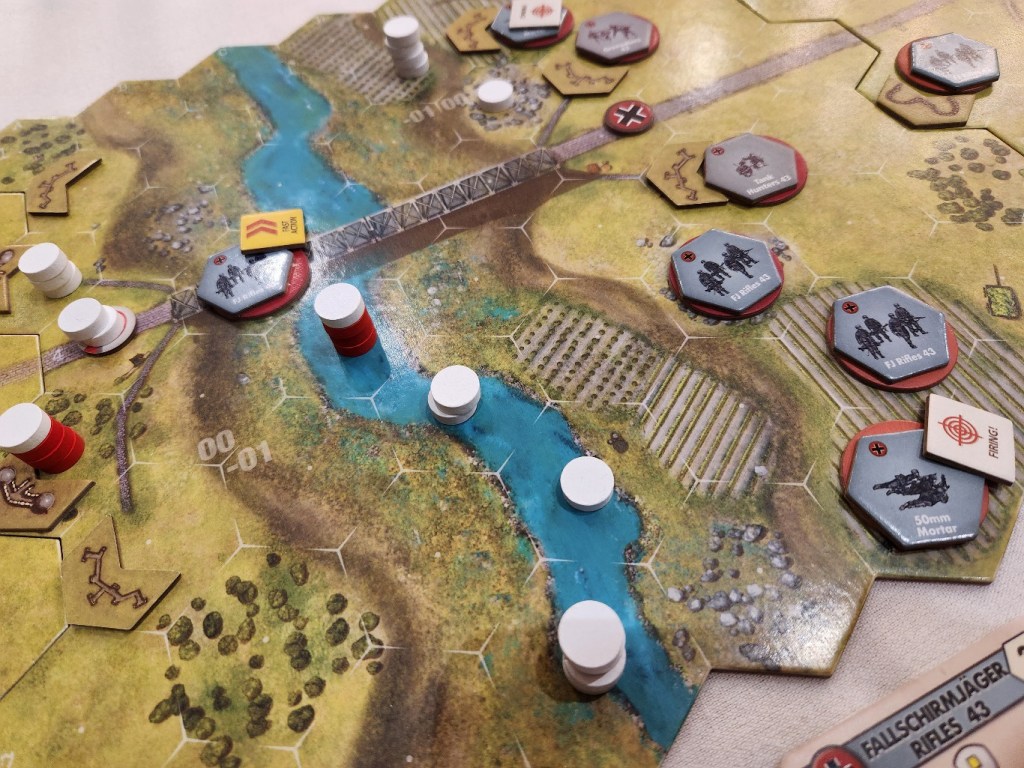
Wolfgang: The challenge clearly lies in crossing the approximately 150-metre-long bridge. The Simeto River is characterized by muddy banks and rising slopes on both sides. In addition, there is good cover for infantry units in the form of vineyards and olive groves north of the bridge. A perfect obstacle for playing for time.
Grant: What scenarios are included in the expansion?
Wolfgang: There are a total of 19 scenarios in this expansion. These include classic scenarios such as Attacker and Defender, Meeting Engagement, and Delay. These can be played individually or, even better, as a dynamic campaign.
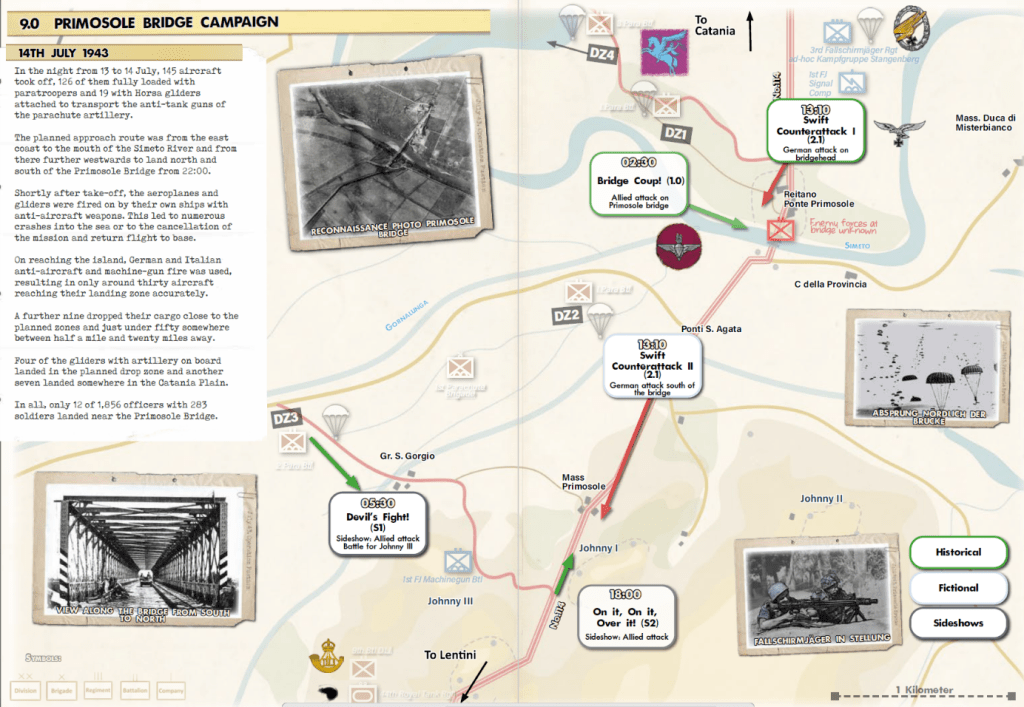
When players choose to play a campaign game, the full power of the Assault System unfolds. Players receive a pool of units, track their losses and increase the experience of their units. The campaign can last up to 10 battles over four days of combat. Each battle determines not only the next battle to be played, but also the overall outcome of the campaign. Depending on the course of the battle, the path of the campaign changes. If you play too risky and suffer too many losses, important units may be missing in the next battle. There are 11 different variants for the final outcome of a campaign. Compared to the Sicily ‘43 – Gela Beachhead campaign, Primosole Bridge has become even more intense and larger.
Grant: How were these scenarios designed to highlight these new units and their tactics?
Wolfgang: Essentially, we based our work on numerous eyewitness accounts and historical descriptions of the conditions on the ground. There are very vivid reports of the battles there from both sides. The German defenders were significantly inferior in terms of equipment and fought with cunning and discipline. To this end, they made optimal use of the terrain. We were able to control this very well via the map terrain design. In addition, we have of course mapped fortified positions in the scenario setup, and units in the Assault System can also dig in or prepare an ambush. On the second day of the battle, the British were superior in terms of equipment and personnel due to the arrival of reinforcements from the south, and this superiority continued to increase over the following days. For example, on 17 July, the British were able to bring in over 200 artillery pieces to prepare for the attack. This was a huge disadvantage for the Germans. This fact is reflected in the campaign scenarios, where we have gradually increased the number of off-board artillery cards.
Grant: When can players expect the expansion to be available for pre-order? When do you believe the product will be ready?
Wolfgang: The pre-order phase is already underway and will end at the end of July 2025. I would like to add some important information here. All pre-order customers who order from our Sound of Drums webshop will receive an exclusive booklet depicting the battle for Malati Bridge, located south of Lentini. This is a mini-campaign featuring the assault and defense of that bridge by British commando troops. We plan to start the print of Primosole Bridge in August 2025. This means it could be available at the end of 2025.
Grant: What other expansions are you working on?
Wolfgang: Specifically, we are currently planning an expansion for the Canadian troops in Sicily. Then, due to high demand, we are working on a new edition of our Eastern Front module Red
Horizon ‘41. In connection with this, we want to do a campaign expansion for Sevastopol.
And very important to us is the completion of a starter kit for the Assault System, which is set in Normandy in 1944.
Grant: What are the tentative release schedule for these
expansions?
Wolfgang: That’s not always easy to say and depends on many factors. God willing, we plan the following timelines:
Primosole Bridge: in stock at the end of 2025.
Red Horizon ‘41 Revised Edition: Gamefound 2025, in stock 2026.
Assault Starter Kit: Gamefound 2026.
Sicily ‘43 Canadian Army Expansion: pre-order 2026.
Sevastopol Expansion: not before 2027.
If you are interested in Assault Sicily ’43 – Primosole Bridge Expansion, you can pre-order a copy for €59.00 ($67.89 in US Dollars) from the Sound of Drums website at the following link: https://soundofdrumsgames.com/shop/assault-sicily-43-primosole-bridge/

