We have interviewed Francisco Ronco in the past with his FAB Series #5 Dubno ’41 from GMT Games (that has since been removed from the P500) and more recently Von Manstein’s Triumph from NAC Wargames, which deals with the German 11th Army’s invasion of Fortress Sevastopol in 1942 during World War II. His newest design is called Castelnuovo 1539 from Draco Ideas and is coming to Kickstarter on June 17th.
If you are interested in Castelnuovo 1539 you can learn more about the campaign on the Kickstarter preview page at the following link: https://www.kickstarter.com/projects/dracoideas/castelnuovo-1539-wargame
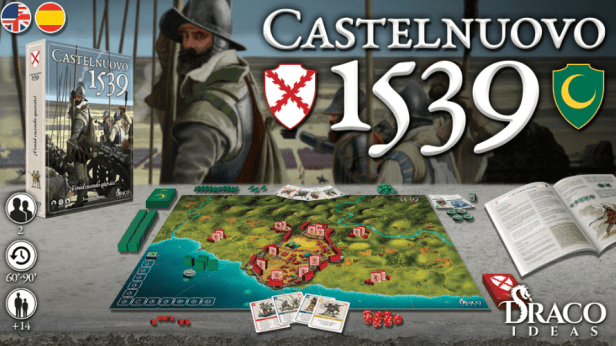
Grant: Welcome back to the blog Francisco. What is your upcoming game Castelnuovo 1539 about?
Francisco: Nice to write for you again Grant. It’s always a pleasure being asked in such depth about my games. Thank you for letting me explain the rationales behind the game and its main mechanics. Castelnuovo 1539 is a small game in the wake of Santa Cruz 1797 published by my own company, Bellica Third Generation in 2017 and their bigger brother Von Manstein’s Triumph published by NAC Wargames in 2022. I call all of them a “family”, I call the family Desperate Battles. Castelnuovo is about a desperate siege fought by a Spanish Tercio against the Ottoman Turks in a small fortified town of the Dalmatian coast. Now the town is called Herceg Novi, in present day Montenegro. It took place between July 23rd and August 7th, 1539.
Grant: Why was this a subject that drew your interest?
Francisco: Castelnuovo drew my interest as it is a very obscure topic, even in Spain is mostly unknown, very interesting for the type of warfare it reflects and very likely to join the family of Desperate Battles. There is not a single game about this action and I love doing games about not-so-well-known battles or conflicts.
Grant: What is your design goal with the game?
Francisco: As I said before, the game is part of a “family”, devoted to depict desperate life-or-death struggles. Centered on combat and using the uncertainty added by cards and blocks I wanted each installment to reflect a different kind of “desperate” struggle. Santa Cruz 1797 was about a night-urban-Eighteenth Century style battle; Von Manstein’s Triumph was about the last onslaught on the powerful and well garrisoned Soviet fortress of Sevastopol in 1942, other two installments – yet to be published by my own company – depict other kinds of urban and fortress warfare. Castelnuovo gave me the chance to depict on the tabletop, with a simple system, a full Sixteenth Century siege with all the nuisances of artillery fortress warfare and at the same time adding a very different setting for the development of the Desperate Battle Series in the line of its predecessors.
Grant: What from the siege of Castelnuovo and the Ottoman-Hapsburg struggle over control of the Mediterranean was important to model in the game?
Francisco: Several points. First of all “Artillery Fortress Warfare”. Castelnuovo was an old medieval fortified town with tall and thin walls that were no rival for modern siege artillery. Since the King of France Charles VIII’s invasion of Italy old medieval fortifications were out-of-date against modern siege trains, so the rules of siege warfare changed for the rest of Modernity. Earthen ramparts, bastions that hold platforms to mount artillery pieces, siege trenches, siege batteries.., were the new means of attack and defense in fortress warfare. All this is reflected in the game. The Spanish garrison strengthened the medieval defenses and fought a very active siege. It is a siege game. But siege games don’t have a good reputation in the wargaming hobby, they seem to be boring, and slow. Till now.
Second the proper situation of the garrison: cut-off from relief and let by themselves, 3,500 Spanish soldiers against more than 50,000 Ottomans. A truly desperate battle. The Ottoman fleet led by Hayreddin Barbarossa was far superior to the Christian one, led by Andrea Doria, so the garrison was abandoned to its doom. So, the Spanish cannot win the siege, but they have to be able to win the game. How? By making the Ottomans pay in blood for the victory. The game has no turn limit and the Spanish can only win by destroying Ottoman blocks, regardless of what happens to their own troops.
Grant: What sources did you consult about the details of the history? What one must read source would you recommend?
Francisco: Most sources are in Spanish, Italian and Turkish and are from the Sixteenth or Seventeenth Century. The most completed are the chronicles of Prudencio de Sandoval (1634) and Martín García Cereceda, one soldier that took part in those wars and later put it down on paper. In the Sixteenth Century, a good bunch of Spanish military men put their experiences and reflections on paper, creating a big corpus of military doctrine, the first Modern one. There is also a curious document called “Relación del asedio y toma de Castelnuovo” – The story of the siege and conquest of Castelnuovo, written by two survivors of the siege, the corporals Juan de Alcaraz y Juan de Tapia, that bought their liberty in Ragusa from their Turkish captors. We can also turn to archives and letters from Andrea Doria and other officials and Italian politicians.
Unfortunately, in the English language there is no good account of the siege except some short references in more general works like Oman’s A History of the Art of War in the Sixteenth Century.
In Spanish there is a very good and recent work from Hugo Cañete, Los Tercios en el Mediterráneo: los sitios de Castelnuovo y Malta.
I will try to make an extensive historical explanation of the context and the development of the siege for English speaking players in the game, don’t worry.
Grant: What other games did you draw inspiration from?
Francisco: Castelnuovo 1539 was not designed by itself, but as part of the Desperate Battles Series: small card-driven, block games, that are so different from other block and card-driven games to have their own footprint on the hobby. Castelnuovo shares with Santa Cruz 1797 and Von Manstein’s Triumph most game elements and mechanics, but retaining its own idiosyncrasy. All of them are area games, with different types of cards in the decks, with cards that can influence combat and other actions.
Grant: What has been your most challenging design obstacle to overcome with the game? How did you solve the problem?
Francisco: As this is the fourth game I designed in the series it was easier to design than others. The main problem was with the historical accuracy because many details cited in the sources are not precise enough to be put with ease on game components and the mapboard. Especially the terrain. The orography of the area is so steep that I have to play several games to find the proper rules for depicting the different elevations in the game. Also, the historical position of the Turkish siege batteries has been very difficult to locate given the actual lay of the land.
Grant: Why did you feel a block wargame was the best vehicle to tell this story?
Francisco: As in the previous installments of the series, I pretend to create a very dynamic, fast-swinging, full-of-uncertainty game. So, blocks that hide your strength and identity from the enemy is a good choice. It was a foundational choice for the full family from the beginning with Santa Cruz 1797.
Grant: What is the purpose of the various wooden pieces included in the game such as walls, cubes and angular wooden markers?
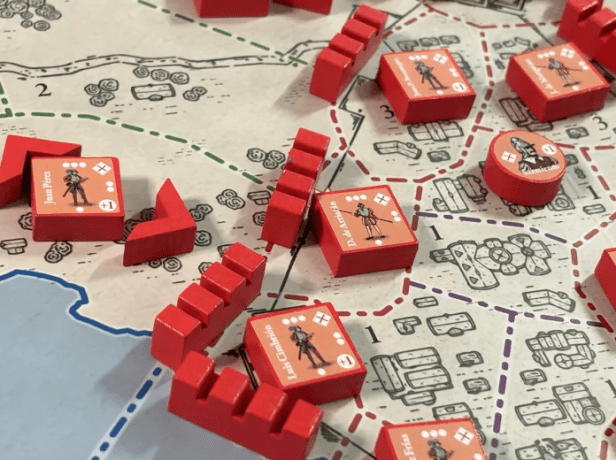
Francisco: In the original design they were cardboard counters, but the publisher has decided to opt for wooden pieces. They reflect the “assets” for both sides: artillery batteries for both sides, “Chevaux de Frise” and earthen bastions for the Spanish, the proper walls of Castelnuovo and the siege trenches for the Turkish. They add advantages to the blocks they are stacked with.
Grant: How do these bits add to the experience of the siege?
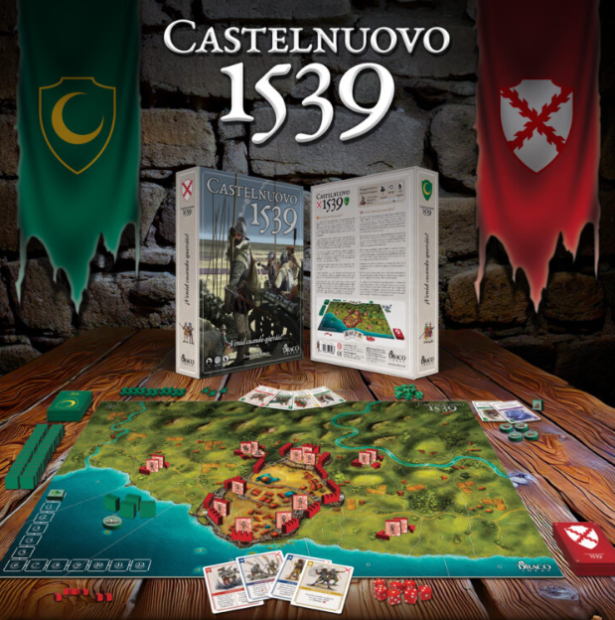
Francisco: Whatever cardboard or wooden pieces they are very important as the cannons were the Queens of siege warfare in those days. They fire solid shots to break the walls, so when you hit an area with walls, each hit makes you remove a wall piece. When there are no more walls, a breach has been opened and the Ottoman troops can assault. Those wooden pieces can be retrieved by the Spanish playing cards, in fact repairing the walls. The Spanish can also construct obstructions for the breaches – I have resumed them in “Chevaux de Frise” -, that made them more defensible. Also the Spanish, during set up, place four earthen bastions on map, using the angled wooden pieces, that can be destroyed by the Ottoman artillery to allow infantry assaults on them. On their part, the Turkish will place their wooden trenches pieces to protect themselves from enemy fire and attacks. As you can see, all these pieces form the core of the siege warfare mechanics in the game.
Grant: What is the layout of the mapboard?
Francsico: The mapboard depicts the town itself and their surrounding areas. Each area, including the sea areas, has an altitude value. The lay of the land is so steep that it is not the same to fire uphill or downhill, or moving through the land near the sea or in the interior. So the hilly orography of the terrain dominates movement and combat in the game.
Grant: What are the different number values in the areas?
Francisco: Areas are rated from 0 to 4. 0 is sea level, 4 is the highest elevation. This influences artillery fire (is easier firing downhill and harder uphill) and the use of some Spanish reaction cards that depicts the Spanish superiority in firepower.
Grant: What is the purpose of the red and white stars on the board?
Francisco: The number inside those stars is the number of hits that the town walls in those areas can withstand before a breach is opened. Three of them are in red color because they are the objectives of the Ottomans. If at the end of a turn the Ottomans occupy all those three the game ends in an Ottoman victory.
Grant: How does the design use cards?
Francisco: This game is card-driven, as its predecessors, so you have to play Command Cards to make things happen: move blocks, initiate combat, bombard, place batteries and dig trenches (Ottoman side)… Everything.
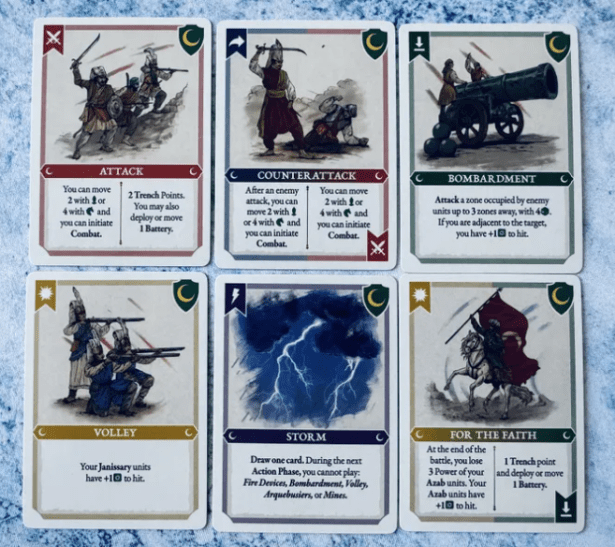
Grant: What different types of cards are included?
Francisco: There are five card types. Four are the same as in the other two published games and there is another new to provoke a random event, a really big storm. The four main types are: Combat (for being used during combats), Reaction (that allow you to intervene during the enemy Action Phase), Order (that are of very diverse types in each deck) and Action (that allow movement and combat). Each side has their own deck with their unique cards and effects.
Grant: Can you share a few examples of these cards and explain their use and benefit?

Francisco: You can see in the photo the four main types of cards. On the left you can see a Combat Card (Fire Devices, yes hand grenades were in use in this era) that allows the Spanish player to roll 3 dice to inflict losses on the Ottoman troops BEFORE the normal combat sequence is resolved, if the combat takes place on a town wall or bastion area. On the rightmost place you can see an Ottoman card of the Order type (Bombardment). The effect of this card is to allow the Ottoman player to roll 4 dice against an area within range of one Ottoman battery or fleet. If the objective is very near you hit more easily.
In the middle you can find one card that belongs to two different types of cards, because you can use it as you see fit. You can use this card (Counterattack) as a Reaction Card during an enemy Action Phase at the moment an enemy-initiated combat has been resolved, to move and even attack with your own units – in this game to attack you have to move, as you have to enter the enemy occupied area to initiate the combat, halting momentarily the Enemy Action Phase. OR you can use it as an Action Card to move and even attack during YOUR OWN Action Phase.
Grant: What different types of units are included? Do any of these units provide special abilities or attacks?
Francisco: Each side has their own order of battle with the troops that took part in the siege. The number and composition of the Spanish forces is mostly known with great details. The number of companies and the names of the captains are all known. Of the 3,500 effective men and officers around 1,000 were pikemen and 2,500 were arquebusiers. Yes, contrary to what is depicted in every pike & shot game in the market, the Spanish infantry ascendancy over more than a Century was caused by his tremendous firepower, among other causes. It was very common in those times, in the high command letters to the Spanish Kings, the complaint about the few pikemen available with the troops and the low ratio (even 1 to 3) of pikemen to firearms that made it difficult to form squadrons (close order pikemen formations).
So, the Spanish player has blocks of pikemen, arquebusiers and one weak block depicting a small squadron of Albanese cavalry -stradiotti- detached for scout and patrol duties.
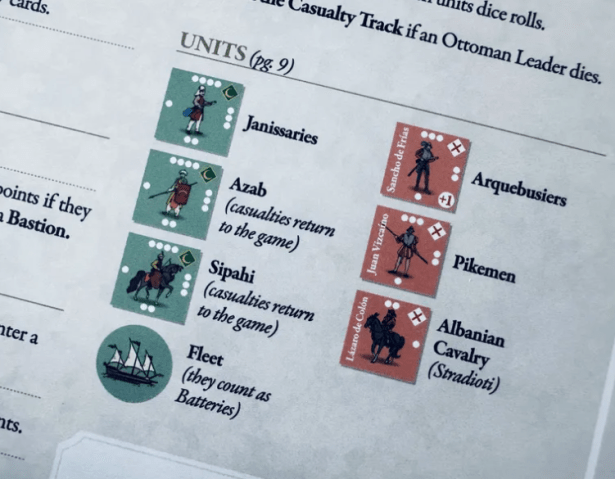
On their part the Ottoman player has three types of troops: Janissaries, Azab and Cavalry.
The sequence of resolution of combat is based on the types of troops. So, in open country cavalry strikes first, except if the Spanish have pikemen. The Spanish arquebusiers were elite troops and always hit on a 50% basis and always roll to hit before the Ottoman infantry strikes. And the Ottoman infantry had to absorb the losses inflicted by the Spanish arquebusiers before rolling themselves.
Janissaries striking power can be enhanced by their own leader and the playing of “Volley” cards, as the Janissaries used firearms as well, not with the abundance of the Spanish, but in number enough to be felt on the battlefield.
Ottoman Azab infantry and cavalry main quality is that they are ENDLESS, once destroyed they return to the game, at full strength, on the next turn.
Grant: How does combat work in the game?
Francisco: This is usually one of the main differences between the games in the series. As the game is focused on combat, this mechanic gives its game part of its own idiosyncrasy.
In this game I have reflected the common tactics of the era in the “to hit” sequence. The basic mechanic is that you roll a number of dice equal to the strength of the block to inflict hits on the enemy. With a result of 5 or 6 on d6 you obtain a hit. The point is WHEN do you roll.
If the combat takes place in an open area Cavalry strikes first. If the Spanish have pikemen in the combat the pikemen strike first -and the hits must go first to the Ottoman cavalry. Then the Ottoman cavalry lose their advantage and will strike with the rest of the Ottoman infantry. After the Cavalry-Pikemen issue, the Spanish arquebusiers strike and inflict losses, then the rest of blocks -mostly Ottomans.
If the combat takes place in a breached walled or bastioned area or in an town area the Cavalry-Pikemen issues are voided and first the Spanish arquebusiers strike and then the rest of blocks -of both sides.
Additionally you can play Combat Command Cards, to roll dice to inflict casualties BEFORE the normal sequence of combat resolution or to enhance your striking power -as the Ottoman “Volley” cards.
Note: while everyone hits with a 33% chance, the Spanish arquebusiers hit with a 50% chance at all times.
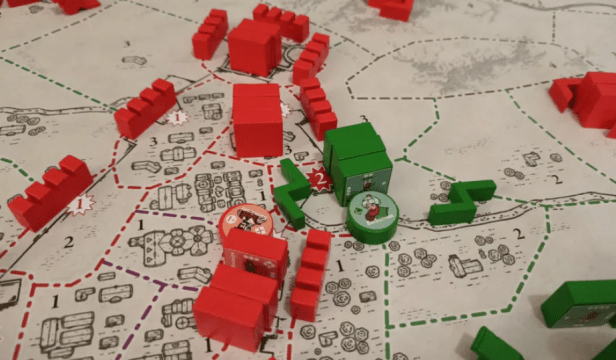
Grant: What is the role of the Leaders and what benefits do they provide?
Francisco: Leaders are present on both sides. The Spanish only have their Maestre de Campo (Fieldmarshall, was the name of the Commanding Officer of a Tercio), Francisco Sarmiento, that gives a bonus of “+1” to hit to all blocks in his area.
The Ottoman player has three leaders and they are an advantage, but also they can be a liability. One of them, Agi, gives the same advantage as Sarmiento, but only to Janissary blocks. The same Agi as well as Barbarossa and Ulamen are the focal point for the return of previously eliminated Azab and Cavalry blocks. The problem with the Ottoman leaders is that if they are eliminated they count as one more Ottoman block eliminated towards the Spanish victory.
Grant: What is the purpose of the Ottoman Casualty Track?
Francisco: Its purpose is to record the suffering of the Ottoman side during the siege. As soon as the marker arrives at the “12” space the game ends in a Spanish victory. The marker advances one space on the track each time an Ottoman block is eliminated (loses all its steps), an Ottoman leader is eliminated or the Ottoman player declares an Assault turn.
Grant: What is the objective of each player? How is victory achieved?
Francisco: The Ottomans can achieve victory in two ways: they can annihilate the Spanish blocks or they can occupy the three red-starred areas in Castelnuovo AT THE END of a turn. Spanish can only win by making the Ottoman Casualty Marker go to the end of the Ottoman Casualty Track, reaching the “12” value.
Grant: What different scenarios are included? How do they differ?
Francisco: There are two scenarios included in the game. The main one, that can be played in one hour and a half, and an introductory one that depicts only the assault and conquest of Castelnuovo by the Christians forces of the Holy League in 1538. This last scenario is only a training one devoted to making players familiar with the system and cards, as it lasts only one turn and the roles are reversed: a weak Ottoman garrison has to defend the town from a powerful assault force that includes Venetian ships and Italian troops in Spanish pay.
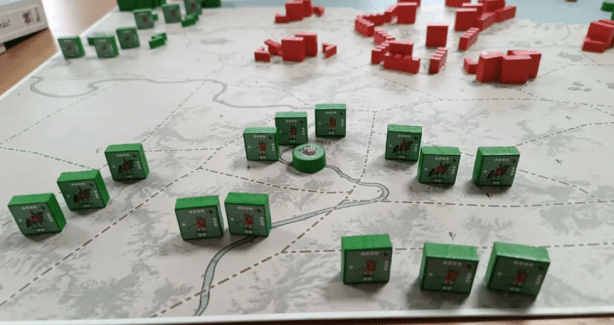
Grant: What is the General Sequence of Play?
Francisco: The Sequence of Play in each turn is very simple: an Ottoman Action Phase is followed by a Spanish Action Phase – in the main scenario, in the introductory one roles are reversed, that is followed by a Reinforcements Phase.
The Sequence of Pay is very similar to the other games in the family, including the aspect that BOTH players draw cards at the end of EVERY Action Phase. This is a very interactive game. Players are rewarded for playing cards, not withholding them.
One important aspect of this game is that not all turns are equal. The hand size of cards will be different depending on the decisions of the Ottoman player. Before both sides draw new cards at the end of the Spanish Action Phase of each turn, the Ottoman player has to decide which type of turn will be the next. He decides between SIEGE or ASSAULT turns. Each one allows different activities and forbids others, and both players will have a hand of only FOUR cards during Siege turns and SEVEN during Assault turns. But each time the Ottoman player decides to take an Assault turn the Ottoman Casualty Marker moves one space ahead along the Ottoman Casualty Track.
Grant: How are amphibious landings modeled?
Francisco: In both scenarios one side comes from the sea, so fleets are included in the game and they perform two functions: they act as floating batteries and can bombard enemy fortifications and troops on land and they mark the areas where arriving land troops are placed and from which they can descend on land. As the first recorded amphibious assault against opposition date from 1583 and needed the design and construction of the first known landing craft with frontal collapsing doors, in this game you cannot attack directly from the sea into enemy occupied areas. Therefore, you have to land on friendly occupied or empty areas. You do that by just playing a card that allows you to move a group of troops, and then move them inland as in a normal move. As space-time ratios in this game are flexible you can disembark and then continue moving inland in the same movement.
Grant: What do you believe the game does really well in modeling the siege?
Francisco: I think I have created a real siege game: as the Spanish you have to fight for your life from prepared positions, but you have to be very aggressive making sallies and counter attacks or you are doomed. As the Ottomans, you really have to follow the rules of siege warfare: opening trenches and planting batteries to bombard the Spanish fortifications and open breaches to be assaulted. If you just go with your Turks against the Spanish defenses you will lose, so a siege has to be undertaken.
Grant: What has been the experience of your playtesters?
Francisco: Many of them already knew the other two games and they valued the difference between them and this one. The game offers you a frenetic experience of life-and-death struggle for both sides. As the Ottomans has to set the pace of the siege many players got themselves chop up as they went too early too fast against the Spanish defenses or they see the Spanish cutting through their ranks for being slow in the conduct of the siege and having to take extreme measures undertaking Assault turns that makes easier the Spanish victory trying to win by themselves. Spanish players always suffer a lot of stress as they see the endless Ottoman army approaching and their siege batteries and trenches getting nearer and nearer. Spanish troops dwindle as they battle the Ottomans to make the Ottoman Casualty marker move to the end of the track before they get wiped out… A really tense and balanced gameplay. Full of decisions and very fast-paced. It has been very well received.
Grant: What other designs are you working on?
Francisco: As you know I am not only a designer but also a developer and publisher myself. At the present we are printing our next release for my own company (Bellica Third Generation), a game from David Gómez Relloso – author of the famous game Crusade & Revolution about the Spanish Civil War named An Impossible War (https://boardgamegeek.com/boardgame/301083/an-impossible-war-the-first-carlist-war-in-the-nor). The game is about the First Carlist War in Spain, from 1834 to 1838.
Also, as a publisher, I am developing a new game about the struggle in the Iberian Peninsula against Napoleon, from 1808 to 1813, that is called Disasters of War designed by Rasmus Larsen. Then, preparing for the print run of the reprint of Santa Cruz 1797 and the release of my Campaign Commander Vol IV White Sea, about the struggle in the Central and Eastern Mediterranean between the Ottoman Empire and the Spanish Empire from 1565 to 1574.
As designer I am also a busy man and I have already finished two designs in the same Desperate Battles Series that will be published by Bellica. One is called November Crisis and depicts the battle for the University Campus in Madrid during November of 1936. The other is called Fort Vaux and depicts the battle for that fort that took place in June 1916, during the battle of Verdun.
I am also finishing the playtest of a game for VUCA Simulations about the battle for Voronezh in July 1942, part of their Formations System. And preparing a new series of games called Schwerpunkt!, about battles in the Century from 1870 to 1973 at grand tactical level (500 meters per hex).
Thank you so much for your time in answering our questions Francisco. I must say that I am keenly interested in this game and cannot wait to get it to the table. Very interesting subject and the components are just top notch.
If you are interested in Castelnuovo 1539 you can learn more about the campaign on the Kickstarter preview page at the following link: https://www.kickstarter.com/projects/dracoideas/castelnuovo-1539-wargame
The Kickstarter campaign is scheduled to launch on June 17th.
-Grant


Great article, the components and design decisions look interesting …..I wish the FAB series would have been picked up by another publisher.
LikeLiked by 1 person