
History is a messy thing! There are events in world history that are very sensitive for many and for many different reasons. Either it is too close to them, happening during their lifetime, effected their family, loved ones or them personally. I know that history can be rough. But, the study and looking into history can be a fascinating journey. Learning about why things are the way they are today and how the past has forged that situation is truly interesting. Learning about motivations behind and the circumstances that lead to terrible historical events, wars and other happenings is also very interesting. And I would guess that many of us who play historical games and wargames play them for many of these reasons. To learn. Consider different perspectives. See if history can be changed. And even for a bit of understanding and acceptance. In this edition of The Love/Hate Relationship, I want you to share with you what I like about controversial historical game topics and what I don’t like so much.
Love
I very much enjoy learning history. I always have had a fascination with history and how that history has shaped my world, my life and my country. I am a Caucasian male in a Caucasian male dominated society and I understand the position and advantage that this grants me. I also understand that my situation has always been on the side of the oppressors more than that of the oppressed. In fact, my lineage goes back to Unterfranken, Germany, Lithuania and Russia (on my father’s side – Kleinhenz and Orlack), Belfast, Ireland and England (on my mother’s side – Baldwin and Knight) and my mother’s line settled in South Carolina in the 1600’s and probably owned slaves. But my line also suffered injustice and tyranny as they were chased from their farms in Lithuania, suffered disease and plague in Ireland and ultimately made their way to America and settled in Chicago, Illinois, Cedar Rapids, Iowa, Marcellus, Michigan and other places in the Midwest looking for a better way of life and their freedom. I love to learn about this history and I absolutely love playing games on topics that have shaped this history.
I know to some the concept of a game is a light hearted trivialization of the historical topic. I get that but the games that I have explored and played are not those type of games. Typically, they are wargames set in the history of the battles covered relying on historical records, published Orders of Battle for the troop disposition and makeup and even After Action Reports to make sure and cover the finer tactical details of the conflicts. Yes sometimes the more visceral or socio-economic aspects of these battles is omitted from the games. I have played the Nazi’s (Germans) in wargames but never had to deal with the perpetration of war crimes against the Jews, Poles, Czechs or other Slavic peoples. And I would not want to do that. But I have played the underdog roles in several COIN Series games and had to rely on terror operations including car bombs, bombings, booby traps and other less than desirable tactics. But the very act of seeing these real world tactics play out on the game board is a very fascinating experience and has really changed my opinion and my views on these elements.
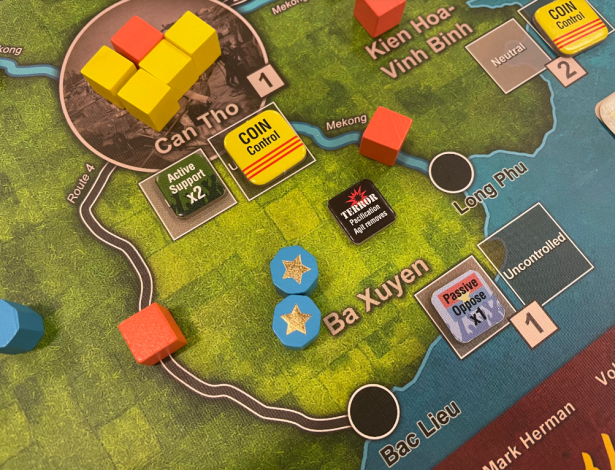
The word terror evokes deep and dark feelings within all of us and an abiding FEAR. Fear of danger, fear of injury, fear of death, fear for our peace and way of life. Terror is a key Operation for the various insurgent factions in the COIN Series as they have a goal of affecting the Support Level for the Government in key cities, colonies and provinces. Typically during a Winter Quarters/Propaganda/Coup phase, the Government will receive Resources using some combination of formula built on the total of their Support. So, placing Terror Markers is key for the insurgents in these games as this removes Support and sets spaces to Neutral. The presence of Terror markers during the Support Phase of the Propaganda Round also typically hampers the Governments ability to build support. Why? Because the locals feel that the Government can’t protect them and this erodes their support. I love the use of Terror when playing as these insurgents as it truly is the only real tool that you have to affect the Government and ultimately win the war. I say that I “love” using the Terror Ops but I really cringe each time I have to use them as it feels wrong, both morally and ethically, but this is one of the great design elements of these historical games. Making you think before you act. A lot of times in regular hex and counter wargames, I usually don’t think anything about bombing civilian centers or cities, as there really is no negative effects upon the psyche for doing so. But in these COIN Series games, the game is so visceral and emotionally evocative, that I actually feel that I have to tread lightly when I am bombing cities as I think about the consequences of my actions through collateral damage.
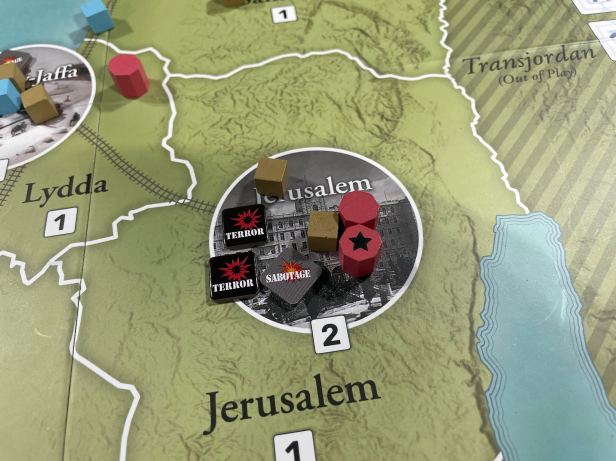
Terror is used in the COIN Series as a vehicle for the insurgent factions to strike at the Government forces, not through direct conflict, but by creating an environment of fear. It is literally war by other means. Dastardly means. Means born of desperation and due to a lack of other options. Attacking the peace and serenity of the utopia that the Government has tried to create to keep the population under their boot. An attempt to sow the seeds of doubt and dissatisfaction in the protector. To create a crack in the façade, leading to doubt and a wavering trust in their supposed protector. Or at least a little unwillingness to remain in the status quo. It is a visceral tool that is used to sow fear.
The Terror operation results in many different benefits for the insurgents including effecting Opposition or Support, locking up resources through the sabotage of Lines of Communication and the placing of Terror markers that will hinder future actions by the Government player to effect the Opposition or Support in that area. While the Indians in Liberty or Death don’t have a specific Command or Special Activity called Terror their Raid operates much the same.
I also enjoy experiencing new topics that I have not necessarily been focused on or even aware of. Here on The Players’ Aid Blog, we have covered several of these controversial historical topics in our writings about the games that we have played. A few examples of these controversial topics have included a series of Event Card Spoilers on the upcoming game called The Troubles: Shadow War in Northern Ireland 1964-1998 from Compass Games. As you know, the conflict in Northern Ireland has been going on for decades and is very much a bloody war between 2 parties that do not agree on much. The Troubles has been “marked by street fighting, sensational bombings, sniper attacks, roadblocks, and internment without trial, the confrontation had the characteristics of a civil war, notwithstanding its textbook categorization as a “low-intensity conflict.” Some 3,600 people were killed and more than 30,000 more were wounded before a settlement could be reached in 1998.”
As a relative newcomer to this history, I have truly enjoyed learning about the conflict through the designer of the game Hugh O’Donnell and his insightful commentary and insights to the fighting. We have shared about 21 Event Card Spoiler posts and I love to read them and learn. But there is always a bit of controversy with those posts (and something that I will go into in the Hate section of this post). I understand the immediate negative reaction to these posts and the fact that such a horrific event is being put into a game but if those who feel so would just give it a chance and look into it they might feel differently about the effort. One of the things that draws me to these irregular counter insurgency games is the learning of something about history and this game is going to shed some really interesting light on the subject for many who do not know much, if anything at all, about the details of the conflict.


I also recently played a few upcoming or newly released games while attending the World Boardgaming Championships in July that cover these controversial topics or more importantly that are having a game made about them. I know that this is distasteful to some who read the blog and our musings on social media. One game that I played was a new upcoming designs called The Great Hunger: Ireland’s Tragedy in the 19th Century from Compass Games designed by Kevin McPartland and Jerry Shiles.
The game deals with the growth and expansion of Ireland after potatoes were cultivated and led to population explosion. The players are trying to expand when times are good and the potatoes are plentiful by starting up farms but then later have to switch to survival and exodus as the potato blight arrives.
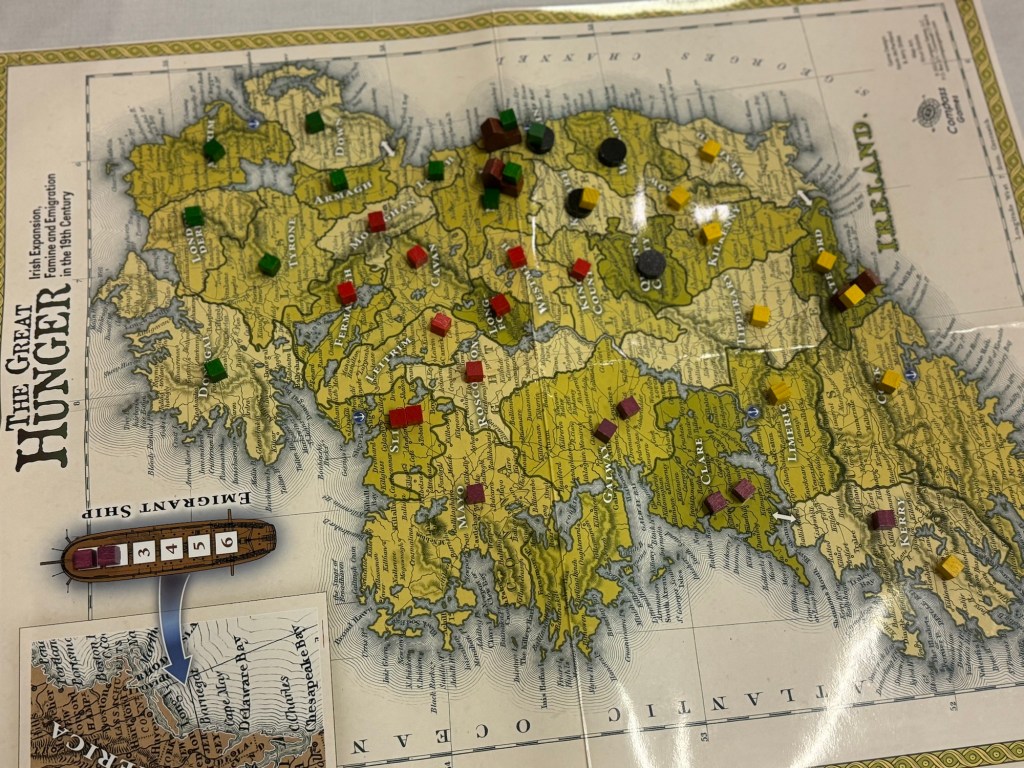
The game uses cards that have events and special abilities that are tied to the history of this time. These cards are played as the players are attempting to place out their clan pieces (cubes) into unoccupied areas to farm. They can also take advantage of the Industrial Revolution and place their pieces to work into factories and on English Estates. This gives them gainful employment and they don’t have to fear the effects of the coming blight.
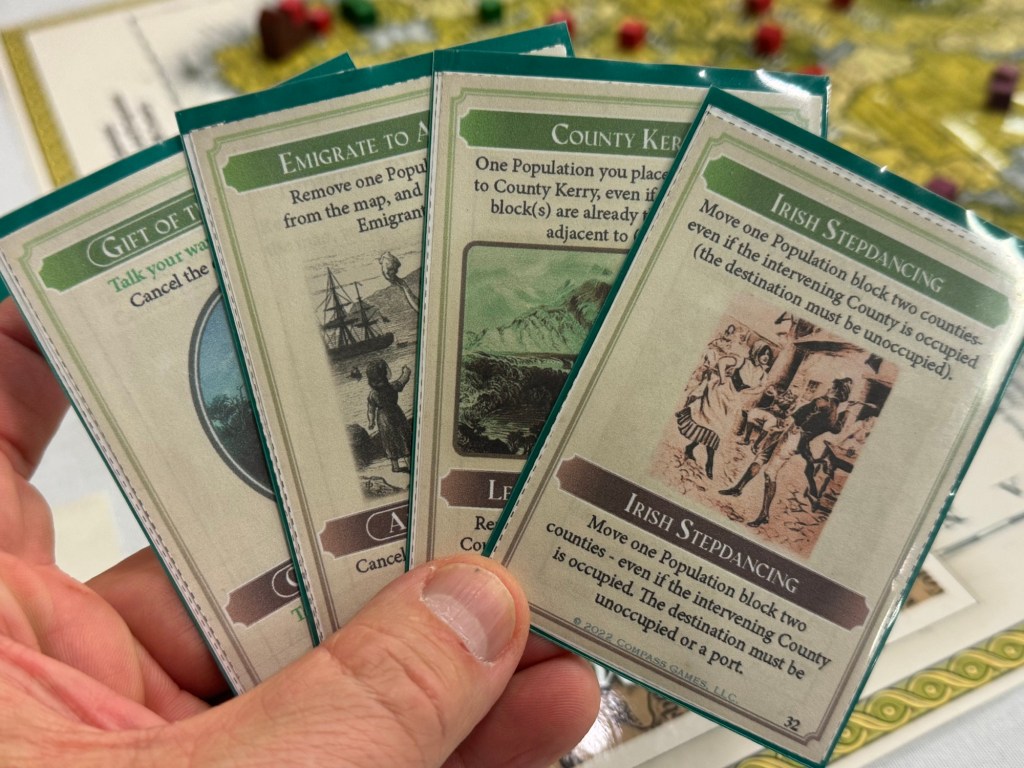
I know this one won’t appeal to everyone but it was steeped in the history of Ireland and I think that Kevin handled it with respect and care and most importantly it is going to teach us something about this event in history that affected an entire country and lead to lots of immigrants to the United States of America.
Here is a video interview that I did with Kevin McPartland covering The Great Hunger at WBC:
A final game that I have played that is considered a bit controversial is Plains Indian Wars from GMT Games. Wounded Knee. Little Bighorn. Cooks Canyon Massacre. Conflict was inevitable as white settlers moved west in the latter part of the 19th century looking for new opportunity and land to start a new life as the young United States looked to realize their dream of Manifest Destiny and to establish a country that stood “from sea to shining sea”. When I say inevitable, it is because of a lack of understanding and empathy with the original inhabitants of North America and their way of life. What happened could have been different but was not necessarily possible in the thinking of a 19th century settler. This westward wave of settlers, hastened by the construction of the transcontinental railroad, opened up the American West to more rapid development. With the completion of the track, the travel time for making the approximately 3,000-mile journey across the United States was cut from months to under a week.
Plains Indian Wars from GMT Games is a euro style wargame from John Poniske that deals with this clash of cultures on the plains of the West. The game is based on the Birth of America Series from Academy Games and borrows many of its rules, including the combat system and use of cards to activate, move and fight with various groups. The game can be played by 1-4 players and contains all of the major players in this westward expansion including the Northern Plains Indians (NPT), Southern Plains Indians (SPT), southwest and Canadian Indian Tribes known as Enemies, Settlers, Wagon Trains and the mighty US Cavalry. Once the rules are learned, and the game has some different nuances than the BoA Series mentioned earlier, it is a relatively fast playing game able to be concluded in 90 minutes.
Inevitable is the word that I used earlier to describe the conflict that would come from westward expansion. This inevitability also applies to the eventual outcome of this struggle and conflict as the numbers of settlers and wagon trains, backed by their “steel horses” and the guns of the US Cavalry, were simply too numerous to count and overcome for the Native Peoples and spread across the West like a wildfire. Plains Indian Wars doesn’t pretend that this struggle is a fair fight. The game provides the US and Settler player all of the numbers they need to get to the West and complete this colonization. The waves of blue, white and brown cubes are simply overwhelming and the NPT and SPT forces will have to pick and choose their battles to have a chance to carve out a space for themselves on the plains. But this means that their victory will be a pyrrhic one and not a conquest as they will not be able to stand toe to toe with the US. This was the historical outcome and this game does a really good job of retelling that story. I think that being true to the history if a good thing and I didn’t want to see this be a sandbox game where I could somehow pull out a total victory over the westward expansion and waves of settlers but more of a nuanced win with certain conditions. The victory conditions, which we will discuss later in this peice, give all players an opportunity to “win” a victory but this victory will not be total or even acceptable but it is historical.
One other thing about the history that I liked was that the US player not only has their Wagon Trains, Cavalry forces and Settlers but also has the support of friendly Indian Tribes in the southwest and Canada in the North that are referred to as Enemies of the NPT/SPT. The NPT and SPT player will be surrounded from the get go and be beset on all sides. This causes a moment of reflection and strategizing for the Native player and this decision is an important one to make. You cannot take on all comers but have to choose how you are going to amass your victory points, either by picking off the Wagon Trains, defeating the Cavalry or taking over and controlling as many areas as you can as each will give you a victory point at the end of the game. One of the other most important aspects for both payers is the completion of the railroad. If the railroad is finished across the plains the Native player will lose an opportunity to gain 3 VP’s and the US player will be awarded 3 VP. If the railroad is not completed for any reason before the end game conditions are met, then the NPT/SPT player will be awarded 3 VP’s. While there is no way for the NPT/SPT player to destroy or hinder the construction of these sections of the rail, they can slow its progress by destroying the Settler cubes as they move toward the railhead to build an additional 1-3 segments depending on the number of brown cubes in that area. The Settlers are a hardier bunch than the Wagon Trains (white cubes) but their combat dice only have 1 hit and 1 treaty symbol with 5 blank spaces on them so they will not hit often and fighting with them is a crap shoot at best.
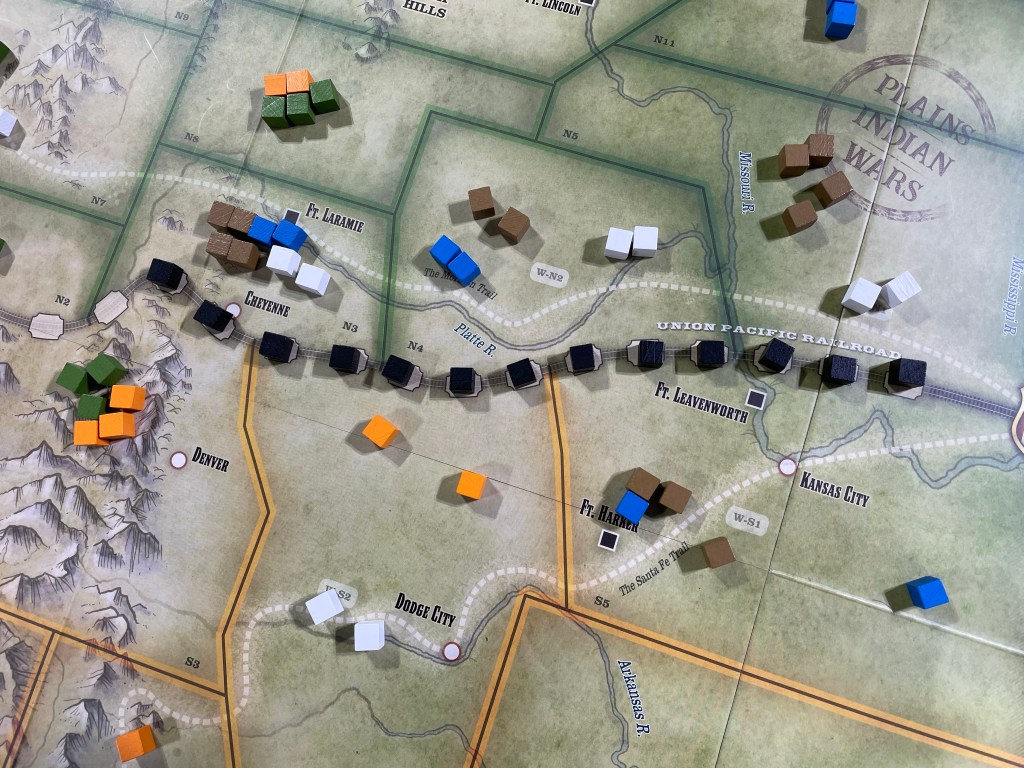
The Enemy will also come at the Native player and attack them when possible to keep the Natives from colonizing their territories and gaining VP as well. I know it sounds bleak but you will simply have to understand that from the get go and adjust your strategy to focus on what you can accomplish and how you can gain VP. This is a game first and foremost, but a game that is rooted in the history of the conflict and doesn’t pull any punches or give false hope of a significantly different than historical outcome. While not a true simulation, I was glad to see that it stuck to the history (maybe not in the choice of leaders for the cards or including all of the possible events) and told a story rooted in fact rather than fiction.
Finally, this game covers the American Indian Wars on the plains with broad strokes. Plains Indian Wars is a very basic approach to a long and complicated conflict. It does not delve into the basic culture of the Plains Nations and doesn’t have a lot of detail about each tribe, their advantages or tactics (other than for general Indian ambushes as their knowledge of the land and conception of warfare lent an emphasis on ambush). The designer informed me several years ago when we first spoke abut the design that it also doesn’t emphasize buffalo, horses and intertribal rivalry which were key historical hallmarks of the Plains Indians and their history. The buffalo, which sustained Native-Americans on the Plains are not mentioned or included in the game. Likewise, the horses they relied on to follow and hunt buffalo and raid are not directly addressed. As for intertribal rivalry, the designer took a bit of liberty here and approached the NPT and SPT by allowing the Plains nations to unite and work together so they stood a fighting chance to deter, if not halt, the tide of European settlers that flowed over them. I think that the design will encourage players to dig deeper into Plains Indian culture as their history is a rich story filled with courage and sadness.
Here is a link to our video review of Plains Indian Wars:
I do understand the concern about these topics being made into a game but I would posit that a game is just another type of learning tool and has merit to provide opportunities for insight into the root causes, difficulties and challenging aspects of that history. Everyone learns and digests information in different ways including reading about history, visiting historical sites, pouring over diaries of participants and yes even sometimes playing a game on a subject.
Hate
Now that you see what I love about these controversial games, let’s take a look at what I hate. I have said this to many in my personal life but I hate criticism. I am by nature a very positive and upbeat person trying to see the good in all things in life. I embrace the good and the bad and try to learn from everything and everyone that I encounter. But I do not like being told that I am something that I am not or that I should be embarrassed or ashamed about my opinion, stance or values. And let me tell you, there are always plenty of folks that love to log-on with the relative anonymity of the internet to tell others why they are wrong. I have had many negative comments about my highlighting of various games over the years and it bothers me. I actually hate it but do appreciate people conversing on the subject. I have clipped some comments from the blog and our YouTube Channel below to illustrate the issue.
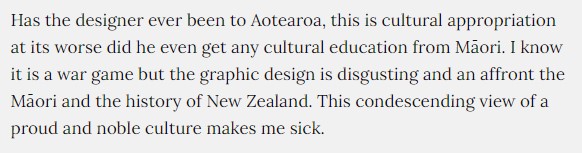
The first two comments are regarding a newly published game that I happened to host an interview with the designer on the blog about called Maori: Warriors of the Long White Cloud from Compass Games. The designer Kevin McPartland has done several games on various subjects that are always a bit supercharged including Conquest of Paradise from GMT Games, the aforementioned The Great Hunger from Compass Games and this game. The following comment was posted in response to the interview that I had with Kevin:

Now I do understand their concern. They are proud of their people and their history, and that is actually another thing that I love about historical games and how they help us to experience new and sometimes dark history, and used the word “cultural appropriation” to express that feeling. And I am not totally disagreeing. I get it. But, Kevin has gone to the trouble to research the history, read several books on the subject and tried to portray the culture appropriately and the commenter’s expectations are just not met. But to call it “horrible”, “offensive” and “disgusting”? I would think that bringing light to a subject is a good thing. Maybe I am off base but that is the way I feel about it.
The next comment was a bit less filled with vitriol but was also negative on the game.
I actually know that Kevin has been there and has done the work and research but he probably is not an expert on the subject matter. Maybe him having talked with a Maori consultant would have been wise. But once again, for me, in playing this game, which I did at WBC, taught me a great deal about the situation. Maori: Warriors of the Long White Cloud from Compass Games is a 1-4 player wargame dealing with clan warfare typical in Polynesia before European contact in the 1600’s.
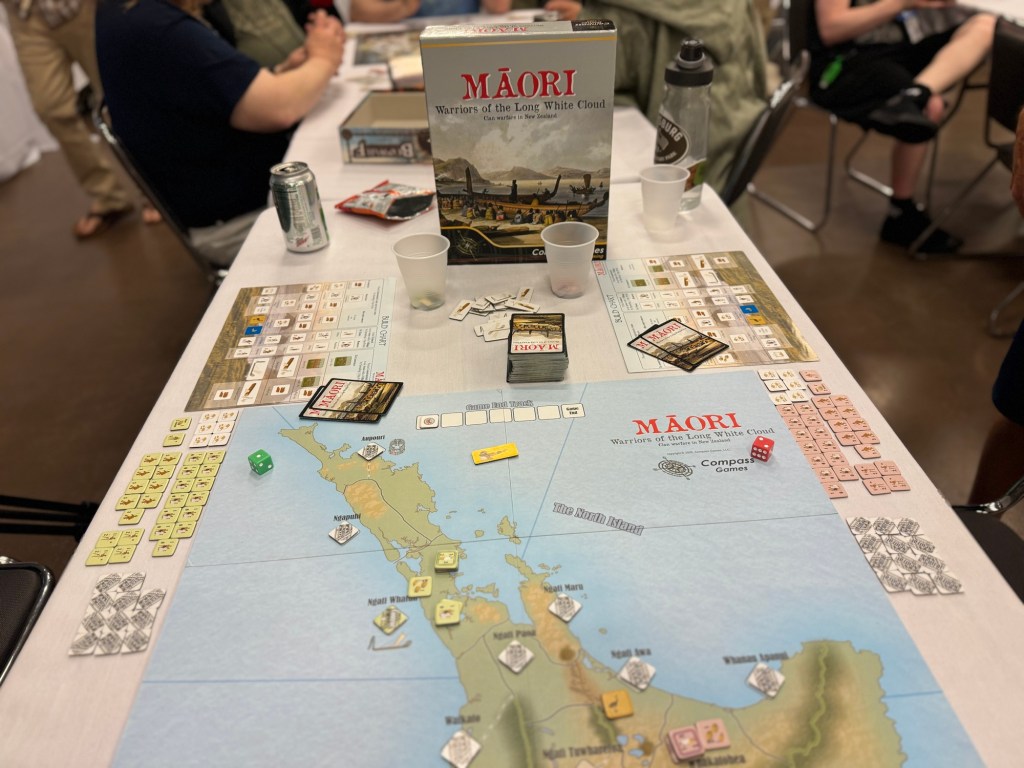
Players will use use their cards for either their printed events of for Op Points to build villages, war canoes and train warriors to create a force to strike at their enemies, while trying to protect or even fortify their home villages. The player is represented on the board as the Head Chieftain and if this unit is killed, the game is lost. There is player elimination but you just have to know that going in. The game also deals with the cultures having to manage their scarce resources in the form of lumber, seals and animals and a society that isn’t respective of these elements will find themselves left out in the cold.

I enjoyed the game very much and thought it was pretty good for what it is. It did play a bit long but it was interesting and all players seemed to have a good time. And most importantly I learned something about the Maori that I wouldn’t have otherwise.
In case you are interested, here is a link to our interview with Kevin McPartland covering Maori: Warriors of the Long White Cloud: https://theplayersaid.com/2020/09/14/interview-with-kevin-mcpartland-co-designer-of-maori-warriors-of-the-long-white-cloud-from-compass-games/
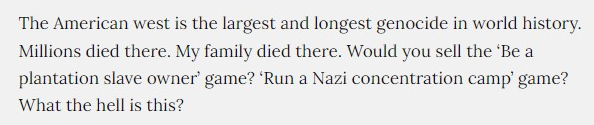
The next negative comment is about Plains Indian Wars and one that I do understand as I mentioned this earlier. I am fine with the comment and understand what is behind it. But to assume we play these games and think of it in this way is a bit over the top.

I have played a few games that have these type of elements in them. Most notably Brave Little Belgium from Hollandspiele where if the German player moves too quickly in the game as they are invading Belgium they will open themselves up to the committing of atrocities. When a turn ends via a Chit Pull, as the German player, there is the option of Activating those armies that didn’t Activate this turn. There is a risk though and this is where the press your luck element comes into play. The German player announces which inactivated armies will Activate but before carrying out the Activation, they will roll a d6 for each such forced activation.
On a roll of 4 or higher the Army will be able to Activate but will end up perpetrating an Atrocity on the local civilian population. This is an abstracted element that has its place in history but is the price of these forced Activations. The German player has an Atrocity Track that is numbered from 1-5. Each roll they fail and commit an Atrocity, the marker will be advanced up the track. If the marker ever reaches 5 on the track the game will end immediately in an Entente victory. So as you can see, these forced Activations can be costly but are important to try and to manage. Without forcing the Activations the German will have no hope of reaching their goal by game’s end.
Here is another example of a comment about The Great Hunger. I think that they truly didn’t watch the video or even listen to the discussion because Kevin specifically addressed this point.

My final sharing of a negative comment is about The Troubles.

Who is to say it is a poor choice of subject? Maybe to one person it is but to others who want to learn or gain a better understanding I think that it is a great topic for an asymmetrical game. I also feel that games can act as catharsis for people who have been injured by, offended or have suffered great loss. Seeing it on a game board, moving the pieces around and trying to understand the motivations of both sides can truly be therapeutic. And also give greater insight and understanding.
In summary, I do understand some of the concerns shared by people on these games and the topics. I would argue that not every game or simulation is for everyone and that as long as they are done historically, with some good research and proper care and caution, that any subject can be better understood through a game.
What are your thoughts on making games out of controversial historical topics?
-Grant


Great article Grant, really insightful!
I am very curious what will start to happen (had already a sample when doing preview) once I collect The Other Side of The Hill at Essen in few days and start creating content on this. Volko kindly already shared a lot of great thoughts on the subject (https://theboardgameschronicle.com/2023/12/05/the-other-side-of-the-hill-thoughts-from-volko-ruhnke/) but I am sure to get some push back. Let us see!
LikeLiked by 1 person
Sanctimonious trolls. The bane of comment sections.
LikeLiked by 4 people
I really am fine with disagreement and even with questioning but to just take a hard position “because” always has bothered me.
LikeLike
People have differing opinions and I am actually grateful for that. It would be boring if we all though the same way. I just want people to think about these things before they comment or bristle up and get offended. Thanks for your comments.
LikeLiked by 1 person
Differing opinions are one thing. There was a time when we could argue a point, share our opinions and, if not swayed, at least agree to disagree. In the last dozen or more years, the growth of cancel culture, online hate and the petulant inability to accept a contrary viewpoint, along with a tendency amongst many to view the past though ‘presentism’ and find it to be lacking, has led us to this point. Again, at least in my opinion.
It’s always selective. One could easily find objections with virtually every wargame ever made, unless it was always skewed so that the ‘oppressed’ come out victorious.
That whole narrative that is constantly trumpeted on social media and in universities is, quite frankly, tiresome.
History is messy and complex. All we want to do, I assume, is learn about a moment in our past through the mechanics of a board game, push some cardboard around and see who comes out victorious.
LikeLiked by 3 people
One thing is to disagree; the other is to respect the other human being. If both things are in place – well, than it is what I call a civilized discussion. But if the latter is not followed, than this crossing a red line that I am not willing to accept.
LikeLiked by 1 person
Whiny bitches are gonna whine. It seems like the offensensitivity of the media is oozing into other facets of life (like the game table, for example). If you don’t like a game, then don’t play it. But getting up in arms and trying to prevent others from doing something as harmless as playing a game is next level troll behavior. This is one of the reasons why I stopped financially supporting BGG. After being a faithful subscriber for over 20 years, I just got tired of the witch hunts and the draconian moderation tactics there. Just my tuppence. Feel free to ignore it if you don’t like it.
LikeLiked by 3 people
Thanks for your insight. I really like your word “offensensitivity”. You need to trademark that!
LikeLike
Just showing my age. That word was coined by Berke Breathed in a Bloom County comic strip about how easily people get offended. It appeared in the newspaper when I was in high school in 1982 (a mere 42 years ago when the newspaper existed had color comics on Sunday…). That word has buried itself in my brain ever since. Plus ça change, plus c’est la même chose. The more that things change, the more they stay the same.
https://www.gocomics.com/bloomcounty/1982/11/14
LikeLiked by 2 people
Good article other than this talk about being part of the oppressors- I think everyone should be proud of their history. Weakness leads to destruction. My own DNA is from more than one race and I can celebrate all of them. I think that only folks of certain political leanings get offended by historical games. I don’t have a high opinion of such folks!
LikeLiked by 3 people
Thanks for your input.
LikeLike
I was playing Labyrinth for the first time a while ago, and it hit me as I played a suicide bomber card. The magnitude of what that card means in the real world was too much for me to keep playing, BUT I enjoyed the game and its mechanics! I enjoyed how it made me think beyond the rulebook and made me think of the past twenty-odd years and the war on terror.
I truly appreciate games that have difficult topics. I may not play them more than once, but I don’t think we shouldn’t make a game just because they’re controversial. As long as it’s well made and researched, more power to the designer!
LikeLiked by 3 people
I get that opinion. I am not sure anyone truly enjoys playing the “bad guys” in games but I always feel that it helps me understand even come to grips with these sides.
LikeLike
There is a saying in Poland, that you cannot fight your enemy without understanding him. And sometime you need to put yourselves in the shoes of the enemy to find a way not to allow it anymore (not necessarily committing what enemy did, but at least imagining and thinking about the situation)
LikeLiked by 2 people
What a great write up!
In the end, ALL history is controversial. War is a terrible thing. That cannot be changed…games are games and hopefully they open up interesting conversations and greater historical understanding and empathy (I know Andean Abyss has for me….terror, kidnapping, extortion anyone?)
IMO, if you don’t like the subject matter, then you should avoid the game (this is how I feel about the “Werewolf” despite loving the COIN system).
Personally, I feel game designers try to do a good job with controversial topics. “Freedom” is a game about the Underground RR where the “slave-catchers” are bots so that nobody is actually playing to try to catch slaves. Instead, the players work together to help enslaved peoples reach freedom. (Disclaimer: In the end, I felt a little weird about enslaved people being represented as square little cubes and the “necessary sacrifices” I had to make along the way, so the game hasn’t been on the table much).
I heard some guy was developing a Haitian Revolution Game where a “bot” played the French for the same reason(s).
This is life. Kids play video games where they kill over and over again; maybe “Mario Bros” is “racist”; maybe “Dwarves” aren’t politically correct in D&D; many sports heroes represented in video (and board) games were/are less-than-stellar in real life; should bombing Dresden not be allowed in games b/c so many civilians died?
….who am I to say? In the end, I feel we become more educated if we learn about history and most games I’ve played do that. I have not come across any that I found overtly insensitive…..most made me think about various historical struggles more deeply.
Either way, great coverage of an interesting topic, Grant. Hopefully it spurs some great conversations around the table. It should, as should any great game.
LikeLiked by 3 people
Thanks. You make some great points and I am glad that you decided to add your comments to the conversation. I just think we all need to understand that not everyone feels the same about every situation and that doesn’t make it wrong just different.
LikeLiked by 1 person
Great article and it’s great to see so many common sense and based replies.
There are some historical games that are being made where the designer has outwardly said their bias is in the game. Instead of berating them about their design decision, I just choose not to play the game.
LikeLiked by 2 people
I think that is a wise choice and approach to controversial historical games. Bias is in us all and it comes from our experience, upbringing, where we live as well as many other factors. I just think that more people should take that advice and just scroll on past if you are not interested. Thanks.
LikeLiked by 1 person
It certainly is a divisive topic and definitely warrants grappling with when the subject line of a game does involve these sensitive topics.
I recommend watching the John Company 2nd Edition video by Shut Up and Sit Down: https://youtu.be/ykrqCX2_mhU?si=yx29xrdD02fXBdTw
They do an excellent job at discussing and balancing the game-ification of what is essentially Colonialism and how the designer has actually tried to portray this tough topic through the abstract lense of a board game
It must be tough for designers to balance a historical simulation without making certain elements, like atrocities, too trivial or too in depth. As it was said above, no one wants to play concentration camp simulator, but you don’t want to necessarily ignore the uncomfortable topics either.
Excellent write up as always Grant.
LikeLiked by 1 person
Great post, Grant! Even-handed and thoughtful. It would be silly to say a board game could cause any material harm, but there is such a thing as good taste, and where that boundary lies may vary for different people.
LikeLiked by 1 person
(This is not directed towards you, Grant.)
I avoid games on most of these topics for exactly the reasons one might think. I don’t find the experiences enjoyable. However, saying “if you don’t like it, don’t play it” is simplistic. When people say others are “offended too easily” I often end up wondering if those people are capable of being offended at all. Make a game about Vietnam War protests that has a flag burning mechanism. I bet a lot of the same people would discover their offense genes pretty quickly. No one is going to be offended by the same things. That doesn’t give anyone room to label people as “overly sensitive”, at least not of they care if I assume they really haven’t thought it through.
I said I don’t play most of these kinds of games, but I also recognize the hypocrisy in playing games where I am taking the German side in WWII or attacking Pearl Harbor. That doesn’t mean I don’t think about what those situations can teach me (as I know you do). When people comment not that they disagree with someone’s offense, but imply that they essentially have no right to have it, I wonder if they are capable of learning anything at all. As a fan of historical games I find that sad, given that learning about history is one of the rationales we use. I think we as hobbyists have to be better than that.
LikeLiked by 1 person
I completely understand. I always think about the ramifications and history when I play any side but it doesn’t bother me personally to play the Germans, Russians, VC or other antagonists.
LikeLike
Those specific things don’t bother me personally, but playing a pro-slavery side or an anti-suffragist side would. That’s no comment on the quality of those games. I hope they are well-made, respectful, and effective at teaching their lessons. I will just have to learn them in another way.
LikeLiked by 1 person
One should not require a stamp of approval from self-appointed arbiters of a culture. It’s not like they have some secret information to impart. The history is there, ready to be researched by anyone willing to do the hard work. I can’t think of any wargame designers who don’t treat the history with respect. Some are better than others, of course.
LikeLiked by 1 person