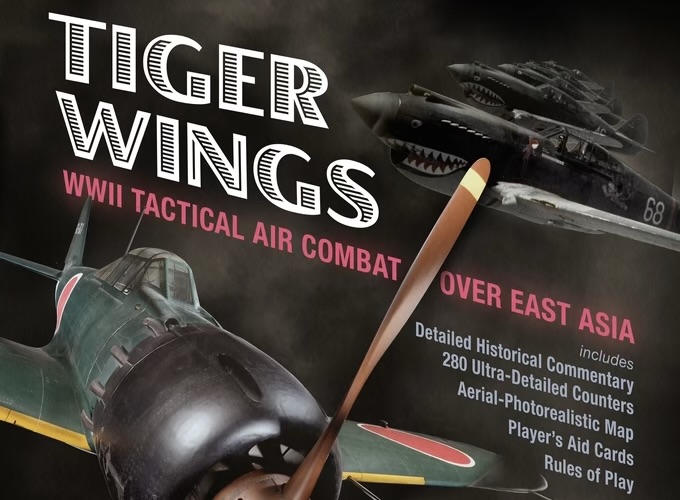
I love air war games! They are always supremely interesting and I really like the tactical nature of maneuvers and positioning. A few years ago, we covered the Buffalo Wings Reprint in our Wargame Watch feature and recently saw an announcement about a new volume in the Fighting Wings Series called Tiger Wings designed by J.D. Webster. We reached out to J.D. to get some inside information about the design and he gave us plenty.
You can learn more about Tiger Wings: WWII Tactical Air Combat Over East Asia in Against the Odds Magazine Campaign Study No. 2 by visiting the Kickstarter page at the following link: https://www.kickstarter.com/projects/atomagazine/tiger-wings?ref
Grant: J.D. welcome to our blog. First off please tell us a little about yourself. What are your hobbies? What’s your day job?
J.D.: Thank you to the gentlemen at The Players’ Aid blog for this opportunity to share a little bit about myself and my time in our wonderful history hobby. I’m 69 years old, and a retired Military and Commercial aviation pilot and my number one love in life has been flying. Like many of us, I started young in traditional board wargaming, starting with Avalon Hill’s Afrika Korps as a kid in high school. At the time I was already a history buff, and my father, a civilian pilot had imbued a love for airplanes in myself at an early age. Growing up, my hobbies were building model airplanes, plastic, balsa, foam, etc., and I read everything I could get my hands on regarding WW-I and WW-II air combat. Naturally, that morphed into a desire to be a military aviator myself. In college, I joined Navy ROTC, got commissioned and went on to become a Naval Aviator, flying A-7 Corsair attack jets with VA-195 off the USS Ranger in the mid-1980s. My second tour was as a Navy jet flight instructor in the late late 1980s. In 1990, my life shifted, and I left the Navy to become a commercial airline pilot, but, at the same time, I did an inter-service transfer into the Air National Guard, flying Air Force A-7D Corsair jets with the 124th TFS and then, F-16C Fighting Falcons for a brief stint (Wonderful plane, BTW).Along the way, I built up a personal library of over 600 aviation books, becoming, as I would call it, an “amateur subject matter” expert. I apologize but this long-winded information is going to be relevant to your following questions. Of course, throughout this entire time I stayed an avid wargamer, picking up on all aspects of the hobby and, naturally, I was most excited when someone put out a game on aerial combat. I also, was most interested in “tactical” level games, squad vs. squad, tank vs. tank, ship vs. ship and airplane vs. airplane. Which brings us to your second question.
Grant: What motivated you to break into game design? What have you enjoyed most about the experience thus far?
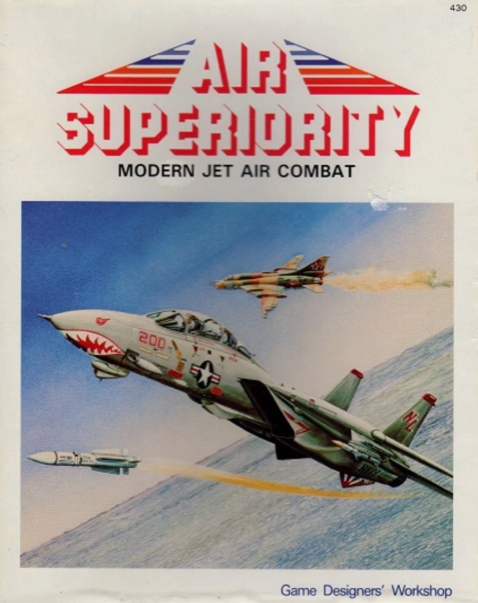
J.D.: Although, I was active in other parts of the gaming hobby in my youth and early college days, aviation games excited me the most. I loved Richthofen’s War, Luftwaffe and the Air Force / Dauntless Series games, all of which I played until they fell apart. By the time, I was actually learning to fly in the Navy, I got hold of David Isby’s Air War, and struggled to learn it. By then, I knew enough about flying to realize, IMO, that these other game designers, talented as they were, were not themselves flyers, and the game models they were producing did not have the correct approach. Some designs were simpler than others, most were fun, but they did not model three dimensional air combat in the right ways, or worse, in an engaging way that would bring the gamers back around for multiple playings. I felt I could do better on my own – so in 1986, I designed Air Superiority, which was published by GDW. This was followed by Air Strike two years later, also published by GDW. Mark Miller and Frank Chadwick were wonderful mentors to a budding rules writer and those two games went on to very successful sales. To be honest, Air Superiority was really, me doing a game about my day job at the time, flying jets in the Navy.
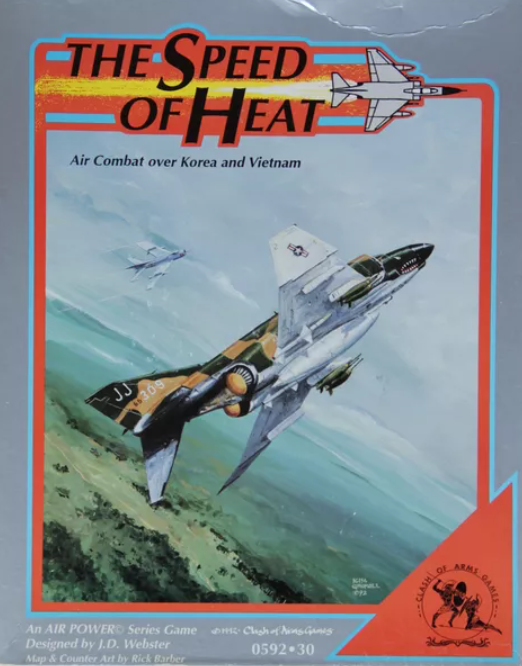
As a young hobbyist in his early twenties, it was pretty cool to become a published “game designer” and naturally, I got interested in doing more. I moved over to Clash of Arms in the 1990’s, and they published The Speed of Heat, my first tome, on the history of jet air combat, using an upgraded version of the Air Superiority rules. As an active duty military person, however, I couldn’t go forward much without touching upon classified topics, so I decided to go backwards and build a game to model WW-II air combat instead. This led me to create the Fighting Wings Series of games, all of which share the same family of rules, and, of which, there have been four boxed volumes, and multiple magazine supplements made. Briefly, they are:
Over the Reich, published 1991 by COA. / FW volume 1 boxed
Achtung Spitfire, published 1993 by COA. / FW volume 2 boxed
Whistling Death, published 2003 by COA. / FW volume 3 boxed
Buffalo Wings, published 2010 by ATO Magazine. / supplement
Top Cover #1, Darwin’s Spitfires, published 2013 by COA. / supplement
Wings of the Motherland, published 2019 by COA. / FW volume 4 boxed.
My mission, and what gives me the most satisfaction in this effort, is knowing that my game rules, though sometimes considered complex, actually do an accurate job of modeling what the real important factors of air combat are, and that the airplanes perform correctly, in terms of their historical abilities relative to each other. Of course, one quick thing to mention, of importance is that Buffalo Wings, featured a simplified set of game rules, more of an introductory version of the general Fighting Wings rules set. Buffalo Wings, was reprinted just a few years ago.
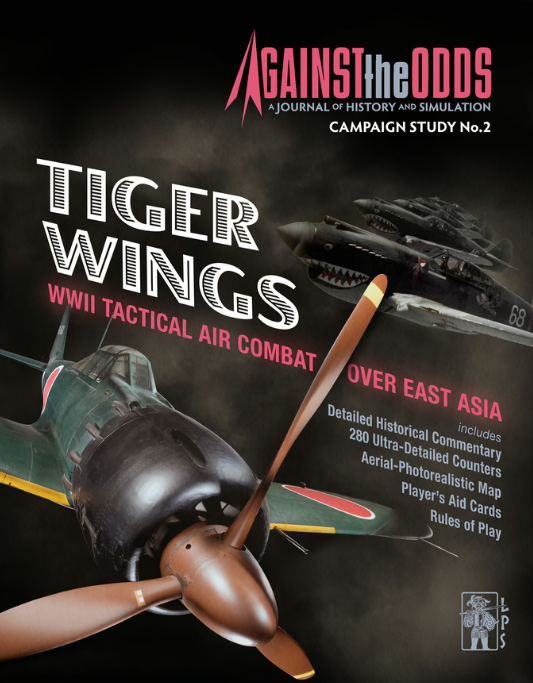
Grant: What is your upcoming game Tiger Wings about?
J.D.: Every Boxed game and supplement I’ve done for the Fighting Wings, Buffalo Wings family of WW-2 air combat games has filled in some significant portion of the history the air war in WW-2 and Tiger Wings is yet another area of historical significance, seldom touched upon or previously explored in wargaming, which is that of the successful air campaigns waged by the Japanese Army and Naval air arms in the first six months of the war, when they swept across the Far East conquering Malaya, the Philippines, the Dutch East Indies and Burma in just six months. What is unique about these campaign are the various myths involved with them. There is this idea that Japanese air power was overwhelming and that their airplanes were far superior to those of the Allies, but the truth is different. Qualitatively, Allied aircraft were better, and they were not heavily outnumbered, the problem was Allied air power was ineptly used and frittered away in a most incompetent way as will be covered and explained by the historical articles included with the Tiger Wings campaign study magazine game. For example, the famous AVG Flying Tigers, as heroic as they fought, and despite being effective defenders, were ground out of existence and disbanded within six months of entering battle. They were defeated in Burma and pushed back to China, where, they disbanded to be replaced by the newly formed 14th Air Force. This isn’t the way history normally portrays them, but it is realistic, and one of my goals with every Fighting Wings related product is including the real history behind the situations.
Grant: What is being updated with the system or improved with this entry in the series?
J.D.: Tiger Wings is targeted both at my existing fan base, in terms of adding new planes to the game system and dozens of new scenarios to explore, but also to entry level players, who want to try the system for the first time, but without the extra details and complexity of the “full” level Fighting Wings rules. As such, the Tiger Wings rules are the Buffalo Wings beginner’s rules, cleaned up, and revised slightly, with all the second printing BW expansion rules for air-to-ground combat added in. We also plan to include a “quick start” player’s guide to facilitate understanding how to play the game. So Tiger Wings is a passport into the Fighting Wings game system. Players who like TW may want to delve further, trying the full rules products for even greater realism, but if not, I’m pretty sure they will be fascinated with Tiger Wings as a stand alone item, just as it is.
Grant: Why was this a subject you wanted to create a game on?
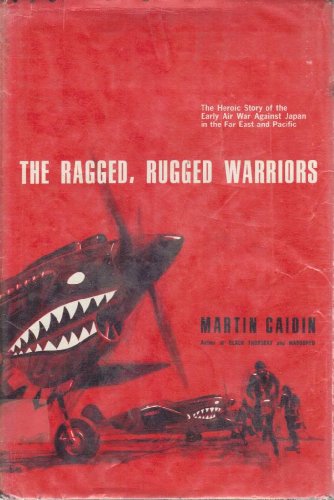
J.D.: Back in 1966, Martin Caidin, a famous pulp aviation author of the day wrote a book called the The Ragged Rugged Warriors, which is largely about air combat from the Spanish Civil War era through the end of the Flying Tigers era in mid-1942, which talks a lot about the Far East campaign and the fall of Malaya, etc. I was twelve years old when I first read the book in 1968 and my fascination with American pilots fighting against the odds at great sacrifice, to hold the line against the merciless Japanese, until the tide of the Pacific War changed in favor of the Allies never left me. It has always been on my to-do list since first designing the Fighting Wings Series and now, 34 years into my quest, I’m finally getting it done.
Grant: What are the unique features with the Fighting Wings System used for the game?
J.D.: This is a broad question. But for the unfamiliar, the key is to understand with my designs are that the FW, BW, and TW game scale is specifically designed to model not aircraft flight, per se, but what a fighter pilot can reasonably accomplish in what is known as a standard “OODA” loop cycle. Whether you were a fighter pilot flying Sopwiths in WW-1, or jet aircraft in the Korean War, forty years later, the one thing that hasn’t changed, is the “OODA” cycle. “OODA” stands for “Observe-Orient-Decide-Act”. It’s an actual mental process, first recognized and codified by Eric Hartmann, the most famous and successful German fighter pilot on the Russian front in WW-2. It has been taught at Top Gun and the USAF Fighter Weapons School, but under different names. You will often hear or read about the term “Situational Awareness” or SA. Guess what, SA is derived by OODA looping. In short, the OODA loop works this way – it’s a four second cycle, on average – and it is a continuous never ending loop, constantly changing, evolving, and getting modified as the fighter pilot maneuvers his way through a life and death air battle. It takes about one second of visual inputs, for a pilot to OBSERVE as much as he can. It then takes another second of time for the pilot to interpret and sort all the visual, aural and physical forces information assaulting his eyes brain and body to ORIENT himself to his situation. Based on that orientation, the pilot must then DECIDE what to do to attack or defend himself (about a one second process) and then the fourth second is taken up with the ACT of placing the aircraft controls in a position to start moving the airplane where he needs it to go. As his fighter’s flight path starts to change, he will be observing the changes, and reorienting to the changes etc. It should be understood that the OODA cycle in not sequential in nature. You don’t Observe-Orient-Decide-Act and then start over. It’s layered, each piece responsible for starting another cycle. Kind of like how a staggered “Row-row-row the boat song is sung.” As the OODA cycle progresses each piece is being observed by the pilot for its effects and that requires Orienting anew, deciding anew, Acting…etc.
Observe Orient Decide Act <<< OODA cycle 1
Observe Orient Decide Act <<< OODA cycle 2
Observe Orient Decide ACT <<< etc.
Grant: What is your design goal with the game?
J.D.: Quite simply, to immerse the gamer into the accurate historical context of the Far East Air Campaign as fought in 1941 and 1942 and let him have some fun, while flailing about the map board solving the situations he himself creates while moving his aircraft in plane-on-plane tactical air combat.
Grant: Who is your developer Terry Simo? What does he bring to the design?
J.D.: I’m proud to say that Terry is one of my great life-long friends, a fellow Military Aviator, and he brings to the design his own instincts as a successful air game designer himself, having developed and even published his own air combat designs with GMT Games. With regards to rules balance, scenario play balance and a critical eye for ensuring that a “non-pilot” gamer that has never had any flight instruction will be able to understand the rules concepts put forth by myself to fly in the game – Terry has been invaluable. I can’t thank him enough for his efforts. BTW Terry and I met back in the late 1980’s during my jet combat game design era and he’s also been a life long Fighting Wings System player since that series was first published.
Grant: What was unique about aerial combat in the CBI Theater of WWII? How did you model this?
J.D.: Technically, Tiger Wings covers more than the CBI (China-Burma-India) theater. It covers the air fighting over Malaya, Sumatra, Java, the Philippines etc., with Burma, being just one portion. My approach to the game scenarios that is unique is to try to explore both the reasons for the many Allied failures and their few successes in these campaigns, in terms of highlighting what the tactical errors were and how the successful flyers, such as the Flying Tiger pilots were different in their approach to fighting the Japanese.
Grant: What various planes are included in the game? What is unique about their statistics?
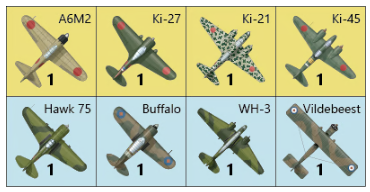
J.D.: Tiger Wings has an eclectic and fun group of early warplanes to push around. On the Allied side for fighters, there is the Hawk 75, Brewster Buffalo, Curtiss Wright Demon, Hawker Hurricane, the Curtiss P-40 Tomahawk and the P-40E Warhawk. The Japanese Army Air Force pretty much only has Ki.27 obsolete fixed gear Nates and the newer Ki.43 Oscar fighter to work with, while the Imperial Japanese Navy shows up with the outstanding A6M2 Zero fighter. For the most part, all of the Japanese fighters are agile, but fragile, and woefully under-armed, except for the Zero. Almost all of the Allied fighters are much more robust, armored and well armed, and even faster than the Japanese planes, yet they were still defeated in detail by the Japanese flyers, and the reason goes to the use of good tactics by the Japanese and bad tactics by the Allies, exacerbated by the very poor experience and training levels of the Allied pilots facing the Japanese veterans of the air war in China.
Grant: What is the anatomy of the counters? What information is included?
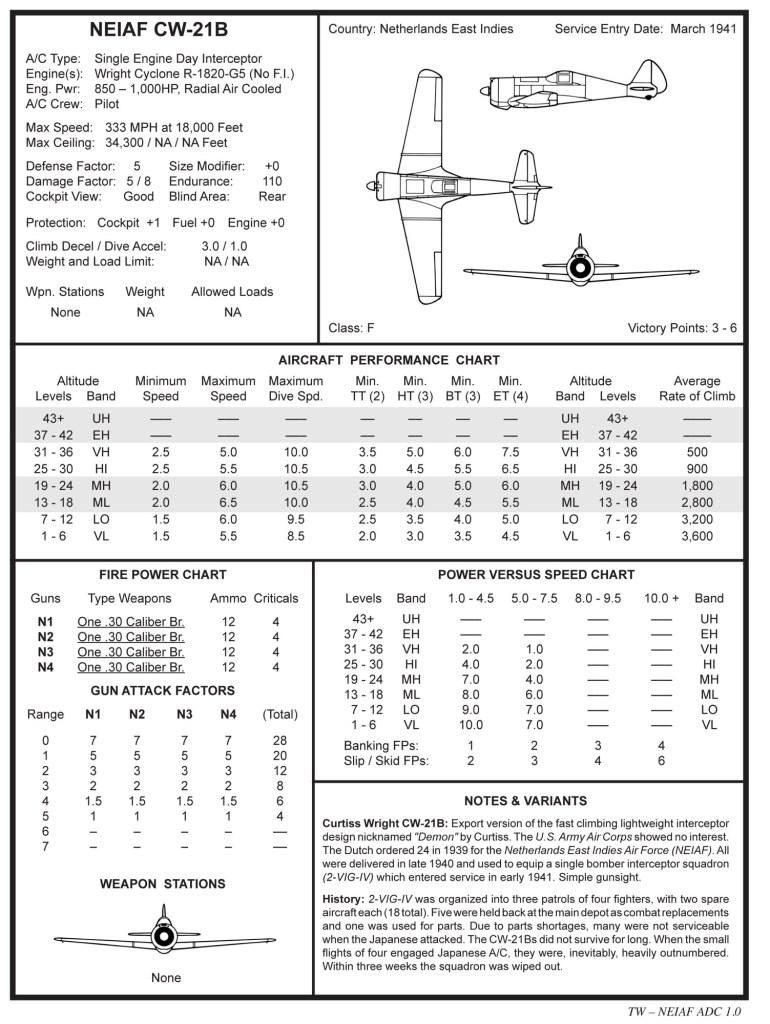
J.D.: Each aircraft counter in the game represents a single aircraft. It will have a top view, a type name and an ID number and nothing else. Everything else about the fighter’s performance is kept noted on an aircraft log sheet, since the aircraft’s pitch angle, bank angle, speed and height can constantly change during play. All of the aircraft’s performance capabilities at different altitudes is summarized on each aircraft’s data card, known as an ADC. Here is a sneak preview of the Dutch CW-21 Demon fighter.
Grant: What information is included on the Aircraft Data Cards?
J.D.: As you can see from the Demon Aircraft Data Card example, everything you need to fly the plane on the game map is summarized on the Aircraft Data Card. For different altitude bands, each about 6,000 feet thick, there is a listed minimum level speed, maximum level speed and maximum safe diving speed and the numbers are in terms of “Hexes of movement”. So if an aircraft has a current speed of 6.0, it can move six hexes in a game turn. Each point of speed equals 50mph of scale speed, so Speed 6.0 equals 300 mph of speed, and so on.
Grant: How does combat work in the design?
J.D.: In the FW, BW and TW game system, standard war game odds tables are used along with a percentile die roll to resolve combat. Aircraft firepower diminishes with range, reflecting a loss of accuracy as range increases, and aircraft have a defense factor, which is increased by the angle of deflection of the attacker, to reflect the increased difficulty of a hitting a target from the side as opposed to from the rear. Ideally, the best shots occur if the attacker is directly behind the target with no deflection shooting required and at a close range. Damage is inflicted in terms of “hits” with multiple hits sometimes resulting in special “critical damage” events such as causing an aircraft to lose its wings or explode from a fuel tank hit. The combat system is one of the most popular parts of the entire series often creating entertaining story telling as you play. “There I was, wing on fire, engine sputtering, pilot wounded…. And so on”.
Grant: What do you feel the game models well?
J.D.: Obviously I’m biased. It models how three-dimensional maneuvering impacts a dogfight’s overall geometry very well. There is a good reason to attack from above in a dive, because of the extra energy you’ll get from diving, and thus the extra speed, that may well then let you zoom out of a bad situation. Speed is life. Get slow…not good, you can stall and spin out if that happens in the game.
Grant: What has been the experience of your playtesters?
J.D.: Terry and I ran two different groups of playtesters through the rules and through multiple varieties of scenarios. In Terry’s group there were two players who had never played a FW or BW game before. They did fine. We also had experienced Fighting Wings players who – obviously had no issues with the beginner version rules. As far as I can tell, the playtesters, themselves, were entertained by the process. A good sign.
Grant: What are you most pleased about with the design?
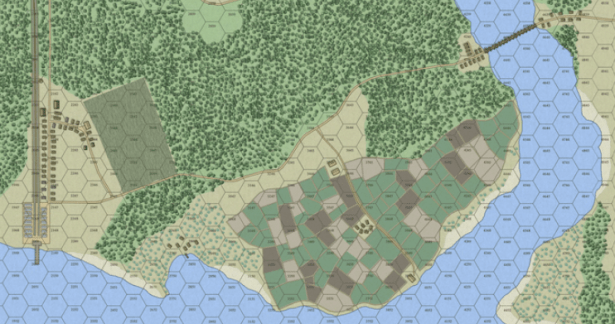
J.D.: The beauty of the game counters, and the game map, thanks to the fantastic talent of our counter Artist, Ian Wedge from England and our map artist, David Friedrichs from the USA.
Grant: What other designs are you contemplating or already working on?
J.D.: None at the moment, my plate is full, but on my to-do list…I’m contemplating how to best do a WW-I air combat game design.
Well, gentlemen, thank you so much for letting me blab a bit about this new product. I hope this will provide some interesting insights for your readers.
Thank you J.D.! It was a pleasure getting to know you a bit and we appreciate you doing this little interview on such short notice. Good luck with the Kickstarter!
If you are interested in Tiger Wings: WWII Tactical Air Combat Over East Asia in Against the Odds Magazine Campaign Study No. 2, you can back the project at the Kickstarter page at the following link: https://www.kickstarter.com/projects/atomagazine/tiger-wings?ref
-Grant
 The Players' Aid
I played a lot of Air Superiority back in the day. I am sure we played it wrong, but it was so much fun. Thanks for sharing! happy New Year!
LikeLiked by 1 person
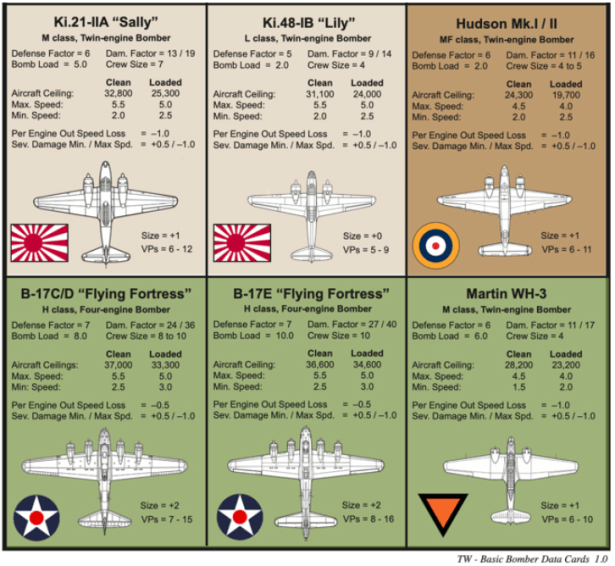
Just to note the last image shown are “Bomber Information Cards,” which are a new development to the FW system.
They make it easier to control several bombers who aren’t doing dramatic maneuvers– better for multi-plane scenarios and a big improvement for solo play. But the kickstarter stretch goals are also offering full Aircraft Data Cards for the bombers, because there were many cases in the Asia/Pacific where 1 or 2 bombers worked recon or even made attack runs. So players get BOTH– bombers easy to handle as lumbering targets, or bombers who will make it tougher for the fighters to line up on them.
Upcoming stretch goals include more obscure planes, a Khalkin Gol scenario pack, and a countersheet that captures all the planes released in the “Wargame Vault” ADCs.
LikeLiked by 1 person