
Today was our first ever trip to the SPIEL Essen Convention and I have been very excited about the proposition since our plans became solidified several months ago. In case you don’t know, SPIEL Essen, is the world’s largest public fair for board games. The convention is held annually in Essen, Germany, typically in late October, and attracts a massive crowd of visitors and exhibitors. The fair is intended for board gamers to be able to discover new games, play demos, meet with game designers, and purchase new products. The convention is more about board games than wargames but we are going to seek out those wargame publishers who are here.
SPIEL Essen is a bit smaller than GenCon (200,000 vs 250,000 attendees) but really was a very nice and relaxing environment as we entered the convention center this morning at 9:00am. The exhibitors are spread out in about 7 different areas and those areas are much larger and roomier than those at the Indianapolis Convention Center. We never truly felt thronged on all sides and very rarely had to wait in congested areas. I was very impressed and frankly surprised in a good way! We made our way over to the Sound of Drums booth and met up with owner Uwe Wallentin and his team. All great guys and they immediately handed us some gifts including special chocolate cookie biscuits called Ovomaltine and a brand new in-shrink copy of their newest game called Neither King Nor God.
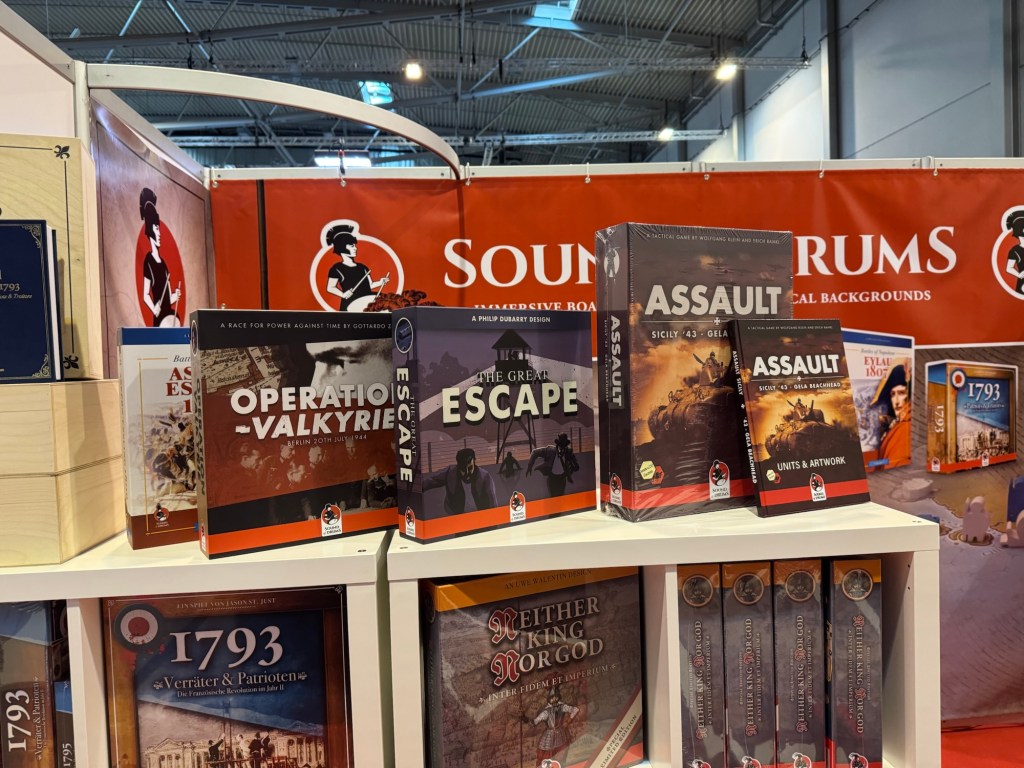
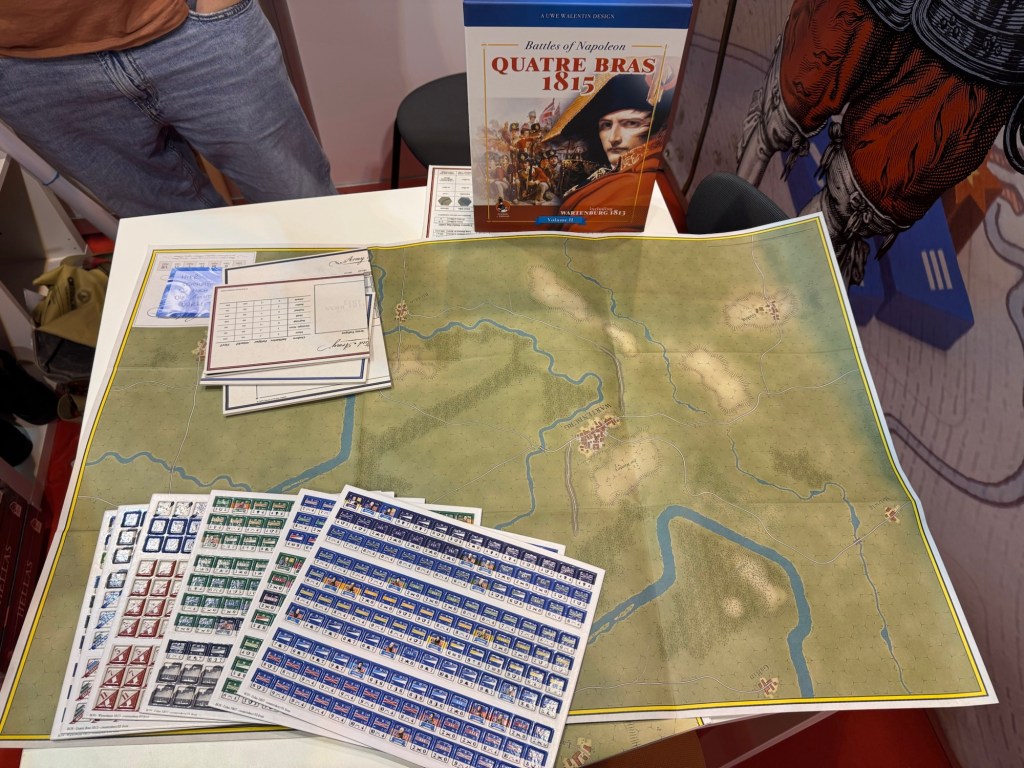
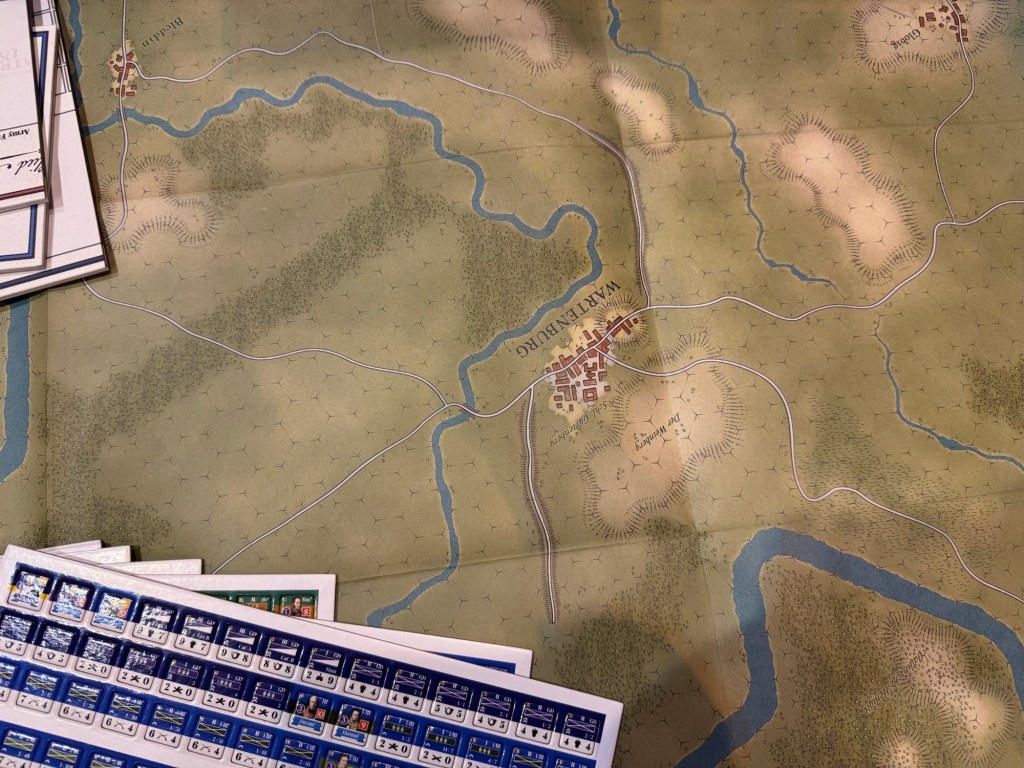
We spent a few minutes nosing around their booth and saw near final production proof copies of Battle Commander Vol.1 – Napoleon’s Italian Campaigns designed by Carl Paradis and Battles of Napoleon Volume II – Quatre Bras 1815.
But the game I was most interested in was Neither King Nor God, which was just released and at a very discounted price of €29. Neither King Nor God is a strategy game for 4 players (it is designed for just 4 and no less) and takes place in Europe during the Age of Renaissance.
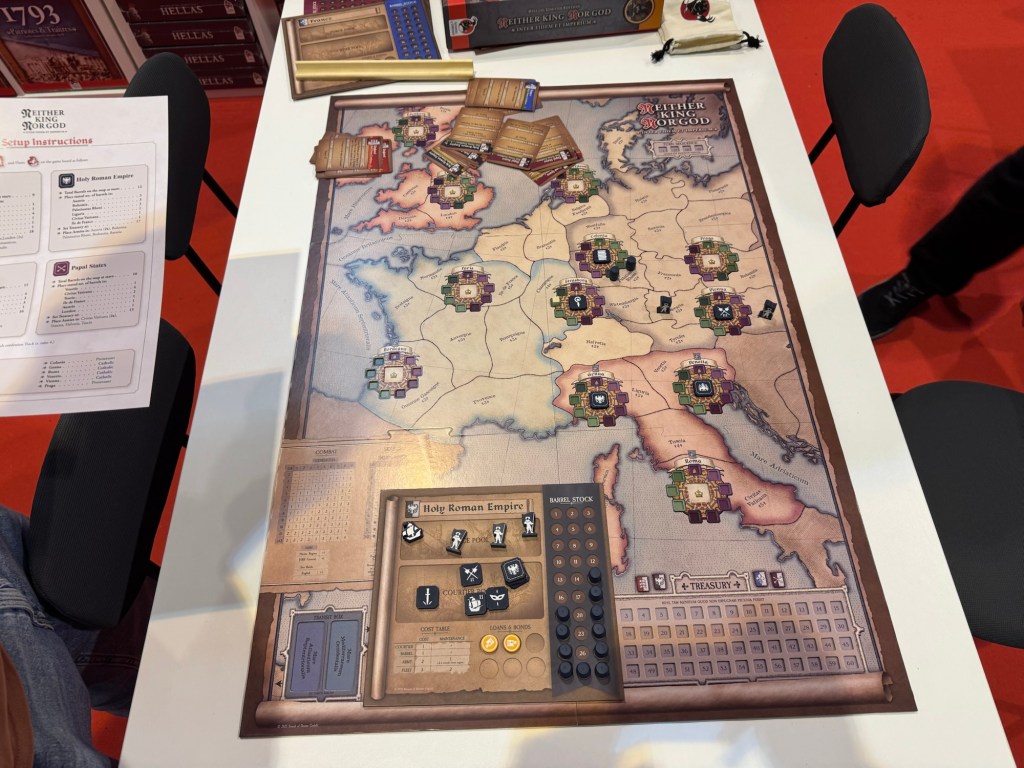
The game’s playable factions include England, France, the Holy Roman Empire and the Papal States. Each of the factions is slightly asymmetric and there are basically 2 factions that work together being France and the Papal States and the other side being the HRE and England. I say work together but they are both interested in the Wars of Religion of the time and the Catholics versus the Protestants.
This version of the game is a “pilot” to the huge and planned epic 5-player version that will be published in 2026. You lead one of four factions and in order to win the game you need to control a certain number of regions and need to maintain or convert a certain number of centers to the confession of your faction. Victory conditions for each faction are different and as some factions aim for a certain confession in the centers, they help their opponents fulfilling their victory conditions. In addition to that the English player may win the game if the continent is overrun by the troops of the Ottoman Empire.
To achieve your goal of the game you send out at the beginning of a turn members of your court to various centers in Europe where they fulfill tasks in your name. Your diplomats, your generals, admirals and spies are all called Courtiers. These will affect the possibilities of your actions in the regions of Europe. Your merchants will try to ensure your share of the market potential in a region, your bishops will try to convert a Center’s confession, spies and assassins will foil your enemies plans.
Players may recruit new armies, build new fleets and most importantly give orders to various members of their court. Players will also purchase new “Barrels” that represent merchants and building up of trade markets on the board that they plan to place on the map.
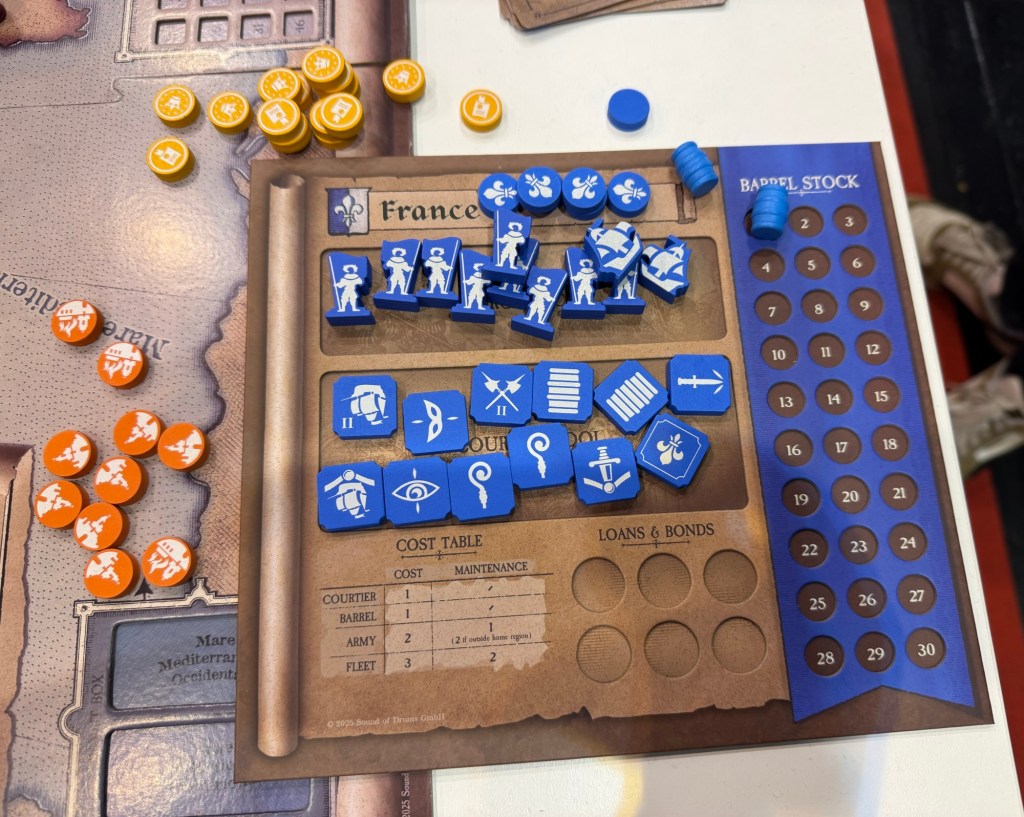
The meat of the game is when the players send out their Courtiers. The starting player first places one of their courtiers with its identity face down in one of the Centers on the game map. The following player does the same as so all players in turn order. If they wish to place a courtier in the same Center as their rivals they can do so but it is placed on top of the pile of already placed courtiers in that Center. One after another the players place their courtiers one by one. They build stacks of courtiers in the Centers of Europe. When all courtiers are placed, their identity is revealed one by one, from top to bottom, and they execute their possible actions. Courtiers allow players to move units, take a share of a market in a region, lay siege on Centers, fight battles, try to convert the confession of a Center, explore the New World and so on. This part of the game is genius and sometimes your plans don’t work out and you will be unable to take an action because of your opponents placement of their courtiers. It is all just so tense and so much fun.
Each player has multiple victory condition cards that are drawn at random and these are the ways the player will win the game. If a player fulfilled their victory conditions at the end of a turn they reveal their Victory Card and are declared the winner. These victory conditions include several different types of things such as controlling specific regions or centers, having a certain amount in their treasury, having a certain number of barrels out, etc. The point of these cards are different ways to win each game which adds a lot of variety and the unknown.
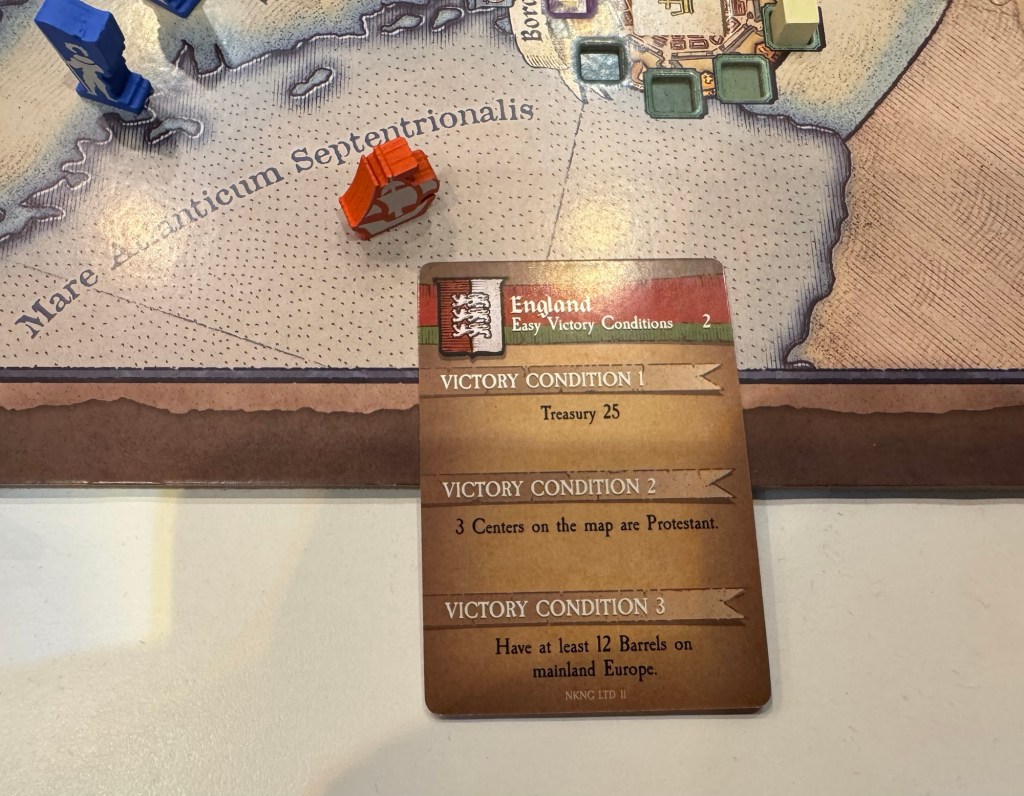
Combat is simple and players use their armies to protect their economic interests or to remove competitors from certain markets to allow for the placement of their barrels as each region has a limit that can be placed.
Their is a simplified CRT that takes into account your army strength while DRM’s come from various things such as leaders, being on your home territory or other things and then 2d6 are rolled and a certain amount of losses are inflicted upon both sides.
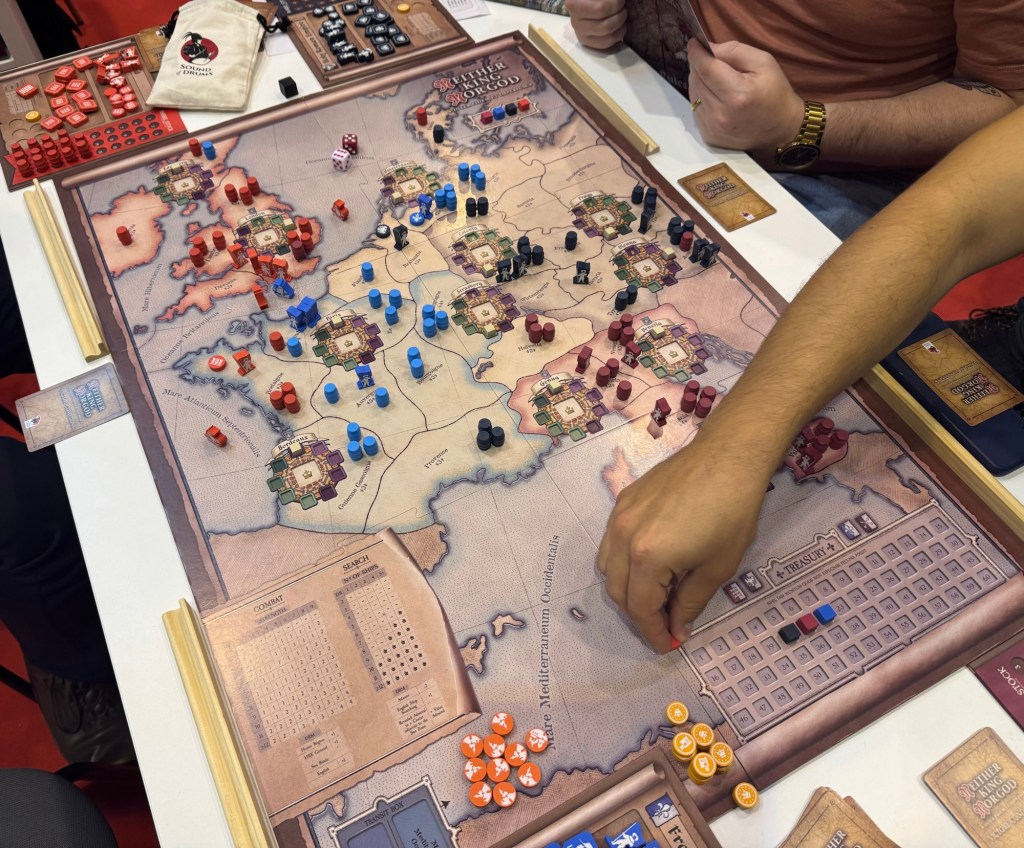
We had a great time with this one and it played in about 90 minutes. It is very good and I am very excited to give this another go and to see how the game evolves in the more advanced version.
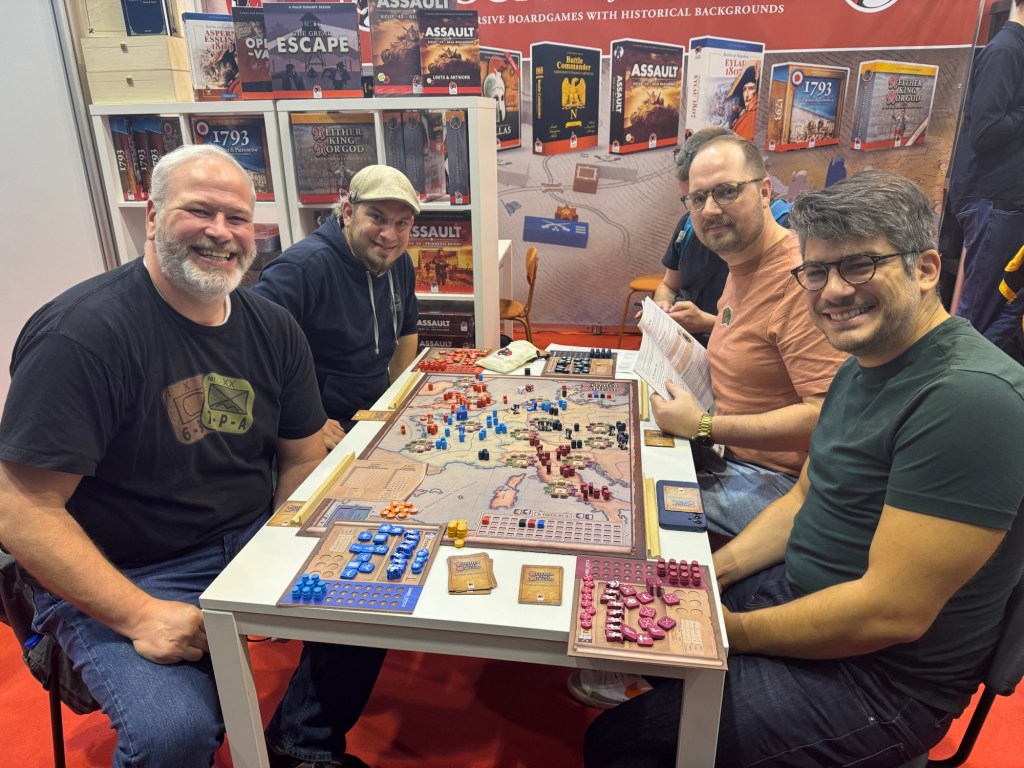
It also is a gorgeous game with the highest levels of production. Get a copy while they last. You will thank me.
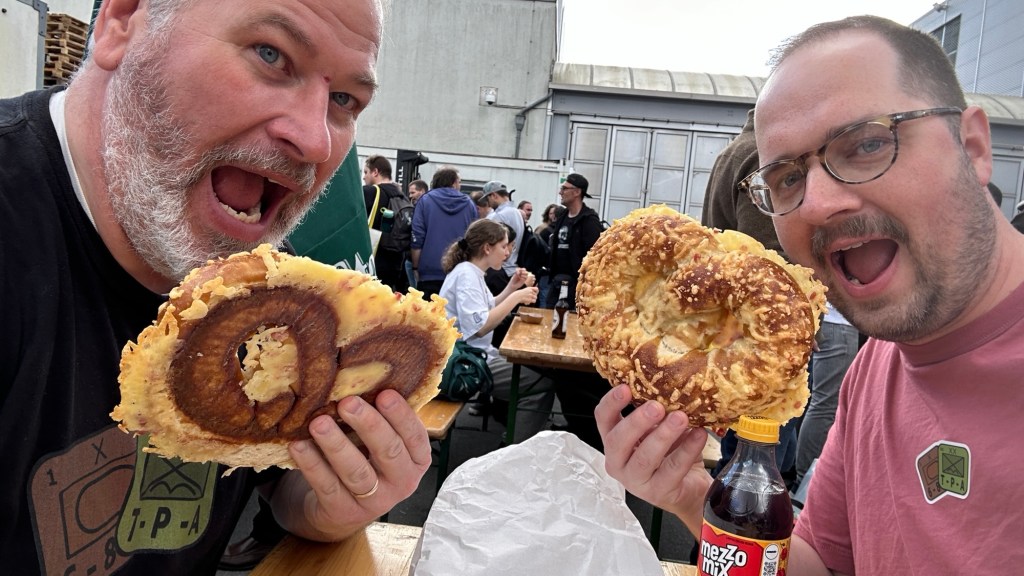
We then broke for lunch and had huge pretzels covered with butter cheese and bacon bits! It was both delicious and extremely gluttonous and I have very much enjoyed the breads we have eaten in France, Belgium and Germany.
We then walked around the convention halls a bit and found Ares Games and purchased copies of their 2 newest wargames in WunderWaffen and Quartermaster General: South Front.
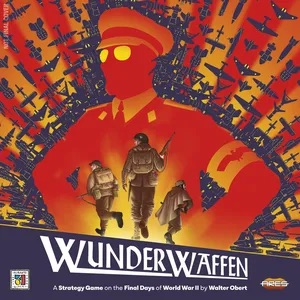
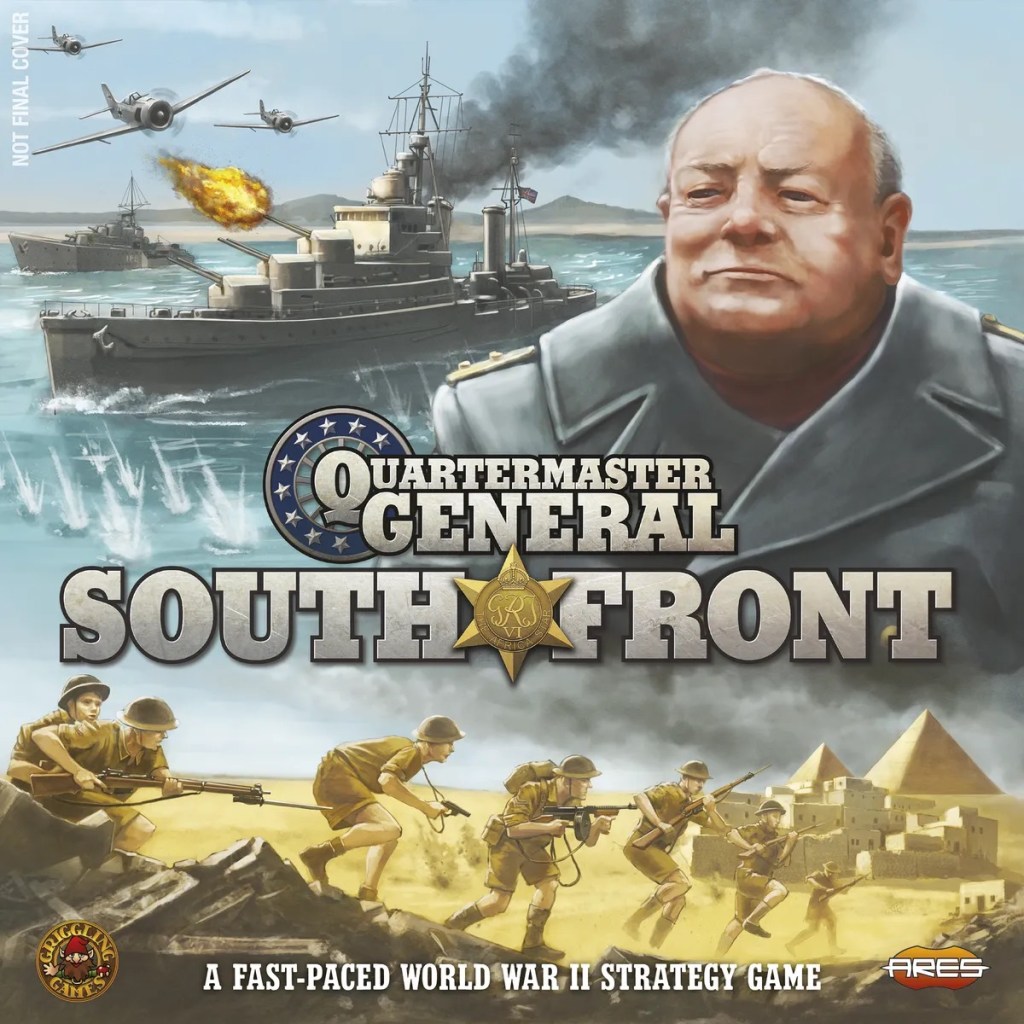
Looking forward to playing both of these soon!
We then returned to the Sound of Drums booth to shoot a video interview with Uwe Wallentin and also to play a 3-player game of DIES IRAE, which is volume II in the History of the Ancient Seas Series.
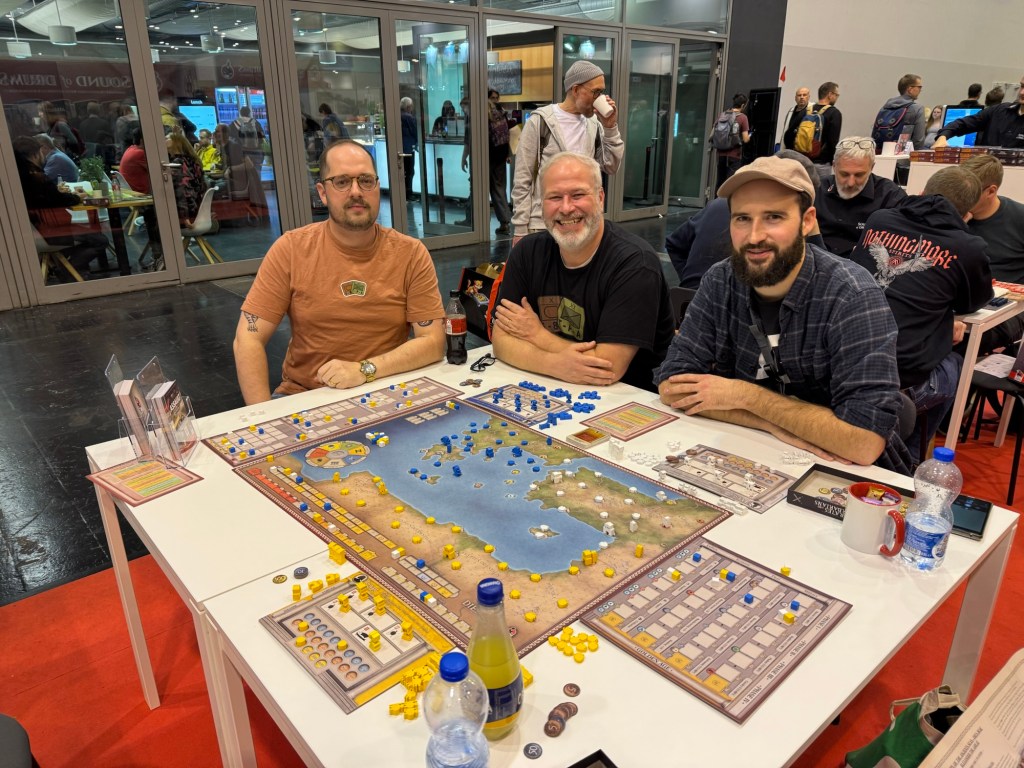
In DIES IRAE, players take on the role of one of three ancient Empires either the Greek City States, Egypt or Persia and fight for dominance in the eastern part of the Mediterranean Sea.
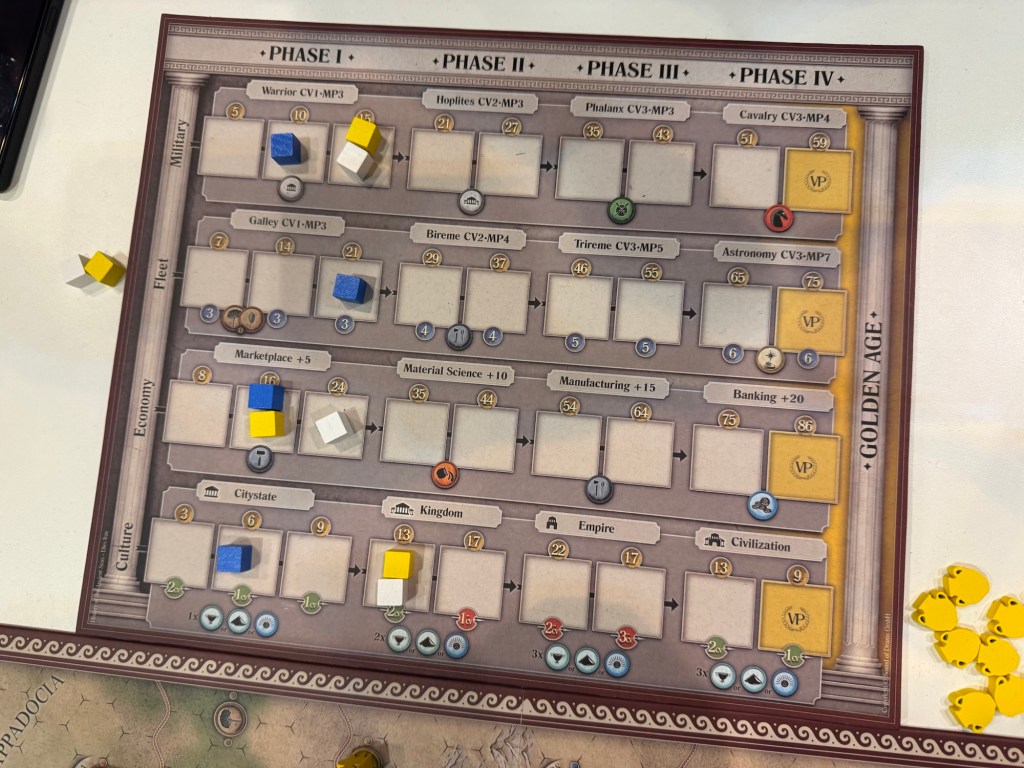
The game is a lite civilization building game that uses deterministic combat with no dice, a very nifty action wheel where no same action can be taken twice in a row and all actions can be taken no more than 5 times per turn, and where you have to balance economic expansion through building trading posts, collection of various types of goods to meet requirements for technology upgrades and improve your income to build more armies and babies to expand and eradicate your enemies.
We played this one a few years ago when it was in prototype form and had a bad experience because the rules weren’t clear, were missing parts and the game didn’t include all the needed pieces. Now after playing again I liked it much better with final rules and the issues worked out. It still somewhat suffered from the same problem from our playtest where we found there was about 8-9 turns of build up and expansion that could have been foregone with a setup that put players in contact much sooner and got to the best parts of the design in negotiation, the use of armistices and alliances and more competition over markets. All in all though I do enjoy this one and would recommend it to anyone who likes lite civ building.
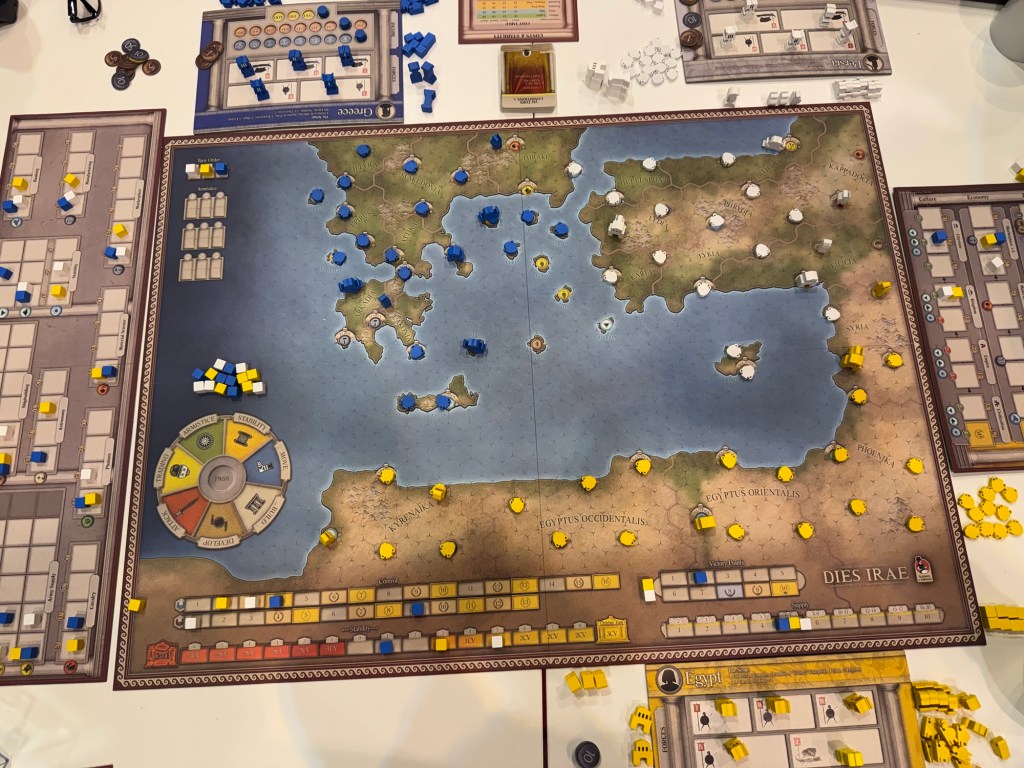
The other part that I like a lot is the building of technologies through purchasing developments. Certain things cannot be done until you have amassed specialized goods and that causes players to compete over these scarce resources. Just a neat part of the game that gives it depth.
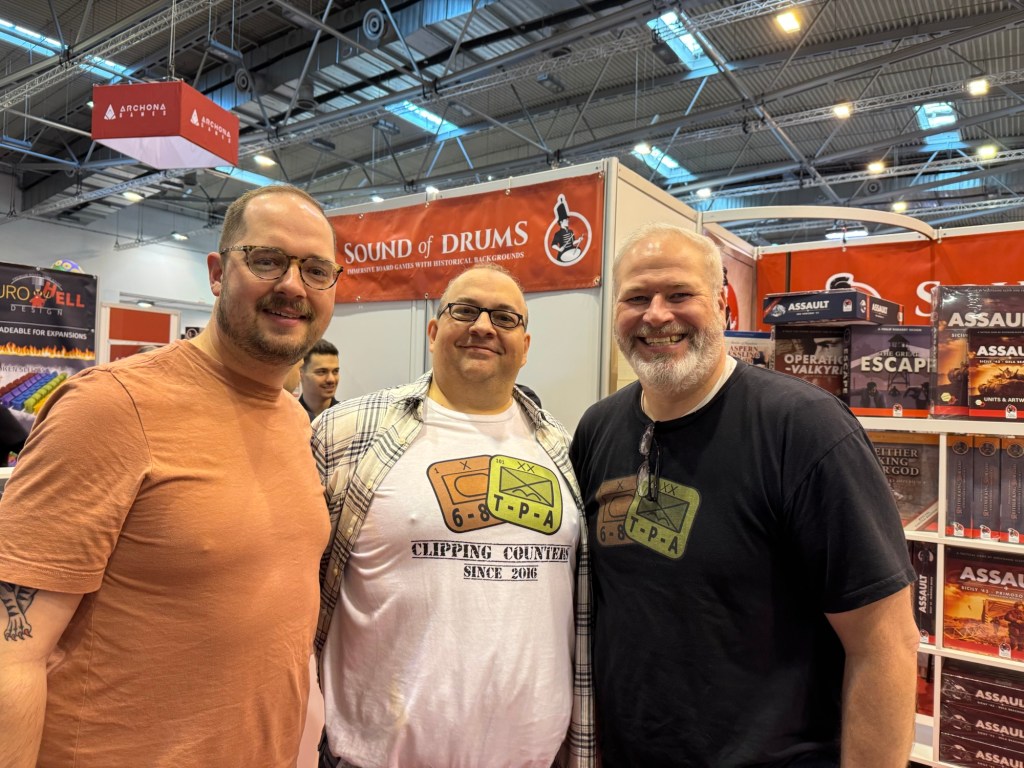
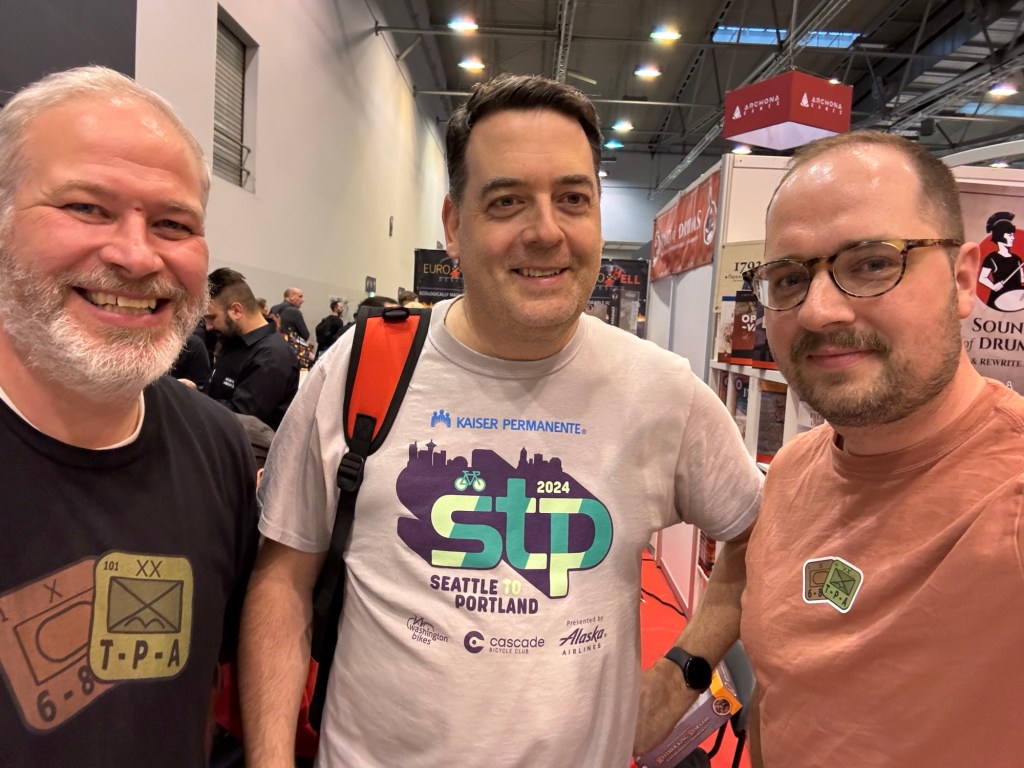
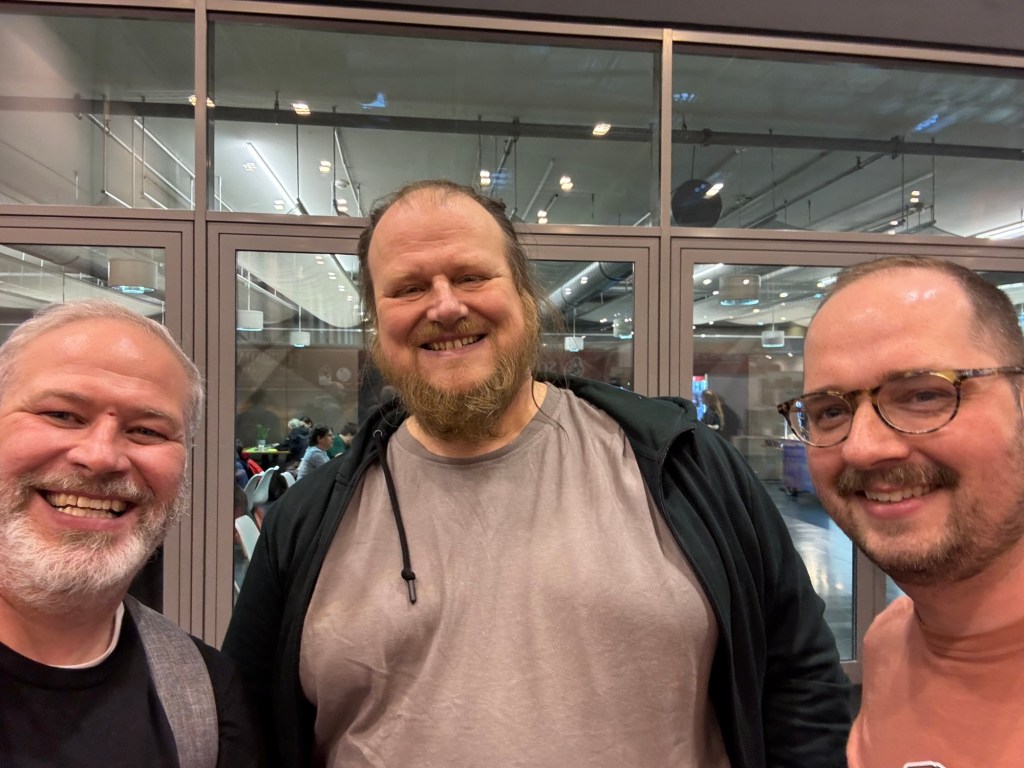
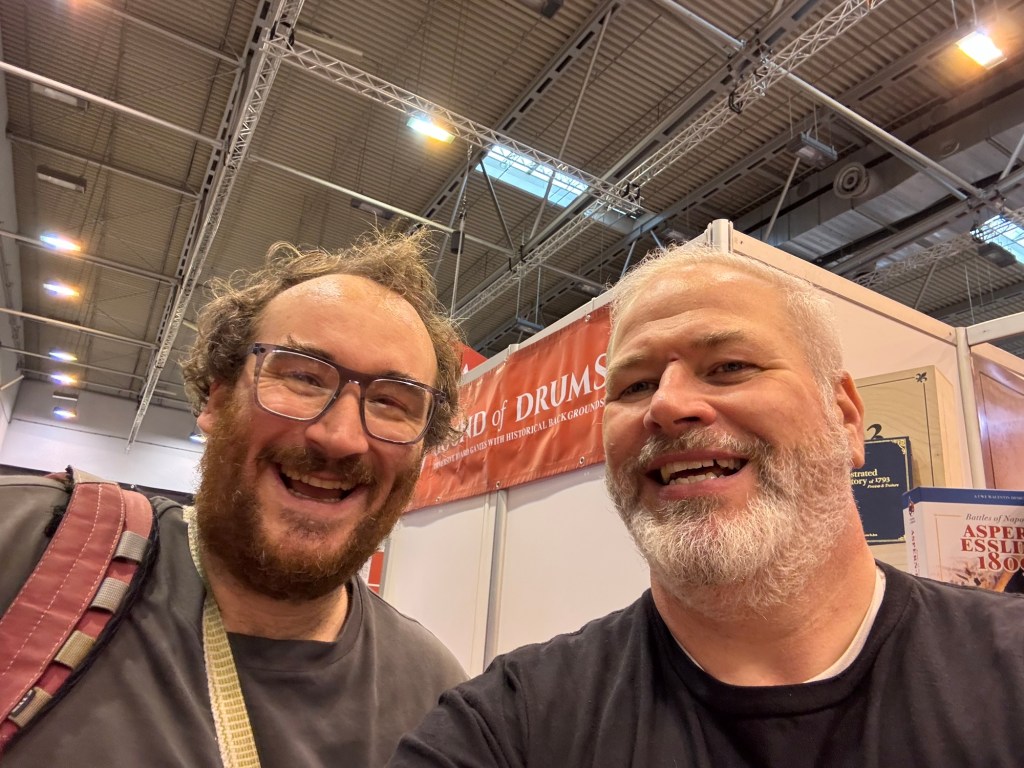
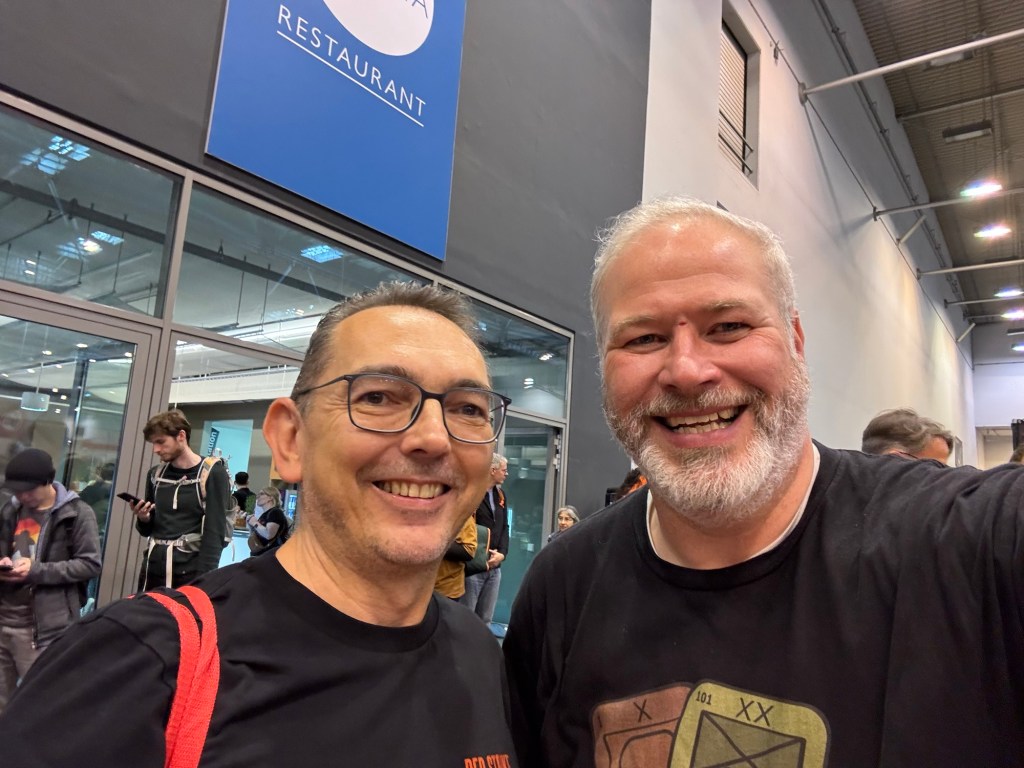
We also met a lot of people who like to watch our videos and read the blog. I will not name them as I will most likely get their names wrong but wanted to show some of there pictures.
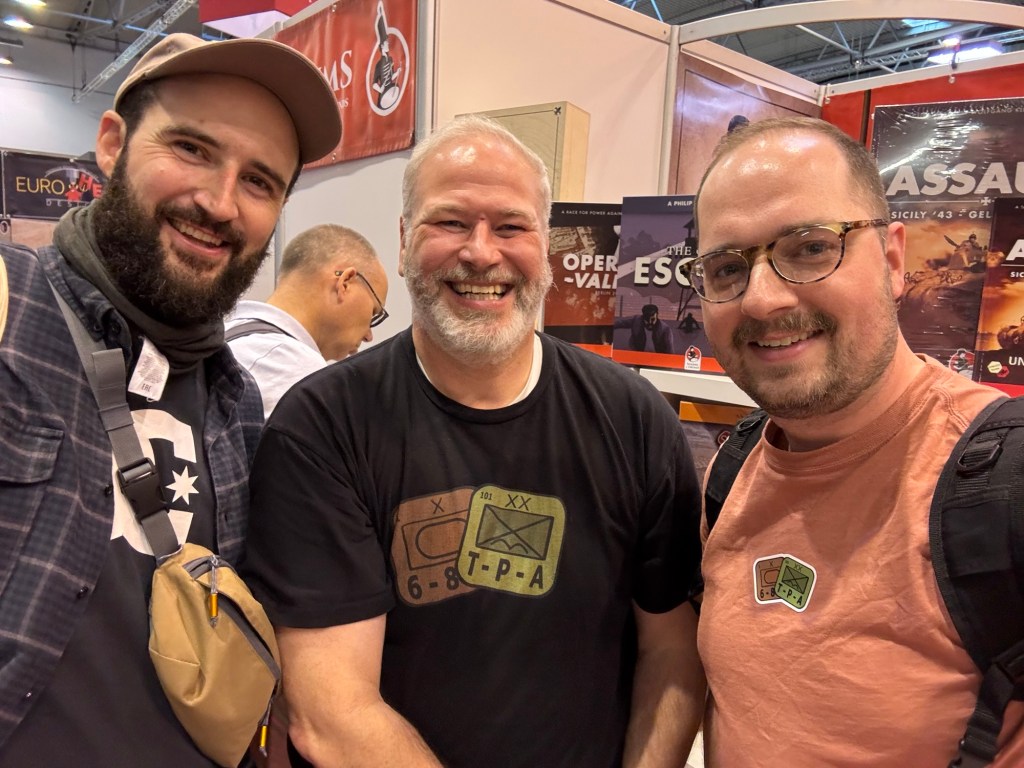
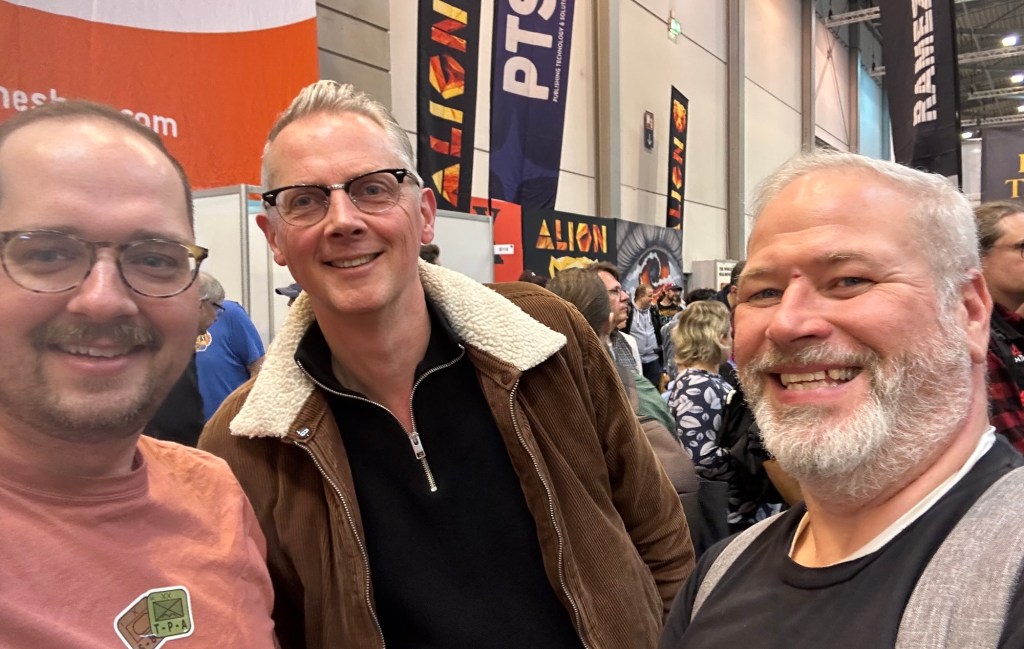
And we met up with designer Yves Rettel who designed Red Strike from VUCA Simulations.
Tomorrow is a packed day as we have plans to visit with Dragon Dawn Productions and discuss their new game Verdun and Black Mask Verlag to chat about their Gamefound campaign for Echo Team: Spearhead.
See you tomorrow evening!
-Grant
 The Players' Aid
really nice write up!
LikeLiked by 1 person