We are coming into the final quarter of the year and fall is already in the air. Cooler temperatures have been very nice and the foliage will start to change soon as College Football kicksoff and the NFL gets ready for their opening games. But there has been no slow down in the production of wargames and the presses are heating up with a lot of great looking titles.
For September, I was able to find 27 games (including 4 older games and 1 newer CPO from our sponsor Legion Wargames in their section below) to highlight in the Wargame Watch! Of that total, 3 games were offered on Crowdfunding.
This month we have a sponsor for the Wargame Watch feature in Legion Wargames! Legion is a fantastic boutique publisher of very fine quality games. Randy Lein is also a super nice guy and it is really amazing all of the great games that they put with really only Randy and his wife as employees. They have relationships with many fantastic designers including John Poniske, Kim Kanger, Steve Dixon, Bob Best, Vance von Borries and others and are always putting out great looking games on lesser known or gamed subjects.
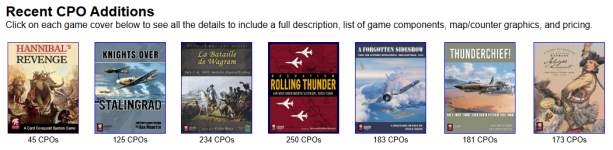
Legion has their own pre-order system called the CPO (Customer Pre-Order) and once a design reaches the required 250 pre-orders it gets moved into the production queue. Here is a link to the description of the CPO and a look at many of the games they have offered there: https://www.legionwargames.com/legion_pre-order.php
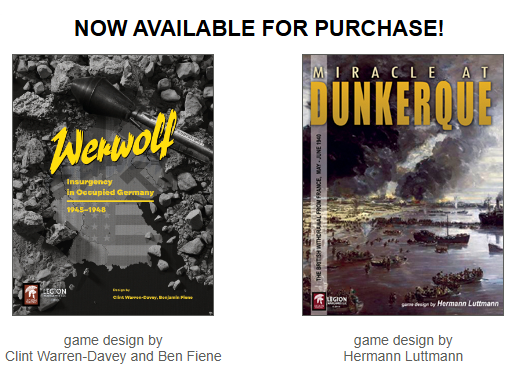
This month, they have the following 2 games that are available and shipping to those who pre-ordered them. These include Werwolf, which is a COIN Series adjacent game on the hypothetical resistance to the Allied occupation of Germany at the end of World War II, and Miracle at Dunkerque, which is a solitaire game about the British retreat during 1940. You can learn more about both of these games in the New Release section below.
One of their newest CPO offerings is Hannibal’s Revenge designed by Mark McLaughlin and which is a part of the Card Conquest System used in Hitler’s Reich from GMT Games. But in addition to that, they have several other really interesting looking games on that list and you should definitely check those out if you haven’t already.
Here are just a sampling of a few other links to our video reviews for several of their games that we have played and really had a great experience with:
Dien Bien Phu: The Final Gamble designed by Kim Kanger:
Captain’s Sea: The American Frigates, 1799-1815 designed by Mike Nagel:
Nemesis Burma 1944 designed by Kim Kanger:
Decisive Victory 1918 Volume One: Soissons designed by Tim Gale:
But now onto the games for September!
Pre-Order
1. Armed Conflict from Bockholm Games Currently on Gamefound
I am always on the lookout for a good game and if that game is new and from a new company, I really am keen to share about it. Such is the case this month with a new offering from a company that I know nothing about called Armed Conflict. The game looks interesting and is a multi-player hex and counter game for 2-6 players, which is really pretty rare!
From the game page, we read the following:
Armed Conflict is a wargame for 2–6 players, that let’s you command military units of different type and size in a conflict between two alliances, the Lions and the Eagles. The game is based on modern warfare, loosely set in a post-WW2 world, but not tied to any specific historical event or location. The complexity is balanced to suit both casual board gamers as well as seasoned wargamers, without sacrificing realism.
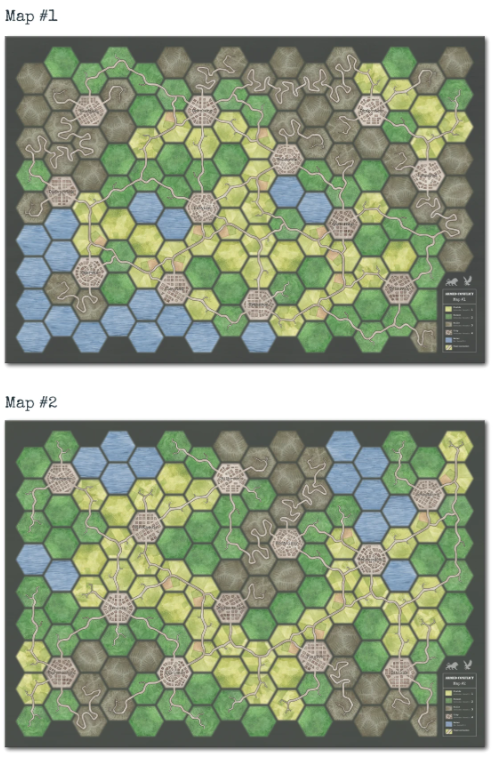
The game comes with a double sided board, with two different maps. Each of the maps include hexagonal areas of different terrain, such as fields, forest and hills, which all give different benefits in the battle, based on real world military science.
The complexity in the game is well balanced to suit both casual board gamers as well as seasoned wargamers. The key features of the different military units are highlighted to maintain realism, while keeping the game mechanics simple enough for a thrilling pace.
The game is designed by Sebastian Kihlman.
I think that one of the more interesting parts of the game is the concept of Alliance making and breaking. I think that multi-player games with these concepts can be truly engaging and interesting and change up the dynamics of the game each play as well as create lots of tension and negotiation.
Here you can get a good look at an unboxing video for the prototype:
As of September 1st, the Gamefound campaign has raised €8,394 ($9,817 in US Dollars) toward its €15,000 ($17,505 in US Dollars) funding goal with 144 backers. The campaign will conclude on Wednesday, September 17, 2025 at 2:00pm EDT.
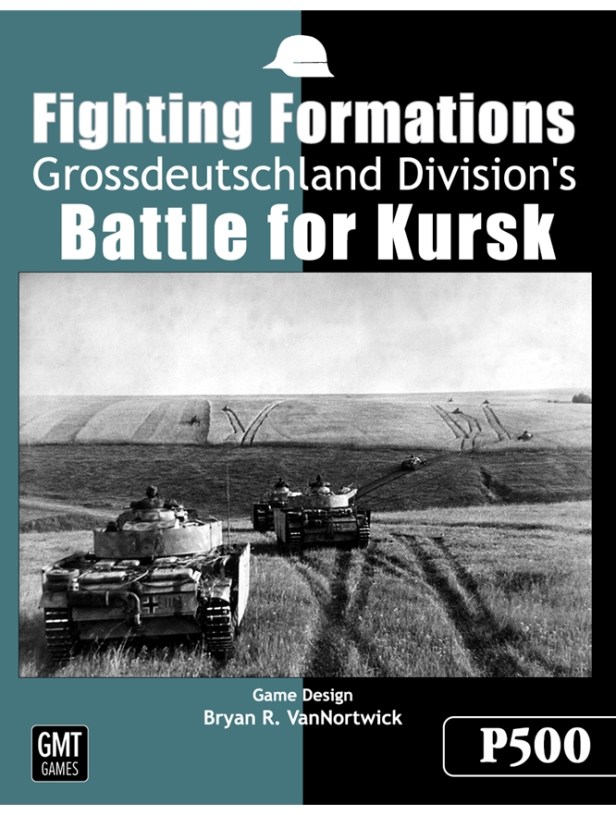
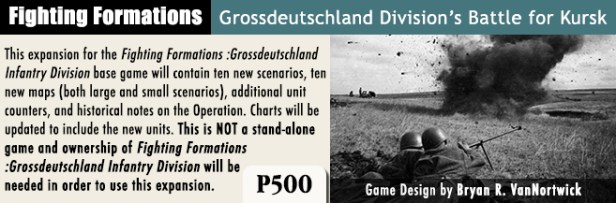
2. Fighting Formations: Gross Deutschland Division’s Battle for Kursk from GMT Games
A new game that has been hinted at by GMT Games over the past year or so is a new addition to the Fighting Formations family of tactical games designed by the late great Chad Jensen. This is a system that we have recently got a chance to play and very much enjoyed what it was doing. We love Combat Commander, and this Fighting FormationsSeries shares a lot of DNA with that system but offers some very interesting new takes on activation. The new expansion in the series designed by Bryan R. VanNortwick is called Fighting Formations: Gross Deutschland Division’s Battle for Kursk and takes a look at the fighting on the East Front near the Kursk salient.
From the game page, we read the following:
During the spring of 1943 on the Eastern front of WWII, the Soviets had created a large salient into the German lines that extended west of Kursk. To the south of Kursk and in this bulge were critical transportation hubs for the Soviet troops & supplies. The bulge was almost 200 kilometers wide & 120 kilometers deep. It was quite a bit narrower than that at its base. The German battle plan was to attack this bulge from both the north and the south, retake all the terrain in between, and join their forces in the middle. Thus they would both eliminate the salient completely and capture the surrounded Soviet armies there in a grand pincer movement.
This expansion for the Fighting Formations: Grossdeutschland base game will contain ten new scenarios, ten new maps (both large and small scenarios), additional unit counters, and historical notes on the Operation. Charts will be updated to include the new units.
This is NOT a stand-alone game and ownership of FF:GD will be needed in order to use this expansion.
We recently really liked what we saw in the system with our first few plays of Fighting Formations: US 29th Infantry Division and cannot wait to get back to the game. Here is a look at our initial thoughts in this RAW video:
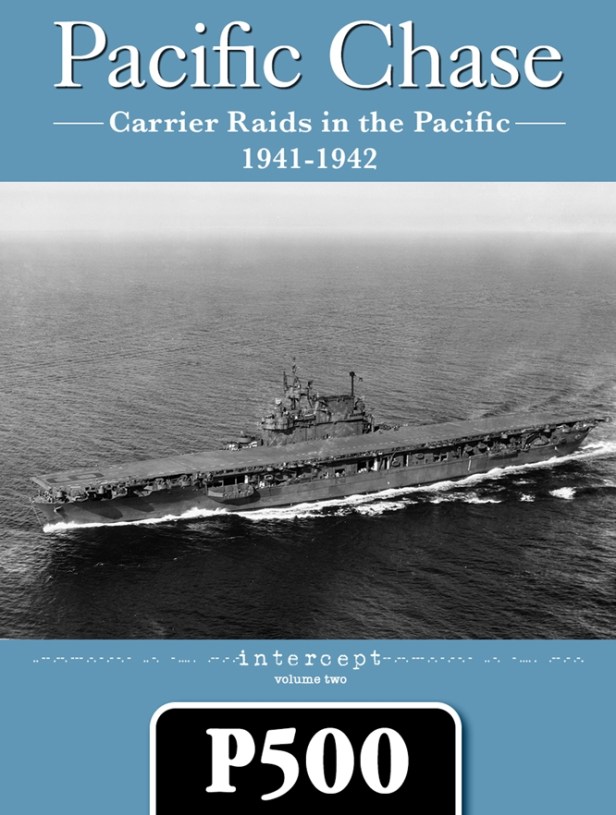
3. Pacific Chase: Carrier Raids in the Pacific, 1941-1942 from GMT Games
Not often is a wargame found to be on the cutting edge of forging new ground. There are many tried and true systems that are of high quality simulation value that designers use over and over again to great effect. But, once in a while, a designer seems to go out on a limb and try something new that ends up being highly innovative and changes the way we view games on that subject. Such is the case with the Intercept Series from Jeremy “Jerry” White and the first game Atlantic Chase: The Kriegsmarine Against the Home Fleet, 1939-1942. Atlantic Chase is an effort at simulating the naval campaigns fought in the North Atlantic during World War II between the surface fleets of the Royal Navy and the Kriegsmarine from 1939 to 1942. I really am looking forward to see how this system has changed and adapted to the rigors of the Pacific Theater of WWII and am very excited about Pacific Chase.
From the game page, we read the following:
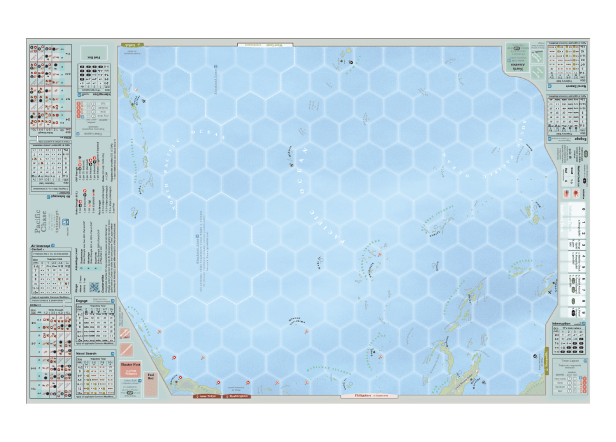
Pacific Chase presents the naval campaigns fought in the Eastern Pacific between the surface fleets of the United States and Imperial Japan from December 1941 to September the following year. It utilizes a system of trajectories to model the fog of war that bedeviled the commands during this period, inviting players to arrange trajectory lines across the shared game board, each line representing a task force’s path of travel. Without resorting to dummy blocks, hidden movement, or a double-blind system requiring a referee or app, players experience the uncertainty endemic to this period of air-naval warfare. This system also has the benefit of allowing the game to be played solitaire, and to be played quickly.
The game is operational in scope, but strategic concerns shape the battlefield. The game utilizes a system of changing Objective Panels that allow each player’s goals to gradually, and sometimes dramatically, morph over the course of a scenario and campaign. As Task Forces perform actions, the results may alter objectives or change opportunities to call on reinforcements. For the Japanese player, the construction of a robust defense perimeter of island bases governs their set of objectives, while the U.S. player will be keen to interrupt that strategy without risking a disastrous loss of naval assets. The Op Panel system allows players to make key choices operationally while the game maintains broad historical parameters strategically.
The game chronicles Imperial Japan’s outward push to Wake atoll, Midway, the Aleutians, and especially the Solomons and New Guinea. The Americans sally forth with what assets they still have, performing small and sometimes substantial raids to distract or hamper Japanese operations, or mount an outright stand. Scenarios encompass the raid on Pearl Harbor that opened hostilities and those that followed: operations to capture Wake, Rabaul, Port Moresby, Midway, and the Aleutians, as well as the summer initiative by the United States and its Allies to secure an airfield in Guadalcanal. There are options and decisions to make. The Japanese player might prefer to skip the raid on Pearl Harbor and focus their energy elsewhere, affording their adversary the opportunity to utilize their impressive fleet of battleships. Or perhaps they will choose to hunt American aircraft carriers, ignoring the battleships. What will the American player do in reply?
The game is organized into scenarios large and small, for two players and for solitaire as either the Imperial Japanese or the United States player. Scenarios cover one or two months of operations and put into play a vast stretch of territory from Hawai’i to the Japanese Home Islands, the Aleutians to the tip of Australia. Several mini-map scenarios focus on a single action, such as the invasion of Wake for example, the Battle of Savo Island, or Battle of the Coral Sea, and are played without Op Panels and on an 8.5” x 11” inset map (six inset maps are included in the game). At the other extreme, the campaign strings together operations and uses all twenty-four Op Panels, spanning the crucial first nine months of the Pacific War, and offers players the entire map. The game features battleships, aircraft carriers, cruisers, troop ships, and destroyer squadrons. Air bases are vital, as Imperial Japan strives to build a wall to keep the growing American juggernaut at a distance. Operations during the Campaign Game and stand-alone historical scenarios each take 1-2 hours to play.
I think that my favorite part about Atlantic Chase was the tutorial system used to introduce the game to new players. We walked through the first 8 of these tutorials and really found them to be invaluable in assisting us in learning the mechanics, as well as some bits of strategy. This game initially appears complex on the surface with its various tables and charts printed on the board itself, but after navigating the well done tutorials and then playing several of the 2-player scenarios, I now don’t see the game as complex but see it is as a new experience in a theater of World War II that I don’t have much experience with but that was a joy to learn and play. I cannot wait to get this one to the table and see how the system changes to take into account the vast expanse of the Pacific Ocean.
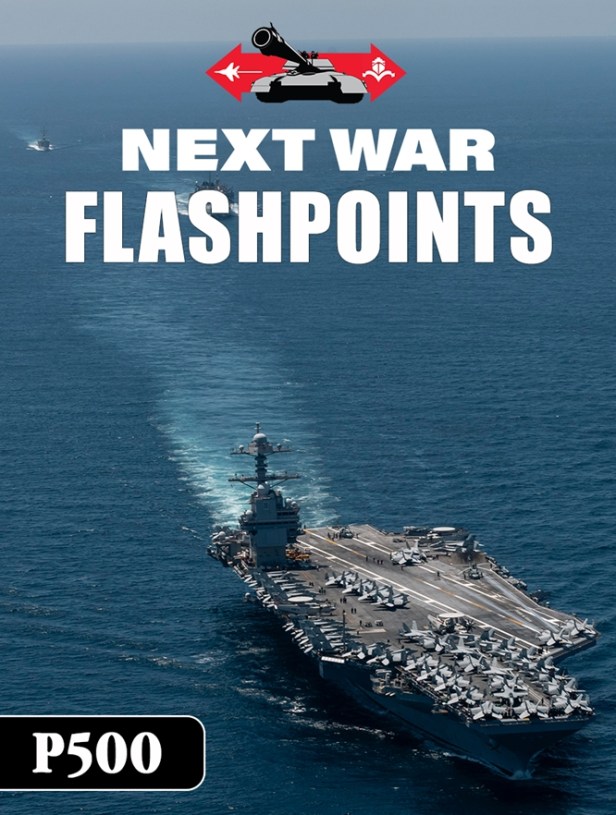
The Next War Series has always intrigued me but also intimidated me. But, last December, we had our first play of the system (with our good friend Bill Simoni coming over to teach us the game) in Next War: Poland and very much enjoyed the experience even though the scenario we chose to play wasn’t necessarily balanced at all and made it some what of a run away for the Russians. With the update, they have announced a new supplement that provides new shorter scenarios for each of the games in the series. This should make getting this monster to the table that much more possible for new players to the system. Next War: Flashpoints comes with a total of 6 scenarios that typically are 3-4 turn affairs.
From the game page, we read the following:
Next War: Flashpoints is a different kind of supplement intended to allow players to experience the full Advanced Game ruleset without having to commit to a full 16 turn scenario and the time it takes to get through all of them. Each of the six scenarios included (one for each published game) will only be three or four turns in length.
Within those turns, you’ll get to pull all the levers and push all the buttons inherent to the Advanced Game including SOF Recons and Raids, Air, HQ, Artillery, and Missile Strikes, Air Superiority and Interceptor/Escort air battles, Supply, and much more. Furthermore, each scenario will be able to be played on a bespoke scenario map contained within the supplement (although instructions will also exist to play them on the actual maps if you prefer).
IMPORTANT: Ownership of the originally published game is required to play that particular scenario (e.g. to play the Poland Flashpoint scenario requires Next War: Poland 2nd Edition.
SCENARIOS Here’s the list of scenarios (and the game for which it is designed):
“Shooting the Gap” – Next War: Poland 2nd Edition. This scenario is a version of the existing Standard Game Suwalki Gap scenario. It was also the scenario used (and tested) in a few tournaments.
“A Sticky Wicket” – Next War: India-Pakistan. This scenario is a version of the existing Standard Game Kashmir scenario.
“Tasked with Jask” – Next War: Iran. This scenario is a version of the existing Standard Game “Any Old Port in a Storm” scenario.
“Busan Bound” – Next War: Korea 2nd Edition. This is a new scenario recreating the Pusan Perimeter and a combined DPRK/PRC attempt to break it.
“We Shall Return” – Next War: Taiwan 2nd Edition. This is a new scenario envisioning a US invasion of Taiwan after the PRC has taken Taipei.
“Miss Hanoi” – Next War: Vietnam. This is a new scenario envisioning the final PRC drive to capture Hanoi.
* Note: scenario names subject to change.
So I hope that each of you are ready to jump into this great little system and be able to explore what it offers in these bite sized scenarios.
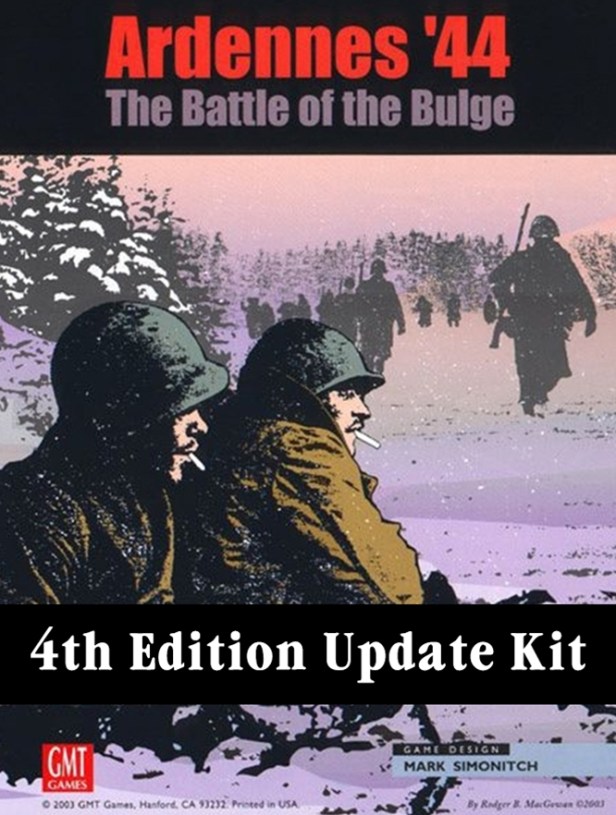
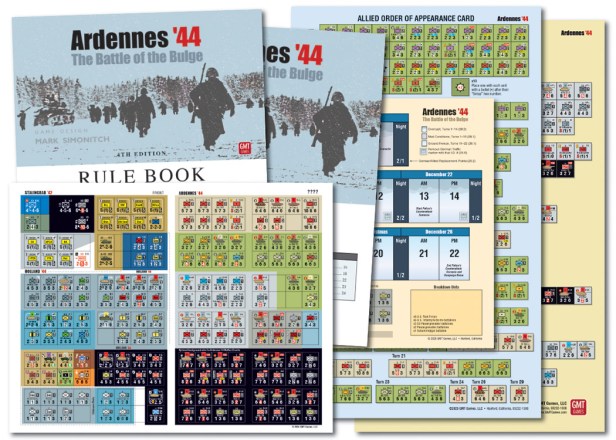
5. Ardennes ’44 4th Edition Update Kit from GMT Games
If you weren’t able to get the new 4th Edition printing of Ardennes ’44 from a few years ago, you are in luck as you can now get the Update Kit to bring your older copy up to date with all of the new changes to the game that have been introduced.
From the game page, we read the following:
This Update Kit is for players who would like to update their existing game of Ardennes ’44 to the 4th Edition. It is not a complete game and ownership of the map and counters of the 3rd Edition is necessary to play.
Note: This item is at the printer now, along with the 4th printing of the game and the mounted maps. We are printing 750 copies of the Update Kit, and they probably won’t last long. So get your order in quickly if you’d like a copy.
So what is new in this Update Kit? Well, let me share what GMT has said on the game page:
Besides a number of clarifications, the following changes were made to this edition:
CHANGES TO THE RULES 12.2: Units using Strategic Movement may not enter a vacant, but enemy controlled Town or City hex (23.3.4). 13.3: Artillery Reinforcements now arrive on their Ready side. 16.4.2: Players now place 3-step units in the Remnant Display instead of the Eliminated Box. 22.6: Army/Corps Identification can be ignored for Artillery Defensive Support. 23.3.4: Control of hexes defined. 25.2.3: How an eliminated 3-step unit returns to play was clarified. 27.3.1: The Movement restriction of British units changed to allow them to enter two of the Liège hexes. 27.3.2: The British 29th Armoured Brigade and the 4 AGRA are now released earlier. 27.3.5: Many of the British units must now move to the Antwerp Box on Turn 24. 28.2: Clear Weather was extended into Turns 23 and 24. 32.3: Fuel dump markers are now removed on Turn 7 instead of Turn 6. 35: Meuse River Bridges Optional rule added and the Operation Bodenplatte Optional rule deleted. 37: A new method of victory (Supply Destruction) was added.
CHANGES TO THE COUNTERS
The arrival turns of a number of units were changed.
SS units changed from dark gray to black.
The 1SS/2 regiment was broken down into battalions and the composition of Kampfgruppe Peiper changed.
The 18th Volksgrenadier Flak replaced by Rennhack.
The German 89th Infantry Division’s fusilier battalion was added.
German 15 PG recon and 521 PzJ units were deleted. The recon battalion was still refitting in Hungary and no primary sources could be found to support the presence of 521 PzJ.
3 FJ/8 was reduced to show it was missing a battalion.
Führer Begleit and Führer Grenadier panzergrenadier regiments were corrected to show their bicycle battalions.
US 3 Arm/643 TD was deleted (it had towed guns).
US 9th Infantry Division is now complete.
4th Armored Division combat strength changed.
US 83rd Infantry Division was added.
Deleted British 6/3 Parachute Brigade (arrived too late).
CHANGES TO THE MAPS, CHARTS, AND TABLES Order of Appearance Cards: These now include the starting units. Turn Record Track: A few typos fixed and more game information added. Map: There were no changes to the map except the naming of the towns in hexes 1433 (Tinlot) and 1435 (Villers-le-Temple). This has no effect on play so the map is not included in the update kit. Player Aid Card: A few minor typos were fixed. Since no significant information changed the player aid card is not included in the Update Kit but can be downloaded for free at GMTGames.com
Here is a link to our video review for Ardennes ’44:
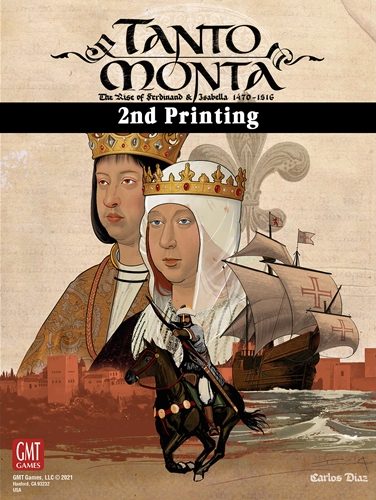
6. Tanto Monta: The Rise of Ferdinand & Isabella, 1470-1516 2nd Printing from GMT Games
We have played Here I Stand designed by Ed Beach several times, with our most recent play being a 6-player game at WBC in July 2025 and the game is just special! The card driven mechanic simply makes the game and it really is a bit of a sandbox as you can win in various and sundry ways. In the September 2020 Monthly Update from GMT Games it was announced that a prequel to Here I Stand was coming that takes place between 1470 and 1516. This prequel is not being designed by Ed Beach but is being handed over to some new blood in the designer world in Carlos Diaz Narvaez. We played the game a few years ago when it came out and put together the following first impressions style video.
Tanto Monta: The Rise of Ferdinand and Isabella covers the period from 1470 to 1516, the height of the Age of Discovery and the years leading immediately into the period covered by Here I Stand: Wars of the Reformation, 1517-1555. The game opens with Isabella’s disputed ascension to the throne of Castile, a position contested by a Portuguese-backed faction supporting Joanna La Beltraneja. Ferdinand’s possessions are similarly threatened by Aragon’s ongoing civil war against forces from the Principality of Catalonia, a faction often supported by France. How can these young Catholic Monarchs possibly deal with both these crises while still pursuing their agendas to unite their two kingdoms into a single Spanish realm, subjugate the Canary Islands, and finish the reconquest of Granada?
Opposing the Spanish player are three more emerging powers. Portugal has been immersed in the exploration of West Africa under the guidance of Prince Henry the Navigator. Can they push further around the coasts of Africa and establish direct trade with the spice merchants of India? Meanwhile the French, initially led by Louis XI the Prudent, are trying to emerge out of the Hundred Years’ War against England and consolidate the power of the crown over the nobles of that land. Once ready to push south, the French nation will compete against Spain for lands from Navarre in the west to the city states of Italy in the east. And the Muslim forces are still roadblocks to all these ambitions. The Nasrid Kingdom of Granada will fiercely defend against further incursions against their highland strongholds. The Kingdom of Fez in North Africa opposes the Portuguese attempts to deny their monopoly over the spice trade. And additional Muslim forces from the Ottoman Empire and the Berber lands along the North African coast are sure to assist in the years to come.
And thus the stage is set for these four powers to compete on the battlefield, at the diplomatic tables, and across the oceans of the world. Can one of these powers unite their homeland and set the stage for a truly global empire?
And this game is definitely a bit different from Here I Stand in a good way as they introduced some new mechanics.
Tanto Monta introduces several innovations to the game series. The land combat system is enriched with the addition of explicit siege artillery units and cavalry units for all major powers, which can try to turn the tide in battle by making a dedicated cavalry charge. The spring phase is also extended to include play of Headline Events, chances to use a powerful hand to score bonus VP and sneak in an extra event card play before the turn is fully underway. Finally, the enhanced Exploration Map systems depict the arrival of Vasco Da Gama in India and Christopher Columbus in America and include explicit rolls to try and navigate into the Terra Incognita.
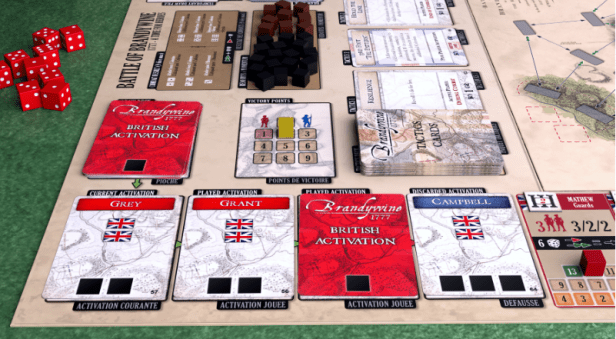
7. Brandywine 1777 – A Time for Heroes from Les 3 Zouaves Coming to Gamefound September 2nd
As you know, I love a good game about the American Revolution and this month I noticed a new game coming to Gamefound on the Battle of Brandywine Creek on September 11, 1777. The game is from a new company that I don’t know much about called Les 3 Zouaves but looks really great. The Gamefound campaign is launching September 2nd.
From the game page, we read the following:
The smoke of musket fire hangs in the air. The Brandywine River glistens behind your lines. Across the field, redcoats are on the move — and one bold decision could tip the balance of the entire Revolution.
You hold command.
Will you outwit your enemy? Will you strike with daring precision, or hold the line against impossible odds?
Play as General Howe or General Washington in a tense, card-driven clash of minds.
Every decision matters. Every move could rewrite history.
And only one can emerge victorious.
Brandywine 1777 is more than a battle: It’s your chance to prove you are a true tactician… a hero of the Revolutionary Wars.
In Brandywine 1777, you assume the role of George Washington, facing a bold and elusive enemy. Activation Cards are your principal tool —used to commit your forces at just the right moment… if you can anticipate the British plan.
But it’s never that simple. Each card lists several potential formations—some real, some misleading—and you’ll never have enough activations to do everything you need to do. Choose wisely, bluff cleverly, and stay one step ahead.
You’ll be balancing:
Major activations – few in number, but vital,
Minor activations – flexible but limited,
And Bonus activations, which cost precious cohesion but can turn the tide when used effectively.
The campaign is set to launch on Tuesday, September 2nd.
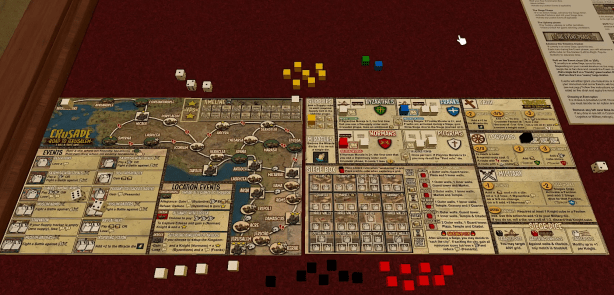
8. Crusade: Road to Jerusalem from Solo Wargame
Martin Melbardis began his design career with Campaign: Fall Blau from Catastrophe Games. This was a very interesting little dice chucking solitaire game on Operation Barbarossa during WWII. Since that time, he has started his own independent wargame company called Solo Wargame and has designed a half a dozen very interesting roll and write wargames on a plethora of subjects including World War I (Trench Tactics), World War II (Operation Barbarossa, Lone Wolf: U-Boat Command and War in the Pacific), Napoleonic Wars (Siegeworks) and Ancient Rome (Rome Must Fall). His newest game called Crusade: Road to Jerusalem is focused on the 1st Crusades and looks really interesting.
From the game page, we read the following:
Crusade: Road to Jerusalem is a solo print-and-play wargame that puts you in command of the First Crusade. Using a streamlined command system and branching campaign map, you’ll marshal different factions including the Byzantines, Franks, Normans and Pilgrims, navigate politics and supply shortages, and push across hostile territory toward the Holy City. Each turn demands difficult decisions as you balance Logistics, Military strength, and Faith to keep the Crusade alive.
At the heart of the game lies a tense positional siege system. Fortified Cities are represented by 4×4 grids of walls, towers, markets, quarters, and citadels, and each siege requires you to capture specific objectives within a limited number of turns. You’ll activate different factions, each with their own siege equipment preferences, roll siege dice, and allocate results to grid spaces, softening defenses, bribing guards and breaching key locations. But every roll risks morale loss, or wasted opportunities and running out of time means the siege collapses which will set back the progress of the Crusade.
Every playthrough offers a unique campaign. Random events introduce battles, ambushes, rivalries, and miracle opportunities. Faction morale rises and falls based on your actions. Siege objectives change from city to city. With minimal setup and a small component footprint, Crusade: Road to Jerusalem delivers a rich, historically thematic wargame experience in under an hour, perfect for solo players seeking meaningful decisions, narrative tension, and high re-playability.
As of September 1st, the Kickstarter campaign has raised $1,905 toward its $72 funding goal with 257 backers. The campaign will conclude on Wednesday, September 10, 2025 at 11:59pm EDT.
New Release
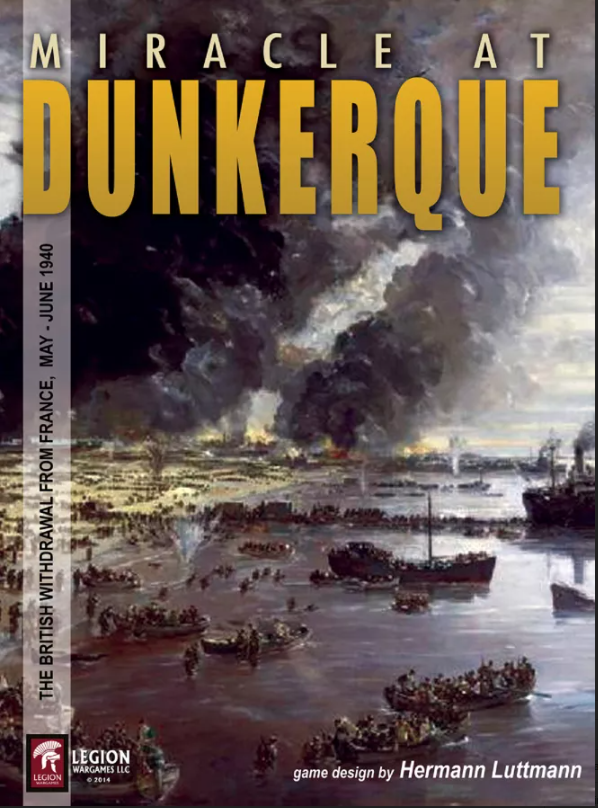
1. Miracle at Dunkerque: The British Withdrawal from France, May-June 1940 from Legion Wargames
Hermann Luttmann is a very prolific designer and he has been doing what he does for a while now. Many of his games are very good historical games but they also have a very playable element to them that attempts to replicate the various elements associated with combat including fog-of-war, fortunes-of-war and friction-of-war and does a great job of making these elements matter. Plus, Hermann is a good guy. I have met him at several conventions including Origins and Buckeye Game Fest a few times, played a few games with him and have had multiple interactions through the blog. Herm is really a great guy and a great designer! His new game is called Miracle at Dunkerque: The British Withdrawal from France, May-June 1940, which is a solitaire wargame that simulates the British retreat from France in 1940. This one looks really good and I am very much eager to play it.
From the game page, we read the following:
In May of 1940 the German army invaded Holland, Belgium and France. In a matter of a few weeks they rolled up the combined armies of Belgium, France and England. The BEF (British Expeditionary Force) and other nearby Allied forces were forced to retreat toward the French coast, resulting in about 400,000 men being surrounded near the town of Dunkirk. Rescue operations commenced to evacuate these forces to England and Winston Churchill, the new Prime Minister of Great Britain, was hopeful that perhaps 30,000 men could be rescued from the trap. Admiral Sir Bertram Ramsay was put in charge of “Operation Dynamo”, the goal of which was to send ships of all sizes and shapes to evacuate these beleaguered soldiers from the beaches of France and Belgium. Through skill, efficient planning and poor German coordination (along with some fortuitous luck), the operation was able to rescue an incredible 330,000 men from the pocket. A true military miracle had been performed and by doing so, the future of the Second World War was forever altered.
Miracle at Dunkerqueis a solitaire game designed to recreate the tense situation within the Dunkirk perimeter during those last eight days in May and June 1940. The game design aims to capture the spirit of the difficult decision-making challenges faced by Allied commanders as they attempted to extricate the remnants of Britain’s last field army from certain capture or death. Historically-based Event Cards drive the action and create varying circumstances each turn. The besieging German forces (army, air and naval units) are controlled by these cards, which are specifically designed to place constant pressure on the player. Allied Player Actions must be allocated each turn for the defense of the perimeter, the creation of evacuee units and the loading of these evacuees from the beaches and moles to available ships and then sailed onward to the safety of England. You obviously cannot save all the Allied units, so you must choose who stays to fight and who shall attempt to escape in order to continue the struggle against the Nazis another day.
Miracle at Dunkerque is an upgrade of a previously published game called A Spoiled Victory. This video review by Marco Arnaudo will give you an excellent idea of how the original game is played.
Miracle at Dunkerque is a significant enhancement and expansion of that original design concept. The map has been expanded, the player now controls actual naval units that travel back and forth across the English Channel (hopefully loaded with evacuees), more combat units are provided to both sides and the air campaign is now represented.
The game system has been honed and polished so that despite the extra detail and chrome, this larger, deluxe edition of the game will play just as quickly as the original did.
If you are interested in Miracle at Dunkerque: The British Withdrawal from France, May-June 1940, you can order a copy for $70.00 from the Legion Wargames website at the following link: https://www.legionwargames.com/legion_MAD.html
2. Werwolf: Insurgency in Occupied Germany, 1945-1948 from Legion Wargames
I don’t need to state this as I know you know that we love the COIN Series! A system that deals with multi-faction treatments of insurgencies and revolutions from across the centuries in a hybrid card assisted wargame that looks great and has a lot of player interaction and teaming with similiar factions. There is a lot to like! Over the past few years, we have seen a few of these COIN Series inspired games such as The Troubles from Compass Games dealing with the conflict in Northern Ireland. Now comes along an alternate history take on the occupation of Germany at the conclusion of World War II in Germany from 1945-1948 called Werwolf.
From the game page, we read the following:
It is 1945 and Germany has been invaded and occupied by the exhausted forces of the Soviet Union and Western Allies. Unlike in our timeline, the fighting continues as German resistance fighters engage in a prolonged guerrilla war. With the Manhattan Project still incomplete, Japan fighting on and the Allied invasion of Europe losing millions of men, the Allies are war-weary and there is pressure to bring the troops home. While the Wehrmacht was defeated, the Nazi leadership has spent 1943 onwards building up a huge secret guerrilla force – Werwolf – to turn the occupation of Germany into a costly quagmire. Other groups calling themselves the Edelweiss Movement are opposed to the Nazis but also to the invaders and will fight to restore an independent and patriotic Germany. The Fuhrer himself has gone missing, and many Nazi officials are in hiding, perhaps awaiting their chance to return to power.
Four factions are now competing for control and the loyalty of the German population: the Allied Occupation Forces (Western Allied troops and German police, referred to as Allies in the rules) the Soviet Union (the Red Army and NKVD, referred to as Soviets in the rules), the Edelweiss Movement (patriotic but anti-Nazi German resistance, referred to as Edelweiss in the rules) and the Werwolf organization (former SS and other Nazi fanatics trained in guerrilla warfare, referred to as Werwolf in the rules). The struggle will be not only for military control and the hearts and minds of the German people but also over the remnants of the Nazi war machine and research programs. The Soviets and Allies may reluctantly co-operate to crush German guerrillas but will compete to secure top German scientists and prototypes for their own arms race. As the Allies try to de-Nazify the populace and entice them with American pop culture, the Soviets will use everything from indoctrination to mass deportation to keep Germany under control. Loyalties will be split between democracy, communism and resurgent fascism or nationalism. This will not be an easy occupation…
We have also recently been provided with an advance copy from Legion Wargames and we posted the following unboxing video:
If you are interested in Werwolf: Insurgency in Occupied Germany, 1945-1948, you can order a copy for $106.00 from the Legion Wargames website at the following link: https://www.legionwargames.com/legion_WER.html
3. War of 1812: British Solitaire: A Journal Game from Worthington Publishing
Worthington has really done a great job in changing up their game model to reach out to more and more gamers and to make their games more accessible and more affordable. They have now expanded the Solitaire Book Wargame to include a modified product that includes a journal that can be used for any number of purposes such as recording results of your games, observations about strategy and tactics and the like. This month, they released 3 new Solitaire Journal Games and the first of which is focused on the War of 1812 and allows the player to play as the British.
From the game page, we read the following:
Discover the War of 1812 like never before—with a journal that doubles as a battlefield. The War of 1812: British Solitaire: A Journal Game is a one-of-a-kind interactive notebook where the cover is your game board and the first two pages contain the complete rules. Engage in strategic campaign play as the British defending Canada from American incursions—right on your desk, coffee table, or campfire stump.
With just a six-sided die and 10 household markers (coins, bottle caps, buttons—anything goes), you’ll bring to life the land and lake battles that once shaped the fate of North America. Each turn is a chance to outmaneuver the American BOT in a game of resourceful decisions, clever tactics, and historical immersion.
Once you’ve mastered the map, the remaining 100+ lined pages are yours to fill with field notes, reflections, sketches, strategies, or anything your imagination commands.
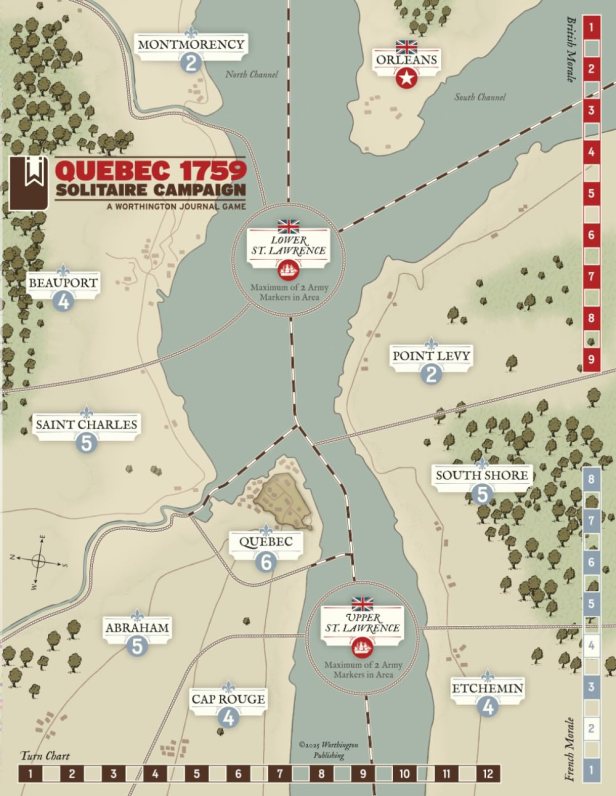
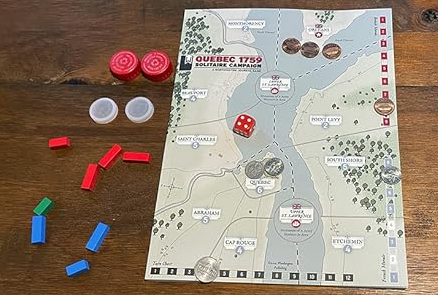
4. Quebec 1759 Solitaire Campaign: A Journal Game from Worthington Publishing
The 2nd Solitaire Journal Game from Worthington is Quebec 1759 where the player takes on the role of the British during the French & Indian War.
From the game page, we read the following:
Command British forces in one of the most decisive campaigns of the French and Indian War—the Siege of Quebec. Quebec 1759 Solitaire Campaign is a solitaire Journal Game where the cover is your battlefield and 100 journal pages are yours for writing. Play against a dynamic French BOT that deploys forces, launches events, and counters your every move.
Use clever maneuvering, overcome militia defenses, and rally your troops under General Wolfe’s leadership. Can you seize Quebec before British morale crumbles or the campaign runs out of time?
Compact. Historical. Engaging. Quebec 1759 Campaign is perfect for military history enthusiasts who want deep strategy in a portable format along with a journal.
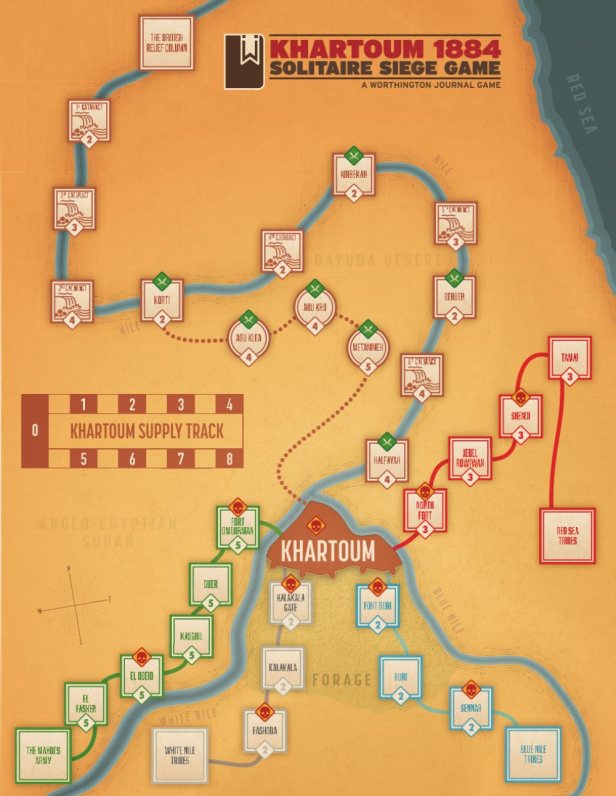
5. Khartoum 1884: Solitaire Siege Game: A Journal Game from Worthington Publishing
The 3rd and final game for this game from Worthington is Khartoum 1884: Solitaire Siege Game where the player takes on the role of the British during the Siege of Khartoum by Mahdist forces.
From the game page, we read the following:
It is 1884. General Charles Gordon and the garrison of Khartoum are besieged by the Mahdi’s forces. You command the British defenders inside the city while anxiously awaiting the relief column under General Wolseley. Time, hunger, and enemy assaults press in from all sides. Can you hold out until relief arrives?
Khartoum 1884 is a solo game you play as the British against the Mahdist automated BOT forces. The game board (the cover of the journal) shows four Mahdist tracks that advance towards Khartoum. Spaces on the tracks have values that must be overcome to push Mahdist markers back from reaching Khartoum. There is also a British Relief Column track along the Nile River. It has cataracts (falls and rough areas) that must be crossed and defended villages to overcome for the British Relief Column to advance towards Khartoum. At Korti the track splits and provides a choice on which path to take to Khartoum.
Khartoum 1884 is a solitaire Journal Game that puts you in command during the Siege of Khartoum in 1884–1885. The cover of your journal is your game board, and inside are the rules, historical notes, and 100 pages for your own writing. Each turn, you’ll defend Khartoum against Mahdist forces closing in along four attack routes, manage scarce supplies, and push the British Relief Column toward the city before it’s too late.
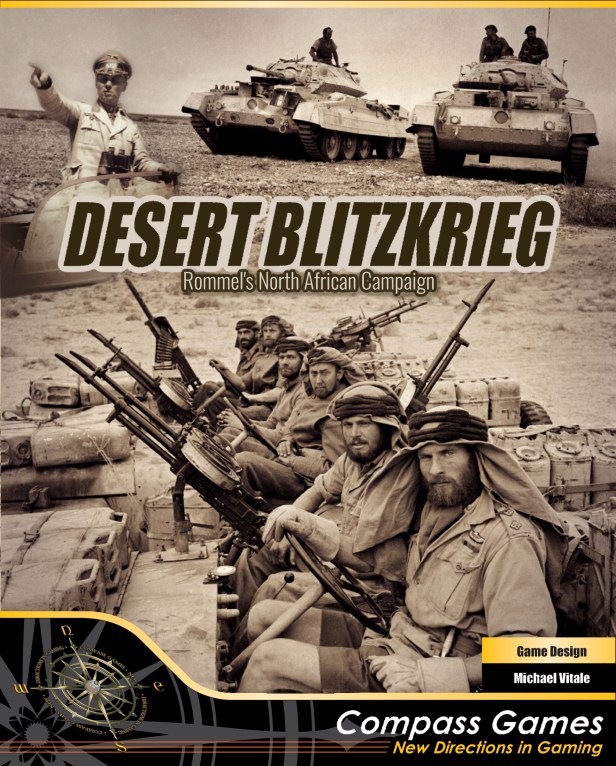
6. Desert Blitzkrieg: Rommel’s North African Campaign from Compass Games
It seems that North Africa during World War II has been a hot topic over the past year and now there is another game to add to that growing list called Desert Blitzkrieg: Rommel’s North African Campaign. The designer is a newcomer named Michael Vitale and it appears that has has some very interesting takes on this well covered subject.
From the game page, we read the following:
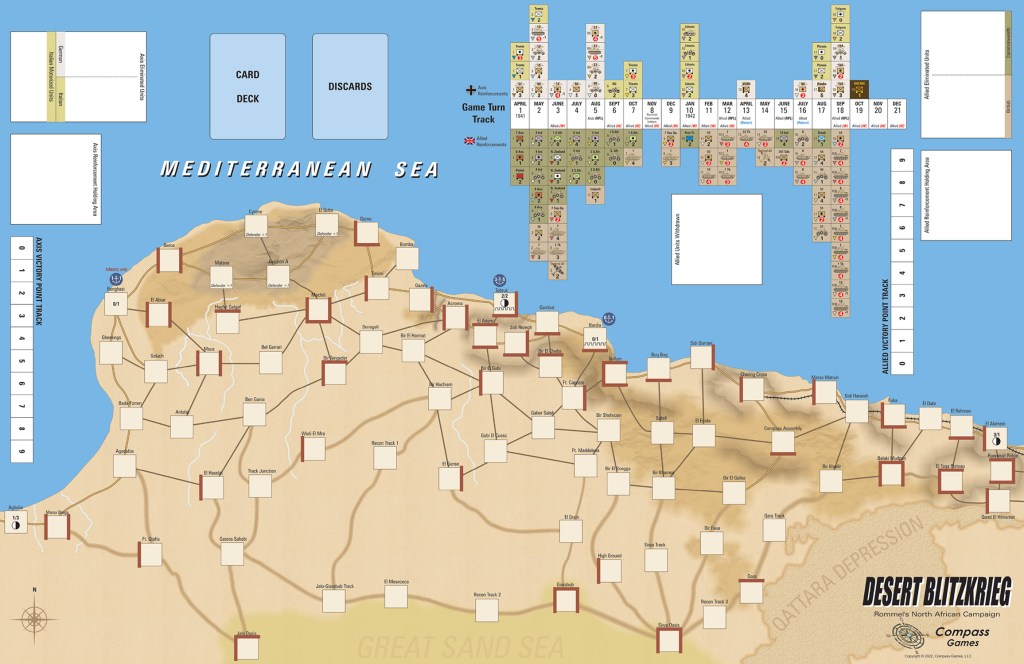
Desert Blitzkrieg is a two-player game covering the North African desert from April 1941 to December 1942. Units are regimental level and Divisional Integrity is key to maximizing the density of your forces on the map covering eastern Libya and western Egypt from Aghelia to El Alamein. The game is of low-moderate complexity and features a ‘Point-to-Point’ system while introducing a number of unique features.
“Losing Tobruk was one of the heaviest blows I can recall during the war.” — Winston Churchill
Movement is along three different road types. Limited Port movement is possible. Supply Unit availability is critical for Battles as supply units must be expended to conduct a Battle.
Simple but involving combat. Battles use a ‘Battle Board’ with a ‘Front Line’ and ‘Second Line’ where positional tactics to maximize Combat Values are key. Battles can be a ‘game within a game’ and go for many rounds or be over quickly depending upon the player’s decisions. Unit types reflect different capabilities on the ‘Battle Board’ and the main map.
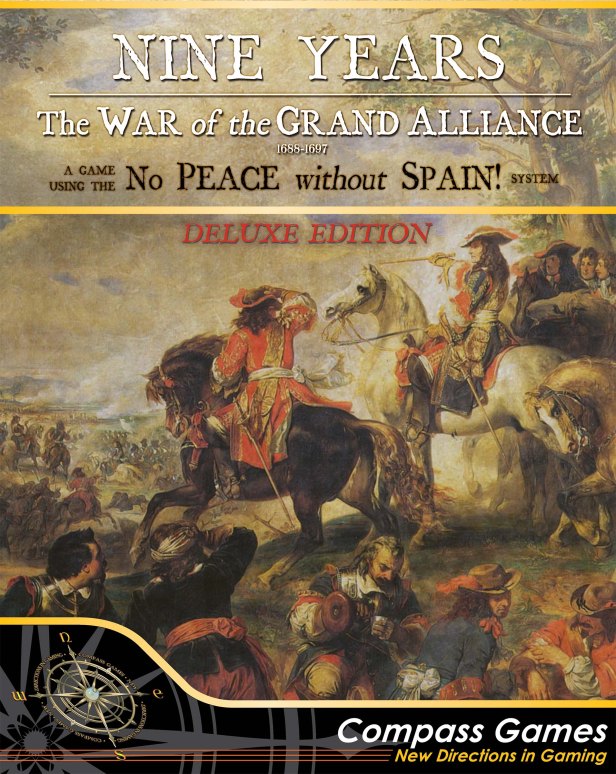
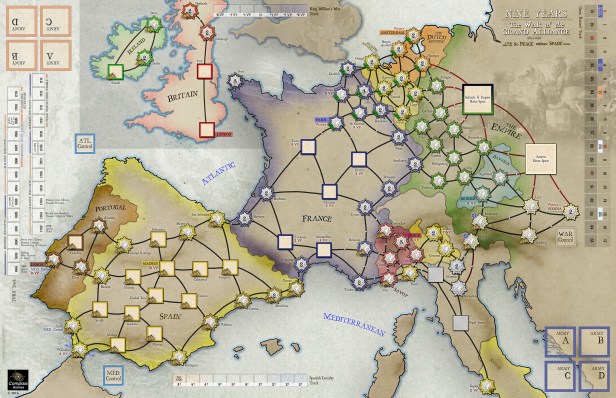
7. Nine Years: War of the Grand Alliance 1688-1697Deluxe Edition from Compass Games
I have heard lots of good things about this No Peace Without Spain! Series but have not had a chance to play the game. This month, Compass Games is shipping a new Deluxe Edition of Nine Years: War of the Grand Alliance 1688-1697 and it looks to be a really great production.
From the game page, we read the following:
This stand alone game uses the No Peace Without Spain! System, but also contains a campaign game combining the components and scenario rules of both the Nine Years: War of the Grand Alliance 1688-1697 and No Peace Without Spain! games into one epic scenario running from 1688 to 1713 for the epic scenario ownership off both games is needed. Now players can recreate one of the decisive moments in European history, as France begins its long slide to revolution, Austria enjoys its last moment of continental dominance, and Britain asserts itself as the preeminent economic power of Europe.
Will Louis XIV assert French hegemony? Will Austria prevail in central Europe? Will England continue as a Bourbon ally or become “Great Britain.?” These and other possibilities are now open to players.
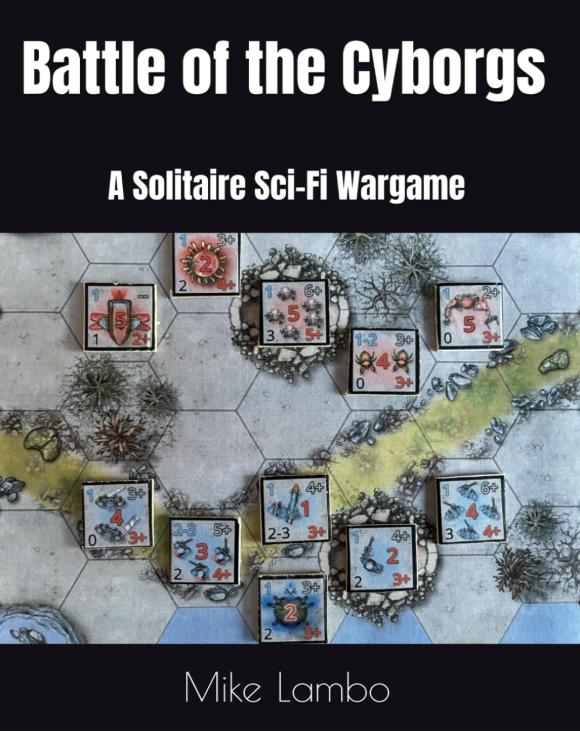
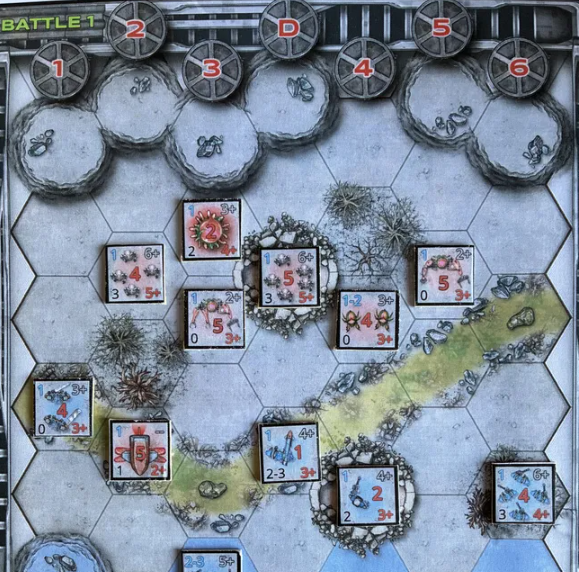
8. Battle of the Cyborgs: A Solitaire Sci-Fi Wargame from Mike Lambo
Over the past several years, the solitaire tactical book wargame has gained a lot of traction in our hobby. A solitaire wargame that is fairly affordable at $20-$30 and can be purchased from on-line retailers like Amazon. What is not to like? And the name of Mike Lambo has been tied to a lot these games as he has designed 20+ of these titles and has built quite the rabid and loyal fanbase. His newest offering is not your typical wargame but a sci-fi jaunt into the future with cyborgs.
From the game page, we read the following:
By the end of the twenty first century the Earth was heading for destruction. Over worked, over populated and dying, it could no longer provide for the masses who relied upon its resources. Gradually, people needed machines and AI to survive. It became commonplace to have mechanical implants, highly sophisticated computerised machinery to aid breathing, mobility, strength and life in general. Hundreds of private providers began to offer these things, often when they were not needed, but always for a price. All other vegetation and animal species were dying, and the world was becoming uninhabitable. The early years of the twenty second century saw various factions build rockets funded by billionaires. The human cyborgs, as they now were, boarded these rockets and fled, searching for a new life anywhere in the depths of space.One such faction landed on an unknown planet several light years from Earth. However, they were not welcome. It was inhabited by a similar cyborg population, but one that seemingly had plants and animals at its core. They feared the human cyborgs, having studied and observed from afar what the human cyborgs had done to their own planet. And the human cyborgs did not want to share their new planet.
War was inevitable, and instant.
In the game, the Player will be commanding various units from the army of Human Cyborgs as they battle a seemingly endless stream of enemy cyborgs, known only as the Biota Cyborgs. This game is a solitaire hex and counter sci-fi wargame. You play the game, and the enemy is controlled by the game(or ‘AI’). You will need a good handful of standard six-sided dice to play (ten is ideal, although fewer will do).
9. COIN Series Volume XIII China’s War: 1937-1941 from GMT Games
This one has been in the cooker for a while now. Since being announced in the August 2019 Monthly Update from GMT Games, this new addition to the COIN Series family has been stuck in neutral a bit as it is just being worked over and looked at. In Volume XIII China’s War: 1937-1941. I was excited about it as always, one being that I love the COIN Series and two that I have always found Brian’s designs to be very interesting and well done. This one is now finally ready to ship according to the August Monthly Update email from GMT Games and I couldn’t be more excited.
From the game page, we read the following:
July 8, 1937: a nighttime skirmish at the Marco Polo Bridge near Beijing erupts into an invasion and occupation of China by the Imperial Japanese Army that would not end until 1945. Western sources call it the “Second Sino-Japanese War”; in China, it is the “War of Resistance”; and in Japan, it is blandly referred to as “the China Incident.”
China’s War: 1937-1941 examines the first five years of the conflict, when China stood alone against the Japanese Empire. Each player takes the role of a Faction seeking to attack or defend the Republic of China: the aggressive Japanese, the harried Government (represented by the Guomindang party), the rebellious Chinese Communist Party, or the unruly, fractious Warlords who are obedient when convenient but have their eye on gaining state power. Using military, political, and economic actions and exploiting various events, players build and maneuver forces to influence or control the population, extract resources, or otherwise achieve their Faction’s aims. A deck of cards regulates turn order, events, victory checks, and other processes. The rules can run non-player Factions, enabling solitaire, 2-player, or multi-player games.
There’s so much that I’m curious about with this one. So many questions that I have about the factions, their motivations and their play styles. We typically think of World War II as a conventional war with tanks and planes and bombs but there was plenty of irregular fighting in the Pacific Theater of Operations and in China and CBI Theater. I am very much looking forward to this becoming a reality on my table.
If you are interested in China’s War: 1937-1941, you can order a copy for $55.00 (but get your order in quickly as that P500 price is sure to disappear quickly and then the regular price is $88.00) from the GMT Games website at the following link: https://www.gmtgames.com/p-830-chinas-war-1937-1941.aspx
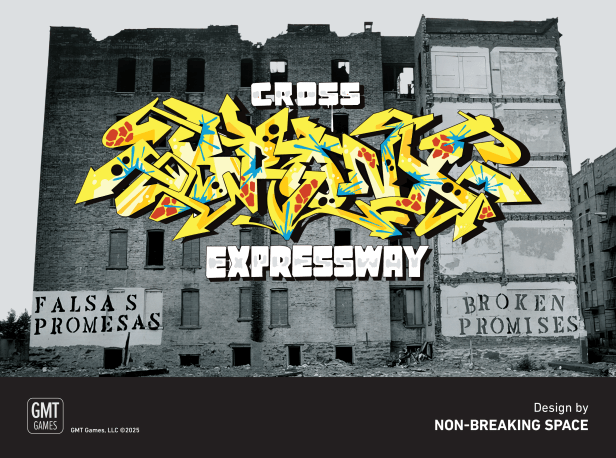
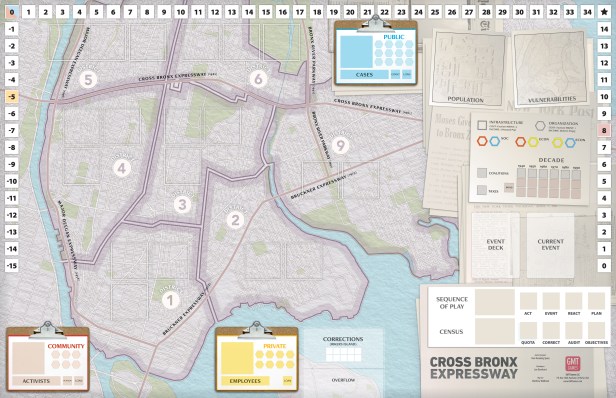
10. Cross Bronx Expressway from GMT Games
The Irregular Conflicts Series from GMT Games is just a fantastic series that highlights non-traditional “war” in a framework similar to the COIN Series but that is considered COIN adjacent. In the September 2021 Monthly Update from GMT Games, the next offering in the Irregular ConflictsSeries was announced which would really solidify the focus of the series being on conflict and not necessarily war. Cross Bronx Expressway is a game that looks at social issues in New York City, and more specifically the South Bronx, and how those issues and stances formed the world view of the time and effected those that the policies were intended to benefit. I am really interested in this game as I can see so many additional topics that could be given this same treatment to better help us understand our world.
From the game page, we read the following:
Cross Bronx Expressway is the third game in the Irregular Conflicts Series. It simulates the socio-economic processes of urban development, and the human costs that result, as a competitive city-builder with collective loss conditions. Players control one of three asymmetric factions working in the South Bronx between 1940 and 2000, pursuing their own goals while cooperating to keep the borough viable. Through a card driven sequence of play, they will work to solve the economic challenges facing the area by building infrastructure and organizations, forming coalitions, mitigating the multitude of issues facing the vulnerable population, and managing resources to stay out of debt. Cross Bronx Expressway offers an engaging way to learn about the recent history of American cities, as exemplified by Jane Jacobs’ pivotal work The Death and Life of Great American Cities, simulated through the case study of the South Bronx. Players will experience the conflicting incentives and complex factors shaping urban life and together determine the fate of the Bronx.
In my opinion, focusing on conflict that is not necessarily direct fighting is a very interesting and wide ranging way to deal with so many issues and troubles in our world today and also to bring these conflicts to the gaming table to foster better understanding into the motivations behind all sides involved and to experience some of the pains and difficulties that lead to these social issues.
During his 1980 Presidential campaign, California Governor Ronald Reagan took a tour of the South Bronx. As he walked the same streets that President Jimmy Carter had walked three years prior, what Reagan witnessed was a scene so devastating it caused him to remark that he had not “seen anything that looked like this since London after the blitz.” Cross Bronx Expressway is a game about the social and economic processes that created this scene in the South Bronx and the impacts they had on the local population during the second half of the 20th Century.
These six decades, from 1940 to 2000, witnessed many major events that shook the nation and the world, including the Second World War, the Korean and Vietnam Wars, an international recession in the 1970s, and economic recovery and increased globalization during the 1980s and 1990s. Less well known, but no less impactful for the people involved, were events in the Bronx during the same period, which underwent rapid growth and demographic change in the 1940s and 1970s, suffered through the debt crises that affected the whole of New York in the 1960s and 1970s, and struggled through the 1980s towards a recovery at the end of the 1990s. This is a game about navigating all these events as a local stakeholder in the South Bronx.
Cross Bronx Expressway models this rich history as a competitive economic city builder with collective loss conditions. Three playable factions—Public, Private, and Community—attempt to save the city from the brink of bankruptcy and protect the Bronx’s vulnerable population throughout this tumultuous period, while also working to achieve their own conflicting objectives. The game progresses using a shared event deck, divided into decades. Each decade features a semi-random series of historical cards whose effects will always occur but can be manipulated by the players. The factions perform actions around these events in order to mitigate their effects, while hoping to tip the balance in their favor. Infrastructure will be built and sometimes demolished, coalitions formed and abandoned, populations housed and displaced, and the vulnerable encouraged and discarded, while each faction struggles to stay out of debt and achieve their own objectives. At the end of each decade, census numbers are tallied to determine which factions have achieved their objectives and at what cost. If they manage to keep the city afloat, each decade provides the players with new opportunities to transform the South Bronx according to their own vision, but if too many vulnerable people are lost or if the city goes bankrupt, everyone will lose. Can you cooperate better than the historical actors did and pull the South Bronx back from the brink of disaster?
Just a truly fascinating and mind bending look at things from a different perspective and opening up the wargaming world to this type of political/ideological warfare. I am really interested in this one and cannot wait to get it to the table.
Here also is a link to a promotional video on the game that really sparked my interest:
If you are interested in Cross Bronx Expressway, you can order a copy for $55.00 (but get your order in quickly as that P500 price is sure to disappear quickly and then the regular price is $86.00) from the GMT Games website at the following link: https://www.gmtgames.com/p-953-cross-bronx-expressway.aspx
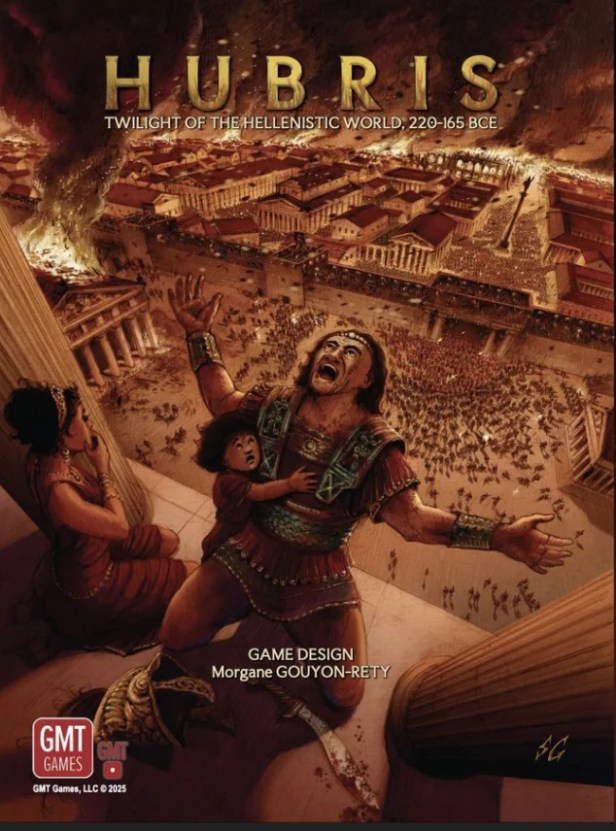
11. Hubris: Twilight of the Hellenistic World, 220-165 BCE from GMT Games
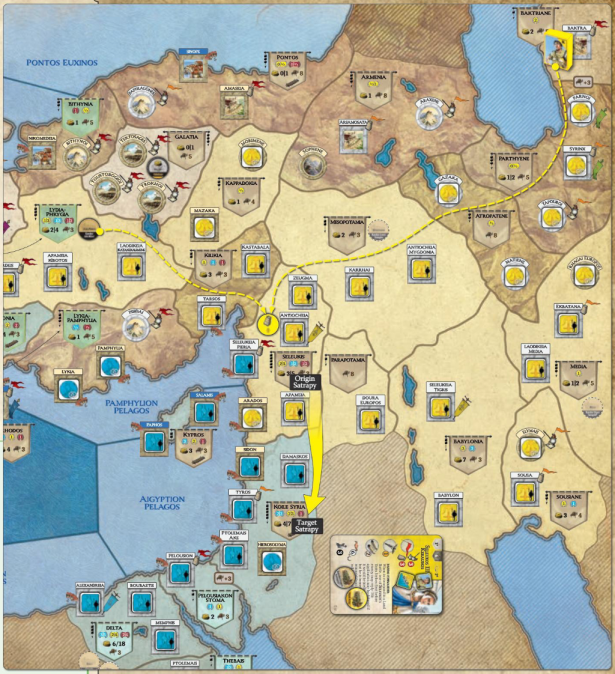
Get ready to get your Ancients on. Hubris: Twilight of the Hellenistic World, 220-165 BCE covers the fifty five years roughly from the Third Syrian War and its famous battle of Raphia between Antiochos III and Ptolemy IV, to the Third Macedonian War and the battle of Pydna between Perseous of Macedon and the legions of Consul L. Aemilius Paullus, as well as the subsequent bizarre episode of the Circle of Popilius on the beach of Eleusis in Egypt. Players will lead the three leading Hellenistic kingdoms: the Ptolemies, Seleucids, and Macedon, guiding their dynasties through these tumultuous decades. Rome, Pergamon, and other major and minor powers of the age are handled by the game engine, with various degrees of influence possible for the three player kingdoms.
I am very interested in this time period partly because I do like the designs of Morgane Gouyon-Rety whose Pendragon we have played multiple times and truly enjoyed. I consider her a friend, although we haven’t ever met, but just felt a nice connection as we talked about things as that game progressed through the design process.
From the game page we read the following:
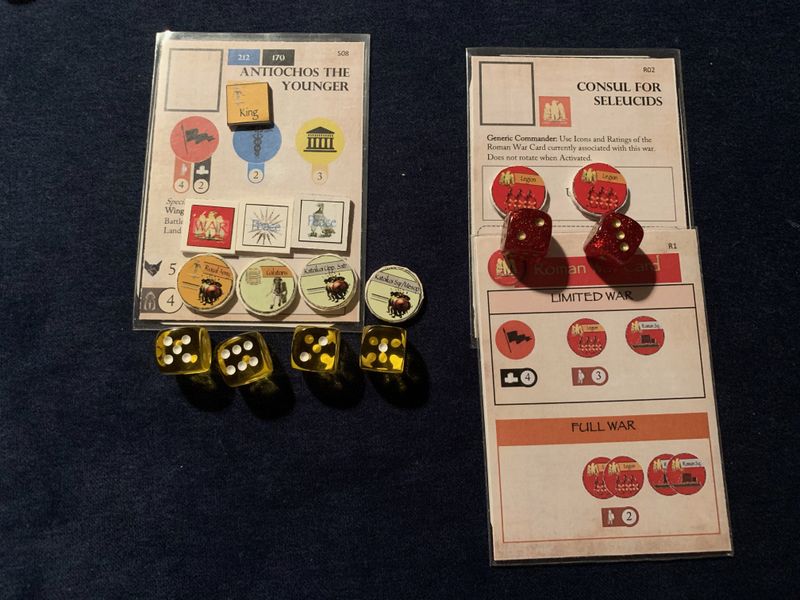
Rather than a hand of cards, each player kingdom has a Court, with the king and his Friends represented by Leader Cards. Each Leader has from one to three Capabilities with assorted ratings among Campaign, Diplomacy, and Admin and is rated for his Loyalty, Intrigue, and, when earned, Renown. Many Leaders also boast Special Abilities, which range from military bonuses or diplomatic connections to unique actions only available to them.
Although monetary and human resources are essential to the ability of kings to wage wars and prosecute their policies, no action is possible in the game without being entrusted to an able and available Leader, and its success is determined by rolling against their appropriate rating. Because each Leader is limited in their number of activations each turn and the size of a court is better kept reasonably small to be manageable, players must be able to leverage their Leaders’ abilities and manage their ambitions and foibles in order to further the interests and future of their dynasty. Not only do Leaders have various abilities, they also present challenges in their personal loyalties and ambitions. Send this competent general too often to war, and his Renown may reduce his Loyalty to such a degree that he may consider rebelling against your rule. Pack your Court with too many gifted individuals, and you risk turning it into a hotbed of conflicting intrigue and ambitions of which you may lose control…
You will be pleased to learn that the game isn’t just about the conflict and battles of the time but takes into account an aspect of kingdom and economic management. From the game page we read the following:
Thankfully, war is not the only way to advance your agenda, as kings can send diplomatic missions to sway the many cities in the game, or raise additional taxes to finance their war effort or hugely expensive public buildings. The relationships with most cities and tribes are another critical dimension of the game’s politics. Kingdoms have the option to impose garrisons or prefer a softer approach through alliances, with consequences both in terms of stability and tax revenues. Garrisons are more secure and allow full taxation but are deeply resented by all Greek cities and will at some point represent a potential casus belli with Rome once the Republic positions itself as the guarantor of the freedom of the Greeks…
If you are interested in Hubris: Twilight of the Hellenistic World, 220-165 BCE, you can order a copy for $59.00 (but again get your order in quickly as that P500 price is sure to disappear quickly and then the regular price is $93.00) from the GMT Games website at the following link: https://www.gmtgames.com/p-891-hubris-twilight-of-the-hellenistic-world.aspx
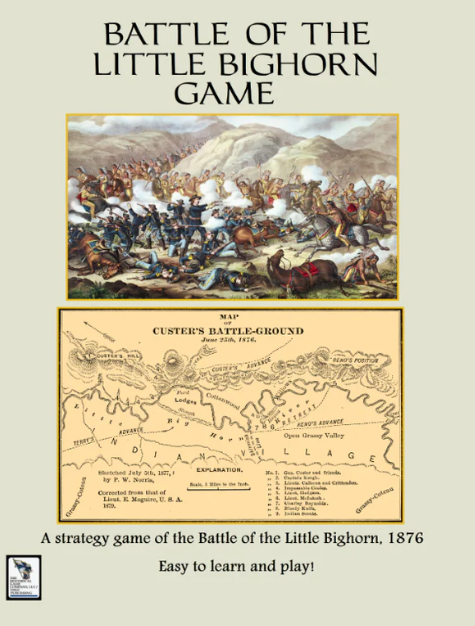
12. Battle of the Little Bighorn from The Historical Game Company
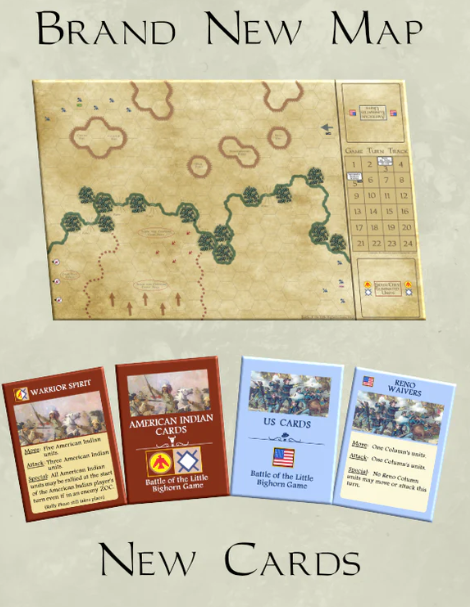
We have played a few of the games from The Historical Game Company from designer Steve Kling and they are designed as nice little introductory wargames with low counter density, great looking maps and easy to learn and understand rules. We describe them as games you could play with your dad over a holiday or be used to introduce a friend to wargaming. These games are also print on demand and are printed and shipped by Blue Panther LLC once you buy them. They will take about 10 days to get to you.
One of their newest releases includes an interesting looking game on the Battle of the Little Bighorn in 1876.
From the game page, we read the following:
1876. The Sioux and Cheyene American Indians have defiantly left the retched living conditions of the US imposed reservation areas. Ambitious Lt. Col. George Armstrong Custer senses the opportunity to make a bigger name for himself by vanquishing the American Indian foes. His arrogance plays right into the hands of his enemy who have other plans for “Yellow Hair” and his men.
Battle of Little Bighorn is a low-to-moderate complex tactical game on Lt. Colonel George Armstrong Custer’s campaign against the Northern Plains American Indians during the Great Sioux War. The game takes about 90 minutes to play. One player commands the US forces and the other player commands the other American Indian forces. Cards vary game play.
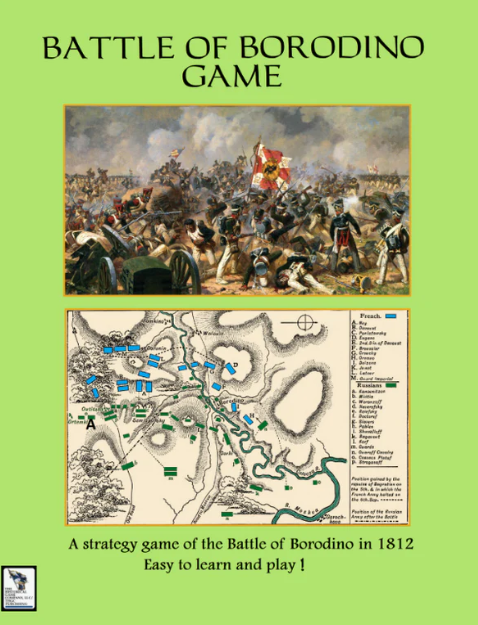
13. Battle of Borodino from The Historical Game Company
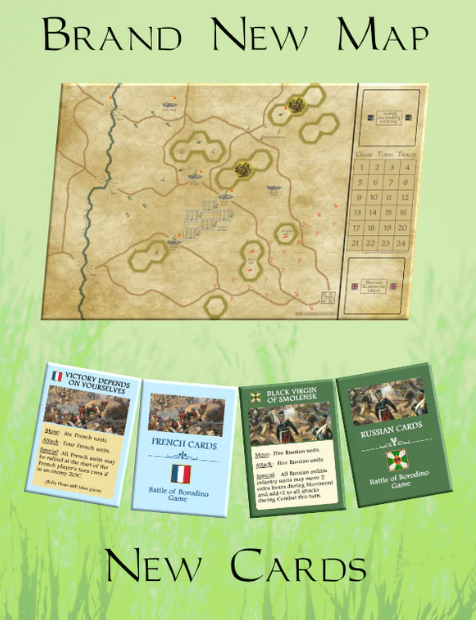
The 2nd new game from The Historical Game Company deals with the Battle of Borodino during Napoelon’s infamous march to Moscow during the Napoleonic Wars in 1812.
From the game page, we read the following:
1812. Napoleon is deep in Russia with winter approaching and is set on capturing Moscow. His huge army has shrunk, but it still contains seasoned veterans. A defensive battle is planned by the Russians to break the French army and reduce its effectiveness much like the foolish Swedes who invaded a hundred years ago. Mother Russia will not be so easily humbled as Napoleon expects. The stage is set.
Battle of Borodino is a low-to-moderate complex tactical game covering the most important battle of Napoleon’s Russian campaign in 1812. The game takes about 90 minutes to play. One player commands the Russian forces and the other player commands the French forces. Cards vary game play.
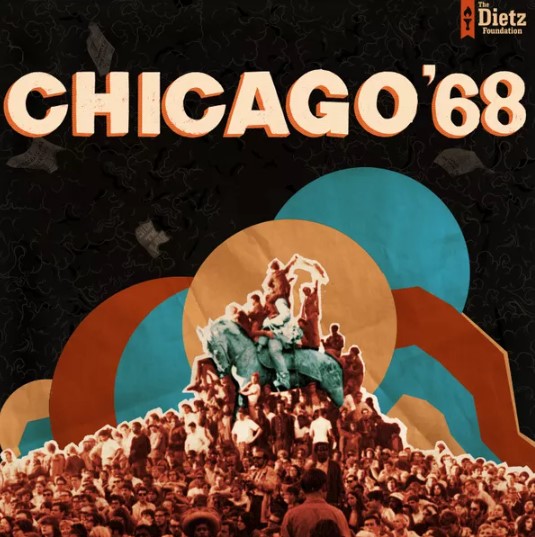
As you know, I do love me a good Card Driven Game. I love the mechanic because it allows for the designer to keep a game going while using cards that incorporate special rules that fit a historical situation but also to be able to use bits of the history itself to teach the players about the topic. Last year, The Dietz Foundation signed a game with a new designer named Yoni Goldstein on his first game called Chicago ’68 for a summer Kickstarter campaign. That game funded and has recently started fulfilling. Chicago ’68 deals with the Democratic National Convention riots of 1968 in Chicago and sees players taking on the role of either the Establishment or the Demonstrators in a fast-paced game of street battles and political maneuvers.
From the game page, we read the following:
Chicago ’68 pits revolutionary spectacle against civil order at the Democratic National Convention riots of 1968. Players take the role of either the Establishment or the Demonstrators in this fast-paced game of street battles and political maneuvers. Each side plays from two asymmetric decks of action cards. The Establishment positions tactical forces and police platoons to co-ordinate mass arrests while working the convention floor. The Demonstrators, on the other hand, can pivot from direct clashes to radical street theater; their tactics can be reactive and unpredictable, allowing for wild cat-and-mouse chases and mischief-making across the tear-gassed avenues of groovy downtown Chicago.
In more detail, the game is played over five rounds, with two rounds representing a single day (daytime and nighttime). Each side takes turns playing cards from two decks of action cards. The first deck represents the leadership committees. For the Establishment, this is the Mayor’s office, and for the Demonstrators, this is the Yippies. These decks are primarily focused on building/activating card splays and manipulating the board state. The Mayor faction can access the policy tableau with the mandate action, which include activating undercover agents, authorizing tear gas, redeploying the National Guard, and more.
Then both sides alternate playing action cards from their rank-and-file decks: The National Mobilization Committee to End the War in Vietnam (MOBE) on one side, and the Chicago Police Department on the other. These actions are largely moving and confronting units on the map and claiming strategic positions. The Demonstrators may build and activate their street theater splay, which is a set of location specific one-time “mini-objectives” with unique, combinatorial powers.
At the end of every round, a delegate commits a vote to either side. Demonstrators grow in number, the mayor is allocated funds, and whoever controls a majority of critical city areas is awarded exposure points.
Chicago ’68 supports 1-4 players in solo, competitive, co-operative, and team play modes. Game duration is 45 minutes per player, with the typical two player duel lasting 60-90 mins.
As usual, thanks so much for reading along and sticking with me this month as I navigated through the many websites and game pages looking for new and interesting games to share.
Finally, thanks once again to this month’s sponsor Legion Wargames!
I have a correction regarding Ardennes ’44. The most recent edition (2018) was 3E. This update kit updates 3E to 4E, and 4E will release at the same time as the kit.
The 2E game (2012) plus the 4E update kit will still have 3 deficiencies. They’re fairly easy to remember, so 2E owners could get by with the update kit if they don’t want to buy a new edition.
-Nebelwerfers should be range 3. -Skorzeny’s front is unchanged. The back should be mechanized infantry with no tank rating. The other values are unchanged. -99th Norwegian Bn should be independent.
Thanks for your kind comments about China’s War. It has been a bit of a wait but I am very satisfied with how it has come out! I’ve said much of what I think I could ever say about the game in the interview with me you posted here, the game has not changed very much since then… tweaks to some functions, twonks to buff some of the Event Cards to make them more tempting, that kind of thing. But basically the same game.
As I have probably mentioned to you before, this is my last planned essay in the GMT COIN system, except for O Canada, a reboot of the old SPI game Canadian Civil War via an adaptation of the COIN system (used by permission) that I will be self-publishing in very limited quantities later this year.
Never heard of the Battle of Little Bighorn game before – thanks for bringing that to my attention!
For some years in my childhood, I was immensely interested in the American Indians, and I had a large, richly illustrated book (with many paintings by Old West artists like Frederic Remington or George Catlin) which I read over and over again – and probably no part as often as the one about Little Bighorn!














 The Players' Aid
I have a correction regarding Ardennes ’44. The most recent edition (2018) was 3E. This update kit updates 3E to 4E, and 4E will release at the same time as the kit.
The 2E game (2012) plus the 4E update kit will still have 3 deficiencies. They’re fairly easy to remember, so 2E owners could get by with the update kit if they don’t want to buy a new edition.
-Nebelwerfers should be range 3.
-Skorzeny’s front is unchanged. The back should be mechanized infantry with no tank rating. The other values are unchanged.
-99th Norwegian Bn should be independent.
LikeLiked by 1 person
For the Fighting Formations game, was there any indication that they’d be reprinting the base game that you need to play it?
I’m pretty sure it’s out of print.
Too bad, if so.
Great list!
LikeLiked by 1 person
I do not know.
LikeLiked by 1 person
Thanks for your kind comments about China’s War. It has been a bit of a wait but I am very satisfied with how it has come out! I’ve said much of what I think I could ever say about the game in the interview with me you posted here, the game has not changed very much since then… tweaks to some functions, twonks to buff some of the Event Cards to make them more tempting, that kind of thing. But basically the same game.
As I have probably mentioned to you before, this is my last planned essay in the GMT COIN system, except for O Canada, a reboot of the old SPI game Canadian Civil War via an adaptation of the COIN system (used by permission) that I will be self-publishing in very limited quantities later this year.
LikeLiked by 1 person
Thanks Brian and I look forward to your Canadian Magnum Opus!
LikeLike
Oh it’s a Magnificent Octopus all right.
But I am never self-publishing a game with this scale of components again.
LikeLiked by 1 person
Never heard of the Battle of Little Bighorn game before – thanks for bringing that to my attention!
For some years in my childhood, I was immensely interested in the American Indians, and I had a large, richly illustrated book (with many paintings by Old West artists like Frederic Remington or George Catlin) which I read over and over again – and probably no part as often as the one about Little Bighorn!
LikeLiked by 1 person