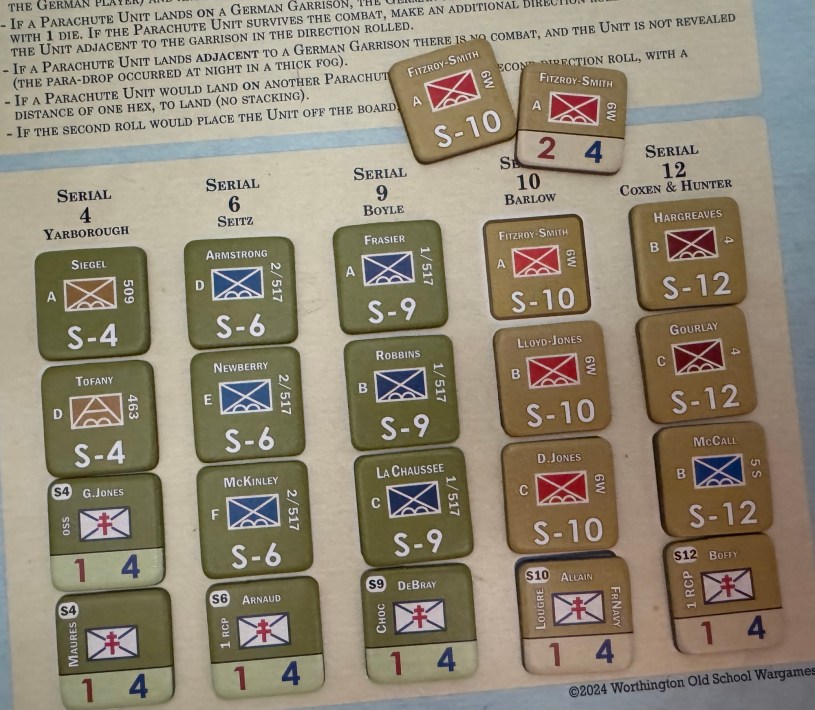
Drop Zone: Southern France is a company-level wargame covering the Allied airborne assault that spearheaded Operation Dragoon, which was the invasion of Southern France or the Second D-Day on August 15, 1944. The history behind this operation is really very interesting as early on the morning of D-Day, the allied First Airborne Task Force (1st ABTF) parachuted a dozen miles behind the Riviera landing beaches to seize key towns and road junctions, to prevent the German occupation forces from counter-attacking the amphibious landing, and to facilitate the advance of Allied forces. The 4:00 AM parachute drop was badly scattered due to an unexpected dense fog bank that blanketed the battlefield. Drop Zone: Southern France covers the first two days of this airborne operation in six game turns, when the American and British paratroopers and glider-men fought surrounded and alone, supported only by French resistance bands. This game is very good and is just a solid wargame.
In Action Point 1, we looked at the Game Board paying attention to the airdrop zones, the terrain and the objective spaces highlighted in yellow and red. In Action Point 2, we took a look at the airdrop procedure and covered an example of both the airborne and glider landings. In this Action Point, we will take a look at the hidden units for the Allies and why this is such an interesting aspect.
Hidden Parachute Units
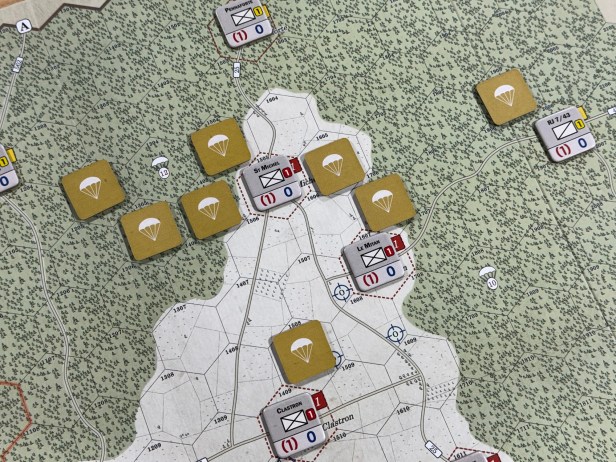
As you know from the last Action Point, all 20 of the Allied Parachute Units that are dropped at the start of the game are placed onto the board with their Hidden Unit symbol face-up, which is a parachute. This is specially designed to keep the true identity of the unit hidden from the German player and serves as a Fog of War element that is unique in the design. These Hidden Units are not revealed until they are involved in a combat, either in attack or on defense or when they receive a Step Increase through the use of a Replacement Point.
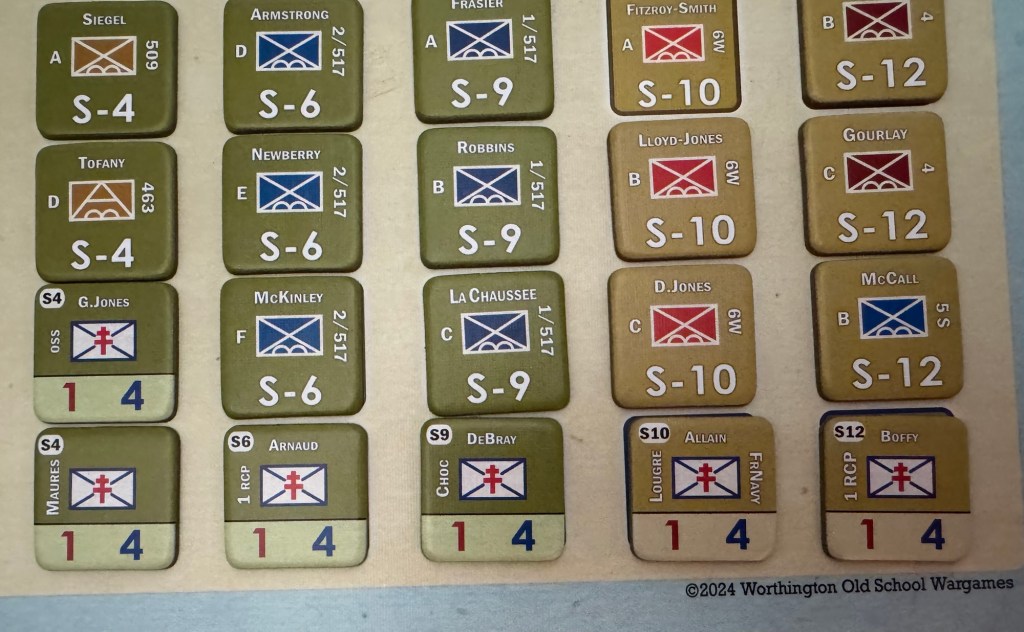
Let’s take a bit of a closer look at the makeup of the Allied Parachute Units and their combat strengths. Remember that there are 5 total Serials made up of 4 Parachute Units each. Of these 4 Parachute Units, typically 3 are regular military and 1 is a French Parachute Unit. In the case of Serial 4 though, there are 2 French units included. In the picture below, you can see these Serials laid out on the Allied Set-Up Card. These units are not representative of the combat units that will be placed on the board once these units land but are the initial drop counters that are used. On the reverse side of these counters is the parachute symbol that is turned up when landing to obscure what unit is underneath.
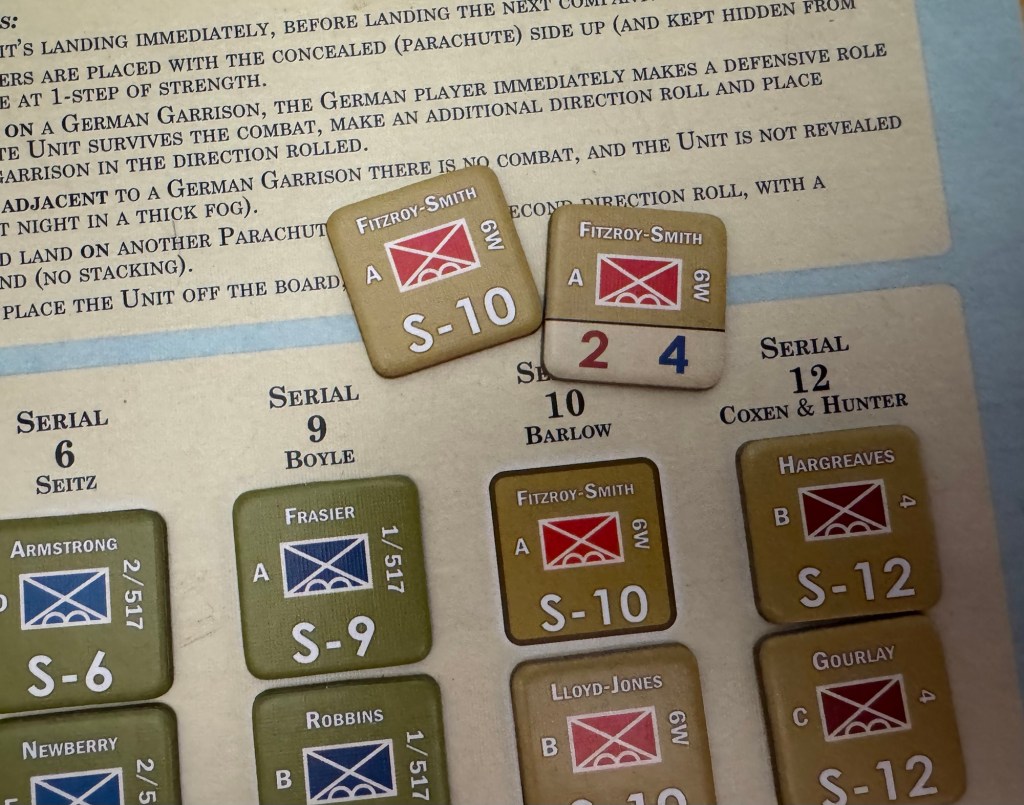
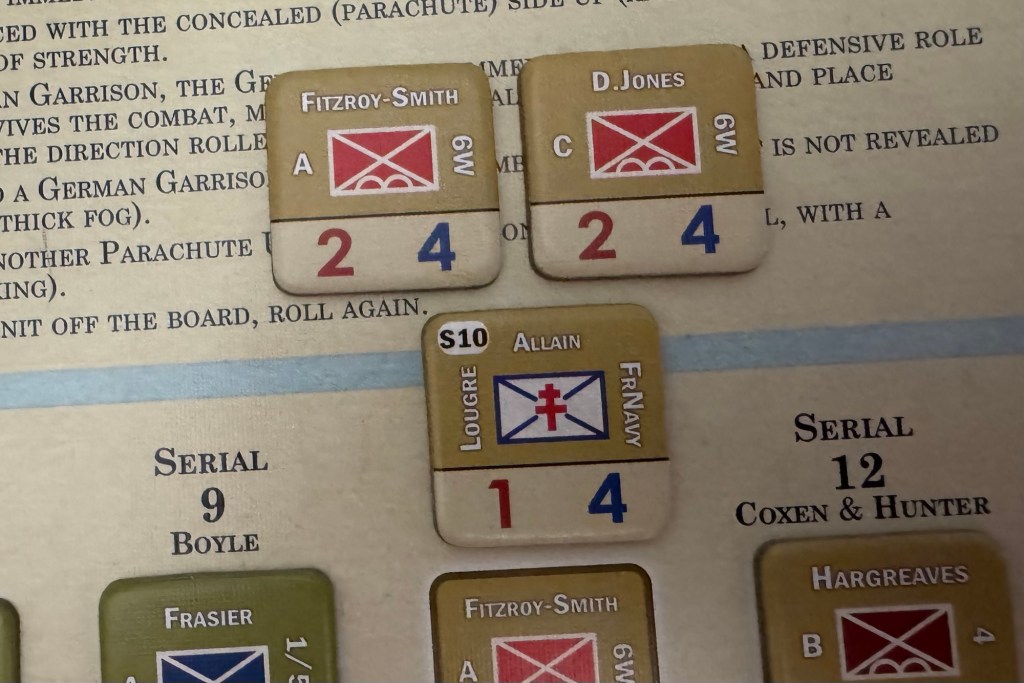
As you can see below, the Fitzroy-Smith Unit, which is a part of Serial 10, has a counter with a 2 Combat Strength shown on the front. The other value in blue is the movement value. The Allied Parachute Units all are 2 Combat Strength with 2 steps while the French Parachute Units are 1 Combat Strength with just 1 step. This means that of the 20 initial dropped Parachute Units, 6 of them have just 1 Combat Strength. In the game, Combat Strength equates to the number of dice that are rolled by each of the units in combat. A 2 Combat Strength unit will roll 2 dice while a 1 Combat Strength unit will roll just 1 die. The other key distinction here between the 2 types of units is that the regular Parachute units which have 2 steps are harder to hit in combat as they will only take hits on the infantry or armor faces of the combat dice while the French units will take hits on all 3 of the shown faces including the armor, infantry and French Resistance symbol (Cross of Lorraine). Hiding the true identity and relative Combat Strength of the units is key for the Allies
It is also important to understand that the stacking limit for the game is just 2 units in a hex and this is key when creating your attack stacks as you want to make sure to include the maximum total dice possible so stacking 2 Allied Parachute Units together is better than 1 Allied Parachute Unit and a French unit. But, bringing these 1 step and 1 Combat Strength units along is recommended as they still can attack from an adjacent hex and provide their 1 die or 2 if you have stacked 2 French units togethers.
I feel that the heart of this game is the cohesion of your drops and how quickly the Allies can gather their forces together quickly after the drop to get moving on objectives and attacking with the maximum force possible. It is also possible that the drops will go terribly wrong and force low odds (low dice) combats if units land on top of existing German units. That is the other part of the game that is supremely interesting as you just don’t know what will happen and what you will have left after the landings are complete.
While this hidden unit element is not a game changer here it really is very well done and creates that bit of doubt when the German player decides to attack as they will not really be sure what the full strength of the units they are attacking is.
In Action Point 4, we will review the Chit-Pull Activation process.
-Grant
 The Players' Aid