
We have interviewed Trevor Bender before, including for one of his 2 entries in the Labyrinth Series from GMT Games with Labyrinth: The Forever War, 2015-?. He is a very up and coming designer and has now done several hex and counter wargames for inclusion in the various editions of the fantastic C3i Magazine from RBM Studio including Battle for Kursk: The Tigers Are Burning, 1943 (2020) and Desert Victory: North Africa, 1940-1942 (2022) in the C3i Combined Arms Series. About a year ago, we heard that he was working on a 3rd entry in that series that dealt with the Korean War called Korea: The Fight Across the 38th that would appear in the upcoming C3i Magazine #38. We reached out to him to see if he would give us some insight into the game by answering our questions and he was more than willing to share.
Grant: Trevor welcome back to the blog. What have you been busy with over the past couple of years?
Trevor: From a game design perspective, 2024 was focused on designing Korea: The Fight Across the 38th, which we will get into later. During 2023, I wrote a counterfactual article that was published in C3i #37 for The Russian Campaign that explored a possible different outcome on the Russian Front had the Germans used the resources that were employed in both the Battle of Britain and North Africa in Russia instead, and how the Allies might have responded to that. On a professional level, I was recently promoted to Chief Growth Officer at Cypher Analytics.

Grant: What is your new design Korea: The Fight Across the 38th about?
Trevor: The Korea game uses nearly the same system as The Battle for Kursk: The Tigers are Burning, 1943 (published in C3i #34 and subsequently given a deluxe treatment). The game covers the first year of the war in 13 monthly turns, though frequently the game will end sooner than that. The intent was to give players a similar feel to Victory Games Korea, but a game that was playable in less than 4 hours.
This is now the third volume in the C3i Combined Arms Series. What are the hallmarks of the series?
Trevor: The C3i Combined Arms Series was heavily influenced by Frank Chadwick’s Battle for Moscow, with similar quick-play characteristics that include no stacking, combat before general movement, and simple supply rules. The C3i Series takes these mechanics to much larger theaters with greater map maneuvering room and greater counter density and more strategy options.
Grant: What can players expect with a game using this system set in Korea in the 1950’s?
Trevor: Play testers have commented that Korea feels like the war, meaning the ebb and flow from the initial Korean assault to the American riposte, to the Chinese intervention and the UN counterattack to retake Seoul a second time and then the stalemate roughly along the 38th parallel. But the game is not scripted, and many other outcomes have been seen in playtest, including major invasions in other areas besides Inchon.
Grant: Why is this a subject you wanted to design a game around?
Trevor: Ever since the founding of the C3i Combined Arms Series, Korea has been on the short list of a game that would work well with these rules’ mechanics. With 2025 being the 75th Anniversary of the war, we thought it appropriate to cover this topic at this time. It was completely coincidental that the issue number was 38, and the subtitle was The Fight Across the 38th!
Grant: What must a game about the Korean War model?
Trevor: For a game of this scale, just like with Kursk, we are trying to model the mechanics of the entire front as it ranges across the Korean Peninsula. At the same time, we want to include items that were important in the conflict, such as amphibious landings, air support, combined arms, etc.
Grant: What is your design thesis or goal with the game?
Trevor: None really. I suppose it’s the same as other games, have fun while learning history, and then answer the question, can one conceive a plan that will do better than the original combatants?
Grant: What type of research did you do to get the details correct? What one must read source would you recommend?

Trevor: Historical game designers will generally agree that some of the best sources for historical information are the Campaign Series by Osprey Publishing. These interesting books provide nearly all the material needed to design the historical flavor of a campaign, such as actionable Orders of Battle, maps, historical figures, important weapons, weather, etc.
In particular I used:
- Campaign 162 – Inch’on 1950: The Last Great Amphibious Assault, by Gordon L. Rottman
- Campaign 346 – Yalu River 1950-51: The Chinese Spring the Trap on MacArthur, by Clayton S. Chun
Grant: What other games gave you inspiration on this project?

Trevor: I mentioned earlier the original Korean War from Victory Games that I enjoyed so much in the 80’s. This has been the game by which all other Korean simulations are compared. Additional inspiration came from these titles:
- Korea: The Mobile War – 1950-51, Simulations Publications, Inc. 1971, by James F. Dunnigan.
- Korea: The Mobile War, Strategy & Tactics #111, 1987, by David Richie.
- Yalu – The Chinese Counteroffensive in Korea: November 1950 to May 1951, Compass Games, 2009, by John Hill.
- MacArthur’s War: The Korean War and Beyond, self-published, 2009, by Kerry Anderson. Shows the conflict from a global perspective including the possible use of atomic weapons.
- Korea: The Forgotten War, Multi-man Publishing, Inc., 2014, by Rod Miller. The Operational Combat Series (OCS) series as created by Dean Essig treatment of the Korean War. Perhaps the most detailed analysis of the entire conflict.
- 1950: The Forgotten War, Conflict Simulations LLC, 2018, by Matthew Ward and Ray Weiss. Simple presentation in the Procedural Combat Series of games, comparable to Korea: The Fight Across the 38th.
- The Korean War: June 1950-May 1951, Compass Games, 2020, by Joe Balkoski. Remake of the Victory Games classic. This was the inspiration of my design for Korea, to make a game that could be played in a single sitting that had a similar feel to this one.
- Korea: The Mobile War, Strategy & Tactics #349, 2024. A solitaire game from the UN Players perspective.
Grant: What is the scale and force structure of units? How has this choice in the design assisted you in telling this story?
Trevor: The scale is 15 miles per hex (exactly twice the hex size as the VG game), and the units are divisions for all sides. This helps to set up the classic contest of quality verse quantity, as we have seen so frequently in the Cold War.

Grant: What is the anatomy of the counters? Can you share several examples of units for comparison?
Trevor: The counters use the classic NATO symbology with combat factor first and movement factor second, with armor units having a silhouette for the most common tank type historically found in the unit.
Grant: How do each side’s units compare and contrast?
Trevor: As described above, the quality verse quantity dynamic is apparent in this game. The most obvious difference, besides combat strength and numbers, is that the Allies have three armored units to the Chinese one. This makes a big difference in setting up for attacks, and plugging holes, etc. Also, American infantry units are slightly faster, and Chinese units can move through rough terrain a bit easier.
Grant: What is the makeup of the Combat Results Table and how does combat function in the design?
Trevor: The CRT is very much the same odds tables we saw in Kursk, though column shifts from Allied Airpower and Chinese Human Wave attacks can make for much higher odds in this game in some situations.

Grant: How many scenarios are included?
Trevor: Just one, the historical first year of the war, well actually 13 months though the game can end much sooner through the Armistice Talks rule.
Grant: What area of the Korean Peninsula does the board focus on?
Trevor: Pretty much the entire peninsula, minus the far northeast bordering Russia, which did not see much combat during the war.

Grant: What interesting tactical challenges does the terrain offer?
Trevor: The game really shows how important the road network was during the Korean War. Units won’t get far if they do not have access to the roads, which makes choke points critical to hold.
Grant: What logistical challenges are faced by each side?
Trevor: Units must trace four hexes to a road, then any length on the road outside of EZOC to a northern entry hex (Communist), or a friendly port (Allies). This incentivizes a side to try and find a way to cut the peninsula and sever their opponent from their supply source, as was done with the Incheon landings.
Grant: What changes to the C3i Combined Arms Series rules have you had to introduce?
Trevor: We didn’t add a lot but made some changes as shown below:
- Naval Transport & Amphibious Assault, which allows the Allies to make five amphibious assaults during the game
- Isolation & Attrition, which cause units that are out of supply to slowly whittle away and makes them easier to defeat in combat.
- Harsh Winter Conditions, which limits Allied Air Power, and slows road movement North of the 38th parallel during the critical winter months.
Grant: What type of experience does the game create?
Trevor: The game provides an opportunity for both sides to be on attack and defense twice during the game, with the critical decision on when to give up the initiative being very hard to make. Between balanced players it becomes a struggle to get that last hex needed for a marginal victory!
Grant: What are you most pleased with about the design?
Trevor: How real it builds the historical picture we all have in our minds of the Korean War.
Grant: What has been the experience of your playtesters?
Trevor: We have seen early and late wins for both sides. The situation really feels desperate for the South Korean forces in the first couple of turns, then the Americans show up and everything changes! The Chinese intervention is awesome in its size and capability, but can be stopped by the use of terrain, superior Allied units and airpower. The game then evolves to who can control the other sides’ capital, barring that, the most hexes on the other side of the 38th parallel.
Grant: What is next for the C3i Combined Arms Series?
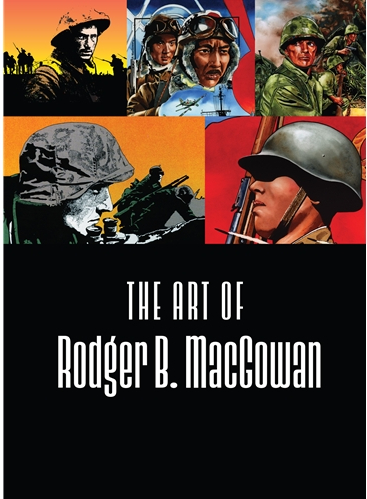
Trevor: I was working up concepts to model Operation Cobra using an update of the Desert Victory rules set when Rodger MacGowan passed away. Rodger was such a force for good and inspiration in this hobby, and his talent and personality will be dearly missed! I am so glad he was able to publish his book summarizing his wargame art and the history of the hobby!
I have spoken with his son Steven, and he is very much interested in publishing C3i #38, which is mostly done in terms of layout. Korea is completely finished, so I anticipate we will see this issue come to life sometime in the late Summer or early Fall.
Grant: What other games are you working on?
Trevor: As many are aware, I am a fan of Counterfactual History. In fact, my son Jared recently filmed me giving a 9-minute description of this form of speculative history and how it intersects with Military Simulation Gaming, and the video can be watched here:
Most counterfactuals are presented as an article, with possibly some variant counters, and don’t really require an entirely new game design. As such I am currently working on a different way to portray the Battle of the Bulge using Designer Edition Bitter Woods from Compass Games, which will be featured in an upcoming issue of the War Diary Magazine. In this situation, the Germans will start with their armor first, to see what impact this would have had on the battle and the Allied response.

Thank you for your time in answering my questions on the upcoming Korea: The Fight Across the 38th in C3i Magazine. I also look forward to your other design ventures in the near future.
If you are interested in Korea: Fight Across the 38th, you can pre-order a copy of C3i Magazine #38 for $45.00 from the RBM Studio website at the following link: https://c3iopscenter.com/rbm-studio-store/C3i-Magazine-Nr-38-Pre-Order-p645718603
We also shot the following video interview with Trevor while attending SDHistCon last November:
-Grant
 The Players' Aid