
There are not a lot of true hex and counter solitaire only wargames. You can play regular hex and counter games two-handed and just take the role of both sides and do best move avaialble. But a true solo hex and counter design is on the rare side. Well, last year, I found a really great one in Vive L’Empereur 2nd Edition from Blue Panther.
With Vive L’Empereur, there is a very involved and well laid out list of priorities for the AI forces of Wellington that make playing the game easy to understand and also easy to adjudicate. These priorities are centered around moving toward and protecting key strong points on the battlefield including the Hougemont, Le Haye Sainte and Papelotte. As the French move in to these areas, or take them, then the British and ultimately the Prussians when they arrive will prioritize moving to those areas. While the AI instructions are fairly involved, they are well written and really took the guess work out of the process. I can only remember a few times where I felt like I had to simply make a call about what they should be doing if priorities conflicted.
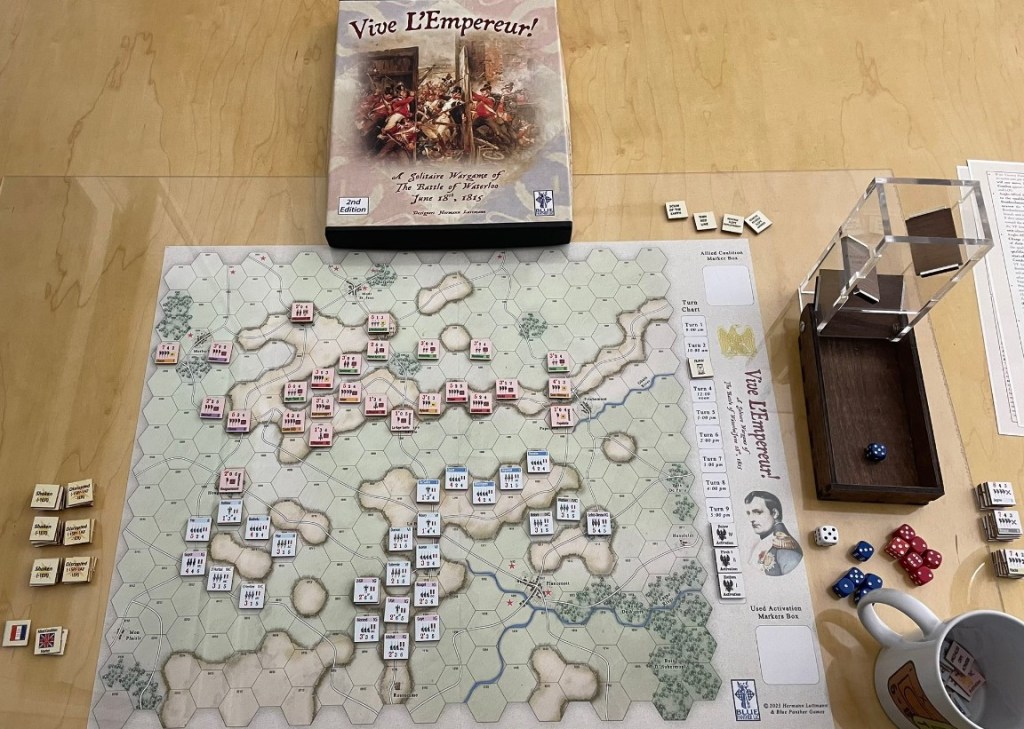
The other thing about the design that I very much enjoyed was the focus on troop quality and morale. This is one of the major determiners of whether combats are successful or even whether they will go off as planned as the player has to roll under the value to proceed. This really made for interesting decisions about where and when to move units and who you want to lead those attacks. Cavalry is also a great part of the game as you only have a few good Cavalry units and you must protect and use them wisely to ride around flanks and force retreats in order to open up paths toward objective hexes. Each time a Cavalry unit charges they will have to exhaust and then recover to be used again in later turns.

The best part of the design for Vive L’Empereur was that the game uses a chit pull system to generate random force activations for both sides. The Anglo-Allied and Prussian forces move and conduct combat based on the instructions resulting from a dice roll on their respective Activation Tables. This means that you can never really be sure what is going to happen during any given round and you have to consider or prepare for the worst. This adds some really tension to each pull and I really enjoyed this aspect. There are also leader counters that will allow a bit of flexibility in what formations move and act but this is also just as unexpected and tense. Because there are more Anglo-Allied chits in the cup than the French, you are able to hold some activation chits and use them when they will be most valuable to you and do the most harm to your enemies. This game would not have been the same without the chit pull activation mechanic and I think that this was a great design choice by Hermann Luttmann.
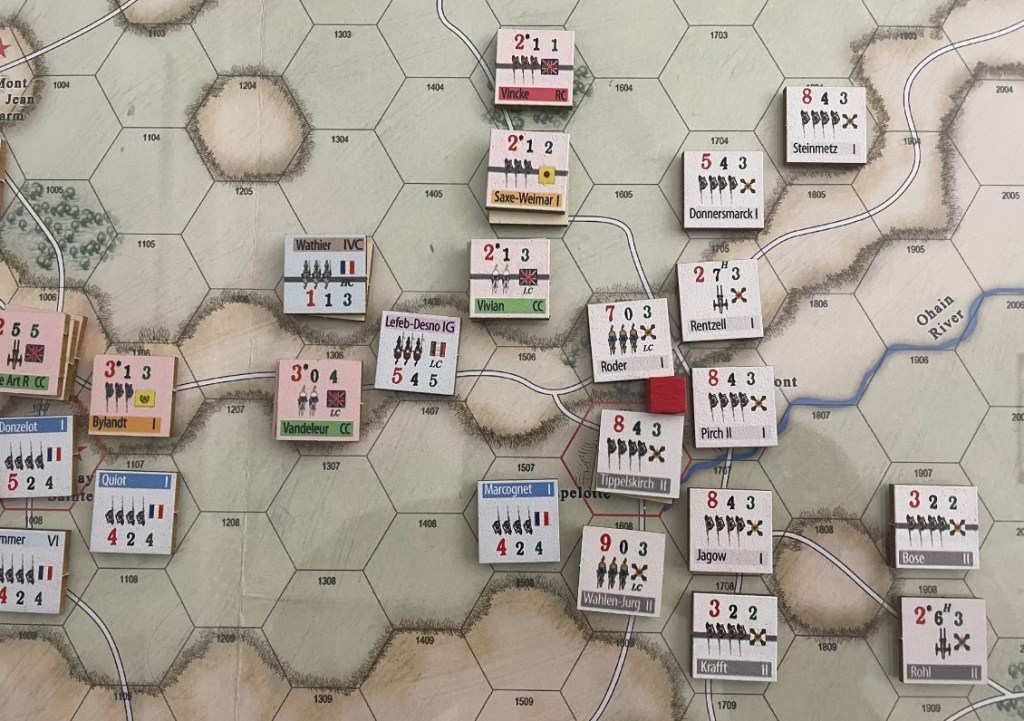
Enjoy my video review of the game, even though now I have provided you with a written summary of most of the points contained within.
-Grant
 The Players' Aid
Love this game…thanks for the great review, Grant! The chit pull mechanic really keeps it tense. One of the best solitaire games I’ve played in years.
LikeLiked by 1 person