Three Crowns Games is a newer to me company but their work just looks outstanding. I did share some information in the last few years on their Stargard Solstice and Iskra but to date have not had the opportunity to play anything from them. I think that their new game called Polar Storm: The Petsamo-Kirkenes Operation, October 1944 looks to be an interesting topic and a great looking package. As such, I reached out to the designers Stefan Ekström and Jan Larsson and they were more than willing to share.
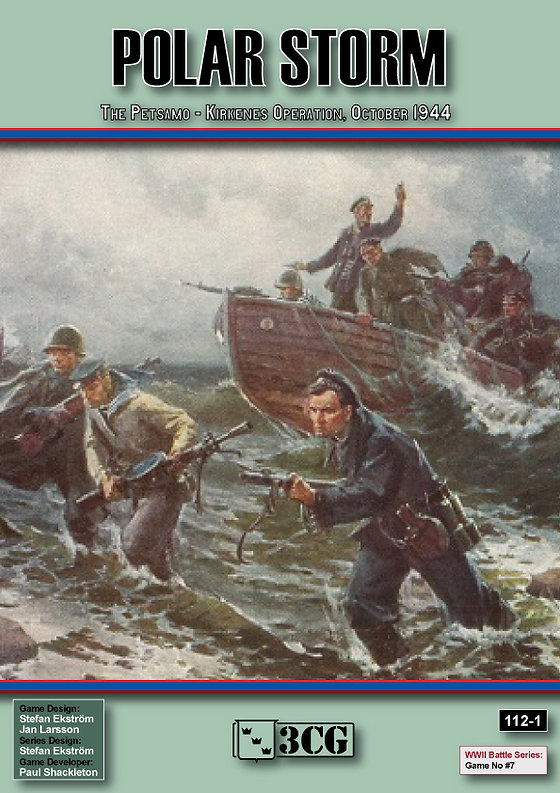
Grant: What is your upcoming game Polar Storm about?
Stefan: The game covers the Russian October 1944 attack into northern Scandinavia to push the German forces out of both Finland and Norway.
Grant: Why was this a subject that drew your interest?
Stefan: First of all, it’s the largest up to date military campaign in an arctic environment and secondly it’s an area close to us designers so we feel a connection to the history in Scandinavia.
Grant: What is your design goal with the game?
Stefan: The design goal is twofold. Firstly to make an historical game with all the terrible terrain challenges and the separate historical goals the Germans (retreat in good order with all supply) and Russians had in the campaign. Secondly as a “what if” game, where the Germans decided to stay as a no retreat arctic fortress.
Grant: Who is your design partner Jan Larsson and what skills does he bring to the design?
Stefan: He is one of the partners in our game company. He performed most of the basic research for the game and after play tested it a lot. He was important to the process and brought a good sense of the history along with him to improve the design.
Grant: What are the hallmarks of the WWII Battle Series?
Stefan: The WWII Battle Series games are built around the following major pillars: a chit draw system, with events and general ground rules. The concept also includes being formatted for a zip-lock game, maximum sized A1 map, and rules no longer than 16 pages. The goal is to make an historically accurate depiction of the events in a playable format.
Grant: What research did you do to get the details correct? What one must read source would you recommend?
Jan: Der Abwehr um Petsamo und Kirkenes 1944, by W.W Thorban (in German);
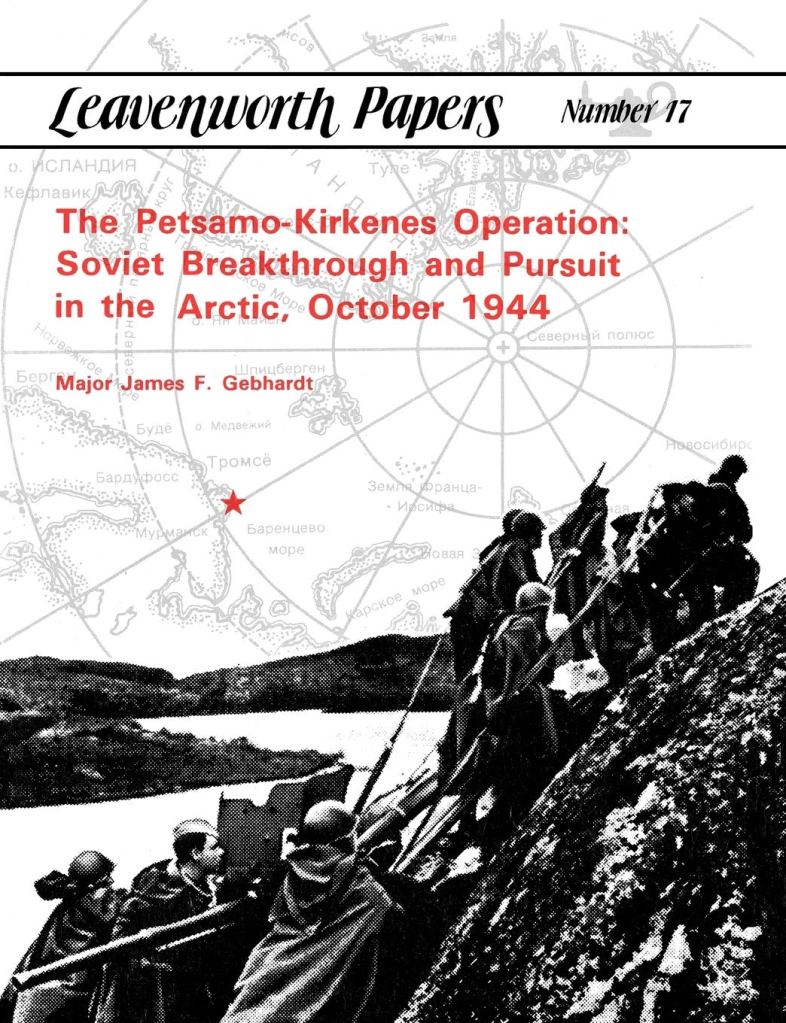
The Petsamo-Kirkenes Operation, Soviet Breakthrough and Pursuit in the Arctic by James Gebhardt (in English);
Journal of Military Operations of Troops 14th Army 01.10-31.10.1944, Soviet Archives (in Russian);
Arctic Storm by Kai Isaksen (in English)
Grant: What is most important to model from the Arctic Front of WWII?
Stefan: Combat only really occurred along the road network since moving in the rough mountainous terrain was more or less impossible. To do this, and simultaneously make the game any fun to play, was the real challenge.
Grant: What is the scale of the design? Force structure of the units?
Stefan: German units consists of Divisions and Soviets use Corps. The combat units are Battalions for the Germans while the Soviets have Regiments and Brigades.
Grant: What different armies and formations make up the forces in the game?
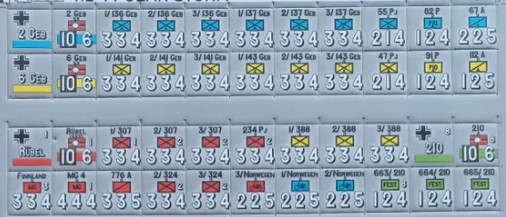
Stefan: German XIX Mountain Corps consisted of four divisions; 2nd Mountain Division, 6th Mountain Division, 210th Coastal Defense Division and Division Group Van der Hoop. Russian 14th Army consisted of five Rifle Corps including the 31st, 99th, 126th, 127th, 131st and one Infantry Group Pigarevich. (We also found the 133rd Rifle Corps in the Soviet archives, never mentioned in the English or German sources). Northern fleets include both NavaI infantry brigades and minor armored units.

Grant: How does the game use Chit Pull?
Stefan: Both sides HQ’s each have a draw chit. These are placed into a cup. The Time Track then informs how many chits each side are allowed to draw per turn. Then one chit is drawn at a time and acted upon. Doesn’t matter who draws.
Grant: What are the various Command Chits which are added to the draw cup?
Stefan: There are also a few special chits that allow the player a more free method to choose which HQ they will use, but they are activated as reinforcements, by events or through optional rules.
Grant: How do you model the elements and extreme cold conditions of the battle?
Stefan: This is all done with the Random Events that are rolled during the start of each turn.
Grant: What area does the map cover?
Stefan: The map covers the area from Kirkenes in Norway, with Petsamo in Finland (Penchenga in today’s Russia since this area was ceded during the armistice in 1944) almost all the way to Murmansk at the Kola Peninsula.

Grant: What strategic considerations are created by the terrain?
Stefan: The Germans were well dug in and the Soviets could not use Artillery in the way they usually did. So flank moves and keeping up the pressure on the Germans is a must. Both sides need to use the terrain in defense and go around it on the offense.
Grant: How does combat work?
Stefan: Attacker announces its target, then adds all attacking unit’s strength and the defender/-s total its defense strength. Both sides count towards any modifiers Then they cross index the attacking odds on the Combat Results Table.
Grant: What is the makeup of the Combat Results Table? Any interesting odds?
Stefan: The CRT in this game is built around retreats rather than losses. This to reflect that stubborn defense to the death was not the case. Odds on the upper scale can be achieved but does not necessarily give a better end result than attacking on 2-1 or 3-1. That said, many small victories are better than one big one.

Grant: What is the concept of National Results on Combat? Why was this important to include?
Stefan: The German forces were under direct orders to withdraw towards Narvik in good order and to save both men and equipment and at the same time rescue as much supply and material from Petsamo and Kirkenes as was possible. This forces them to be careful and pick where to stand their ground. Likewise, the Soviet player is forced to keep up the pressure as their first retreat results become a loss.
Grant: What special optional rules are included?
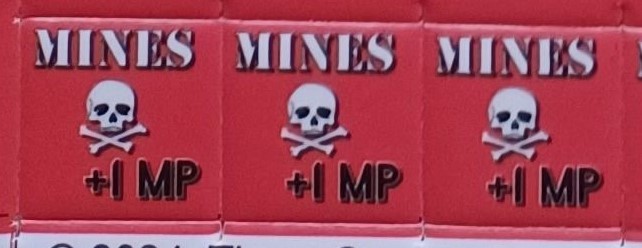
Stefan: There is only one optional rule in the game, allowing the Soviet player to reject a reinforcing Corps to enter and instead use an extra special draw chit. As for special rules, both the German and Soviet players have their special National Rules and then there are minefield rules, etc.
Grant: What is the game length? Are there any scenarios included?
Stefan: The game length is 12 turns and it will take 8 hours to play the game the first time. Learning the traps makes for faster games after that. There are no scenarios. Just the campaign game.
Grant: How is victory achieved?
Stefan: The German player wins by rescuing huge amounts of supplies and being able to retreat with most of their units from the map without losing a huge number of those units. The Soviet player wins by stopping the German player from achieving their goal and themselves leaving the map on the Norwegian side.
Grant: What are you most pleased about with the outcome of the design?
Stefan: We have managed to recreate history in a hard fought game that manages to still be fun. We know that it’s not everybody’s cup of tea, but it’s a tough nut to crack and that’s what we like.
Grant: What type of experience does the game create for players?
Stefan: The gamers must have a plan from the beginning and despite all else that happens stick with it. This game is ‘frustration in a zippie’. As the German player, you must know exactly when to give ground and when to hold and for how long. As the Soviet player, it’s a slog as they only have two roads to use for their tanks. They should be held back in reserve until the right moment arrives.
Grant: What has been the feedback of your play testers?
Stefan: As said earlier, it’s not everybody’s cup of tea. It is a game that you either love or hate. The same signals came from the play testers (that did a fantastic job btw, thanks guys!). But in general they stayed positive and provided us with great input.
Grant: What other designs are you currently working on?
Stefan: We currently have two games in the Collision of Empires Series on the bench awaiting their turn at release. These include Mud & Blood, Battle of Lodz 1914 to be released Q4-2024 and North to Jerusalem, South Palestine Campaign 1917 to be released Q1-2-2025. Other projects in the WW2 Battle Series are hush-hush right now. One of them though is an East Front game and the other a North Africa one.

Thanks so much for your time in answering our questions Stefan and Jan. We appreciate this approach and really want to give this game and system a play.
If you are interested in Polar Storm: The Petsamo-Kirkenes Operation, October 1944, you can order a copy for 43,50 € ($46.30) from the Three Crowns Games website at the following link: https://www.threecrownsgames.com/product-page/polar-storm
Three Crowns Games also has a relationship with Noble Knight Games and you can order your games from them in the United States at the following link: https://www.nobleknight.com/Publisher/Three-Crowns-Game-Productions
-Grant
 The Players' Aid