
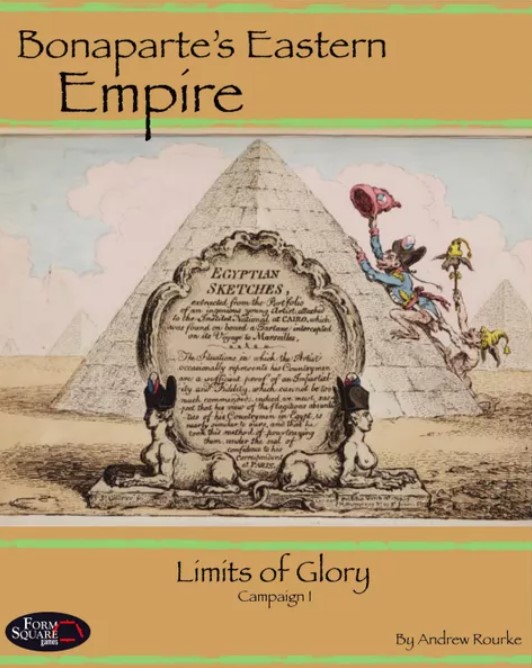
A few years ago, we became acquainted with Andrew Rourke through his Coalitions design from PHALANX that went on to a successful crowdfunding campaign. He has since been a busy guy with starting his own publishing company called Form Square Games and also publishing the first design in a new series called Limits of Glory that will take a look at the campaigns of Napoleon. Bonaparte’s Eastern Empire successfully funded last year and has been fulfilled and now the series is expanding to Campaign II with Maida 1806.
If you are interested in Limits of Glory: Maida 1806, you can back the project on the Gamefound page at the following link: https://gamefound.com/en/projects/form-square-games/maida-1806-limits-of-glory
Grant: How do you feel about the success of your first entry in the Limits of Glory Series Bonaparte’s Eastern Empire?
Andrew: Bonaparte’s Eastern Empire was a test for me; I had designed games before but not considered publishing them myself, instead preferred to offer them to established publishers. I knew the Limits of Glory System was very different to anything else out there and I knew there would be almost endless scope to adapt the system to different campaigns and periods. So this game was my first toe in the water of becoming a publisher. The most important criteria for me were to learn how to undertake every step correctly, build a network of skilled people around me and listen to advice. I didn’t want to let any backers down and I didn’t want to expose myself to unnecessary risks. My goal was to get fifty backers then produce the best game I could, I’ve now sold two hundred copies and feel confident about releasing the next game in the series.
Grant: What have you learned about the design process from that project?
Andrew: I think one of the most important aspects I learnt in the design process is to give yourself a very strict design criteria before you start, then stick to it. For Limits of Glory, I wanted to use a single mechanic to undertake every aspect of the game. This presented a massive challenge as the system includes movement, combat, sieges, uprisings, naval actions and continual gradual fatigue and attrition. I needed to represent all this using the same mechanic and that mechanic had to be simple and intuitive. This forces you to come up with interesting new ways to approach a problem instead of falling back on easier, better-known mechanics or design options.
Grant: What is your upcoming game Limits of Glory: Maida 1806 about?
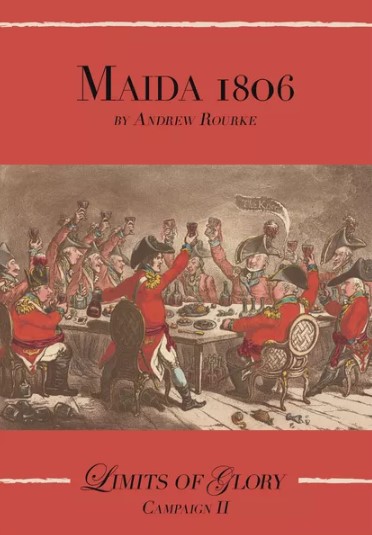
Andrew: The game covers the whole campaign, not just the battle. When William Pitt formed the Third Coalition he tried to encourage Ferdinand IV, King of the Two Sicilies to join, but under pressure from Napoleon the King declared neutrality and promised to stay out of the impending war. However, as soon as hostilities commenced, Ferdinand agreed to host an Anglo-Russian army in Naples and this army was to attack Northern Italy in support of the main Coalition effort in central Europe. Napoleon was so angry about this betrayal that after his success at Austerlitz he sent Marshal Massena with 40,000 men to invade Naples and if possible capture the island of Sicily itself. Maida 1806 covers the period from November 1805 when British and Russian troops landed in the Bay of Naples until just after the battle of Maida on the 4th July, 1806. The game is about theatre management, using your commanders and limited resources to the best of their advantage.
Grant: What is your overall design goal with the game?
Andrew: I knew I had a system that worked; I wanted to explore how I could use that system in different ways, model different aspects of warfare and at a different scale. For example, in Bonaparte’s Eastern Empire naval elements represent whole fleets or squadrons. In Maida 1806 I wanted naval elements to represent single ships or boats because small gunboat and frigate actions were extremely important during this campaign. I wanted the system to remain simple to learn but give interesting decision points to players every turn and I wanted the system to be continually transferable to other campaigns so that once players were familiar with the system they could easily play any game in the series.
Grant: How has the situation changed for the Emperor in this entry in the series?
Andrew: In Bonaparte’s Eastern Empire, Napoleon is still just a General de Division, like so many others. He had seniority in the campaign but he was still General Bonaparte. That is why the game is not called Napoleon’s Eastern Empire, he would have been known as General Bonaparte at the time, he later takes the title of Napoleon I once he becomes Emperor like so many other Kings and Emperors using their first name. In Maida 1806, Napoleon is not represented in the game, as he was not there, instead he sent Marshal Massena to command the troops and his brother Joseph to become the new King of Naples.
Grant: What changes have been introduced to the system?
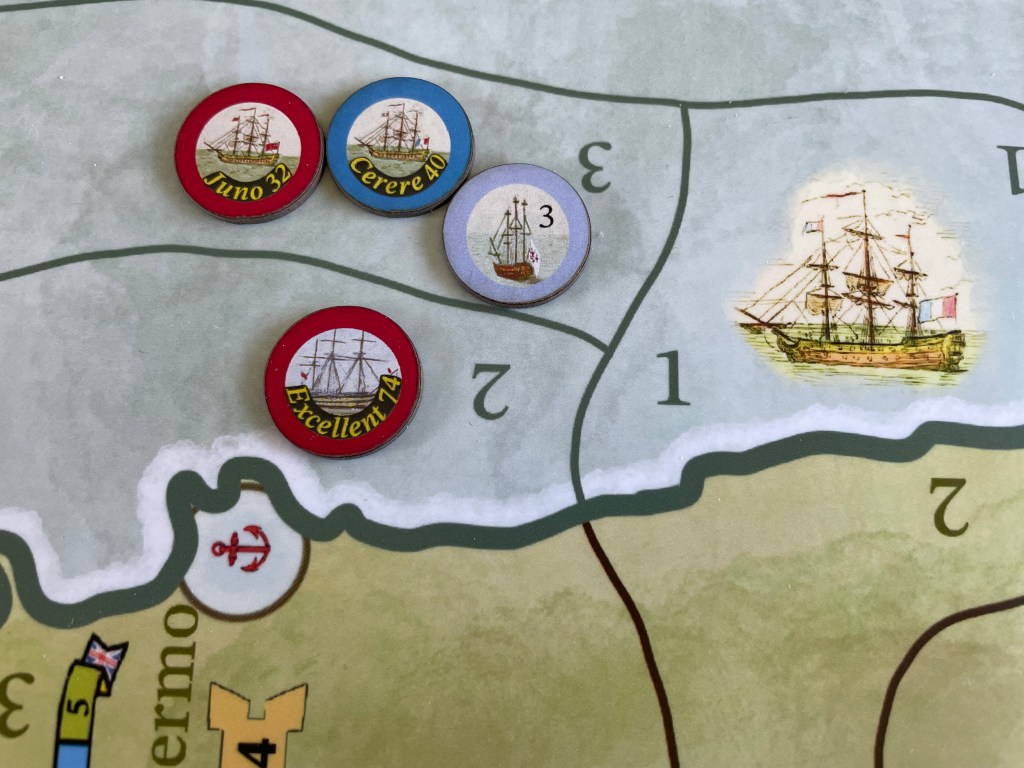
Andrew: The naval aspect of the Maida campaign is far more important than the Egyptian campaign; therefore the game reflects this with the introduction of 3rd Rates, Frigates, Gunboats and Barges plus the inclusion of new harbours that allow protection from enemy ships. There is also the possibility of small numbers of reinforcements, especially for the French and different strength Built Up Areas (BUA’s) reflect the differences in fortifications.
Grant: How does the game examine the influence of luck and skill on the timing of events?
Andrew: I believe luck is what happens, skill is how you deal with it. Certain events such as storms and plague are just down to luck, others like perhaps arriving a day too late or not having enough food could be put down to bad luck or poor judgment. However all of these situations could be mitigated by skill; travelling at the right time of year, strict quarantine adherence, marching faster and planning stores better.
I wanted to design a game that put both players in a situation where they didn’t know what might happen next, so there are no event cards held by the player, to plan their future moves. Instead, the Event Clock drives the game with randomly generated historical events that will occur in roughly the correct chronological order, however, neither player knows what’s coming and both have to react to the situation as it presents on the board. This means strategic reserves must be kept and positioned wisely. Decisions about the strength of armies needs to be weighed against the need for garrisons and most importantly, it means making decisions to place the right commanders in the right places.
A player, who has skillfully weighed up the needs of all his forces and positioned them well, should be able to overcome whatever luck throws at them with the randomness of the Event Clock.

Grant: What is the scale of the game and the force structure of units?
Andrew: The game is all about managing your commanders and using their Glory wisely. Units have a numerical value that is interchangeable like currency; a unit of 5 French infantry could be broken down into a unit of 2 and a unit of 3 if desired. Each unit represents roughly 1,000 men. The command structure is a very important element of the game; the Glory of the most senior commander in a space is used to mitigate the situation and junior commanders always accompany their more senior commander in the chain of command until they are detached to perform tasks separately.
Grant: What different units are represented in the game and what advantages do they bring to the battlefield?
Andrew: The units in the game are infantry, which is the standard combat unit for all sides. The French have cavalry; the British have none. Cavalry units count double in combats, though following the first assault round of a siege, they no longer contribute to the siege, more importantly cavalry prevent uprisings. Artillery units count as triple in combats and sieges.

Naval elements are also represented; they may fight enemy naval elements, blockade harbours, transport land elements or add their combat strength to sieges fought at coastal built up areas.
Grant: What is a Glory Rating? What role does it play in the game?
Andrew: A Glory Rating represents a combination of a commander’s historical skill and how lucky they appear to have been in the campaign. All named commanders have a Glory Rating, which is established immediately when his position marker is placed on the map board. A mixture of a number of die, which are rolled and totaled, plus a fixed number allocated to that commander determines the amount of Glory. In this way, each commander has a certain degree of randomness applied to their Glory Rating. For example, Reynier’s Glory Rating is 12+3d6, whereas Peyri’s is only 2d6.
A commander’s Glory is reduced to re-roll dice during the game at the rate of one Glory point per single re-roll. Any dice can be re-rolled once by the owning player and any successful combat dice of an opponent can be forced to be re-rolled once.
Grant: What area does the Map cover? Who is the artist and how does their style assist in creating theme and immersion?
Andrew: The Map covers a distorted and abstracted area of Southern Italy (Naples), Sicily, and the Tyrrhenian Sea. All the art in the game is by contemporary political satirical cartoonists, James Gillray, Isaac Cruikshank and George Cruikshank.

The British public at this time would have had little idea of what a military campaign in a foreign land looked like. They depended on paintings and written descriptions, but more importantly, for the masses their only depiction of events would have been through the cartoons of artists like these. So in a way, these cartoons are a primary source of information about how the public saw these campaigns.
Grant: What purpose do the various numbers appearing in each space on the Map serve?
Andrew: Spaces on the Map each have a value of between 1 and 4; this indicates the number of dice to be rolled to activate elements in that space. Dice rolls succeed on a 5 or 6 and fail on 1 to 4. Only one dice success is needed to activate the space. Therefore spaces with a value of 1 will be harder to move out off compared to spaces with a value of 4.
Grant: What is the purpose of the Event Clock? How does it work?
Andrew: The Event Clock is the mechanic that drives the game. There are no event cards in the Limits of Glory Series; instead the Event Clock introduces events. There are twenty-four numbered flags on the Event Clock each with an event written on it. The flags represent who will benefit from the event.
At the start of each turn in the conquest phase an event is rolled for, initially by rolling 1d6. The number rolled corresponds to the event that is to occur immediately and once the event has occurred the flag is covered by a second event tile unless the event is repeatable, in which case it is never covered. Some events indicate that another dice must be added to the event roll for the rest of the game, so in this way players start by rolling 1d6 for an event, they progress to 2d6, then 3d6 and finally 4d6. This means that as the game progresses more and more events become possible but the probability of particular events happening changes as the number of event dice to be rolled changes. Players need to allow for this in the decision-making process during game play. Some events may never happen and others may occur multiple times.
Once 4d6 are rolled for an event then a score of 14 will end the game. This represents Napoleon’s decision to call off the intended invasion of the island of Sicily. The situation in central Europe was changing by the summer of 1806 and Napoleon’s attention was turning towards central Germany and the growing threat from Prussia.
Here is a short video produced by Andrew that describes how the Event Clock in Bonaparte’s Eastern Empire works:
Grant: What is the makeup of the Combat Chart?
Andrew: The Combat Chart is a grid, combat strength running across the top and the type of troops and their commander running down the side. Players cross-reference the combat strength of their forces with their commander status and place their wooden pawn in the box that intersects where they meet. The box indicates the score needed when all four combat dice are totaled. Once this score is equaled or exceeded, then any successful rolls of 5 or 6 inflict hits as indicated by the box.
Grant: How does combat work in the design?
Andrew: Combat is very asymmetric in this campaign; French troops were fighting the Royal Neapolitan army, the British army, the Russian army and guerrillas from Calabria.
Using the same mechanic of 5’s and 6’s being a success, each player rolls four dice whatever the value of the space they occupy. If a commander with remaining Glory points is present, the player may re-roll any failures, then both players may require opponents to re-roll successes. Re-rolls or requests for opponent re-rolls expend one Glory Point for each re-roll from the most senior commander present or a more junior commander in the same space designated as leading the troops before the combat began.
A player’s total final score after all re-rolls, adding together all four dice, must equal or exceed the large number printed in the box of the combat table containing their combat marker for any loss to be inflicted on the opposing elements. If a sufficient total is scored, successful scores (5’s and 6’s) reduce the opponent’s strength by one non-commander element for each combat hit inflicted. The player receiving the hits decides which elements to remove.
To reflect the asymmetric nature of the combats, generally the French require lower total scores to inflict hits and when they do successfully score hits, they will score more element hits per successful dice than the Neapolitans or Calabrians.
Here is a link to a short video produced by Andrew that describes the combat process from Bonaparte’s Eastern Empire:
Grant: What is the Commander Chart? How does this work?
Andrew: Each player has a Commander Chart that shows the chain of command and the seniority of commanders. This chart also displays the glory value of each commander as a number of d6 rolled plus any fixed amount. During set up all position and glory markers are placed on the commander chart in the appropriate position for ease of access and clear understanding of who has been deployed to the board and who is currently accompanying their more senior commander.
Grant: What is the general Sequence of Play?
Andrew: A complete turn consists of an event from the Event Clock followed by players gaining alternate initiative to activate their forces. Initiative enables continuous activation for movement of elements and fighting of combats and sieges until the player is forced to place a momentum marker due to failing an attempted activation, or declaring an end of their turn. Then the other player moves, fights combats and sieges until they are forced to place a momentum marker by failing activation or declaring an end of their turn. Play swaps back and forth between the two players until all momentum markers have been placed, then the turn ends. Due to the interactive nature of the Glory system, both players are involved throughout the turn whether they are the active or non-active player. This cycle of an event followed by player activations is repeated until the game ends.
Grant: What multiple strategic decisions are presented to the player every turn?
Andrew: The key to success in the game is the management of your commanders and particularly their Glory. Every time you fail to activate a space or fight in a combat you will have to decide how much of this limited Glory resource you are willing to commit, how important it is in a particular situation. Glory is never regained, so as commanders push forward and fight combats they use up their Glory until it is gone and they become exhausted. As a player you continually decide how much to push and how much to fight as sometimes waiting or forcing your opponent to burn through their Glory resource may be the better strategy. There is no correct way to play, you must use your skill to judge the situation as it develops and react accordingly.
Grant: How is victory achieved?
Andrew: The French must attempt to conquer and control as many of the towns and cities of mainland Italy as they can, including the fortress of Gaeta, plus move against Sicily to take control of that island, whilst fighting off all the allied attempts to disrupt them. If the French control Gaeta and currently have more victory points than the Allies at the end of any turn, they instantly win the game. If these conditions cannot be met, they must have more victory points than the Allies to win the game when the event is rolled for Napoleon to call off the invasion of Sicily and end the game.
The Allies must, if they can, hold the fortress of Gaeta and defend the island of Sicily from French invasion. French preparations to invade the island must be disrupted by any force available. They must have 24 or more victory points at the end of any turn when four dice are being rolled for the Event Clock to secure an instant allied victory. If this is not achieved, they will need to have more victory points than the French when Napoleon calls off the invasion of Sicily. This will win the game and ensure the security of the British naval bases in the central Mediterranean.

Grant: What are you most pleased about with the outcome of the design?
Andrew: The way the system is so adaptable to totally different campaigns. The fact that one simple mechanic can produce such variability with in-depth and difficult player decisions.
Grant: What type of experience does the game create for players?
Andrew: Players take the roll of theatre commanders, having to make important decisions on what needs to be done and how urgent it is. Commanders only have so much Glory and when it’s gone it’s gone so the balance between achieving objectives quickly and becoming exhausted is very delicate and puts the player under considerable pressure.
Grant: What other designs are you currently working on?
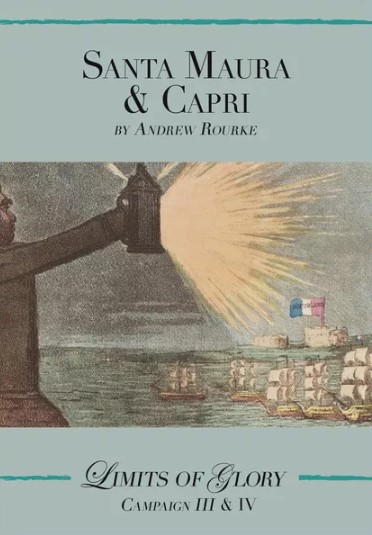
Andrew: I have great plans for the series; Santa Maura & Capri are two shorter, stand-alone games in a single box and these will be available at the same time as Maida 1806 on Gamefound.
The next title in the Limits of Glory Series will be on the campaign in the Vendee in 1793. I am also working with another designer on a very unusual and little known campaign in the American Revolutionary War, which will suit the Limits of Glory System nicely. I aim to offer this on Gamefound to celebrate the 250th anniversary.
The big ambition is to develop the Limits of Glory Series into three and four player games. I have ideas about how to do it and the Peninsular War seems to be the best opportunity for a multiplayer version of the system to shine.

If you are interested in Limits of Glory: Maida 1806, you can back the project on the Gamefound page at the following link: https://gamefound.com/en/projects/form-square-games/maida-1806-limits-of-glory
-Grant

All the illustrations and artwork used throughout the game on all components, tables, charts, the map and the box, are taken from contemporary political satirical cartoons. Their creators’ work brought to life events of the time to a public who had no access to photos, videos, films or social media. Many of the images depicted would never have been seen by the artist. Their imagination of often written accounts, constructed a critical and at the same time ludicrous view of the great and the good from all sides of the political divide, friend or foe.
You can find more information and further reading on all three cartoonists by following these links:
 The Players' Aid