
East Front games are very common in our hobby and most of them are very good. Long lines of contiguous counters and tons of CRT consulting and dice chucking. I love it and have grown to love it even more over the past few years. But sometimes, there is an East Front game that does things a bit differently or takes on a lesser known aspect or corner of the wide front. Such is the case with a new pre-order offering called Spring Prelude: Second Kharkov, May 1942 from Compass Games designed by Greg Blanchett. I reached out to Greg to get a bit more information on the game and he was more than willing to respond. Thanks Greg!
Grant: First off Greg please tell us a little about yourself. What are your hobbies? What’s your day job?
Greg: Grew up in southern California and spent six years in the U.S. Navy. Two daughters who enjoy board games and video games equally. I started playing hex & counter wargames at age 10 when I had a lot more free time and never stopped. Currently working with a company in Field Service for ATM’s, smart safes, cash recyclers, etc.
Grant: What motivated you to break into game design? What have you enjoyed most about the experience thus far?
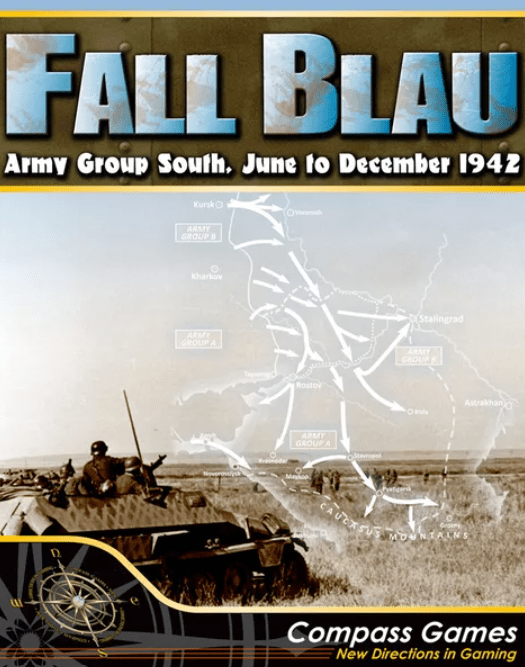
Greg: Ever since I started playing wargames I have dabbled in changing this and designing that. You can see one of my first works with the “Burnside’s Lost Victory” scenario included in the Vassal module for A Gleam of Bayonets from SPI/TSR. After seeing Nathan Kilgore bring out his Victory in the West version of Iron Tide: Panzers in the Ardennes from Pacific Rim Publishing, I had a renewed interest in the system and creating something of my own. I chose a topic and began making maps which would eventually become Fall Blau: Army Group South, June-December 1942 from Compass Games. Actually having people enjoy the games I’ve created is the best part of the whole journey.
Grant: Where did your start for this design come? How has your design process evolved over the years from your start?
Greg: This was originally VCS (Variable Combat Series) Kharkov which was designed to bring the Multi-Man Publishing series over to the Eastern Front. It was dropped from MMP and Compass offered to publish. I made a number of changes from those original series rules so it now can stand alone in portraying this battle.
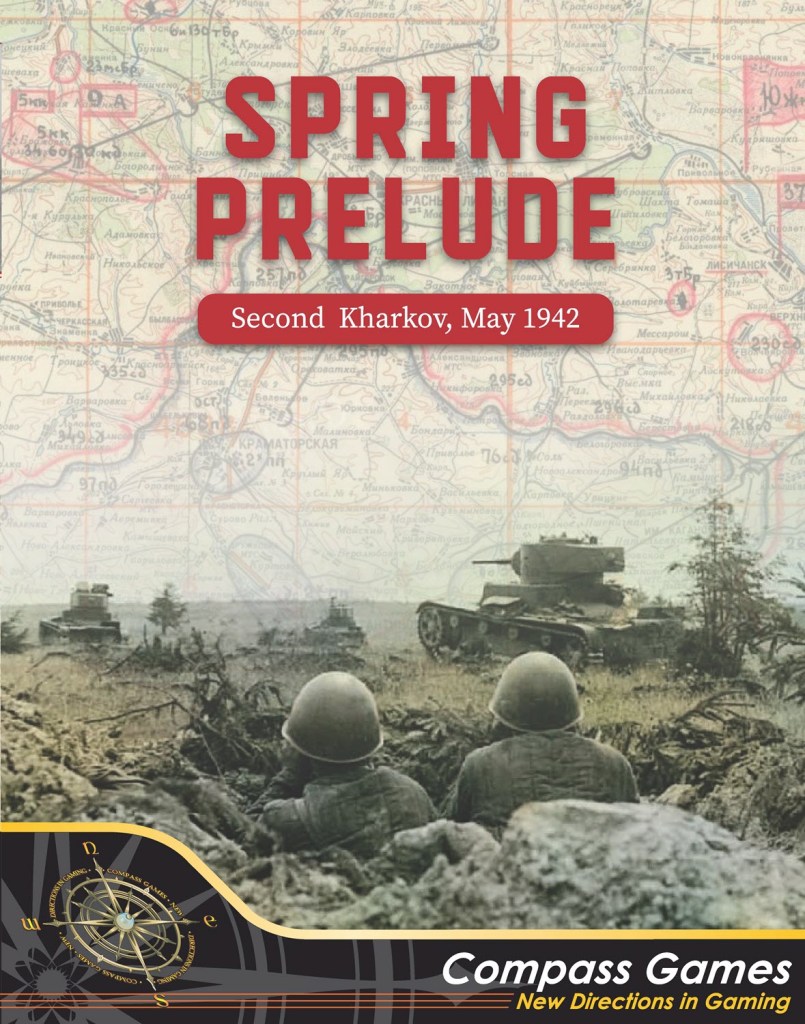
Grant: What is your upcoming game Spring Prelude about?
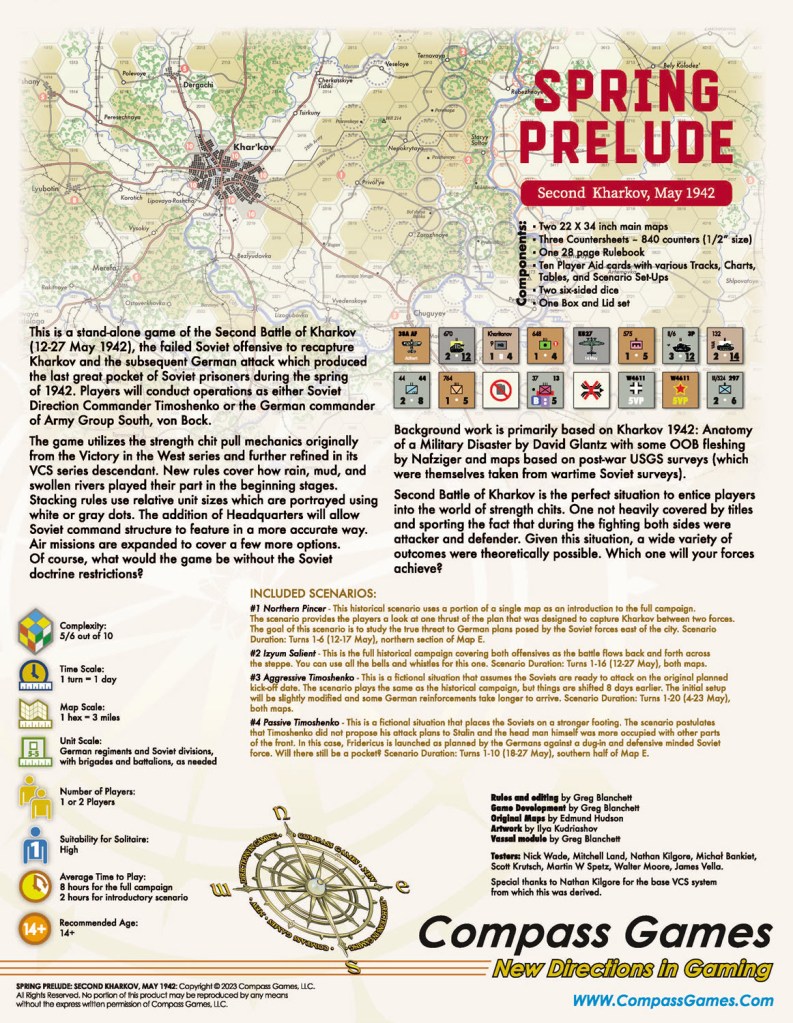
Greg: The failed Soviet offensive to recapture Kharkov and the subsequent German attack which produced the last great pocket of Soviet prisoners during the spring of 1942. Up to 16 turns in the historical scenario or 20 turns for the hypothetical scenario covering 12-27 May. Players will conduct operations as either Soviet Direction Commander Timoshenko or the German Commander of Army Group South von Bock.
Grant: Why was this a subject that drew your interest?
Greg: The Second Battle of Kharkov seemed to be the perfect situation to entice players; not heavily covered by titles and sporting the fact that during the fighting both sides were both attacker and defender.
Grant: What is your overall design goal with the game?
Greg: As with Fall Blau, to make a medium complexity game that’s not weighted down with chrome & detail but still has plenty of historical flavor.
Grant: What sources did you consult to get the details of the history correct? What must read source would you recommend?
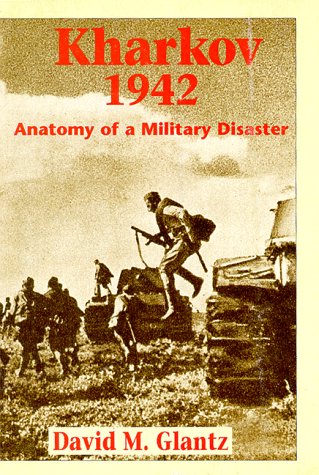
Greg: Main source was Kharkov 1942: Anatomy of a Military Disaster by David Glantz. This is one of the few books on Second Kharkov and I highly recommend it. For a quick read there is also the Osprey Campaign 254 on the battle. Maps were based on post-war USGS surveys (which were themselves taken from wartime Soviet surveys).
Grant: What was the basis for your Order of Battle?
Greg: Background based on Glantz with supplemental references to Nafziger and Kharkov ’42 (Matrix Games).
Grant: What elements from the Eastern Front of WWII did you need to model in the design?
Greg: The system encourages the use of artillery, combined arms, divisional integrity, air power, through the use of column shifts in combat. A fog of war aspect comes naturally with strength chit-pull only after you have committed all resources to the combat.
Grant: What is the “strength chit-pull mechanics” originally from the Victory in the West Series?
Greg: Most large units have a rating versus a set strength. The combat strengths are on chits that are randomly drawn from a pool. The rating tells you which strength to use from the strength chit. In this way you cannot know exactly what strength the units will be until you are resolving combat. Chits usually stay with the unit and are flipped when losing a step. If a unit loses a second step the chit is returned to the pool and the original unit is flipped to a cadre side which has a strength of one.

Grant: How does this chit-pull system differ from others used in other designs?
Greg: It is only for combat (fog of war) and the game play is still I-GO-U-GO.
Grant: What new rules did you add in to cover the effects of the weather in the beginning stages of the campaign?
Greg: Rain, mud, and swollen rivers played their part in the beginning stages of the battle. Heat became an issue later in the month, but not enough to slow operations on the scale of the game. Main question I asked myself were: How to make weather variable, realistic, and not overwhelming, all at the same time? Looking over the Almanac for May 1942 in the Kharkov area, I found there were 6 days of rain during the period of the game. Obviously, most of those days took place early in the month before the Soviet offensive. I didn’t want too much rain to dominate play, but needed it to be a problem for the early start hypothetical scenario. With the weather roll there’s a much greater chance of rain early which decreases as more rain falls during the month. When all is said and done, once you move up the chart you can only end up with the same amount of rain that historically fell. Mud and swollen rivers increase terrain costs during and immediately after a rain storm. Maximum of two consecutive days of rain with each rain day followed by a turn of mud.
Grant: What Soviet Doctrine restrictions are included in the game?
Greg: Lots of different elements that mimic the challenges that the Soviets had with leadership including [18.1] Lack of Tactical Flexibility, [18.2] Hesitation & Indecision, [18.3] Southern Front Unpreparedness, [18.4] Tank Doctrine Infancy.
Grant: Why were these vital to include?
Greg: At this point in the war, the Germans still had a better command structure and mobile tactics. Given hindsight, things would spiral out of control if the Soviets used their units like the Germans would. These rules are to keep the Soviet player in the mindset of their WWII counterparts. As it is a game, you may experiment and it’s even encouraged to ignore most of these rules when playing a hypothetical scenario.
Grant: What is the scale of the game? Force structure of the units?
Greg: Each game turn represents one day. Both maps cover the area of the battle at approximately 3 miles to a hex, from side to side. Units represented cover a range from divisional to battalion size, with artillery further grouped to portray a proper ratio of tubes between each side. German Fighter, Stuka, or Bomber Wings representing approximately 50 planes per Air Point or Soviet Air Force groupings representing approximately 70 planes per Air Point.

Grant: How are air missions handled? What options do players have in their use?
Greg: Air Points are assigned by turn and may be reduced due to weather. Each Air Point can be used for only one mission if they are available for that turn either Interdiction or Combat Support. When one side has control over the skies the other will not be able to interdict. The main focus of the game is on the land combat.
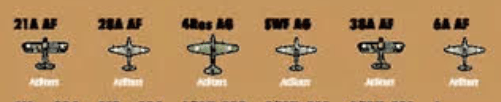
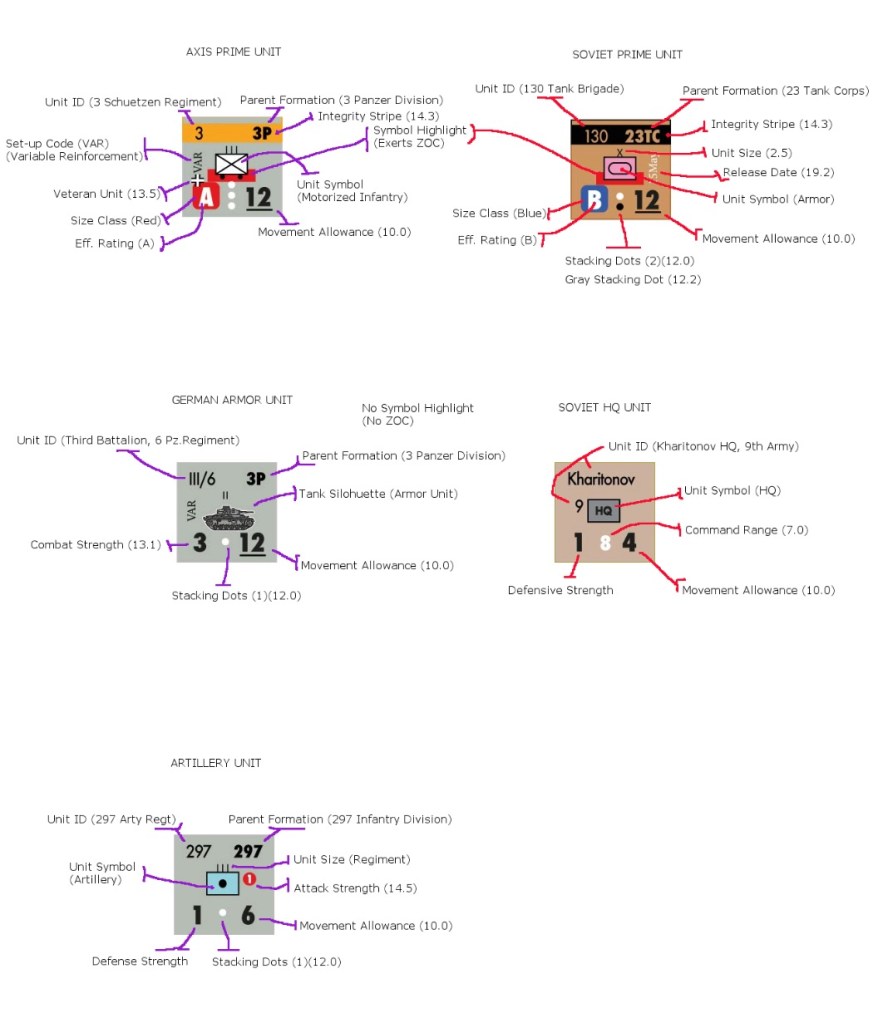
Grant: What is the anatomy of the unit counters?
Greg: Pretty standard stuff. See the following:
Grant: How does combat work in the design?
Greg: Odds column chosen by the defender’s terrain and then shifts due to affecting factors like artillery, air, combined arms, etc.
Grant: What is the makeup of the Combat Results Table? Any interesting odds?
Greg: Game started with the Variable Combat Series CRT as this was going to be volume 2. I re-evaluated the percentages and made modifications to allow for more accurate results over the course of the battle.
Grant: How is victory achieved?
Greg: Victory Points are assigned to locations and are lost through having units unsupplied at the end of the campaign. Also the Axis lose points if the Soviets force them to replace their mechanized units. The difference between each side’s VP total will determine the winner. A couple scenarios have their own specific victory conditions.
Grant: What optional rules and alternative scenarios are included?
Greg: Couple of optional rules which benefit the Germans; a mobile infiltration type movement allowed and possible paradrops using steps from the FJ regiment stationed in Kharkov. A few generic optional rules and there’s two hypothetical scenarios covering either the Soviets launch the attack early (#3 Aggressive Timoshenko – This is a fictional situation that assumes the Soviets are ready to attack on the originally planned kick-off date. The scenario plays the same as the historical campaign, but things are shifted 8 days earlier. The initial setup will be slightly modified and some German reinforcements take longer to arrive. Scenario Duration: Turns 1-20 (4-23 May), both maps.) or not at all (#4 Passive Timoshenko – This is a fictional situation that places the Soviets on a stronger footing. The scenario postulates that Timoshenko did not propose his attack plans to Stalin and the head man himself was more occupied with other parts of the front. In this case, Fridericus is launched as planned by the Germans against a dug-in and defensive-minded Soviet force. Will there still be a pocket? Scenario Duration: Turns 1-10 (18-27 May), southern half of Map E.)
Grant: What do you feel the design excels at?
Greg: Giving a good narrative over the events of the battle. Quick easy play which can be enjoyed even if all the rules are not followed correctly (there’s plenty of give in the system).
Grant: Who is the artist for the game? How has their work connected with your design to create an improved theme?
Greg: The artist is Ilya Kudriashov with maps improved from my drafts by Edmund Hudson. As with Fall Blau, most of the counter art is based on my prototype layouts. I think Ilya did a good job of maintaining a simplicity with the counters and covering everything with a nice professional look.
Grant: What other designs are you currently working on?
Greg: I have many ideas for future games using this basic VitW mechanic. Spring Prelude Second Kharkov is like a stepping stone to the current system version in the Silent Dead Series over at Legion Wargames. These smaller games will utilize a 5-step versus 3-step loss system by rotating the strength chits like Pollards. I also streamlined some of the base rules so it will be even easier to get into. First volume of the three volume set called Belyy on Operation Mars is basically complete except for some VP balance testing.
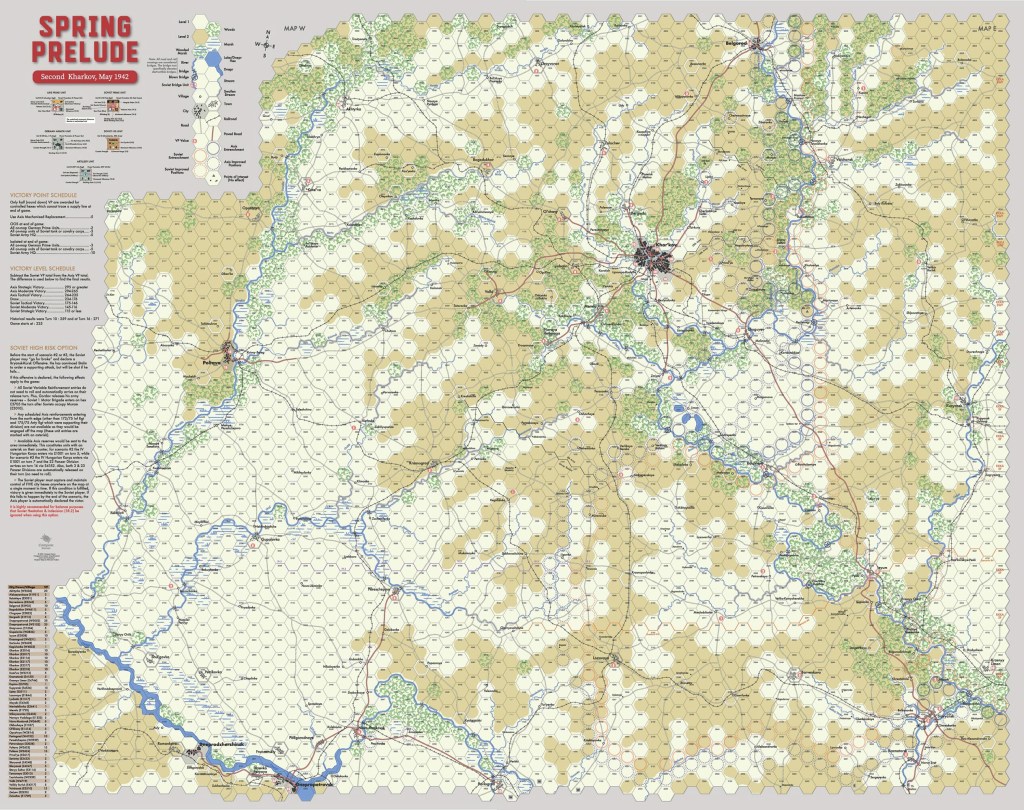
Thanks so much for your time in answering our questions Greg. We really like Chit-Pull designs and have played a few games that use these type of variable chit pulls for strength determination of units during combat and I am very much looking forward to seeing how this works. And just take a look at that big and beautiful map, which is actually shown as a combination of the two 22” x 34” game maps. This one looks really interesting for sure!
If you are interested in Spring Prelude: Second Kharkov, May 1942, you can pre-order a copy for $54.00 from the Compass Games website at the following link: https://www.compassgames.com/product/spring-prelude-pay-later/
 The Players' Aid