As you know, I love the COIN Series and anything associated with it. This new Irregular Conflicts Series is considered COIN adjacent and shares some of the same elements. The 2nd volume called A Gest of Robin Hood is a 2-player game that is set in the world of literature but based on actual events of the time as it covers the bandit known as Robin Hood as he patrolled the Sherwood Forest around Nottingham and attempted to relieve the evil Prince John of the money that he stole from the peasants and give it back to them. The game is very much asymmetric as each of the sides has different goals and objectives but also have different actions, called Plots & Deeds, that can be used to great effect to change the landscape of Nottinghamshire and plant the seeds of insurrection or pacify the locals and keep them paying those juicy taxes. We have played the game a few times now and have really enjoyed what is it that we are seeing and experiencing. The game is a great entry point into the world of asymmetric gaming and also teaches some of the basic principles of the COIN Series mainly focusing on the Sequence of Play, card assisted framework and diverging player sides with vastly different focus. The game is very approachable but also has a lot of meat to it and is really an interesting experience.
In Action Point 1, we took a look at the Game Board, which is absolutely stunningly beautiful yet very functional, and discussed the different areas including Prison, the Justice/Order Track and various other spaces. In this Action Point, we will investigate the 2-player Initiative (Sequence of Play) Box to understand what makes this process unique.
2-Player Initiative – Sequence of Play
The key to the design of A Gest of Robin Hood is the process of determining eligibility, which in other words is the play order for each round in the Chapters. This eligibility is determined based upon the actions that were taken during the previous round by each of the players and their relative positioning on the Initiative Track at the end of the round. This Initiative Sequence is very different from traditional COIN Series games and more akin to the sequence found in The British Way designed by Stephen Rangazas. The concept of Eligibility is important as the first player who can act in a given round is called the First Eligible Player and then the next player is referred to as the Second Eligible Player.
The First Eligible Player’s choice of what actions they can take during the round will ultimately end up limiting what actions the Second Eligible player has access to. Furthermore, these choices will then be used to determine the order of eligibility for the next card. This system works really well and creates some very interesting strategic choices for the players as they decide how they want to go about reaching their goals while also preventing their opponent from reaching theirs.
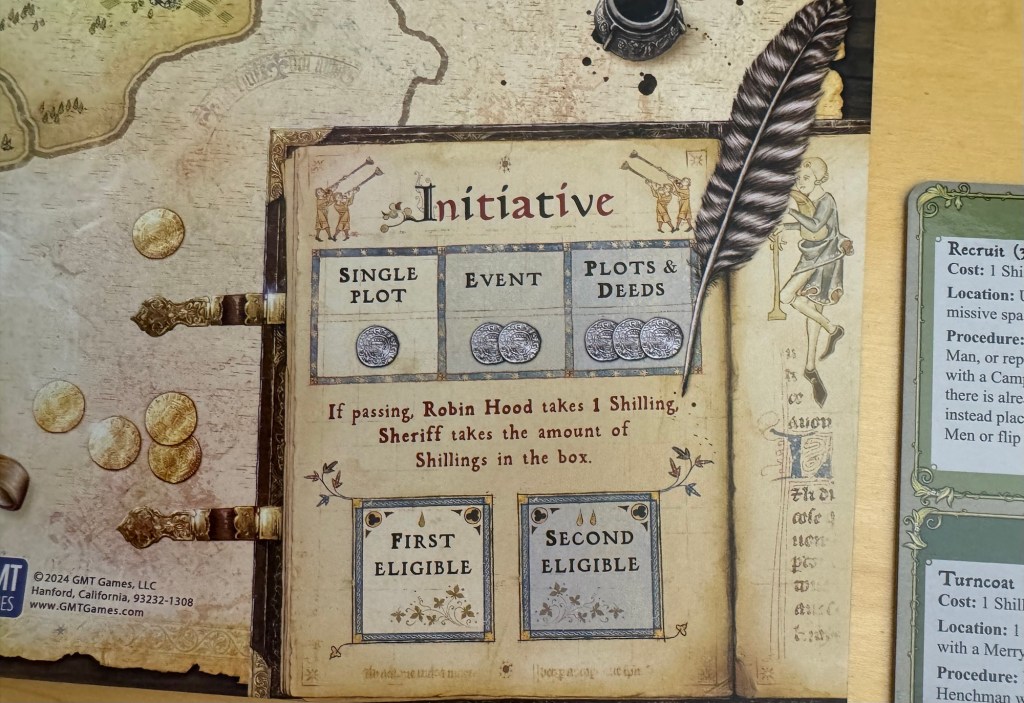
There are three different options that are available to the First Eligible Player to choose from on the Initiative Track. These are shown on the Initiative Track which is found in the bottom right hand corner of the Game Board. These choices include:
- Single Plot: Perform just 1 Plot in a single space on the Game Board. For those familiar with the COIN Series, this is comparable to a Limited Operation.
- Event: Execute either the unshaded or shaded effect shown on the current face-up Event Card.
- Plots & Deeds: Perform 1 Plot in up to 3spaces on the Game Board. This will include the player paying the costs for each space chosen. After the Plot is completed, the player may then choose to perform 1 of their Deeds. For those familiar with the COIN Series, this is comparable to the Operation and Special Activity.
We will go more into detail on the various Plots & Deeds in our next few Action Points in this series but I wanted to understand how the choices of your actions will effect your eligibility for the next round.
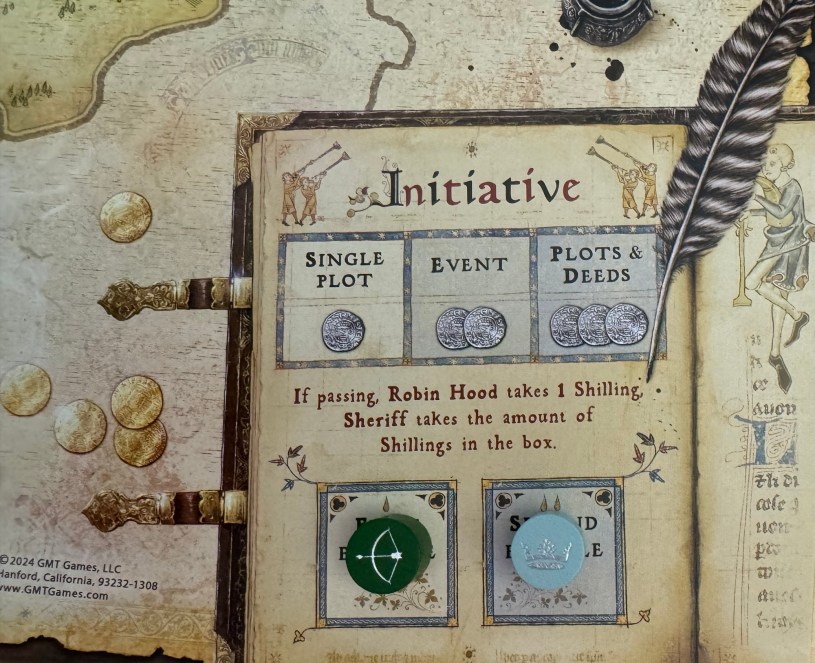
One of the most important and key decisions though for the player in relation to the Initiative Track is what to choose and whether to pass or not. As mentioned previously, there is a direct correlation to the location of the space chosen on the Initiative Track by each player and their designation as First Eligible or Second Eligible at the start of the next round. The First Eligible player chooses one of these options, places their eligibility cylinder in the appropriate space on the Initiative Track and then takes the listed action. The Second Eligible player then chooses from either of the remaining options, also placing their eligibility cylinder in the appropriate space on the Initiative Track and then taking the listed action.

If players want to do as much as they can with each turn, they can choose to place their cylinder in the Plots & Deeds box. If they want to bide their time and only take 1 Plot while they either await a better event or are trying to time their actions to maximize their options they can place their cylinder in the Single Pot box. If the current Event Card is good for them, or conversely really good for their opponent, they can choose to take the Event and place their eligibility cylinder in the Event box. Also, each player needs to keep in mind that they can choose to pass and place their eligibility cylinder in any available space on the Initiative Track and simply pass instead of performing the listed action. This will provide the benefit of blocking their opponent from taking that action, such as a really juicy event, but also can be a source of revenue. When a pass is chosen, the Sheriff player will gain the printed value of Shillings in the box or only 1 Shilling if Robin Hood.

After both players have chosen their actions or passed, the leftmost cylinder on the Initiative Track will be moved to the First Eligible box and the remaining cylinder in the Second Eligible box. This process has now determined the First player in the next round as they new Event Card is drawn and placed faceup for each player to see. And then the process starts all over. This use of this Initiative Track is simple beautiful. It works so well in pitting the players against each other and creates a very fast paced and meaningful decision space for the players. I think that in these COIN Adjacent games, players tend to not think about their choices with the Initiative Track and simply try to take as many actions as possible. And, this is not all together a bad approach as the more actions you can take the more work you can get done and the closer you will technically get to reaching your victory conditions.
But, I try to look at this process as a game in and of itself. Maintaining eligibility gives the player in the First Eligible spot all of the power. They get to act first and can take the action that they truly want. But, it also creates a key decision point. Do you want to try to maintain your eligibility and deny your opponent an event? Or keep them from doing both the Plots & Deeds waiting for your moment to strike or gain a key advantage? I believe that this is the real beauty of what is used here and I really, really like it.

I do want to point out one thing though. This Initiative system is borrowed from The British Way designed by Stephen Rangazas. The main focus of the sequence is to create choices and choices that are meaningful at that. But also to give more focus and credence to the events which feel very powerful and can really make a huge difference in the game. Most of the Event Cards tend to break some kind of rule or provide additional utility to an action. They make your taking the event somewhat of a bonus as sometimes these cards will allow for the completion of a typical 2-step process such as uncovering the hidden Merry Men and then taking them out and sending them to jail! This would normally require the player to take 2 different Plots over a period of 2 turns and always allow the opponent the ability to foil or undo what is trying to be done. The events are really nice and have created a different feel to this game as well as The British Way and coupled with the unique and thinky Initiative Track, have taken the revered COIN Series in a bit of a different direction and I like what I have seen so far.

This innovative take on the Sequence of Play really serves this design well and truly makes a great gaming experience for both novice COIN Series players as well as those devoted to the series. Fred did a fantastic job with this game and I have really enjoyed what I have experienced thus far.
In Action Point 3, we will take a look at the menu of Plots & Deeds for the Sheriff.
If you are interested, you can read our interview with designer Fred Serval at the following link: https://theplayersaid.com/2022/11/21/interview-with-fred-serval-designer-of-a-gest-of-robin-hood-insurrection-in-nottinghamshire-from-gmt-games/
-Grant
 The Players' Aid