We hear the term asymmetry a lot when in discussions about wargames. Asymmetric warfare is typically between belligerents whose relative military power, strategy, or tactics differ significantly. This type of warfare often includes some form of an insurgency or resistance movements to the control of one side or another. But, asymmetric warfare can also describe a conflict in which participant’s resources and capabilities are uneven, and they both may attempt to exploit each other’s relative weaknesses. Such struggles often involve unconventional warfare, with the weaker side attempting to use strategy to offset deficiencies in the quantity or quality of their forces and equipment.
We have played plenty of asymmetric wargames and board games over the years and I find asymmetry to be absolutely fascinating. It can take on the form of differing actions for each player, different resources, different types or amounts of troops and differing victory conditions. In this entry in the Best 3 Games with…Series I want to take a look at my favorite asymmetric wargames. I expect that you will disagree with me and that is your right but please understand these are the best at what they attempt to do in my opinion. I also intend to not include the COIN Series from GMT Games on this list as we have discussed those in other pieces and I want to share some other games.
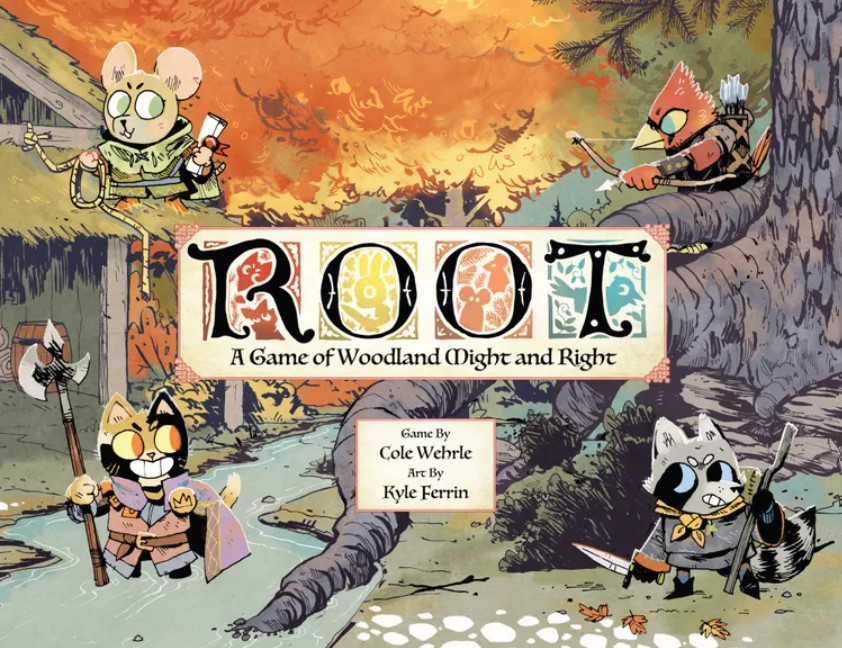
3. Root from Leder Games
I know you are probably rolling your eyes with the inclusion of this game but I don’t care. If you haven’t played it, then you don’t know! Root is a very interesting multi-player asymmetric board game where players take on the role of various factions as they battle for control of the woodland realm in which they all live. This game is a perfect example of asymmetric design as each of the factions works completely differently and win the game in various ways.
In the base game, there are 4 different factions and each of them is very unique and interesting to play. The Marquise de Cat is an engine building strategy where you will build various improvements to try and win the game through VP’s earned by producing with Work Shops, Lumber Mills and Barracks where you can generate lots of cat warriors. The Eyrie or birds have to spread out and take over glades and then build their Roosts to earn points. The interesting thing with them is there is a type of programmed actions you have to do and think ahead or you will find yourself failing. Then there is the Alliance who are the insurgents and are fomenting rebellion by hiding in the dark corners of the forest, gathering their strength and then taking over other factions stuff. Very fun and interesting to play for sure but the hardest to win with. Finally, there is the Vagabond who is somewhat of a timer as it will move around the board, exploring caves, finding treasures and then crafting items to sell or use. They will also score VP from quests and if players don’t get busy and do what they do, the Vagabond will simply build toward a sure victory.
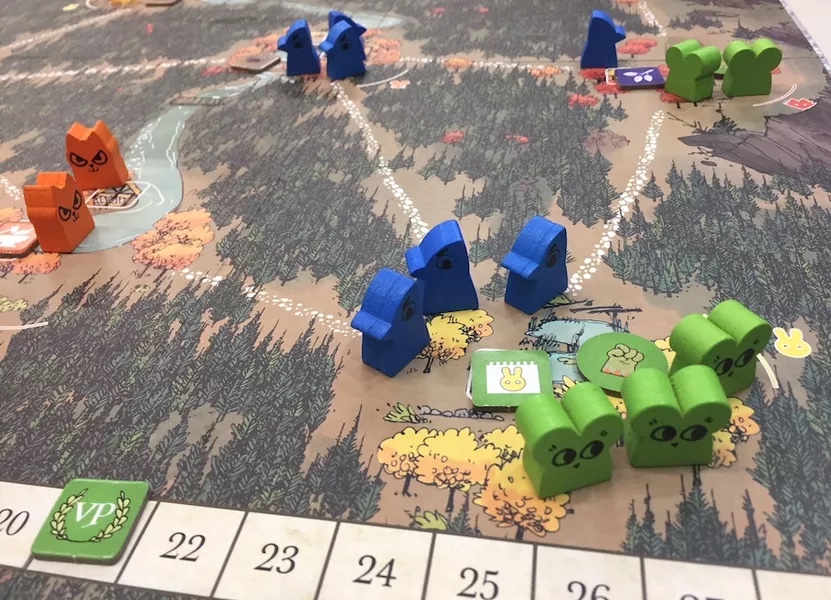
One of the really great parts of the design is the Dominance Cards. These cards are a way for players to abandon their prescribed way of victory and attempt to do something else to win the game. This is very unique in my opinion and takes the asymmetry part of the game to a new level as even the asymmetrical victory conditions have asymmetry in when they apply. I have tried to win Root by playing the Dominance Cards but have never been successful. But, the concept of being able to change your objectives mid-way through the game is very interesting and really keeps all players on their toes.
This game is really a masterclass in asymmetric design and Cole Wehrle really outdid himself with this one. I really have enjoyed my plays of Root and even though the game is extremely cute, and the art is just fantastic, the design is very solid and a really good example of asymmetry in board games.
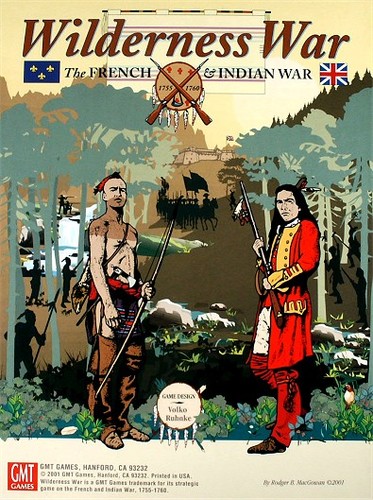
2. Wilderness War: The French & Indian War from GMT Games
Wilderness War is a fantastic design that tells the story of the French & Indian War in North America between the two great rivals of the time in France and England. The game is a fantastic example of asymmetry as it shows each of the sides in their true light and the game is definitely not a fair fight on the battlefield but provides each side with their own strengths that allow each to win the war in their own way.
I remember upon my first play of the game, as we setup and began looking at the cards, my first impression about the French was that they had decidedly fewer troops (their blue troops took up only one compartment in a GMT tray) as compared to the British (while the British needed 2 compartments in the tray), have less powerful regular troops (the British have these monstrosity’s called the Highlanders that are 4-4 units and have a card that allows them to deploy 4 at a time which equates to a ground shaking power of 16!) but have more access to the irregular units or Auxiliaries in the form of various Indian tribes and the Courers des bois (Runners of the Woods) being made up of trappers, hunters and frontiersman adept at Indian-style wilderness fighting. This caused me to start thinking about my plan in a less than conventional way and to start thinking as an insurgent. I said “started” thinking as my very first moves were very traditionally aggressive where I moved masses of under-powered troops into position to begin assaulting forts/fortresses and causing the enemy to react in a similar manner. My first few turns didn’t go well and left me wondering how the French could ever possibly win this dramatic struggle. Then I began switching my strategy to do what it is that I believe the French are built for and intended to do, namely raid the frontier, outmaneuver the British troops causing confusion and forcing a change of plans, sporadically target and attack inferior force stacks and only attempt to try to take strongholds when convenient and relatively easy.
In the end, the game is very asymmetric and it is a prime example of a game designed with two very different fighting styles. The French have to raid, have to remain mobile and fight the long battle with strategic moves and retreats, waiting for the right moment to pounce. The British however have to play aggressive and will need to take the fight to the underpowered French attempting to force them to fight in the open and allow you to bring your big guns to bear. The other really well done part of the asymmetry here is the differences in the cards.
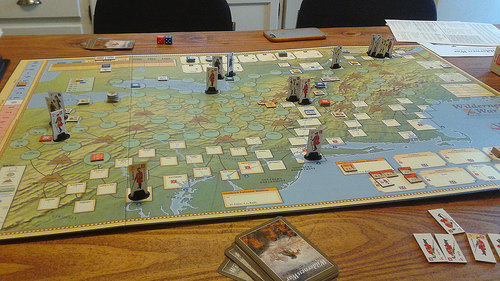
Each side has their aligned cards that allow them to take the printed event on the cards rather than just the Operations Points if the card is owned by your enemy. I would generally say that playing the cards wisely is a required part of both British and French strategy, but the French have to use those cards to improve their strategic and numeric values on the battlefield by either recruiting key Indian allies or by bringing in a few well timed host of Regulars to even the battles out. They also have to allow for defensive actions to take the momentum out of British aggression or actions such as bad weather, the plague or other fun tricks. The British have to bring in their big units and make a concerted push on the key victory point forts held by the French with their other eye on taking Montreal and Louisburg.

The simple beauty of this game is that the game is an effectual struggle for both sides and more often than not comes down to the very end and will be decided over just a few VP’s. In my opinion, there is no clear advantage for either side if proper strategy and tactics are used, even though the British are superior in numbers and power. This means that this game is very well balanced, well put together and a strategic gem of the gaming world. I would highly recommend this game to anyone that loves CDG’s or asymmetry and there is a reason that it has sold very well over the years since its first printing in 2001.

1. Labyrinth: The War on Terror, 2001-? from GMT Games
We love Labyrinth: The War on Terror, 2001-? from GMT Games. The game is a 2 player asymmetric Card Driven Game that pits the mighty and powerful United States military and all of its antiterrorist agencies against the Jihadists whose sole goal is to spread terror, sow the seeds of deceit and ultimately destroy Western civilization. Now before you think I am an authority on the game, I have played about 15 times, 14 or so as the US and only once as the Jihadist. I know how to play the game mechanically and generally understand what it is that I am trying to do as the US player but not so much with the Jihadist. I have though watched my opponent Alexander skillfully play the Jihadist and generally understand what he is trying to do. In fact, Alexander is somewhat of a master at the tactics needed to be employed by the Jihadist and he often states before he plays, “…And for my next trick!” I always laugh because it is like magic how he will try to twist and manipulate me into doing what he wants. And that is the beauty of this particular asymmetric game. Each side is trying to do their own thing but also trying to get the opponent to do something other than what they want to do.
One of the biggest parts of the asymmetry is in the makeup of the cards. The Jihadists have the overall card advantage as they have 1 more total aligned card (47 for the US vs. 48 Jihadist) but where their true advantage lies is that they have 7% more Ops points on their faction cards than the US. At initial glance, this might not seem to be much of an advantage but over a full game consisting of 3 decks, it will add up and you will feel the difference. The Jihadists also have more total 3 Ops value cards (16 for the US vs. 20 Jihadist) and a higher percentage of their overall cards are 3 Ops with 41.6% as compared to only 34.0% for the US. These advantages cannot be overlooked and require the US player to be diligent and careful about how they play their hand of cards.
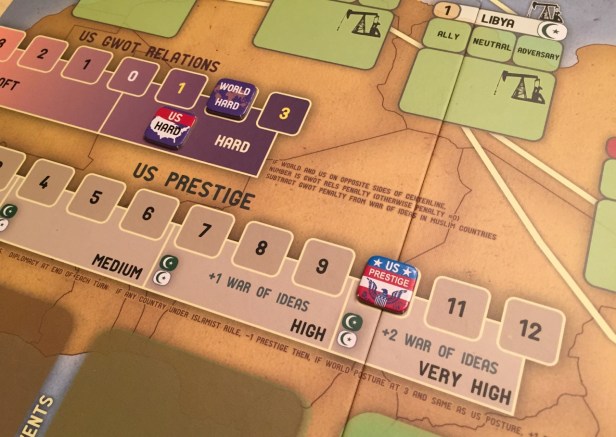
The method by which the US mainly wages the War on Terror in Labyrinth is not with brute power and the deployment of Troops but by waging a War of Ideas. This War of Ideas is performed by rolling dice to attempt to improve the Governance level of countries or shift them from Neutral to Ally. The process involves the inclusion of various DRM’s including bonuses from High (+1) or Very High (+2) Prestige, from an Adjacent Good Ally (+1 maximum) or +1 for each Aid Marker. There are also negative DRM’s that can be included in the process such as the dreaded -1 Attempting shift to Good or GWOT Relations Penalty of up to -3. The battle for good prestige is a continual effort and must be focused on by the US player for any real chance at success. If you ever get GWOT Relations Penalties to your rolls or negative DRM’s from low Prestige, you will find yourself unable to do anything and soon will realize that you are losing…badly! Prestige can increase in several ways, including through Event Cards, but more practically from Disrupt Operations. Each time the US does a Disrupt in a country using Troops, they will gain a +1 Prestige. This should be the focus in the early going as they try to build up Prestige.
The Jihadist though has to move around the board and create havoc and chaos. While a large portion of the game is about trying to establish Islamic Caliphates in countries, they will find it extremely challenging if they play in a static fashion. The Jihadist game pieces function similarly to insurgent pieces from the COIN Series, as they are hidden and need to be flushed out before they can be removed. Anytime they move, even within the same region, the cells go underground again, ready to strike at a moment’s notice. The Jihadist player has to embrace mobile warfare, get in to perform jihads, lay terror plots, and then get out again before the US can catch up to you. When the heavy handed US war machine comes crashing down you have to scatter. Always remember, run away, to fight another day! You have the movement advantage. Your pieces can move to any adjacent spaces without rolling, or can roll and move across the entire world. The US simply cannot move in this fashion, they cannot catch you everywhere, so the Jihadist player must spread out, spread the US thin and create “constant chaos”. Any respite is a benefit to the US and allows them to stabilize things with a chance to take a breath, so the Jihadist must try and keep them off kilter at all times and gasping for air.

I absolutely love Labyrinth and find its brand of asymmetry to be exquisite! But, it might not be for everyone’s palette but from a mechanical and exploratory standpoint the game and its asymmetry are really good. Again, I’m good with the theme, but if it seems a bit heavy and dark at times, just try and set that aside and play the game for the game, because it’s extremely enjoyable.
So those were my 3 Best Games with…Asymmetry! and I hope that you enjoyed what I shared and also got into the spirit of the post and started thinking about games that do asymmetry well. What are your favorite asymmetric wargames?
-Grant
 The Players' Aid